

This article is a part of Poland Unpacked. Weekly intelligence for decision-makers
Andrzej Mężyński: Why Africa?
Andrzej Dopierała (CEO of Asseco Data Systems): Africa is one of the fastest-growing regions in the world. As that growth accelerates, demand for modern technological solutions and expertise is rising. This creates opportunities for Asseco – a global technology company with Polish roots, which are viewed favorably in this market.
Why is that?
Because we are not a country from the so-called old Europe that colonized Africa. We are part of Western civilization, but there is no difficult history between us that casts a shadow over cooperation. African countries look with admiration at what Poland has achieved over the past 30 years.
Warto wiedzieć
Who's who
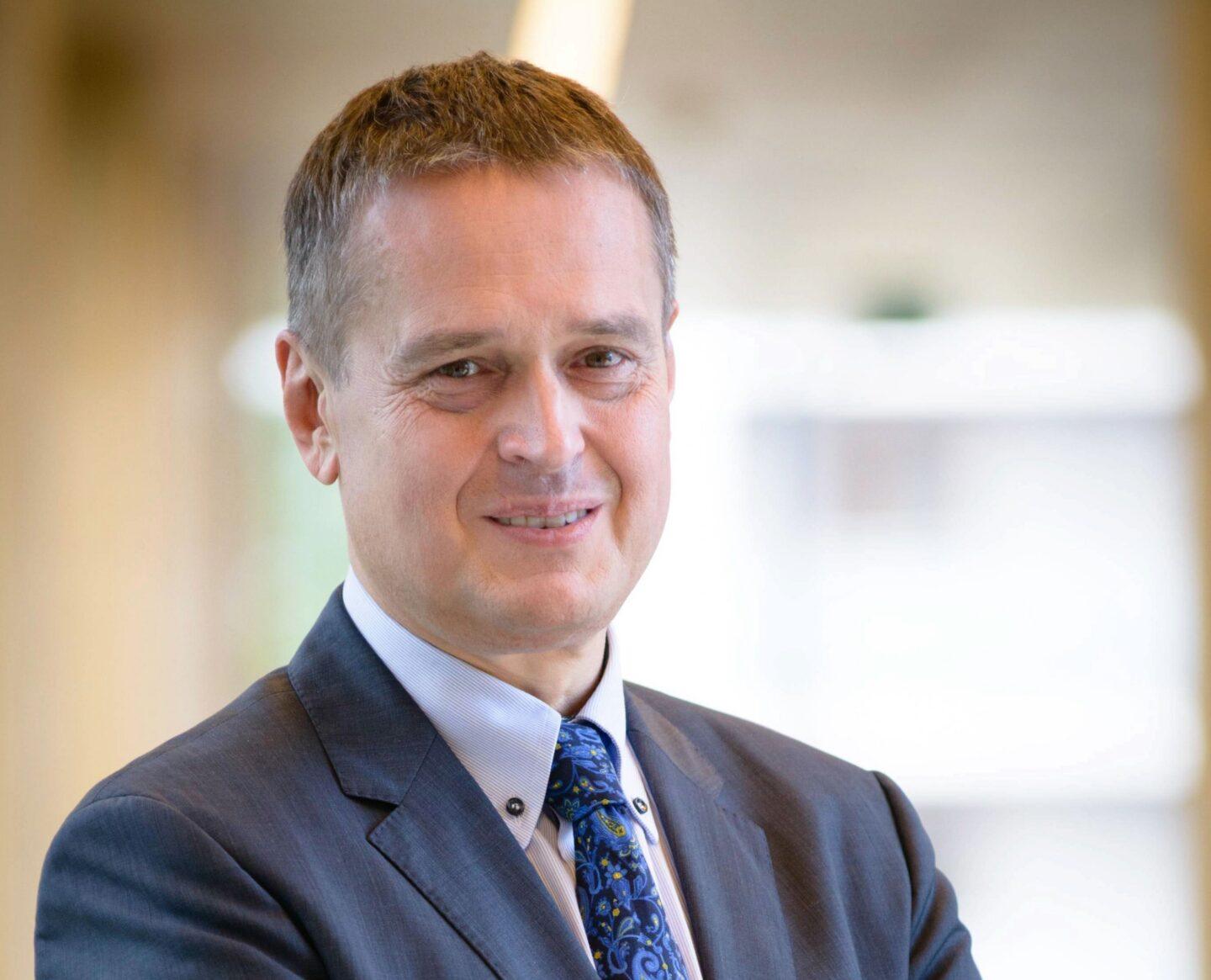
Andrzej Dopierała has served as CEO of HP and Oracle in Poland, among other roles
He is an electrical engineer by training. After graduating, he worked in the United States and Canada. After returning to Poland, he worked at Hewlett-Packard Polska from 1994 to 2006, serving as CEO for the final eight years of that period. He then became CEO of Oracle Polska.
In September 2013, he joined the management board of Asseco Poland as vice president, with responsibility including the defense sector and cybersecurity solutions. Between 2019 and 2026, he served successively as CEO and chairman of the supervisory board, and since May 2026 he has been vice president of the management board at ComCERT. Since 2016, he has been CEO of Asseco Data Systems, one of Poland’s largest IT companies.
What do they see?
They see the changes that have taken place in our country as a major success. And they aspire to reach a similar level themselves, especially in terms of organization, quality of life and prospects. On top of that, looking at demographics, the African continent will continue to develop for the next dozen or even several dozen years. That is why entering this market and establishing the right position there is important from a business perspective.
Can Africa today be compared with Poland in the 1990s? Is it also the case that these countries are not adopting older solutions, but instead moving straight to the latest ones? Much as Poland skipped the era of checks and went directly to electronic banking.
It is important to remember that Africa is highly diverse. There are less economically developed countries where digitization is not progressing as rapidly, and there are also countries that are more advanced. In those places, broadly speaking, what happened in Poland is now taking place. For Africans, digitization is an opportunity to accelerate transformation in a broader sense. I think that is the right approach. They want to implement modern solutions, not technologies that were developed several years ago. The same is true in Poland, which is why we are a leader in digitization in many areas. Technology changes very quickly. What was once innovative is now standard.
What about investment security? Togo is not far from Mali, where a full-scale war with jihadists is under way. Nigeria is also seeing fighting with Boko Haram terrorists.
Togo is not a large country, which works in its favor, because it is not a place of particular interest to terrorist organizations. Business in Africa, however, requires a different commercial approach. For example, requiring advance payment is good practice as a safeguard, so that you do not carry out work and then fail to receive the agreed payment. And this is where a new EU program, operated in Poland by Bank Gospodarstwa Krajowego, provides enormous support.
How does the program work?
The EU recognized that European companies need to expand more broadly into the African market. That, however, requires additional financial mechanisms and safeguards to reduce investment risk. A support program was therefore developed and implemented for investments in projects in African countries undertaken by European companies.
Over our 13 years of operating in Africa, we have often been approached by various local companies with ideas for digitization projects. It is worth emphasizing that these are usually good and worthwhile initiatives. If implemented, they would certainly benefit the country concerned. There is, however, one problem.
Good to know
The Togo project is a partnership between Asseco Data Systems and the government-backed CDA
The project in Togo is being carried out by Cyber Defense Africa (CDA), a company established by the Togolese government and Poland’s Asseco Data Systems. Its role is to protect the country’s digital infrastructure against cyber threats. CDA operates a modern security operations center that monitors networks and systems around the clock and responds to detected threats. It is also responsible for running the national incident response team. The project is to be developed over 12 years, with a total budget of EUR 80 million (around PLN 340 million).
The funds will be used not only to develop the infrastructure itself, but also to invest in new technologies and skills. Among other things, CDA plans to deploy solutions using artificial intelligence and establish a digital security academy to train specialists from Togo and other countries in the region. This marks the next stage of Asseco’s cooperation with Togo, which began in 2019. Financing for the first stage of the investment, worth EUR 24 million (around PLN 102 million), is being provided by BGK, backed by a European Union guarantee under the EFSD+ program.
What is it?
African entrepreneurs come to us and say: financing is needed. But we are a commercial company; we do not award grants or provide loans. Now, thanks to this financing program, we will be able to carry out such projects.
You are present in Togo and have investments in Nigeria and Ethiopia. What are Asseco’s further plans for Africa?
We have the highest hopes for digitization projects in Sub-Saharan Africa that are being carried out with funding from the EU program I mentioned. We expect to secure several such projects. The next one is to be implemented in Nigeria, followed by another in Cameroon. It is also important to remember that projects such as those in Togo, Nigeria or Cameroon must make business sense. Because of where they are being implemented, they carry greater risk, so additional safeguards are required.
How long does it take to implement a project from launch to go-live?
Based on our experience, at least a year, though usually a year and a half. We once tried to approach this in a very project-driven way, with deadlines, tasks, dates and people responsible for delivery. It often turned out that the timetable had to be extended for valid reasons that we could not have anticipated. Something that would take us a month here can take much longer there. That is simply part of the reality. You can get frustrated by it, or accept it and adapt to the realities of the local market and the way business is done there.
What are the pros and cons of investing in Africa?
I will start with the downsides. First, there is unpredictability, and the need for patience and flexibility. Obviously, every country has a different business culture. You can see that even within the European Union, where doing business in Germany is different from doing business in Poland. But from our perspective, the way business is conducted in Africa is different again.
What do you mean?
In Europe, the arrangements we put into a contract are, naturally, binding. In Africa, they sometimes have to be treated more as a general direction. What we agreed may be changed a week later. Africans are used to that. They are very flexible. We Poles are flexible too, but sometimes, viewed from an African perspective, we do not have enough of it. That can lead to situations in which the two sides do not fully understand each other. If our partner or client is unable to honor what is in the contract because circumstances have changed, that does not mean the contract itself ceases to apply. We have been learning this for more than a decade, but even now something can still surprise us. Those are the main challenges.
And what are the advantages?
Projects carried out in Africa are large and make a positive contribution to financial performance. It is also important to establish a presence in this exceptionally promising market. Many economists say that the African continent will grow faster than others. That is why it is good to be there, to build our position and expand our presence. It also matters from a reputational perspective: a Polish company is delivering new technologies in countries that see digitization as an opportunity to accelerate development.
Would you encourage Polish entrepreneurs to invest in Africa?
That is a decision for each entrepreneur, but based on Asseco’s experience, of course I would encourage them. If someone sees that their business will deliver better results in Poland or elsewhere in Europe, that is where they will invest. But if they are looking for new markets, Africa is worth considering.
Fireside chat
“We are not afraid of Africa because we see opportunities there, not just risks”
Professor, what does supporting investments like these bring to Poland and to the bank?
Prof. Marta Postuła, Vice President of BGK: Africa is the fastest-urbanizing continent in the world. Its population has already exceeded 1.5 billion and, according to UN forecasts, will rise to around 2.5 billion by 2050. However that may sound, it is a young and rapidly developing market, particularly in digital services and cybersecurity. We want Polish entrepreneurs to be able to take the fullest possible advantage of these business opportunities, with support from the state and institutions such as BGK. Our activities have two fundamental dimensions. The first is implementing development policy; the second is supporting Polish companies in their international expansion. It is worth noting that China and many European countries, for example, have for years consistently helped their companies build a position in African markets. They have offered instruments tailored to local needs and designed to make it easier to do business. Poland should also actively create such opportunities for its companies.
BGK is also supporting another major investment in Thailand. Are there regions – apart, obviously, from Russia, Iran or North Korea – where Polish companies cannot count on support?
Apart from the countries you mentioned, restrictions apply primarily to countries where military conflicts are under way. Ukraine is an exception, as BGK remains active there because we operate under the umbrella of an intergovernmental agreement. In total, we already support Polish entrepreneurs in more than 90 markets worldwide, including when they operate as subcontractors. These are, however, different instruments from the one Asseco is using in Africa. Here, we are dealing with long-term financing secured, among other things, by an EFSD+ guarantee under the EU’s Digital Transformation Program for Sub-Saharan Africa.
So how does the African project differ from BGK’s typical support?
Africa is a demanding and complex market. Not all types of risk can be mitigated through KUKE insurance. That is precisely why it is so important that BGK has received a government mandate in the area of development cooperation. This allows us to use our own funds and European instruments that guarantee the implementation of contracts, including those related to digital transformation in Sub-Saharan Africa. Bank Gospodarstwa Krajowego is the only financial institution in Poland to have received from the European Commission an allocation of guarantees worth EUR 115 million, or nearly PLN 500 million. This amount is earmarked to support development projects in the region. This enables us to help companies that have been waiting for solutions already used by the French or Italians. In the case of Asseco’s project in Togo, BGK will finance the initial stage of the investment with around EUR 24 million, or more than PLN 100 million, while the loan financing will be secured by an EU guarantee under the aforementioned EFSD+ program. In total, we plan to finance five to seven such transactions. Importantly, Polish taxpayers bear no risk in the process because we are using European funds. Development-cooperation instruments help companies enter a market and understand it, thereby laying the groundwork for conventional instruments used to finance international expansion. This gives Polish entrepreneurs advantages that others do not have.
What advantages?
Poland is a country that is not entangled in bilateral conflicts or political rivalry between major players such as China and the United States. At the same time, we are seen as a country that has achieved spectacular economic and social success. It is worth remembering that as recently as 1990, GDP per capita in Sub-Saharan African countries such as Gabon or South Africa was higher than in Poland. Today, these countries still face serious structural challenges, while Poland has undergone a successful transformation and built a competitive economy. Polish companies are also flexible and understand the needs of African countries, as Asseco demonstrates. I would also like to stress that development projects in Africa are scalable.
What does that mean?
Some time ago, we had an opportunity to meet EU ambassadors accredited to African countries. They are watching developments in Togo closely because the challenges of digitization are fairly similar across Sub-Saharan Africa. Since last year, BGK has operated under the designation of a development finance institution, or DFI, recognized by the Polish government and accredited at EU level. This gives Poland and Polish businesses greater credibility, visibility and prospects for entering further markets. BGK is also engaging in development activities in other Central African countries: Cameroon, Gabon, the Republic of the Congo and the Democratic Republic of the Congo. Under the Digital Business Boost for Africa program, or DBBA, financed with EUR 15 million in non-repayable funding from the European Commission, we plan to strengthen institutional capacity, build trust in digital solutions and support these countries’ economic growth, for example by promoting Polish solutions in e-commerce and digital public services. In this way, a single project can become a starting point for a broader presence of Polish businesses in the region.
Apart from these EU programs, does BGK have its own programs for companies that want to enter Africa?
We carry out transactions in Africa together with KUKE under the government’s Financial Support for Exports program. We secure and settle trade in nearly 20 African markets, and we also directly finance major infrastructure projects, for example in Angola and Tanzania, where Polish companies operate as subcontractors. Using BGK’s own funds, we can provide a loan to finance a Polish company’s foreign investment if, for example, it wanted to locate a manufacturing plant in Africa. In 2025, we announced that we were ready to support export and investment projects carried out by Polish companies in Africa with a total of PLN 4 billion.
Are only IT companies interested in entering the African market?
No. There is also strong interest from entrepreneurs in other sectors, such as agri-food and mining. They want to do business there and build a competitive advantage in Africa. And it is not only about business itself. It is a form of investment and a win-win strategy, because it brings tangible economic benefits to both sides. In the current environment, Africa is a very interesting market.
Why?
Many countries, both in Europe and the United States, have decided to reduce development-aid funding. This creates an opportunity for Polish entrepreneurs to establish a presence in this market. They do, however, need to bear several things in mind.
What are they?
The African market requires a great deal of patience and long-term commitment. Business culture in Africa is based on building relationships and trust, which matter just as much as the transaction itself, and sometimes even more. Cross-cultural communication is also important. We have projects whose preparation takes a year or longer. We want to mitigate the risk of business failure as much as possible. We invite every entrepreneur who wants to invest in Africa. Our offering is flexible enough for us to find the right support instrument for them — not always a European one, because those instruments have their limitations. We can support every sector. We are not afraid of Africa because we see an opportunity there to build Polish competitive advantages, not just risks.


Key Takeaways
- Africa is presented as a young, fast-growing and increasingly digital market where demand for new technologies will continue to rise. Poland is well positioned because it is seen as a country that has itself undergone a successful transformation, while carrying neither a colonial legacy nor the baggage of conflicts involving the world’s major powers. Polish companies can therefore be credible partners for African countries, with an understanding of their ambitions and needs.
- Projects in Africa can be large and financially attractive, but they require far more patience, flexibility and caution than ventures in Europe. Agreements may change, projects take longer, and business relationships are built to a large extent on trust and personal ties, not only on contractual provisions. Entering the market therefore requires adapting to local realities rather than trying to do business exactly as in Poland. Both Asseco and BGK stress that years of accumulated experience make it increasingly possible to mitigate these risks.
- New BGK and EU instruments are intended to reduce the risks for Polish companies, making it possible to pursue projects that could not be financed on purely commercial terms. Asseco’s project in Togo is expected to be one of the first examples of such a mechanism, with BGK planning to support further transactions. In the broader perspective, individual projects are intended not only to deliver specific investments, but also to open the way for Polish companies into other African markets.