

This article is a part of Poland Unpacked. Weekly intelligence for decision-makers
They started with a small glass factory near Radom. Today, they run one of Europe's leading glass manufacturers, exporting products worldwide. The Bernady family has quietly built an industrial giant, and acquiring a company twice its size is just the latest chapter in a business story spanning more than three decades.
More and more Polish family businesses are developing international ambitions, increasingly pursuing acquisitions in Western Europe to achieve them. Trend Glass, one of Europe's largest manufacturers of glass products, took this step after more than three decades of growth. In 2025, it acquired Germany's Gala Group, Europe's largest producer of candles in glass containers, from a British investment fund.
Łukasz Bernady, the founder's son, has been involved in the family business for more than two decades. In his first interview, he discusses succession, the challenges and crises the company has faced, its achievements, and its global ambitions.
Mariusz Bartodziej, XYZ: What does it feel like to show the founder of IKEA around your own factory?
Łukasz Bernady, CEO and co-owner of Trend Glass: We were extremely nervous about the visit, so we paid exceptional attention to every detail. But it turned out to be a very pleasant experience. Despite everything he had achieved in business, Ingvar Kamprad was a remarkably down-to-earth person. His questions about costs, potential challenges, and other aspects of operations made it clear that he really understood manufacturing.
The founder of IKEA regularly visited factories supplying the company around the world. In 2013, he also visited our glassworks, which played an important role in IKEA's supply chain as a key supplier of drinking glasses, candleholders, and vases. Our partnership, which began in 2002, proved to be a major driver of our growth.
The group's history goes back much further, to 1989. That was when your father, Stanisław, used money earned in the United States to build the Berta glassworks near Radom. What do you remember about those beginnings?
I wasn't involved at the time, but I clearly remember my father returning from the United States and looking for a suitable plot of land. Finding one with the necessary utility connections was far from easy back then. Securing construction permits was another major challenge. Poland's economic reality at the turn of the 1980s and 1990s was completely different from what it is today.
Good to know
Continuing the family tradition
Łukasz Bernady has been involved in the family business since the beginning of his professional career. His father, Stanisław, worked in glass factories during the 1980s before establishing his own manufacturing business in the following decade. Łukasz joined him in 2003.
Since then, father and son have jointly managed a group supplying glass products to nearly 50 markets across six continents.
A turning point came in 2025 with the acquisition of Gala Group. At the time of the transaction, Gala employed almost 4,000 people at factories in Germany, Poland, India, and Hungary. Its revenue was twice that of Trend Glass, and the combined group's turnover now comfortably exceeds PLN 1 billion.
An accidental entry into the family business
Were you always drawn to the family business, or did you dream of a completely different career?
I recently read that only 8% of entrepreneurs' children want to take over their family businesses. I have to admit that I hadn't planned to do so either.
I chose to study glass technology almost by accident and eventually started working with my father.
I became interested in optimizing the company's processes. Step by step, I gained experience in different areas, including purchasing, production, and automation. And somehow, I ended up staying for good.
At what point in your life and the company's development did you become fully involved?
I started working in the family business when I was 22. We already had three production facilities at the time. Initially, the glassworks operated independently, and we began integrating them after the 2008 financial crisis.
In 2004, however, we relocated one of the factories to the newly established part of the Tarnobrzeg Special Economic Zone near Radom, on the site of the former Łucznik industrial complex. I was responsible for that process.
We created a single brand, Trend Glass, for the entire group and began promoting it at international trade fairs. I became CEO.
Clear roles for the founder and his successor
How does working with your father actually work?
In a family business, everything is both difficult and easy. My father and I have a clear division of responsibilities and considerable autonomy within our respective areas. I am responsible for business development, while we make key strategic decisions together and share responsibility for them.
The greatest advantage of a family business is the ability to think in terms of many years rather than just the next reporting period. The owners have a direct connection to the business, its reputation, and the people who make it work. This encourages responsibility, consistency, and quick decision-making.
At the same time, growth brings new challenges. Managing an international group requires more professional processes, a clear allocation of responsibilities, and the development of capable management teams.
The real challenge is to preserve the entrepreneurial spirit and speed of decision-making that characterize family companies while introducing management standards appropriate for a large international organization.
When did you begin expanding the management team?
The global financial crisis provided the impetus. In 2008, we hired someone to help organize our finances. Gradually, we recruited people responsible for other areas, including HR, production, and sales.
Some came from other family businesses, while others joined us from large corporations across Poland.
How did they adapt to Trend Glass?
Generally, very well, because we tend to look for people who appreciate working in family businesses. They value flexibility, the ability to make decisions, opportunities to discuss issues directly, and the capacity to respond quickly.
That said, once a company reaches a certain size, even a family business needs structures and established procedures. They help bring order to many aspects of the organization.
Three decades of challenges and turning points
Looking back at the group's history, which events would you consider the most important milestones in reaching its current position?
In retrospect, relocating the factory to the special economic zone and introducing automation were crucial turning points.
Those decisions opened the door to our partnership with IKEA. That relationship not only drove sales but also forced us to bring our production and processes into line with IKEA's global standards.
Working with major international corporations required many changes.
We had to meet demanding standards concerning working conditions, environmental protection, and corporate social responsibility, which were not yet widespread in Poland at the time.
But that experience quickly paid off and helped us secure further important contracts.
What about the problems you encountered along the way?
There have been so many over more than 30 years that it's difficult to list them all.
One challenge was Poland's accession to the European Union in 2004. It marked the beginning of a period of rising business costs, including labor costs.
Although Poland remains relatively inexpensive compared with some EU countries, low costs alone can no longer form the basis of our competitive advantage.
Then the 2008–2009 financial crisis hit us in two ways.
Like everyone else, we felt its broader economic effects. But the appreciation of the Polish złoty was particularly unfavorable for us, as a substantial proportion of our sales was already denominated in euros.
Since the COVID-19 pandemic, we have faced an almost continuous series of challenges.
A few years ago, energy prices increased severalfold, creating an enormous problem for glass manufacturers.
Today, conditions are becoming difficult again. Although the energy crisis is no longer as severe as it once was, the war in Iran is putting renewed pressure on energy commodity markets, and natural gas prices are rising again.
One of Europe's leading glass and candle manufacturers
How do you deal with these challenges?
Three factors are crucial in situations like these: quick decision-making, financial discipline, and close relationships with customers.
Our long-term perspective is another strength. We don't make decisions solely with the next quarter in mind.
We try to protect the foundations of the business while using difficult periods to strengthen our competitiveness.
Crises teach humility. They demonstrate the importance of diversifying markets, customers, and sources of supply.
How large is the business today?
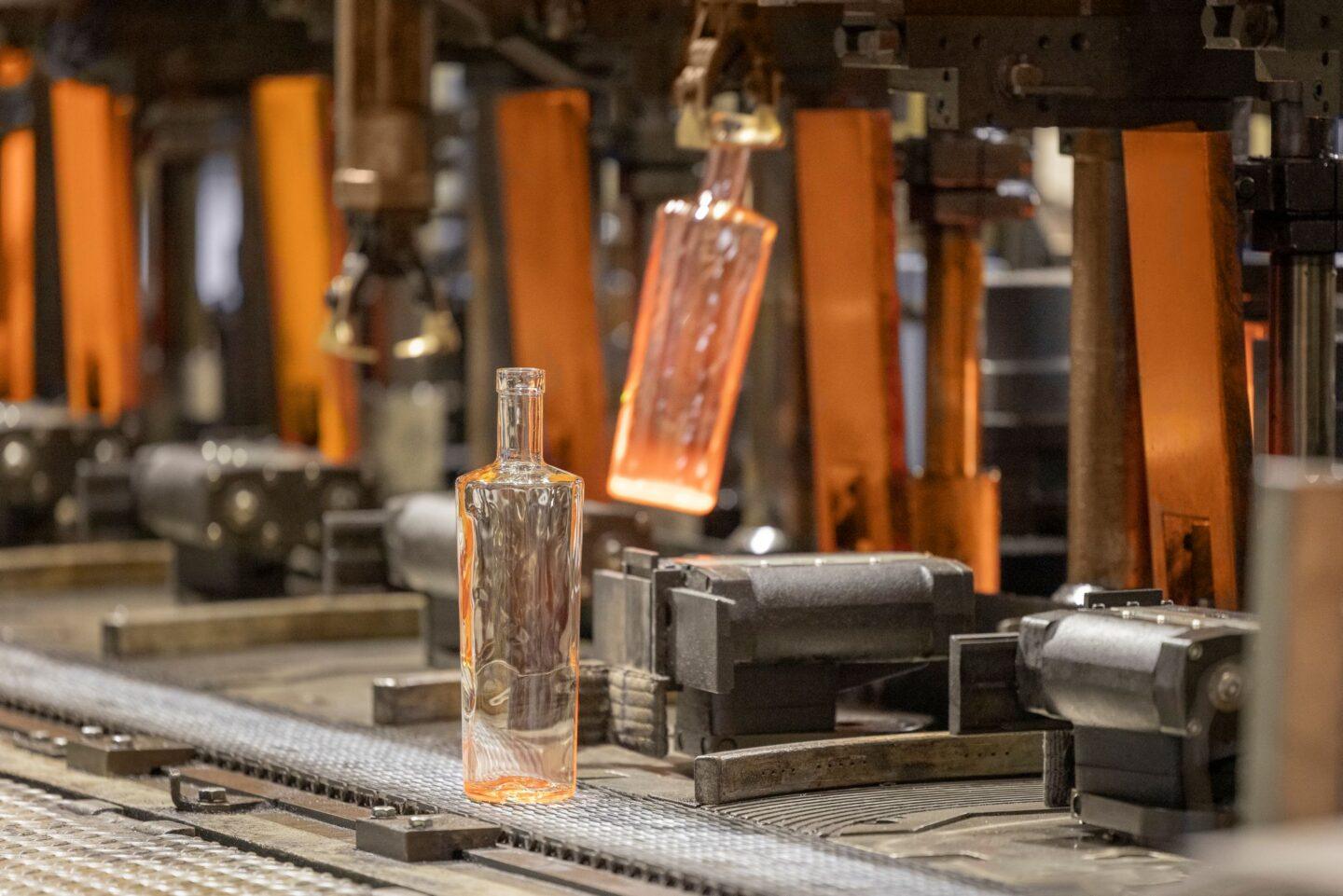
We have the capacity to melt around 400 metric tons of glass per day, placing us among Europe's leading manufacturers. Our sales are divided roughly equally among three categories: decorative glass, tableware and household glass, and candle containers.
Poland is Europe's largest candle producer. For years, we have exported approximately half of our production to nearly 50 countries around the world.
Most of our exports go to EU markets, but we also generate significant sales in the United States and several South American countries.
Does operating a global business from Poland make that ambition easier or harder to achieve?
We don't see our Polish origins as a disadvantage in international business. Quite the opposite.
Over recent decades, Polish companies have developed very strong manufacturing, technological, and management capabilities.
Competing globally means going up against businesses that often have greater scale, better-known brands, or longer-established commercial relationships.
We also face challenges related to energy costs, labor availability, increasingly demanding EU regulations, access to financing, and differences in business conditions across individual markets.
But we don't treat these factors as excuses. They are simply part of the business environment to which we must adapt.
A remarkable acquisition after years of unsuccessful attempts
Despite your success, neither your family nor the company itself has sought much attention from Poland's national media. Why?
We never felt the need. We preferred to concentrate on developing the business and our day-to-day operations.
Only after acquiring Gala Group, in a transaction carried out with CVI and the Polish Development Fund (PFR), did we begin paying greater attention to communication and building brand recognition.
Today, we recognize the value of speaking more openly about our achievements and the journey we have taken.
The acquisition was completed in September 2025. CVI and PFR each provided half of the EUR 45 million in financing: EUR 35 million for the acquisition itself and EUR 10 million for the necessary guarantees and working capital. How long had you been preparing the deal?
For years, we had discussed potential acquisitions with numerous companies, mainly glass manufacturers. None of those discussions resulted in a transaction, so we continued growing organically.
Then the opportunity to acquire Gala emerged. It was a company we knew extremely well.
We had worked together for more than a decade, dating back to when it operated in Poland under the Korona Candles brand.
We supplied the glass for its candles, and Gala had long been one of our largest customers.
At some point, however, the company found itself in financial difficulties.
Its owner, London-based investment fund Equistone Partners Europe, carried out a major restructuring and began looking for an investor in 2024.
For a long time, we watched the process from the sidelines because the initial valuation seemed very high.
We entered negotiations only in the final stages, competing against both strategic and financial investors.
One of the decisive factors behind our success was our ability to secure financing quickly.
That would not have been possible without CVI and PFR, as traditional bank financing was not an option.
More than PLN 1 billion in revenue – and still growing
What convinced you to proceed with the acquisition?
The potential synergies. We became an even larger glass supplier to Gala, Europe's biggest producer of candles in glass containers.
But that's only the beginning of the opportunities the transaction has created. Each company has customers to whom we can now offer a broader, combined product range.
Together, we can also compete for contracts that would previously have been beyond our reach individually. We already have examples of this happening.
There are further benefits in joint purchasing, product development, and other areas.
In our case, one plus one definitely equals more than two. Acquiring Gala Group was a breakthrough for us.
We don't regard it simply as a financial transaction. It is an industrial and strategic project built on genuine product, cost, commercial, and operational synergies.
How large is the combined group?
Our combined revenue is almost EUR 300 million.
Trend Glass generates close to EUR 100 million in sales, while Gala contributes around EUR 200 million.
We don't see our current scale as the final destination. We see it as the foundation for our next stage of development.
It is unusual for a smaller company to acquire a larger one, let alone one twice its size. How difficult has that been?
We weren't convinced we could win such a competitive bidding process.
That makes the acquisition an even greater success in our eyes, as does the integration of the two businesses, considering the results we are already achieving.
One challenge was the planned relocation of production from Germany to Poland. We have now completed that process. We are consistently implementing our strategy.
Gala is benefiting from becoming part of a family-owned group where decisions can be made quickly.
We expect its sales to increase by more than 10% year on year in 2026. By mid-2027, we would like to develop a joint global growth strategy for the following three years. At its peak, Gala generated around EUR 300 million in annual revenue.
I don't want to declare that returning to that level is our specific target. But we certainly intend to continue expanding the entire group.
The right partners at the right time
International investment funds and industry players have been investing in Polish manufacturing for years. Did you consider selling part of your equity to finance the acquisition?
We didn't consider that scenario, primarily because of the time constraints.
Completing a transaction with a private equity fund within three months would have been difficult.
Besides, investors of that kind typically expect to acquire a majority stake, while maintaining our existing ownership structure was important to us.
We had to act very quickly with Gala.
We already knew CVI through its involvement in Krosno Glass.
Once CVI confirmed that it could co-finance the acquisition, and PFR joined shortly afterward, we stopped looking for alternatives.
Both institutions acted very efficiently.
Even during difficult periods, have you always preferred to find solutions independently rather than give up control of the family business?
We have never actively sought such arrangements because we haven't needed them.
There have, however, been approaches from investors.
One came from a fund that, after acquiring the glassworks in Krosno, was planning to consolidate the market.
Ultimately, we decided not to continue negotiations because the proposed terms did not meet our expectations.
Our primary objective is not to maximize the company's short-term valuation, but to build its value consistently through business development.
A company's value comes primarily from its capabilities, customer relationships, organizational quality, profitability, and potential for further growth.
Appropriately structured financing can accelerate this process, enable investment, and help businesses seize market opportunities without automatically requiring owners to sell equity.
As a family business, we particularly value the ability to maintain a long-term perspective and influence the direction of the company's development.
"It's not about maximizing debt"
How familiar were you with private debt financing when you began working with CVI?
We were quite familiar with it because this type of financing is well established in the real estate market, where our family also makes investments.
We simply hadn't needed to use it before. In the case of Gala, time was the decisive factor.
We understood the costs associated with private debt, but the benefits of completing the acquisition substantially outweighed them.
How important has choosing the right source of financing been at different stages of the group's development?
One of the most important lessons we have learned is that financing should be tailored to the nature of an investment and the company's stage of development.
A business financing its day-to-day operations needs different instruments from one expanding production capacity or undertaking a major acquisition.
As our company grew, flexibility in financing, the speed of decision-making, and the ability to tailor our capital structure to specific needs became increasingly important.
It is also essential to strike the right balance between growth ambitions and financial security.
It's not about maximizing the amount of debt available. What matters is creating a financing structure that allows the business to execute its strategy without excessively restricting its freedom to operate.
Global ambitions, family ownership
You have repeatedly emphasized the company's family character. Are members of the next generation already being introduced to the business?
I don't want to plan my children's futures for them. They should decide for themselves whether they want to become involved in the company.
My role is primarily to support them in pursuing their own plans. My daughter is already active in business and runs one of our companies, while my son is still studying.
How would you summarize the group's transformation over the decades?
We started as a small family business, building our position on manufacturing expertise, quality, and long-term customer relationships.
Today, we are at a completely different stage of development.
We combine our experience in glass manufacturing with a strong position in candles, home fragrances, and decorative products.
Our ambition is to build an international group that offers customers more than individual products.
We want to be a partner providing comprehensive solutions for the home, from concept and design to manufacturing and worldwide distribution.
That represents an enormous transformation from where we started.
But the foundations remain unchanged: entrepreneurship, responsibility, and long-term thinking.
Partner's perspective
A Tool for Transformative Deals
In transactions requiring swift action, flexible financing structures, and certainty over capital availability, traditional bank financing is not always the optimal solution.
Private debt allows entrepreneurs to seize attractive market opportunities, including acquisitions of foreign businesses, where timing can be critical.
Although this type of financing is more expensive than bank debt, the potential benefits of completing a transaction, realizing synergies, or accelerating business growth can often more than justify the additional cost of capital.
The Trend Glass example shows that private debt can be more than simply a source of financing. Above all, it can enable entrepreneurs to execute ambitious transactions that fundamentally transform the scale and market position of their businesses.


Key Takeaways
- Humble beginnings, global reach. Trend Glass traces its origins to 1989, when Stanisław Bernady used money earned in the United States to establish the Berta glassworks near Radom. By the time his son Łukasz joined the family business, the group already operated three factories. Soon afterward, it became one of IKEA's key suppliers of glass products. Decades of consistent growth have since taken the company to nearly 50 countries across six continents. Trend Glass has long exported approximately half of its production.
- Successive crises have failed to derail the company. Over more than three decades, the family business has faced numerous challenges. Poland's accession to the EU initiated a period of rising operating costs, while the global financial crisis dealt a double blow through its broader economic impact and the appreciation of the złoty. Since the COVID-19 pandemic, the group has faced further difficulties, particularly high energy prices. "Crises teach humility. They demonstrate the importance of diversifying markets, customers, and sources of supply," says Łukasz Bernady, CEO and co-owner of Trend Glass.
- A landmark acquisition is already delivering results. After years of unsuccessful attempts to consolidate the glass manufacturing market, Trend Glass seized an opportunity in 2025 to acquire Gala Group, one of its major customers for candle containers. CVI and the Polish Development Fund provided EUR 45 million in debt financing, including EUR 35 million for the acquisition itself. The combined group now generates almost EUR 300 million in annual revenue, with Gala accounting for approximately EUR 200 million. At its peak, Gala's revenue reached around EUR 300 million. Its new owner plans to expand both businesses internationally by capitalizing on the considerable synergies between them.