

This article is a part of Poland Unpacked. Weekly intelligence for decision-makers
Cogito Fund II has secured EUR 30m from the Future Tech Poland program and could grow to more than EUR 140m (approx. PLN 600m). The pool of capital available to support the development of Polish technology companies – and their international expansion – is increasing.
In recent days, the first group of venture capital and growth capital funds to receive support under the Future Tech Poland (FTP) program was announced. The program’s operators – Bank Gospodarstwa Krajowego (BGK, a state development bank) and the European Investment Fund (EIF) – have signed agreements with, among others, Cogito Capital.
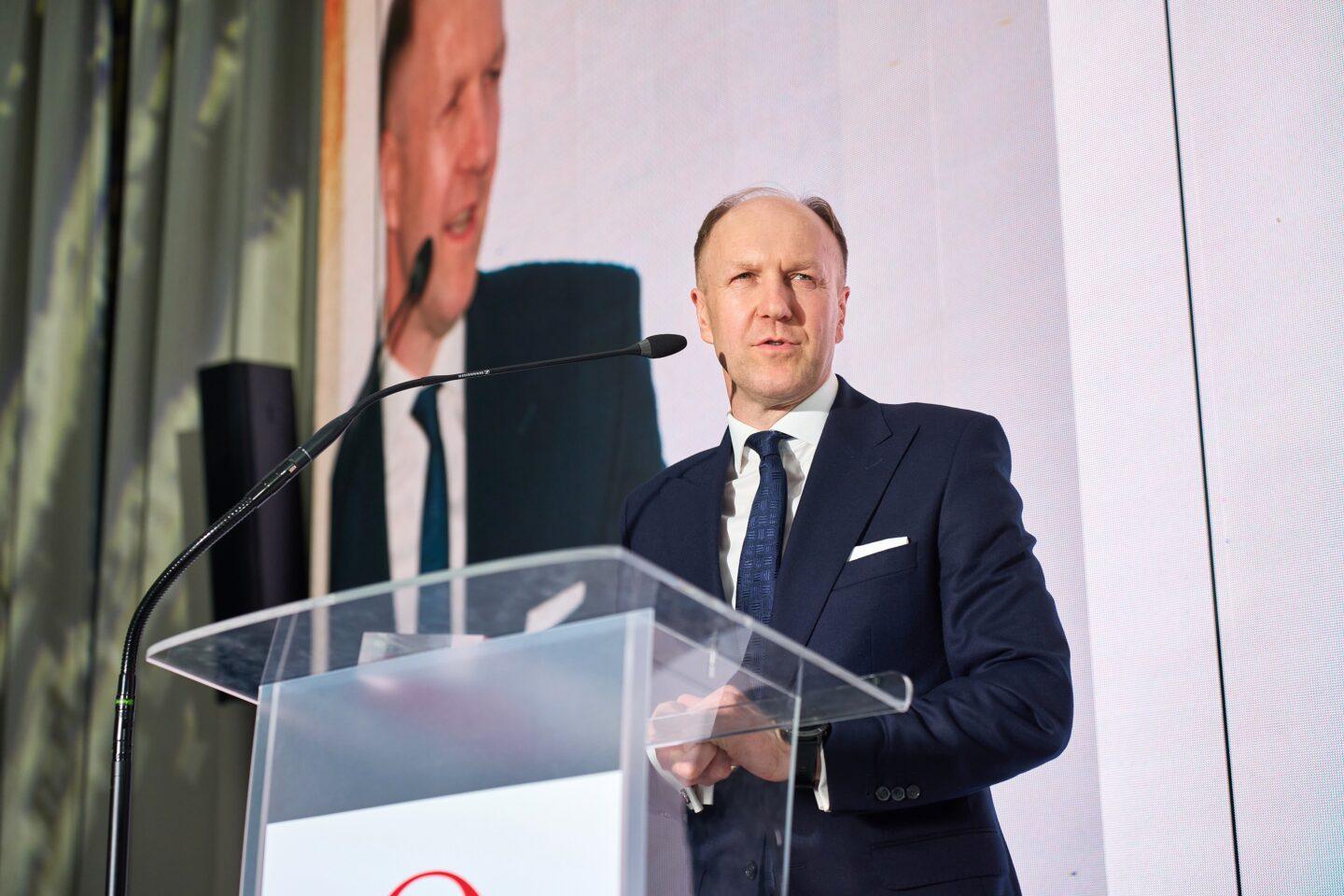
As Sylwester Janik, managing partner at Cogito Capital Partners, noted at the signing of the financing agreements, FTP’s participation is significant both for the fund itself and for the wider market.
“FTP partly closes the capital gap in Poland’s growth capital segment. For us, it means a greater ability to attract capital from international investors and a higher-than-planned capitalization of the current fund. As a result, we can increase the number of investments in local companies at Series B–D stages, while the ecosystem captures a larger share of the value created by the technology sector at the growth stage,” Mr. Janik said.
Future Tech Poland has committed EUR 30m (approx. PLN 130m) to Cogito Fund II. The fund focuses on investing in technology companies at the scale-up stage, providing financing primarily in Series B rounds and beyond. Its aim is to help companies expand their operations and support their international growth, including entry into the US market.
Expert's perspective
Where capital is still lacking
Data from PFR Ventures for 2025 illustrates the point well: of 183 VC rounds, only seven were at the growth stage. This is not a temporary anomaly, but a structural feature of a market that for years has developed primarily in the seed and early-stage segments. The growth segment – covering rounds that finance scaling, technology development and international expansion – remains clearly underrepresented, particularly in terms of the availability of larger tickets and investors capable of leading them.
It is at this stage that the future of a technology company is decided: whether it remains a local champion or becomes a global player – and with what capital it makes that leap. Scaling technology, advancing product development and entering new markets require significantly greater outlays, which the domestic market is often still unable to provide at sufficient scale. As a result, companies more frequently turn to foreign investors once they reach a phase of rapid growth.
Against this backdrop, initiatives such as Future Tech Poland and growth capital funds, including Cogito Capital, represent an important step towards the market’s further maturation. The involvement of institutions such as Bank Gospodarstwa Krajowego (BGK) and the European Investment Fund (EIF) increases the availability of capital at later stages and strengthens the local investment ecosystem. At the same time, it supports the development of teams capable of leading larger rounds and backing companies in their international expansion. Over the longer term, this direction should translate into a greater number of Polish technology companies being developed and scaled with a meaningful contribution from local capital.


The capital gap in Europe and Poland
According to Sylwester Janik, the importance of Future Tech Poland (FTP) goes beyond individual transactions. The program addresses a gap that, in other European countries, is filled by dedicated schemes and public institutions.
“In the United Kingdom, investment programs are run by the British Business Bank; in Germany, by the German Future Fund; and in France, by the Tibi Plan. Poland now has a comparable program – FTP. It is much needed, because Europe still lacks growth capital funds,” the investor says.
Internal analysis by Cogito Capital shows that, between 2020 and 2024, most growth capital rounds above EUR 200m (approx. PLN 860m) on the continent were led by US funds. At the same time, their presence has proved more closely tied to economic cycles than to any long-term commitment to the European market. This was evident in the surge of US funds entering Europe in 2020–21, followed by an equally sharp withdrawal in 2022–23.
As a result, with the downturn in market conditions, the availability of capital in Europe for companies at the expansion stage has declined markedly.
“In Poland, we see a clear capital gap in growth-stage investing, stemming both from the number and the size of active funds,” Mr. Janik adds.
Against this backdrop, Cogito operates a model that differs from many funds which back companies from the seed stage and increase their financial exposure as those companies grow. Instead, the fund focuses on later stages of development, investing in Series B–E rounds and targeting companies on the cusp of global expansion.
“We support businesses transitioning from domestic or regional to global markets. Lack of capital is a barrier to growth – without it, many companies from Poland and Europe relocate their operational centers and intellectual property to the United States, where access to funding is greater,” Mr. Janik concludes.
Good to know
The future of Polish VC hinges on deeper growth capital
Early-stage deals continue to dominate Poland’s venture capital (VC) market, with a clear preponderance of seed and Series A rounds.
According to the report “Transactions on the Polish VC Market 2025” prepared by PFR Ventures and Inovo.vc, just seven Polish companies secured Series B funding last year – typically reserved for businesses at a more advanced stage of technological and commercial development. There were also two transactions each in Series C and combined C/E rounds. The analysts introduced an additional “growth” category (a bespoke classification alongside Series A–E), identifying a further nine transactions.
Commenting on the findings, Luiza Nowacka, investment manager at Vinci, noted that “the development of Poland’s VC market will depend on deepening the pool of growth capital – through larger and more frequent follow-on rounds—strengthening the private LP base, and improving exit pathways (M&A, secondary transactions, and IPO readiness).”
Second closing and a growing fund size
Future Tech Poland (FTP) joined Cogito Fund II as part of its second closing. The first was completed in November 2024, when the fund raised EUR 90m (approx. PLN 390m), mainly from institutional investors.
The fund now has more than EUR 140m (approx. PLN 600m) available for investment – exceeding its initial target of EUR 125m (approx. PLN 540m) – and fundraising remains ongoing. According to the fund’s representatives, discussions with additional investors are under way.
Cogito Capital emphasizes its international footprint and the experience of its team. The fund operates both in Poland and the United States, with partners who have built their investment expertise across Europe and the US.
“We are most effective in supporting companies at the growth stage, particularly when entering new markets, including the US. We work closely with founders and management teams to refine areas such as product development, sales, finance, and team building and management,” explains Sylwester Janik.
At this stage of business development, Poland has long faced a significant capital gap. As a result, companies often look abroad for funding. Domestic funds, in terms of capitalization, are typically unable to compete with their US or Western European counterparts.
Cogito Capital’s investment model assumes participation in larger funding rounds alongside multiple investors.
“We typically invest around EUR 10m (approx. PLN 43m) in a company at the outset, with a target exposure averaging EUR 15m (approx. PLN 65m). By comparison, average Series B rounds today stand at EUR 30m–50m (approx. PLN 130m–215m), Series C at EUR 75m–100m (approx. PLN 325m–430m), and Series D exceeds EUR 100m (over PLN 430m). The presence of a strong local investor is an important signal of credibility for companies,” Mr. Janik adds.
Expert's perspective
Constant dripping wears away the stone
In Poland, circles around PFR Ventures and BGK are making sustained efforts to gradually reduce this capital gap. Yet funding levels still fall short of the market’s real needs. As the proverb goes, “constant dripping wears away the stone” – not by force, but by persistence. That is why efforts and pressure should not relent, demonstrating that Poland can be effective in this area as well.
As for growth-stage venture capital funds in Poland, their number remains very limited—few enough to count on one hand. This reflects both the capital gap discussed earlier and the fact that the segment has only begun to develop over the past decade.
Among the growth VC funds already helping to build Poland’s international profile are teams
such as Cogito Capital, Warsaw Equity Group, bValue, and Balnord. Nor should one overlook the “young wolves” now gaining momentum – such as Momentum Capital, iif.vc, and Cofounder – as well as teams currently executing investments that may deliver highly attractive returns in the coming years.
Some of these players have already generated above-average investment performance. These are successes worth consistently highlighting – both to international investors and to Polish policymakers.
Selection and investment focus
Cogito Capital takes a long-term approach to investing. The fund often tracks potential portfolio companies for around two years before deciding to commit capital.
Its priority is B2B businesses, particularly those developing AI-based software for large enterprises – across financial services, manufacturing and the broader services sector. A second focus area is robotics and hardware solutions that incorporate artificial intelligence.
A key investment criterion for Cogito Capital is that a company has reached revenues of around EUR 10m or USD 10m (approx. PLN 43m), depending on its market. The fund also requires either an existing presence in global markets or a clear readiness to expand internationally, with a particular emphasis on entering the US market. It also seeks opportunities to partner with “serial entrepreneurs” who are building new ventures following earlier successes.
Portfolio and performance
Cogito Capital has already invested in five companies through Cogito Fund II. These include NoMagic (robotics and AI), Alcatraz (facial recognition), Katana (cloud-based ERP), Preply (education technology), and Finom (banking services for SMEs).
Its predecessor, Cogito Fund I, completed nine investments and one exit (Applica). Further exits are planned over the next two years, while the investment horizon for the current portfolio extends to 2029.
“A substantial share of the capital has already been returned to investors in the first fund, and all institutional investors – as well as the vast majority of private investors – have chosen to commit to Cogito Fund II,” says Sylwester Janik.
Good to know
The first funds under the Future Tech Poland umbrella
Future Tech Poland (FTP) is an investment vehicle established by Bank Gospodarstwa Krajowego (BGK) and the European Investment Fund (EIF). It was created as part of the broader Innovate Poland program, aimed at financing new technologies.
FTP has an allocation of PLN 1.5bn (approx. EUR 350m), which will be deployed into domestic funds investing in technology companies at various stages of growth. The program has a 19-year horizon, by which time exits are expected to be completed and returns assessed.
On March 31st 2026, agreements were signed with the first three funds: the growth fund Cogito Fund II and the venture capital funds Expeditions Fund II and Balnord Fund I.
“Poland’s venture and growth capital ecosystem needs players with strong capabilities, experience and – above all – adequate financial firepower. Through Future Tech Poland, we are creating conditions in which domestic capital can effectively support Polish technology companies. This is particularly important at a time when local funds need the capacity to finance increasingly larger rounds, especially at later stages of development. We expect well-managed investments, as transparency and efficient company growth processes are key for us. We anticipate making further investment decisions this year. The full allocation of PLN 1.5bn (approx. EUR 350m) will be committed to funds by the end of next year. We also expect Future Tech Poland investments to mobilize private capital and generate scale effects,” said Jarosław Dąbrowski, member of the management board of BGK.
Risk in investing and market needs
As Sylwester Janik points out, growth capital investments still carry risk, although their profile differs from that of seed or early-stage rounds. Statistically, one in 10–15 companies drops out of the market.
Even so, Cogito Capital is targeting an ambitious outcome – a net threefold return for its investors.
Further development of Poland’s growth capital market will depend mainly on increasing the supply of capital.
“We need more investors, particularly institutional ones, to meaningfully finance not only Series B rounds, but also Series C and D. Capabilities are equally important – both on the side of fund teams and of portfolio companies. For companies operating in Poland, the inflow of talent with experience in executing international expansion and managing rapidly scaling operations is especially critical,” Mr. Janik concludes.


Key Takeaways
- Developing the growth capital market in Poland requires an increase in the supply of capital, particularly from institutional investors, as well as the development of capabilities within both funds and portfolio companies. Initiatives such as FTP, alongside the activities of later-stage-focused funds such as Cogito Capital, support the creation of conditions for financing larger rounds and enabling international expansion. Over the longer term, this may translate into a greater number of Polish technology companies being developed and scaled with significant involvement from domestic capital.
- The Future Tech Poland program represents an important step towards narrowing the growth capital gap in Poland. Through the involvement of institutions such as the Bank Gospodarstwa Krajowego and the European Investment Fund, access to financing for companies at later stages of development is increasing, as are opportunities for funds to raise international capital. As a result, the potential for investment in Series B rounds and beyond is rising, along with the share of the local ecosystem in the value created by technology companies.
- Poland’s venture capital market remains unevenly developed, with early-stage investments dominating while the growth capital segment is clearly underrepresented in both the number of transactions and the volume of available funding. This shortage of scale-up capital means that companies often turn to foreign financing, while in periods of weaker market conditions access to such capital becomes more constrained. The gap is structural in nature and limits companies’ ability to expand globally with meaningful participation from local investors.