

This article is a part of Poland Unpacked. Weekly intelligence for decision-makers
Yet both sides of the crypto divide agree on one point: the sector needed regulation yesterday.
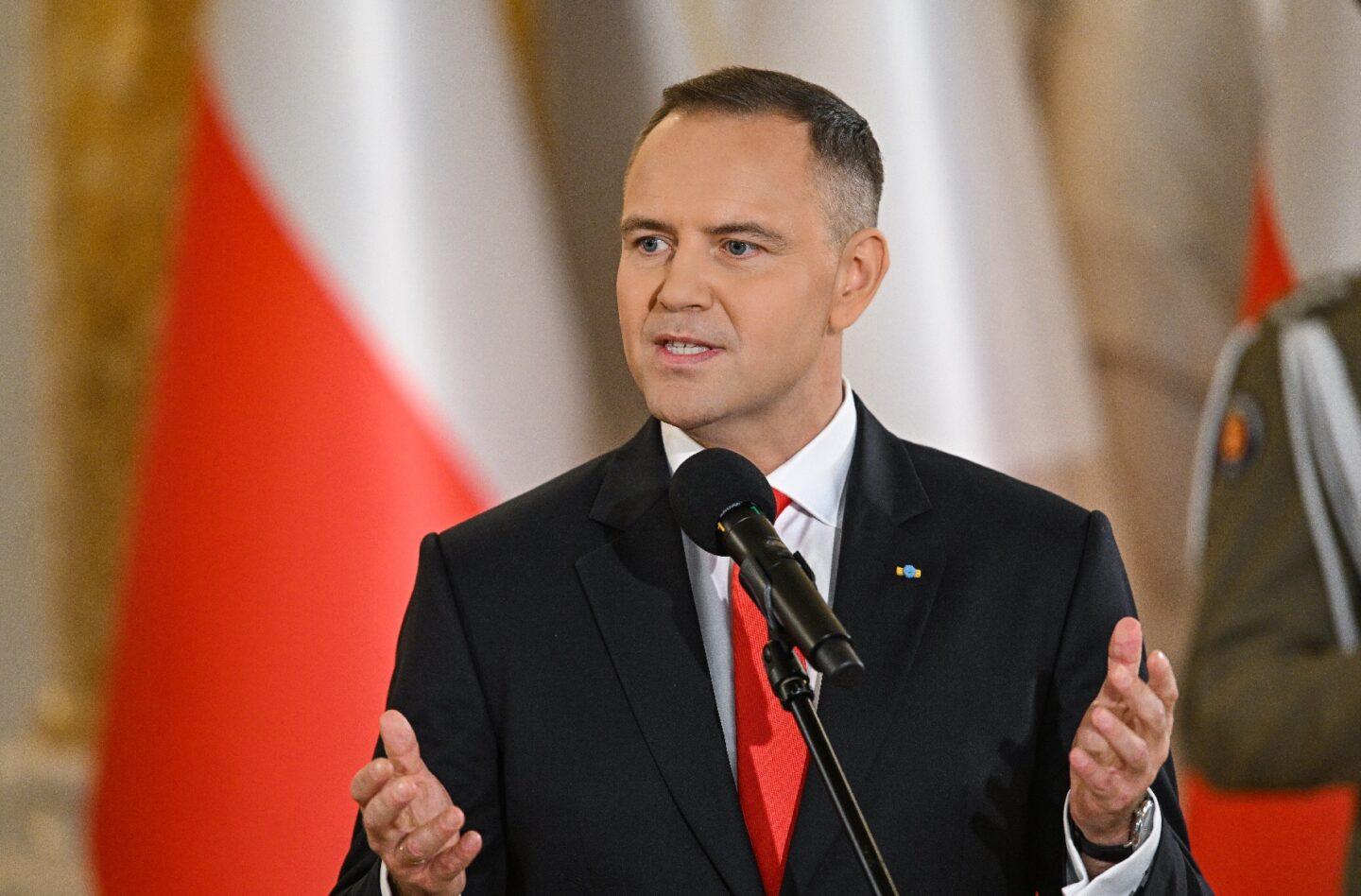
According to the Chancellery of the President, Nawrocki refused to sign the cryptocurrency market bill because its provisions “posed a real threat to the freedoms and property of Poles, as well as to the stability of the state.”
What exactly were the president’s objections - and how has the industry responded? It is worth starting with the area of rare agreement. The bill was drafted to implement MiCA, the EU’s Markets in Crypto-Assets Regulation, which is already in force. All parties concede that without a proper legal framework, the industry cannot operate. The real dispute lies in how that framework should look.
The cryptocurrency market law: what exactly divided politicians?
Whatever its final shape, the law is - above all - late, our sources agree. To meet the end-June deadline, industry players should already be applying for a CASP (Crypto-Asset Service Provider) licence. Without it, their operations will become illegal under EU rules. The vetoed bill could have resolved the looming regulatory gap, but according to the President’s Chancellery it contained several “unacceptable” provisions.
One such provision, the Chancellery argues, was the government’s ability to “shut down websites of crypto-sector companies with a single click.” Deputy Finance Minister Jurand Drop, speaking to XYZ, rejected this characterisation, noting that any such action would follow a proper review and would not be taken lightly. Still, the President’s Office maintained that the language of the bill was too vague and left room for abuse.
The second point of contention was the sheer size of the legislation. By comparison, the Czech Republic, Slovakia and Hungary implemented MiCA without producing hundreds of pages of domestic rules and annexes.
“Overregulation is a guaranteed way to push companies abroad - to the Czech Republic, Lithuania or Malta - instead of creating conditions for them to operate and pay taxes in Poland,” the Chancellery argued.
Jurand Drop, whom we asked about the bill’s scale, takes the opposite view: “The more detail, the better.” Clear, precise provisions, he says, minimise interpretative ambiguity and reduce the risk of discretionary decision-making.
The president’s third objection concerned supervisory fees. “They were set at a level that will prevent small firms and start-ups from growing, while favouring foreign corporations and banks. This is regulatory logic turned upside down - stifling competition and posing a serious threat to innovation,” reads the statement on the President’s website.
“If Poles lose their protection, they will know who to thank”
Politicians from the ruling coalition sharply criticised the president’s veto. Finance and Economy Minister Andrzej Domański wrote on X that the decision runs counter to the interests of consumers and investors in the crypto market.
“Already 20 percent of customers are losing money due to abuses in this sector. We wanted to protect them, but the president chose chaos—and he bears full responsibility,” the minister said.
Foreign Minister Radosław Sikorski echoed this view, noting that “if the bubble bursts and thousands of Poles lose their savings, at least they will know who to thank.”
Deputy Sports and Tourism Minister Piotr Borys added that Poland is now “the only country left without protection against fraudsters.”
Sławomir Mentzen of the Confederation (Konfederacja) party - who had warned from the outset about the consequences of the bill and who is a licensed tax advisor - welcomed the president’s decision.
“President Karol Nawrocki has vetoed a law that would have destroyed the Polish cryptocurrency market! This is a great decision, fully in line with the expectations of the crypto industry. I myself publicly, and during a meeting with the President, called for this harmful bill to be rejected,” Mentzen wrote on X.
Politics in the background: what links the president to the industry?
The wave of criticism following the veto has also brought serious allegations. Prime Minister Donald Tusk suggested possible financial ties between crypto-sector companies and Poland’s right wing.
“To say that the president’s crypto veto is ambiguous is an understatement. Behind it lie big money, scandals and investigations, the mysterious disappearance of the ‘crypto king’, and support for a radical right-wing campaign involving Presidents Duda and Nawrocki. It looks bad,” Tusk wrote.
Government spokesman Adam Szłapka went further, alleging links between the industry and “Russian money laundering.” “Fraudsters now have a free hand, and Putin is rubbing his hands,” he added.
We asked the company zondacrypto to respond to claims that business–politics links may have influenced the president’s decision. During the debate over the veto, some politicians pointed to the company’s sponsorship of CPAC (the Conservative Political Action Conference), attended by right-wing figures. The company says it has sponsored more than 50 events across several markets this year.
“In the current debate around President Nawrocki’s veto, a great deal of misinformation is circulating - which only underscores the need for proper education,” the company told us.
“Every partnership we enter into is guided primarily by the goal of educating the public about cryptocurrencies or discussing crypto-asset regulation, which we have consistently supported for over a decade. For example, some claim that vetoing the bill will allow Russians to make crypto payments. In reality, European rules - governing, among others, our operations in Estonia - explicitly prohibit onboarding customers with Russian passports. This stems directly from the sanctions package imposed on Russia after 2022. We were the first in Poland to block Russian-passport holders from using our exchange, even before the law required it and while other platforms were slow to follow suit,” the company added.
Who is responsible for the chaos?
Artur Bilski - attorney, legal adviser, and expert on the financial sector, blockchain and FinTech -notes that the vetoed bill was already long overdue. But, he adds, “delay cannot be an excuse for pushing through bad legislation.”
“It is not the president’s fault that we are almost a year late in implementing EU regulations. He clearly signalled that he would veto an unfriendly bill, yet the expected amendments were never introduced. Now there is an attempt to shift responsibility for this mess onto the head of state,” Bilski says.
While politicians remain split over the veto, the industry is strikingly unified: blocking the bill was necessary.
“The veto could have been avoided. Had the government not shut itself off from the market and from experts who understand global regulatory trends, securing the president’s signature would likely have been much easier,” argues Przemysław Kral, CEO of zondacrypto.
“The lack of national regulation spells the end of the industry”
According to industry representatives, Poland needs a law that protects business rather than hinders it. They stress that regulation is essential if companies are to operate legally in the country.
“How else can we explain a situation where we—one of the largest cryptocurrency exchanges in Europe - want to pay taxes in Poland but cannot, because we have been pushed abroad and have to operate under an Estonian licence on our home market? It’s absurd,” says Przemysław Kral, CEO of zondacrypto.
Sławomir Zawadzki, co-CEO of Kanga Exchange, adds that the president has kept his promise to “defend the crypto industry,” as pledged during his election campaign.
“The draft law deviated sharply from the approach taken by other European Union countries, which are focusing on simple, clear regulations limited to the essentials. Today’s decision creates a real opportunity for Poland to reclaim its position as a leader in the European cryptocurrency sector. In 2014, we were among the countries with the highest levels of crypto adoption—we can regain that potential,” Zawadzki says.
What happens after June 30?
That is the date when the transition period for crypto businesses operating in Poland comes to an end. From July 1, a license will be mandatory for legal operations.
“Failing to implement legislative solutions before the end of June 2026 would create enormous legal chaos,” warns Artur Bilski. “It would be an absurd situation: providing crypto services without a license would theoretically be illegal under EU rules, yet in Poland, there would be no penalties for violating this prohibition. On top of that, the absence of national legislation could trigger infringement proceedings by the European Commission.”
Przemysław Kral adds that without domestic regulation, many firms may simply seek licenses abroad.
“Polish crypto companies may now have to register in Germany, for example, which effectively removes them from the Polish market - even if they remain managed by Poles. Meanwhile, foreign firms could exploit the unregulated Polish market through passporting, siphoning off both talent and investment,” he says, speaking as president of ZondaCrypto.
After the transition period, in theory, no Polish entities should be legally providing crypto services. Yet there would also be no mechanism to supervise or penalize unlicensed activity.
“There is a flipside,” notes Bilski. “While the lack of regulation complicates enforcement, it also creates opportunities for fraudsters. The absence of national law does not mean MiCA - the EU’s Markets in Crypto-Assets regulation - doesn’t apply. It simply means there are no national procedures granting the right to operate in crypto after the transition period. Without legislation, there is no authority to oversee or sanction unlicensed activity. In practice, licensed operations would be impossible. So, theoretically, Polish entities shouldn’t be offering crypto services - but in reality, there would be no legal framework to stop them.”
Waiting for a compromise
Experts are hoping for a new law, drafted with input from industry representatives. According to Sławomir Zawadzki, the legislation aims to “support innovation and entrepreneurship while protecting users’ interests.”
“We expect a draft law in the coming days that reflects market realities and users’ needs,” Zawadzki says. “We are not opposed to regulation. But it should be sensible, proportionate, and supportive of a sector that could become one of Poland’s economic strengths. We respect concerns from some opposition voices, yet the absence of this specific bill does not threaten cryptocurrency users’ security. No regulation can eliminate investment risk entirely - regardless of the industry. The best protection remains education, common sense, and adherence to basic digital security principles.”
Artur Bilski adds that legislation must strike a balance: ensuring legal certainty and investor protection, while remaining clear and understandable. “Politics should take a back seat here,” he says. “The key word is compromise.” He continues: “Parliament now needs to work with the head of state. We cannot ignore reality; we must adapt to it. The president has recently expressed a willingness to play a more active role in the legislative process. Let’s hope the government swallows this bitter pill and produces a draft law that transcends political divisions. But this will require moving away from conflict and finger-pointing toward taking responsibility and seeing the process through, with genuine cooperation.”


Key Takeaways
- President Karol Nawrocki vetoed the crypto-asset market bill, citing three main “shortcomings.” According to the president, the draft suffered from overregulation and contained inaccuracies, such as provisions allowing the blocking of websites. The third issue concerned supervisory fees, which, he argued, could favor banks and large corporations at the expense of smaller businesses.
- Experts agree on the urgency of new, carefully considered regulation. The industry’s transition period ends next June. Under the EU’s MiCA regulation, market participants will need licenses—a process that can be lengthy. Yet, with no national legislation or supervisory authority in place, obtaining such a license is currently impossible.
- The sector is pinning its hopes on a new law that reflects expert input. Otherwise, Polish crypto firms may relocate to countries with more favorable legal frameworks, harming the domestic economy. The consequences go beyond lost tax revenue: investment potential is also at stake, contingent on a constructive compromise between government and business.