

This article is a part of Poland Unpacked. Weekly intelligence for decision-makers
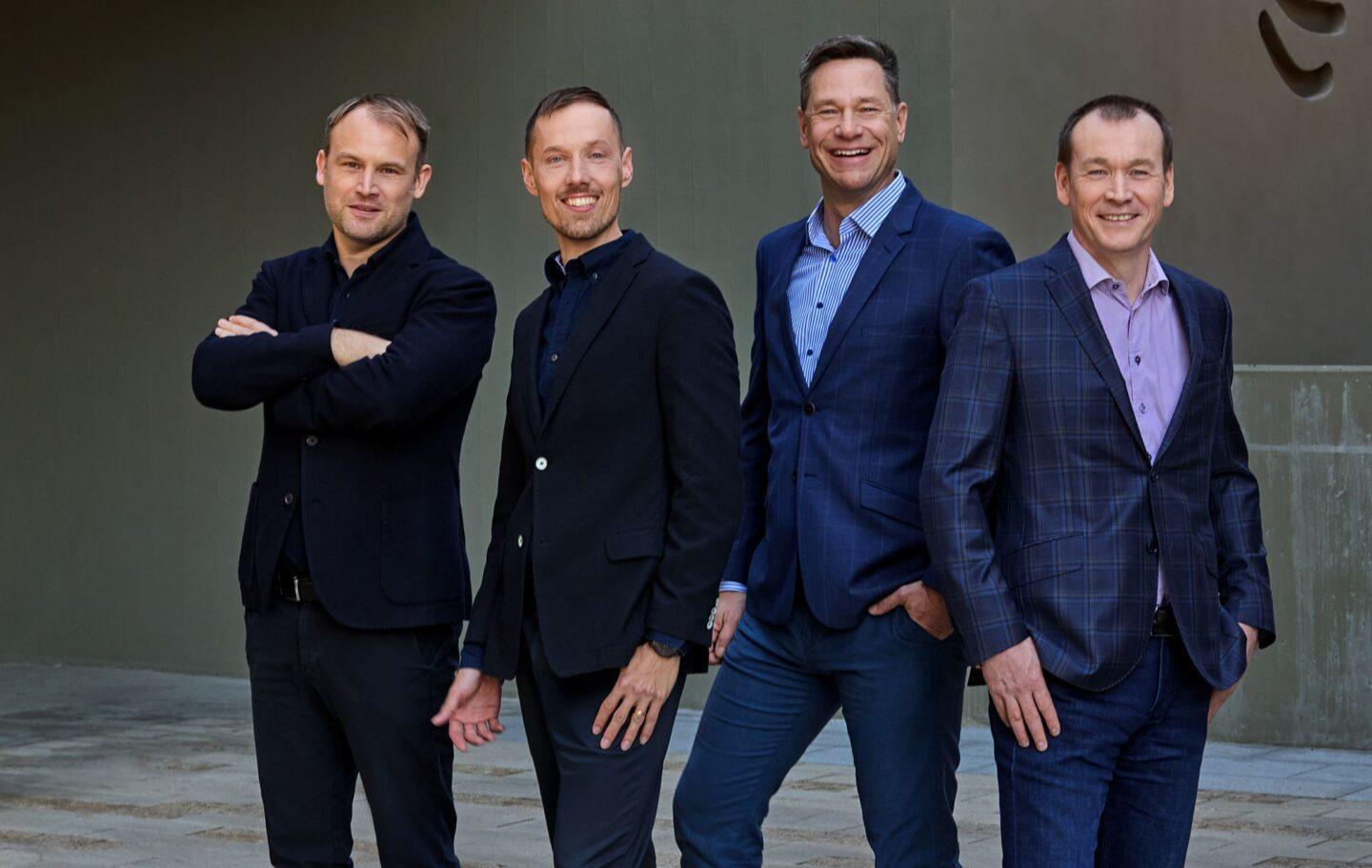
The founders of Pale Fire Capital made their fortunes in technology and are now helping to revive Groupon. They are looking for companies with the potential to become European market leaders. They see plenty of opportunities in Poland, including among family businesses facing succession challenges.
Polish companies are attracting international capital, including from private equity funds. New investors are entering the market, while existing players are looking to expand their presence. Lithuania's INVL Private Equity Fund II, for example, is prepared to invest EUR 150–160 million in Poland, potentially even more. Its managing partner, Deimantė Korsakaitė, recently outlined the fund's plans in an interview with XYZ.
Czech investment group Pale Fire Capital (PFC) is also planning to substantially expand its operations in Poland. It aims to invest EUR 400 million across Central and Eastern Europe (CEE) over the next five years, with Poland regarded as a strategic market. Its portfolio already includes Mubi, an insurance comparison platform, and Fly.pl, a travel comparison website.
"We manage the six partners' own capital, which gives us considerable flexibility. We are not restricted by sector or geography. I would certainly like to invest at least EUR 100 million in high-quality Polish companies, perhaps considerably more. We are looking for the right partners to build European and even global businesses," says Jan Černý, managing partner at Pale Fire Capital.
From Škoda Transportation to working with a Czech billionaire
A major part of PFC's new direction is linked to the arrival of Jan Černý in April 2026. He began his career in 2012 at Škoda Transportation, a manufacturer of trams and other rail vehicles, and joined its board of directors just a few years later. His responsibilities included finance, logistics, building new production facilities, and mergers and acquisitions (M&A).
During this period, Černý met Tomáš Krsek, a billionaire and one of the wealthiest people in Czechia. In 2018, he began helping Krsek manage and grow his fortune, becoming a minority partner in his BHM Group.
"Over eight years, we built one of the largest family offices in Czechia. BHM Group manages more than USD 1 billion in assets, comprising 30 investments across 20 countries. These are mainly private equity and real estate projects, including some in Poland," says Černý.
He helped expand two Polish medical equipment manufacturers, Famed Żywiec and Alvo Medical, across Europe. BHM Group subsequently brought both companies into its Reinsberg group. Černý also acquired and managed a portfolio of 10 shopping centers in Poland.
"I'm a great admirer of the Polish entrepreneurial spirit and impressed by the pace of the market's development. I used to visit Poland at least once a month, and I intend to continue doing so. I firmly believe that relationships must be built in person, on the ground. You cannot really get to know someone or understand their challenges without spending time with them," says Černý.
Expert's perspective
Why Czech investment funds are flocking to Poland
The challenge is finding enough assets that can be acquired at attractive prices and offer growth potential. Poland's market size and the diversity of investment opportunities make it a natural destination for regional expansion, while also allowing funds to diversify their portfolios.
The opportunities span a broad range of assets, from industrial companies and family businesses to logistics, commercial real estate and infrastructure.
An important advantage is the economic similarity between the two countries. Czech funds can draw on their extensive experience in domestic industrial companies, as Jet Investment has done, to support the development of acquired businesses and build larger regional corporate groups. In private equity, this creates opportunities for industry consolidation and improvements in operational efficiency.
In real estate, expansion makes it possible to build larger, geographically diversified portfolios. For example, our group's real estate fund, Jet Industrial Lease, invests in Czechia, Slovakia, Poland, Austria and Germany. Polish projects already account for more than half its portfolio.
But the size of the Polish market alone does not guarantee success. Growing competition for attractive assets requires pricing discipline, realistic assessments of growth potential and a permanent presence in the market. Ultimately, the investors who succeed will be those capable not only of deploying capital effectively but also of increasing the value of the businesses they acquire.


Pale Fire Capital instead of his own fund
After eight years at BHM Group, Černý wanted to become independent. He decided to establish his own private equity fund, backed by several major Czech investors, with the aim of raising several billion Czech crowns (equivalent to several hundred million PLN) for long-term investments.
But at their first meeting, PFC's founders offered him the entire amount. They also invited him to join the group as a shareholder and partner.
"I wanted to pursue my own independent path and move much faster than my previous role allowed. As part of my discussions with potential investors, I spent a weekend with Dušan Šenkypl, Jan Barta and David Holy so we could discuss my investment thesis without distractions. We reached an agreement within just a few hours," Černý recalls.
The discussions continued, and they eventually concluded that joining forces within PFC would make far more sense. Each partner brings unique experience and a different set of skills.
"What unites us is a lack of oversized egos, a relentless focus on results and an ambition to create European champions from our region," Černý emphasizes.
Good to know
Czech billionaires have their eyes on Poland
Poland has long attracted Czech investors, including some of the country's wealthiest individuals. Their investments span a wide range of assets.
Akipia Group, owned by Michal Strnad, who recently became the richest Czech, has joined the Roma Tower skyscraper project in Warsaw. Construction is expected to cost PLN 840 million excluding VAT.
Another investor in Polish real estate is Trigea, one of the three largest Czech property funds. Real estate is also among the sectors targeted in Poland by Jet Investment, backed by Igor Fait.
Penta Investments has been active in Poland for many years. It previously owned Żabka and still holds investments including the Empik group.
Another company well known in Poland, AAA Auto, was acquired almost a year ago by a group controlled by Daniel Křetínský. Meanwhile, the holding company of another Czech multibillionaire, Karel Komárek, has acquired businesses including Clearcode and Avenga.
PPF Group's investment in InPost is another significant example of Czech capital in Poland.
Leading figures in the Czech technology sector
Dušan Šenkypl, David Holy and Jan Barta are Czech entrepreneurs whose fortunes are measured in billions of Czech crowns. Holy was included in Forbes' list of the 100 richest Czechs in 2021.
The three have achieved considerable success in technology. Among their ventures was ePojisteni.cz, Czechia's largest insurance comparison platform. Its owner, NetBrokers Holding, was acquired by Bauer Media Group between 2016 and 2018 for approximately CZK 1 billion.
Dušan Šenkypl and Jan Barta founded Pale Fire Capital in 2017. Today, the group manages assets worth EUR 2 billion.
Polish readers may recognize them as the owners of Aukro, the Czech online auction platform sold by Allegro in 2016.
Their investment in Groupon in 2021, however, brought them international recognition. PFC is now the company's largest shareholder, while Dušan Šenkypl is the only Czech executive leading a company listed on the US Nasdaq stock exchange.
Good to know
Make Groupon great again?
Groupon is Pale Fire Capital's largest investment to date. The American discount coupon platform was once valued at more than USD 10 billion. Today, its market capitalization on Nasdaq is below USD 1 billion.
PFC first invested in Groupon in 2021, when the company had already been struggling for several years. As of August 2026, the fund had acquired approximately 25% of its shares for around USD 87.5 million, making it Groupon's largest shareholder.
"Groupon was losing millions of dollars every month. In 2025, it recorded a profit for the first time in a decade and generated USD 50 million in free cash flow. We carried out the transformation with the help of top talent, including people from Czechia and Poland.
"There is still plenty of work to do, particularly when it comes to using artificial intelligence. We believe Groupon has a very bright future, and we are not considering selling our stake anytime soon," says Jan Černý, managing partner at Pale Fire Capital.
The ideal investment? EUR 50 million to start
PFC is looking for established businesses generating EBITDA of at least EUR 4 million (approximately PLN 17 million at current exchange rates). It is interested in equity stakes worth EUR 15–100 million, although transaction values could be even higher when debt is included.
"We prefer a concentrated portfolio. Ideally, we invest around EUR 50 million initially and then provide additional funding for potential acquisitions. Our minimum is roughly EUR 20 million, because a smaller transaction requires just as much time and effort. We would rather focus on larger deals," explains Černý.
The fund is open to co-investments. It invested in both of its Polish portfolio companies, Mubi and Fly.pl, alongside Posella, an investment vehicle founded by Jacek Olechowski.
The entrepreneur and investor has played a role in the success of companies including Rankomat, Group One and MJM Holdings.
"We are not looking for co-investors because our budget is limited. We have the money, and it is our own. We are looking for long-term partners who understand the local market and have industry expertise. People who can help us unlock a company's full potential or provide access to deals that would otherwise be beyond our reach," Černý explains.
Expert's perspective
Poland needs more investors like this
This is still something the Polish market lacks. PFC can therefore bring value that goes well beyond capital alone.
Its expansion in Poland, alongside other investors from the region, offers further evidence that Poland is now regarded as an attractive investment destination, despite geopolitical tensions and risks to public finances.
Searching for companies with USD 1 billion potential
PFC's ambition is to build companies worth USD 1 billion. In the technology sector, businesses reaching that valuation are commonly called unicorns. The term originated in the startup world but is increasingly being applied to established, highly profitable companies such as Allegro and InPost.
"We see considerable potential in Poland to build companies of this scale. Poland has four times as many unicorns as Czechia. This reflects not only the size of the market but also the mindset of entrepreneurs and the quality of talent," says Černý.
He emphasizes that Poland and Czechia are close not only geographically but also culturally, unlike markets such as the United States.
Czech investors have been active in Poland for years, including Penta Investments, which is among the shareholders of the Empik group.
"The pace of growth in the Polish economy is impressive, and we expect it to remain higher than in other countries in the region. That gives us enormous opportunities.
"Moreover, because Poland has such a large domestic market, many Polish companies expand internationally later than their competitors from Czechia, Slovakia or Bulgaria.
"We have the knowledge and experience to select the right new markets and expand internationally without enormous investments. We can put that expertise to work," says Černý.
A focus on family businesses
PFC would like to complete one or two transactions in Poland over the next 12 months. However, Černý stresses that the fund is under no pressure to meet a particular deadline.
"We are not in the business of buying companies cheaply. We are looking for quality people and businesses, and we are prepared to pay a fair price for them.
"In Poland, we are currently exploring contacts, opportunities and ideas. We are talking to most of the leading advisers, as well as several families," says Černý.
He regards business succession as a megatrend across Central and Eastern Europe. For many founders, he notes, passing their companies on to the next generation or to new owners has become an urgent issue.
"In Czechia and Slovakia, we are talking to more than a dozen families. Most approached us themselves because we do not have a reputation as financial sharks.
"We never claim to be the best option. That depends on many factors. But we are always transparent. We want to build value together over the long term, and that requires openness to new ideas and approaches.
"You cannot simply keep doing what you have done for the past 20 years. What took a company from point A to point B will not necessarily get it from point B to point C," Černý argues.
A strategic partner for 10 or 15 years – or longer
One of the main differences between PFC and traditional private equity funds is its investment horizon.
Conventional funds generally operate in closed, ten-year cycles. The pressure to return capital to investors can sometimes encourage them to sell companies prematurely, among other consequences.
"If you have an average of five years to develop and sell a business, you cannot make many genuinely long-term investments.
"We make decisions that will benefit companies over the long term. We try to think like owners building businesses for future generations.
"We do not face pressure to cut costs and boost EBITDA simply because we have to sell the company in three years. We want to remain involved for 10 years, 15 years or even longer," says Černý.
PFC also intends to distinguish itself in a competitive market through its approach to working with fellow shareholders and management teams.
Rather than merely appointing executives, offering occasional assistance and evaluating their performance through monthly reports, the fund wants to take a more active strategic role.
"That is not our approach. We do not want to run companies – that is management's job – but we do want to be good strategic partners.
"We have built major businesses from scratch ourselves, so we understand exactly what it takes. Business does not always move forward in a straight line; it goes through cycles.
"We are prepared for both good times and bad. That makes us better partners than people whose experience is limited entirely to finance," Černý argues.
Expert's perspective
Investment opportunities are becoming harder to find in Czechia
Attractive investment opportunities are becoming increasingly difficult to find in the Czech market, as many of the most obvious opportunities have already been taken.
Poland continues to benefit from substantial investment activity and greater flexibility in construction and property development projects.
Polish entrepreneurs have demonstrated that they can build strong companies with ambitions extending beyond their domestic market. For investors looking at partnerships lasting five to seven years, this creates opportunities to build lasting value.
It is not simply about providing capital. Strategic support, international experience and access to networks can also help companies enter new markets and realize their full potential.
This approach allows investors to build relationships with entrepreneurs around long-term development rather than merely executing a predetermined exit strategy.
An example of global success
Černý points to PFC's investment in Rouvy as an example of a successful long-term partnership.
In 2021, PFC acquired a 60% stake in the Czech company, which had been founded by two brothers. Over the following five years, they increased revenue tenfold and built the world's second-largest provider of technology for indoor cycling.
The platform now has more than 300,000 paying users.
"We invested heavily in product development and later acquired competitors in Spain and Australia.
"The Australian company was loss-making, but it held an exclusive global Ironman license, which helped us become popular among triathletes," says Černý.
A landmark transaction followed in 2026. Zwift, the global market leader valued at USD 1 billion in a 2020 funding round, acquired Rouvy.
The Samek brothers and PFC became significant shareholders in the combined business.
"They were the ones who built the company, and they deserve the credit.
"When Eric Min, Zwift's co-founder, approached us with an offer for Rouvy, Jan Barta told the team, half-jokingly, 'We'll talk when Eric flies over to see us for the fourth time.'
"When he did, he convinced us to join forces. We are now among the largest shareholders, alongside global investment firms including KKR and Permira.
"We want to build a company worth several billion dollars and potentially list it on Nasdaq," says Černý.
Building European champions in Poland and Czechia
PFC intends to present the Rouvy story to Polish entrepreneurs as an example of what a successful partnership with the fund could achieve.
Its priority, however, is not to merge companies from the region with global competitors, but to build strong local businesses capable of competing across Europe.
The aim is to keep capital reinvested in the region, foster innovation and create jobs.
"Strong companies benefit society, provide independence and increase resilience to adverse developments. The vision of building European champions in countries such as Poland and Czechia is what drives us," says Černý.
He acknowledges that there is no single proven route to achieving this ambition. Nor is it simply a question of money.
"I believe there is enough capital in our market. What is sometimes missing is ambition and the conviction that success is possible.
"I have been living in the United States for some time, and my partners have built companies there. The mindset of entrepreneurs in Silicon Valley is completely different from that in Prague, Bratislava or Warsaw.
"We want to bring that ambition to aim high to our region, and provide companies with everything they need to achieve it," Černý concludes.
Expert's perspective
Why Poland appeals to foreign investors
Another example is Jet Investment, which recently sold one of its flagship Polish investments, Rockfin, a supplier of equipment for the energy industry.
Czech venture capital (VC) funds investing in early-stage companies are also active in Poland.
It is hardly surprising that Poland, a large and developed market by regional standards, continues to attract Czech funds.
Macroeconomic indicators place Poland among the fastest-growing economies in the European Union. Since joining the EU, it has developed into a mature market regarded as predictable and safe by foreign investors.
The war in Ukraine has not triggered an exodus of foreign capital. Investors do not regard Poland's position as a frontline state as a significant obstacle to investing in Polish companies.
Private equity (PE) funds seeking to build regional champions need a presence in Poland, the largest and most central market in Central and Eastern Europe.
Poland's investment spending on defense and infrastructure, supported by EU funds, is also driving economic growth.
New technology companies are springing up across Poland, benefiting from increasingly good access to funding from business angels and VC funds.
As a result, more companies reach a stage of maturity after several years that makes them attractive acquisition targets for private equity investors.
Meanwhile, a wave of ownership succession is sweeping through traditional businesses founded around the turn of the 21st century.
Many owners are therefore deciding either to hand their companies over to family members or sell them to professional investors.


Key Takeaways
- Reviving Groupon has become a calling card for established Czech entrepreneurs. Pale Fire Capital, founded in 2017, is backed by entrepreneurs including Dušan Šenkypl, David Holy and Jan Barta, whose fortunes are measured in billions of Czech crowns. Their ventures include ePojisteni.cz, Czechia's largest insurance comparison platform. In Poland, they may be best known as the owners of Aukro, the online auction platform previously owned by Allegro. Their investment in Groupon, however, brought them international recognition. For several years, PFC has been rebuilding the position of the former technology giant listed on the US stock market.
- A new partner brings a new strategy. Jan Černý joined PFC in 2026. A former board member of Škoda Transportation and business partner of Czech billionaire Tomáš Krsek, he helped develop BHM Group, which also invests in Poland. Černý initially planned to establish his own long-term investment fund worth several billion Czech crowns. Instead, PFC's founders persuaded him to join forces. Their shared strategy envisages investing EUR 400 million over five years, with Poland a strategic priority.
- Ambitious investment plans for Poland. PFC is looking for established businesses generating EBITDA of at least EUR 4 million. It is prepared to invest EUR 15–100 million, ideally starting with around EUR 50 million. The fund is open to co-investments with partners who understand the local market, as demonstrated by its investments in Mubi and Fly.pl alongside Posella. PFC wants to build companies worth USD 1 billion that can become market leaders in Europe or even globally. It sees numerous candidates in Poland and hopes to complete one or two transactions over the next 12 months.