

This article is a part of Poland Unpacked. Weekly intelligence for decision-makers
Will the digital euro push traditional banking onto the defensive, and does Poland’s BLIK have a chance at international expansion? Peter Bosek, CEO of Erste Group, analyzes the technological showdown with Big Tech giants and explains why banks today should grow alongside the economy rather than merely showcase their results at conferences.
Piotr Sobolewski: Erste Group operates in eight markets across Central and Eastern Europe. When you entered Czechia, Slovakia, and Romania two decades ago, you acquired market leaders in those countries. In Poland, you bought the third-largest bank by assets. Is that position sufficient for Erste, or do you also strategically aim to become a leader here?
Peter Bosek, CEO of Erste Group: I would look at this situation somewhat differently. Of course, this transaction is different from the ones we carried out in the past. The key difference is that back then we were acquiring weak institutions undergoing privatization, which we then restructured. We followed that approach until the financial crisis.
Since then, a lot of positive changes have taken place. Thanks, among other things, to interventions by supervisors and central banks, European banks today are very stable and well capitalized. Entering individual markets is now more a matter of strategic decision-making.
Who's who
Peter Bosek
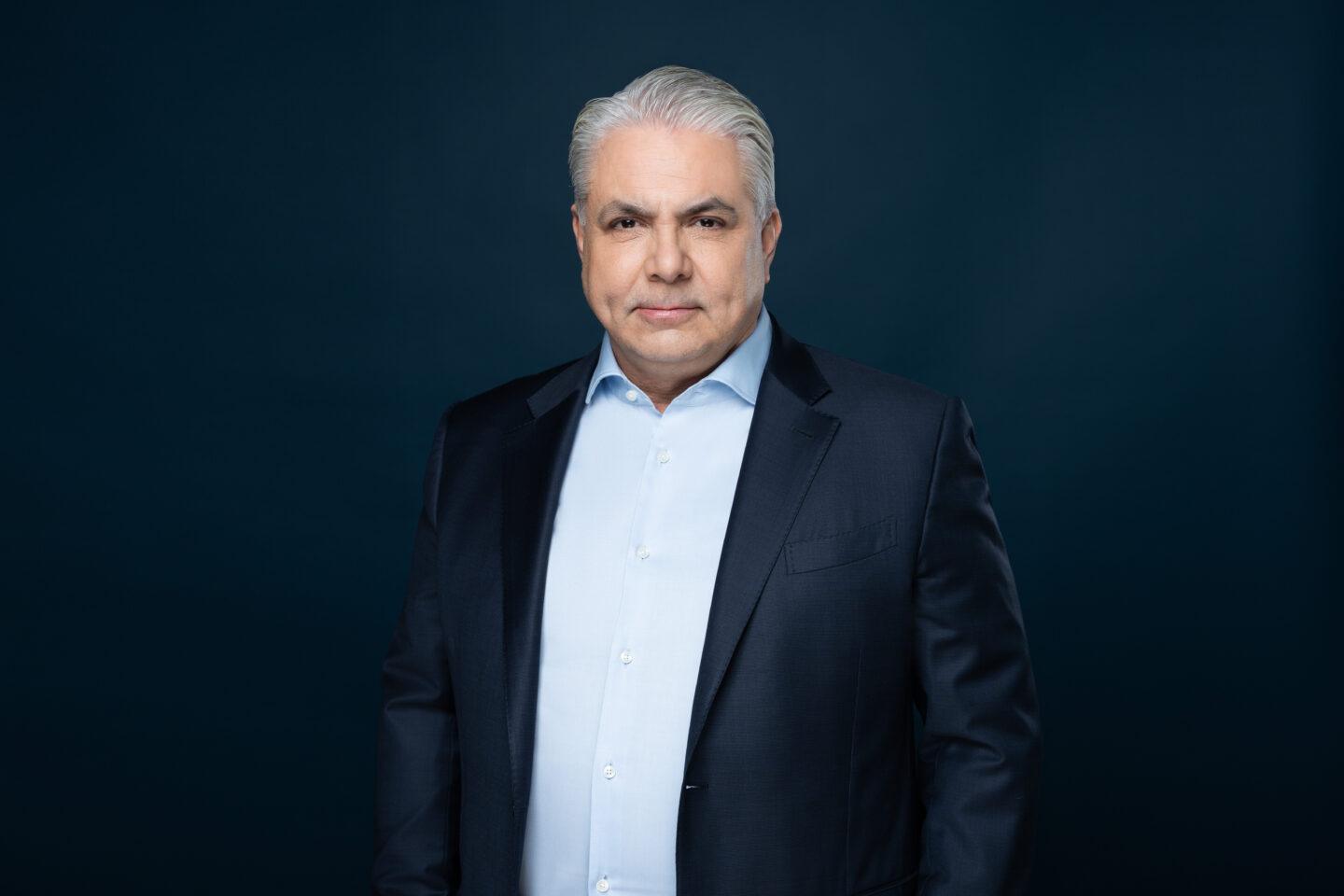
Peter Bosek has been at the helm of Erste Group Bank AG since July 2024. During his tenure, he oversaw the acquisition of a 49% stake in Santander Bank Polska. Following the completion of the transaction, he became Chairman of the Supervisory Board of the Polish bank.
Bosek has been with the Austrian group since 1996. He has primarily been responsible for retail banking. In 2021, he left the group for three years to take up the position of CEO of Estonia’s Luminor Bank, the market leader there in terms of assets.
We have long wanted to be present in Poland, and an excellent opportunity presented itself. We aimed for this to happen through the acquisition of a significant player – namely, one of the top three institutions in the sector.
Of course, we had no influence over the dynamics of how individual banks come up for sale. Some assets are for sale, others are not. Today, however, we are the main shareholder of the best and largest privately owned bank in Poland. This is a major opportunity.
“Customers evaluate banks every day, not once every few years”
What will be the measure of success for your business in Poland? Climbing to the number one position in terms of assets, loans, and deposits? Or becoming the most profitable player on the market?
Of course, profitability matters to us, because it is something that also makes our shareholders happy – especially as it is a source of capital for future growth. But even more important to us are satisfied customers. For corporate clients, for example, it is crucial whether we have sufficient capital to finance them and whether we respond to their real needs.
One of the challenges will be building a recognizable brand. Every bank essentially talks about supporting the economy, so it is difficult to stand out on that basis alone. In Austria, you differentiate yourselves, among other things, as a savings bank. In Poland, that role has been taken by ING, which was the first – and for a long time the only – bank in Poland to advertise its deposits and savings accounts rather than loans and credit. Will you take its place?
Let’s be honest: products offered by individual banks are very similar. Our businesses operate on comparable principles, because in practice loans and deposits have not changed for 200 years.
What really matters is how you deliver services to your customers, and one of the key factors is NPS (Net Promoter Score). In a way, this is the difference between politics and banking. Our customers evaluate us every day. It is not enough to convince them once every four or five years. At the same time, we are not an organization that looks at competitors and constantly compares itself to them.
To gain trust, you need time and consistency
But perhaps you should still be watching it? If you don’t, you could quickly be overtaken. ING is now only about PLN 2 billion (EUR 0.46 billion) behind Erste Bank Polska in terms of assets. That is very little. And in banking, scale matters a great deal.
As an entire group, we have a balance sheet of EUR 450 billion, while Erste Bank Polska is among the top three in terms of market valuation. As for assets, it should be remembered that part of our portfolio was transferred to Santander Consumer Bank, so we are not comparing fully like-for-like data.
What matters most to me is the strength and competitiveness of our offering. If we deliver attractive solutions – for example, in wealth management (asset management for clients) – asset growth follows naturally. Across the Erste Group, we currently manage more than EUR 100 billion in assets, and this figure is steadily increasing.
You are not yet a particularly recognizable brand in Poland. How do you intend to earn customers’ trust in a new market?
We need time for that. As you can see from the many billboards across the country and on television, we are working intensively on building our brand. What matters to customers is consistency and transparency.
When a client takes out their first loan, it is important to guide them through the process in a clear and transparent way – show them where they are in it, what they have already completed, and what still lies ahead. Customers want to feel seen. These are not solutions that you implement once and then forget about.
Erste implements innovations originating, among others, in Czechia and Romania
Innovation also extends to the app. Polish banks are highly modern, and bankers like to emphasize this. Against this backdrop, will Erste in Poland remain one of the innovation leaders, or should we rather expect solutions to be exported from Austria?
We have a very good app in Poland, which we have branded with our colors and which we intend to maintain for now. Our latest innovation – a new-generation biometric identity verification system – was developed in Czechia, for example, and is now being rolled out across the entire group. Similarly, George Junior, an app for children, was developed in Romania and is now being introduced in Austria.
I also believe that today innovation in banking is not solely about products, but more about how you communicate with customers and how you track customer behavior. Retail customers primarily expect convenience. When Apple introduced facial recognition, we had to implement it widely in banking as well, because customers wanted similar experiences in their bank as they had when shopping on Amazon or using Facebook.
For corporate and business clients, the quality of advice, the strength of the network, and execution efficiency matter more. The owners of these companies are themselves drivers of innovation. That is why I enjoy working with them so much.
You mentioned Czechia. Will we see Polish services and technologies being exported to other markets where Erste operates? Other banks are already doing so.
I believe there are two areas where this is possible. The first is the BLIK payment system. If an opportunity arises to support the development of this system abroad, we would be very willing to contribute to its further growth.
The second area is the technological potential of society itself. It is no coincidence that many foreign banks locate their IT teams in Poland. This is a huge opportunity, but we are still at the beginning of that journey.
BLIK has the potential to become an international system
Do you believe BLIK can become an international payment system?
It definitely has the potential to become one. It is an excellent solution. However, the key issue will be the digital euro and whether it is introduced. The rollout of the digital euro could significantly involve banks. In turn, this may to some extent affect the pace of international expansion. We will see how this develops.
Is the digital euro a threat to banks?
I would note that the discussion about digital currencies emerged when Facebook, with its 2 million users, announced it would launch Libra. Central banks decided they also had to enter the game. Facebook eventually withdrew from the project, but in Europe the work is still ongoing. In my view, the key issue is what our customers actually want. So far, none of my retail clients has asked me about a digital euro.
One trend is the digital euro, but another is payment sovereignty. Are local systems such as BLIK, Spain’s Bizum, or Italy’s Bancomat a path toward market fragmentation, or toward greater competition and, ultimately, greater convenience for customers?
There are two layers to this debate. First, in Europe there should be the ability to transfer funds between individual countries, and that is clear. Second, for my retail clients it is important to have easy access to their funds, for example through ATM networks and cards.
We can, of course, debate whether a market dominated by two non-European payment organizations is desirable. However, we also know that they can find solutions that ensure customers retain access to their funds – even in crisis situations.
Success in expansion is the result of many factors
Let’s turn to regional expansion. Erste is often presented in Polish banking as a model of entering foreign markets. Polish banks, however, have not managed to replicate this success. PKO BP has only a small bank in Ukraine, and mBank has small businesses in Czechia and Slovakia. What lessons can be drawn from your experience?
I would not dare to comment on the actions of other banks. However, I can say that successful transactions require the right combination of a high-quality asset, a willing seller, and the right timing. In our case, all of these factors aligned.
If Polish banks wanted to expand abroad, is now still a good time? It seems the cards have already been dealt.
Success in this area depends on many factors that need to come together in the right way. From our perspective, as a leader in Central and Eastern European banking, we will certainly welcome competition.
Head of Erste sees need to strengthen Central European representation in EU institutions
And what about Ukraine? Erste tried its hand there, but ultimately withdrew from that market. Now in Ukraine, Polish insurer PZU has acquired the largest life insurer MetLife Ukraine, and our fintech Zen has bought PIN Bank. Does Erste see potential to return to that market?
Ukraine has enormous potential; it is a large country. However, we did in fact withdraw from it long before the outbreak of the war, and we do not plan to re-enter. I do not wake up thinking about which country to enter next. At the moment, we have a great deal to do in Poland.
Beyond the integration of your Polish business, what is Erste Group focusing on today?
First, supporting governments in infrastructure investment. This is crucial for economic development, especially in the context of preparations for when cohesion funds run out. Central Europe is also in a favorable position when it comes to nearshoring and friendshoring. There is no need for every country in the region to have 100% of its own infrastructure; that would be too costly. Countries can cooperate and support one another.
Second, Central Europe needs a stronger voice at the European Union level. When I speak with EU representatives, they usually want to discuss Germany, France, Italy, and Spain, while I prefer to talk about Central Europe. We need to speak more loudly, because today we are too modest. We can achieve much more, because this region deserves it.
Are the days when the region was driven by cheap labor over?
Indeed, the region is gradually moving away from a convergence model based on low-cost exports and foreign investment. This is a positive change for the region’s inhabitants, as rising wages have contributed to improved living standards.
In the coming years, the emphasis will likely shift toward increasing productivity and fostering innovation. The region is well prepared to successfully undergo this transformation.
Erste does not see the need to build a digital brand
Let’s move on to digital brands of large banks. In XYZ we profiled the business model of Openbank, Santander’s digital arm. We previously wrote about Chase from the JP Morgan Group. Examples could be multiplied. Should Erste also have such a digital brand?
No. We already have a bank that is very strong in digital solutions. Why would I compete with myself?
In recent years, many digital banks have emerged that, like Revolut, have built significant scale. What differentiates us from such digital players is that we focus both on retail and corporate banking. As a result, we support the economic development of the countries in which we operate, for example by financing companies during their expansion. Meanwhile, such digital banks focus almost exclusively on retail clients. US-based institutions typically start by gathering deposits in the UK and Germany because it is safe there.
Will Chase and other digital banks be your main competitors in 5–10 years? Or will it be Big Tech?
Ten to fifteen years ago I thought it would be Big Tech that would start taking over parts of the business, especially corporate banking. Amazon or Alibaba know a lot about retailers and could offer them attractive financing. In the end, Amazon never made such a move, and Alibaba did expand its loan book, but it remains not particularly significant. I think what matters now is technology and artificial intelligence.
Customers do not need trendy technologies from banks
Who will be the biggest beneficiary of AI in financial services?
It is difficult to say who that will be. First, there is a constraint related to energy production capacity needed to implement AI. Second, I believe we need to find a smart way to use the technology. We now have AI, but we also have GDPR, and it is our lawyers’ job to find a way to bridge these two worlds. I am convinced that, in the end, customers will benefit, as they will receive better services.
Bank customers do not expect us to implement the latest “shiny” technologies, but rather to provide good and secure services in a convenient way. There are many new opportunities emerging, but we need time to respond to them appropriately.


Key Takeaways
- A shift in the paradigm of success in banking (NPS over scale): Peter Bosek clearly redefines what success means in the Polish market. Instead of the traditional Polish race for asset size (with ING close on its heels), the head of Erste emphasizes business profitability, customer satisfaction (Net Promoter Score), and the tangible support of economic growth.
- CEE as an innovation hub, not a technology recipient: Erste Group’s technology model challenges the assumption that cutting-edge solutions flow only from headquarters in Vienna. Innovations within the group are scaled from developing markets – biometric solutions were developed in Czechia, a children’s app in Romania – and Poland has the potential to become a technology exporter, including through the international expansion of the BLIK payment system.
- A new role for the region in the EU and the end of the “cheap labor” era: The head of Erste Group highlights the geopolitical and economic transformation of Central and Eastern Europe. The region is moving away from convergence driven by low labor costs toward productivity, nearshoring, and joint infrastructure projects, which should translate into a stronger and more vocal representation of CEE interests in Brussels.