

This article is a part of Poland Unpacked. Weekly intelligence for decision-makers
The IT authority that helps shape global technology trends has recognized a Polish provider of a business-process automation platform. Webcon wants to bolster Europe’s technological independence and grow fivefold. It could become the latest billion-zloty business in the Polish investment fund’s portfolio.
More Polish startups are selling software that successfully expands beyond Europe from their earliest years. At the same time, a growing number of mature Polish technology companies are setting their sights higher. They no longer want to be a local alternative to global vendors, but to compete with them on equal terms in their key markets. And they are getting noticed.
Webcon, founded in 2006, is a case in point. In November 2023, it was acquired by MCI Capital, which paid PLN 163 million (EUR 38 million) for a 65% stake, valuing the company at around PLN 250 million (EUR 58 million). The deal accelerated its transformation toward a subscription-based software-as-a-service (SaaS) model and AI-powered functionality. The results are already becoming apparent.
Webcon gets noticed by Gartner
Gartner, widely regarded as an authority in the global IT industry, has included Webcon for the first time among 19 so-called representative vendors in its latest Market Guide for Business Process Automation Tools. It is the only Polish technology provider on the list.
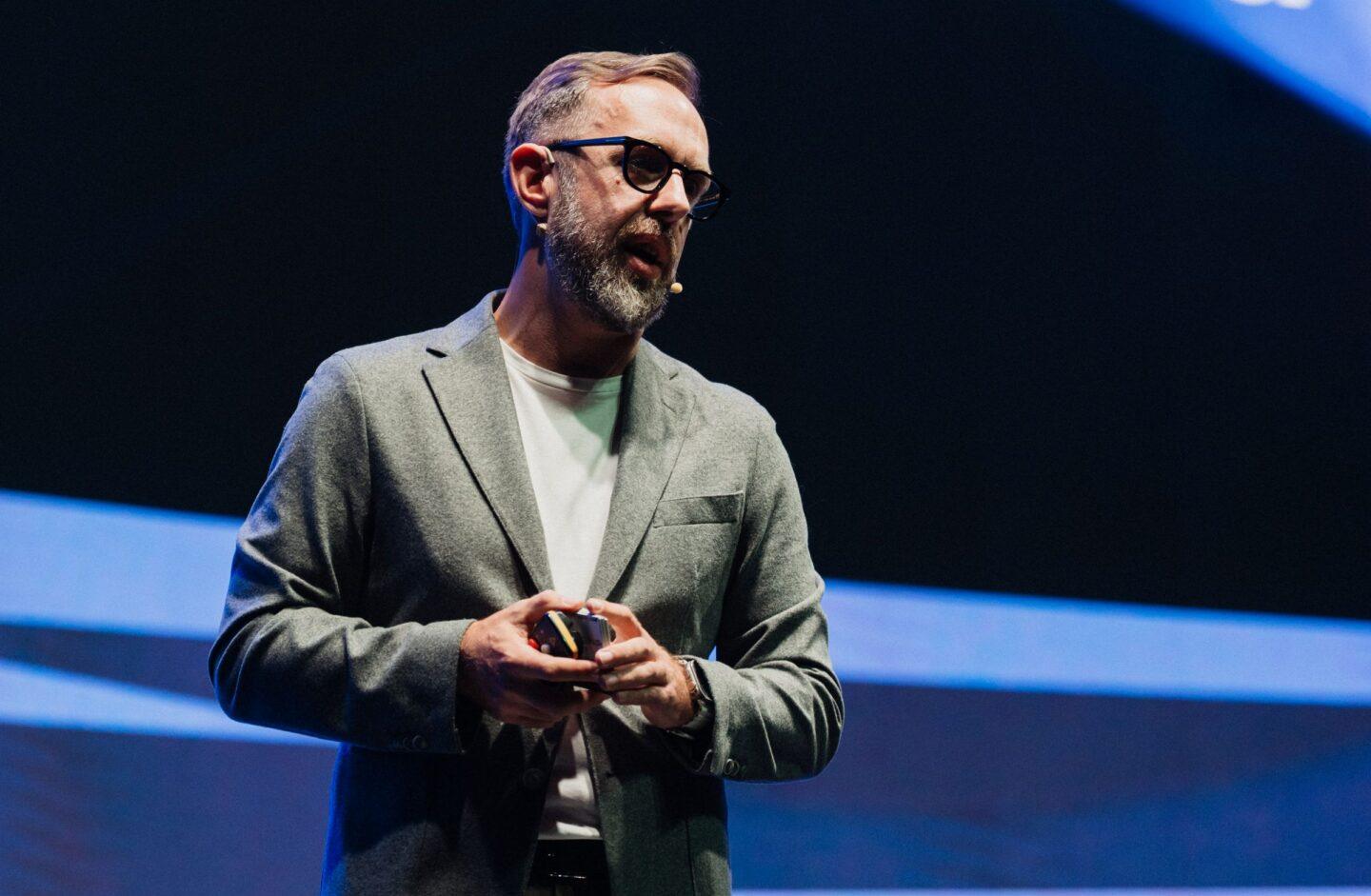
“This is hugely significant for us. It is a signal that the market is now mature enough for the approach we have been advocating for years. Automation cannot stop at a single workflow. It should provide a coherent environment for managing processes, data and change, while also enabling the safe use of AI in day-to-day operations,” says Michał Potoczek, who has been Webcon’s CEO since July 2025.
He emphasizes that these are precisely the kinds of solutions enterprise customers – large corporations – are looking for today. And the Polish company is successfully competing in this segment with the world’s largest technology providers.
Investor's perspective
An investment like few others
Just as important is the fact that the numbers are confirming our thesis. Webcon has now entered a phase of very rapid growth. It is currently growing at a rate of several dozen percent a year while remaining profitable, without burning through capital. That is a rare combination. Most SaaS companies pay for growth with lower profitability.
If Webcon maintains its momentum, it could become one of the best-performing investments in MCI’s history in terms of returns. It is only now hitting its stride and beginning to tap into the markets of Western Europe and North America, yet it already serves more than half of the companies in the WIG20 index as well as global corporations.
Our role is to accelerate that expansion – with capital, a motivated team, experience in scaling businesses and a willingness to pursue acquisitions if the right target emerges.


Part of Europe’s push for technological independence
The company, which employs more than 200 people, already operates across several continents. It has more than 70 implementation partners in different parts of the world. Its low-code platform – which enables applications to be built without advanced IT skills – is used by more than 1,000 companies in around 70 countries. The number of users has already surpassed 400,000.
“What matters to us is that many relationships that began as partnerships in Poland have, over time, expanded into additional markets. That was the case, among others, with Pratt & Whitney Canada, one of the world’s largest manufacturers of aircraft propulsion systems. We already have dozens of similar examples,” says Michał Potoczek.
Webcon wants to play a role in building Europe’s technological sovereignty. The issue is becoming increasingly important as European companies grow more dependent on non-European providers of cloud services, software and AI technology.
“The recent restriction on the distribution of the latest large language models outside the US has only intensified the debate over whether we have any response on the continent to such political decisions – and in which areas Europe should develop its own capabilities and solutions. Business-process automation is certainly one of them, because it directly affects how companies operate: the flow of data, decision-making and the execution of day-to-day operations,” Michał Potoczek explains.
Expert's perspective
Polish technologies can strengthen Europe’s sovereignty
And I am not talking only about cloud computing or defense systems – the sectors considered ‘strategic’. The same dependence applies to everyday software used to manage warehouses, invoices or online stores: tools that underpin the day-to-day work of thousands of businesses.
That is why building European technologies should not be seen as a niche project or confined exclusively to sectors considered critical from a security perspective. It should be a deliberate economic decision made in every industry. Technological independence is, in practice, business independence: the ability to decide how we develop our businesses, set our prices and define our standards rather than adapting to conditions imposed by others.
Polish companies have a real role to play in this process – and a bigger one than we might think. We have highly educated engineers, proven software-development capabilities and a growing number of companies that have demonstrated they can expand internationally.
At cyber_Folks, we are systematically building a group of companies – with PrestaShop, Shoper and Sylius – with the ambition of creating a European alternative to global e-commerce platforms. We are showing other companies from our country that it is possible to build European, and even global, champions with Polish roots.
What makes Polish technology a genuine alternative rather than merely a local substitute is above all its quality and cost competitiveness. It also comes down to being prepared to think about building a European business from the outset, rather than focusing exclusively on the domestic market.
But we need to stop seeing ourselves as a backup supplier – the cheaper option to turn to if something goes wrong with the primary solution. Our goal should be to become the first choice, not the fallback.
From document workflows to end-to-end automation
The idea for Webcon emerged two decades ago, in part because of the limitations of SharePoint. Initially, most customers used its platform to automate document workflows, particularly financial ones. Today, they use it not only for individual processes, but to manage some of the most complex areas of their operations. Kruk is one example, as Piotr Krupa explained in an interview with XYZ.
“Kruk wants to use our platform for end-to-end automation – from acquiring receivables through servicing and debt collection. If one of Europe’s largest debt-management groups can base such a major transformation project on Polish technology, it is difficult to argue that we are limited by scale. With our help, companies can automate dozens or even hundreds of processes involving different teams and systems, without compromising on performance, security or corporate governance,” Webcon’s CEO says.
As AI agents take on a growing role, open standards for integrating AI models and the ability to manage their operation securely are also becoming increasingly important. For companies, this means they can connect models from different providers in a controlled way without having to rebuild their entire process architecture.
“Many companies have already conducted their first experiments with AI. But real value comes from embedding AI directly into the process. When it can draw on the relevant context and data, operate according to established rules and leave a complete audit trail of its actions, that is when it becomes truly useful. Our customers are building precisely these kinds of solutions, whose results can be measured and whose return on investment can be calculated,” Michał Potoczek says.
Customers at different stages of digital maturity
Webcon’s customers are at different stages of digital maturity. Some are only just beginning to organize processes that are still handled manually – sometimes even on paper. They need a single environment in which to standardize those processes, define operating rules, roles and permissions, and gradually digitize additional areas of the business.
“Others are much further along in their transformation. Their technology environments consist of multiple systems that perform specific functions well. But the more systems there are, the harder they become to manage, develop and maintain. Information flows can also become a problem. Instead of moving smoothly through the organization, data and tasks get stuck at the boundaries between individual systems,” Michał Potoczek explains.
Webcon’s platform enables companies to consolidate their technology ecosystems and execute business processes at every stage of their digital transformation.
“The common denominator among all our potential customers today is above all the need for rapid implementation. Low-code technology enhanced with AI capabilities significantly shortens the journey from a business need to a working solution. Business users can quickly validate a concept in the form of a prototype, while IT teams can efficiently turn it into a secure, production-ready application,” the executive says.
Product first, services to stay
For years, Webcon built its business largely around its own implementation teams. But this model makes international expansion more difficult, as it requires the company to build local structures in every market.
“Today, we are a strictly product-focused company, and we base our expansion almost entirely on a global partner ecosystem. Our partners know the local markets, industry specifics and customer needs. At the same time, they know how to use our platform to build specific solutions – from typical back-office functions such as finance and HR processes to core business operations,” says Michał Potoczek.
The new partners include both specialized integrators and software houses such as Billenium, Software Mind and Betacom. In just over a year, the share of recurring revenue from subscriptions has risen from roughly 50% to 70%. Ultimately, over the next few years, it should exceed 90%.
“We will not abandon services entirely – we see them as a professional support service for our partners. Combining their specialized industry expertise with our product knowledge is crucial for the most advanced projects,” Michał Potoczek says.
Growing the company’s ARR (annual recurring revenue) will be supported not only by expanding its partner ecosystem. The Polish platform will soon be available on Microsoft’s marketplace. At the same time, integration is underway with complementary offerings from third-party companies, such as Autenti’s digital-signature solution.
Expert's perspective
Webcon’s strategy is aligned with what the market wants
This year, some software companies have seen their valuations decline. One factor has been concern about the impact of AI agents on licensing models based on the number of end users. Since then, buyers have been scrutinizing the sources of revenue growth even more closely. Is growth driven by the number of employees a customer has, or by the number of processes it digitizes?
Private-equity funds value predictable cash flows and a clear path to an exit. Strategic investors value technology quality, the customer base and potential synergies, including opportunities to cross-sell services and products. For public-market investors, meanwhile, the key is recurring revenue combined with growth and profitability.
Relying on services does not automatically reduce a company’s value. The problem begins when services are the main revenue engine and every additional zloty of growth requires another hour of a consultant’s time. The market today rewards not a ‘product without services’, but a product that services enable rather than replace.
The strategic shift is already paying off
The transformation is already delivering tangible results. Webcon is growing three times faster than it was a year ago.
“The sum of our revenue growth rate and EBITDA margin exceeds 60% - well above the 40% benchmark for SaaS businesses. This year, we are already growing sales at a rate of 50% without ‘burning cash’. I would like our revenue in five years, by 2030, to be five times higher than it was in 2025,” says Michał Potoczek.
If the company’s value grows in line with the expansion of its business, it could become the latest billion-zloty business in MCI Capital’s portfolio. This year, the fund sold the IAI group for more than PLN 1 billion (EUR 233 million). It collected around PLN 470 million (EUR 110 million) net – a more than fourfold return on invested capital – making it the fund’s most profitable investment on record.
Last year, Webcon increased revenue by 27% to PLN 60.4 million (EUR 14.1 million). Adjusted EBITDA was PLN 5.8 million (EUR 1.4 million), compared with a result close to zero a year earlier, despite the transformation of its business model from licenses toward subscriptions.
“Average revenue per customer is steadily increasing as customers expand the scope of their deployments. We are building scale not only by acquiring new customers, but also by growing our business with existing ones,” Michał Potoczek says.
Poland still matters, but the priority is the West
More than half of the companies in the WIG20 index, which comprises the largest domestic companies listed on the Warsaw Stock Exchange, already use Webcon’s platform in Poland. The growth potential in its home market remains substantial. In 2025, the company increased domestic sales from PLN 37.7 million (EUR 8.8 million) to PLN 48.1 million (EUR 11.2 million), a 28% increase, while international sales rose from PLN 9.9 million (EUR 2.3 million) to PLN 12.3 million (EUR 2.9 million), up 24%.
The next goal is for more than half of revenue to come from outside the region by 2030 – from Western Europe, North and South America, and Asia.
“For now, Central Europe accounts for around 75% of our sales. But we are expanding aggressively in the DACH market [German-speaking countries – ed.], as well as the Nordic countries, Benelux and the United Kingdom,” Michał Potoczek says.
An advantage? A low barrier to entry
Webcon operates in a highly competitive market, with numerous global providers offering similar technologies. Moreover, some companies still need to be convinced to start automating their business processes.
“Our low barrier to entry is one of our major strengths. A company with a small IT team can use our platform and AI implementation to be just as effective as organizations with far greater resources. Companies with more than 100 employees can make full use of our technology. At the same time, our customers include global corporations with thousands of users, dozens of locations and hundreds of processes,” Webcon’s CEO says.
M&A among the fund’s options
Webcon’s founders, Radosław Putek and Łukasz Malina, built the company entirely through organic growth. Their partner, MCI Capital, meanwhile, has experience helping portfolio companies pursue acquisitions. So far, however, none has taken place in this case.
The company does not continuously monitor the market, as its priority is developing its own platform. But if an opportunity arises to acquire a company with a complementary product or customer base, it is prepared to consider it.
“We are not basing our growth strategy on M&A [mergers and acquisitions – ed.]. We do not want to make the mistake of other technology companies that carried out numerous such transactions to broaden their offerings and now face serious challenges in making those offerings coherent and integrating them. Webcon is a single-product company. We do not plan to change that,” Michał Potoczek concludes.


Key Takeaways
- Polish technology recognized globally can help strengthen Europe. Gartner has named Webcon – the only Polish company on the list – among 19 providers of business-process automation tools. The company sees the recognition as confirmation of its approach: automation should not stop at a single workflow, but provide a coherent environment for managing processes, data and change. Webcon wants to play a role in building Europe’s technological sovereignty.
- Polish technology recognized globally can help strengthen Europe. Gartner has named Webcon – the only Polish company on the list – among 19 providers of business-process automation tools. The company sees the recognition as confirmation of its approach: automation should not stop at a single workflow, but provide a coherent environment for managing processes, data and change. Webcon wants to play a role in building Europe’s technological sovereignty.
- The transformation is delivering tangible results. For years, Webcon built its business largely around its own implementation teams. But this model makes international expansion more difficult. Today, it is a strictly product-focused company, with recurring subscription fees accounting for the majority of its revenue, and is driving sales growth through a global partner network. In 2025, it generated PLN 60 million (EUR 14 million) in revenue and PLN 6 million (EUR 1.4 million) in adjusted EBITDA. It aims to grow fivefold by 2030. MCI Capital, which acquired the company in 2023 at a valuation of around PLN 250 million (EUR 58 million), could have another billion-zloty business on its hands.