

This article is a part of Poland Unpacked. Weekly intelligence for decision-makers
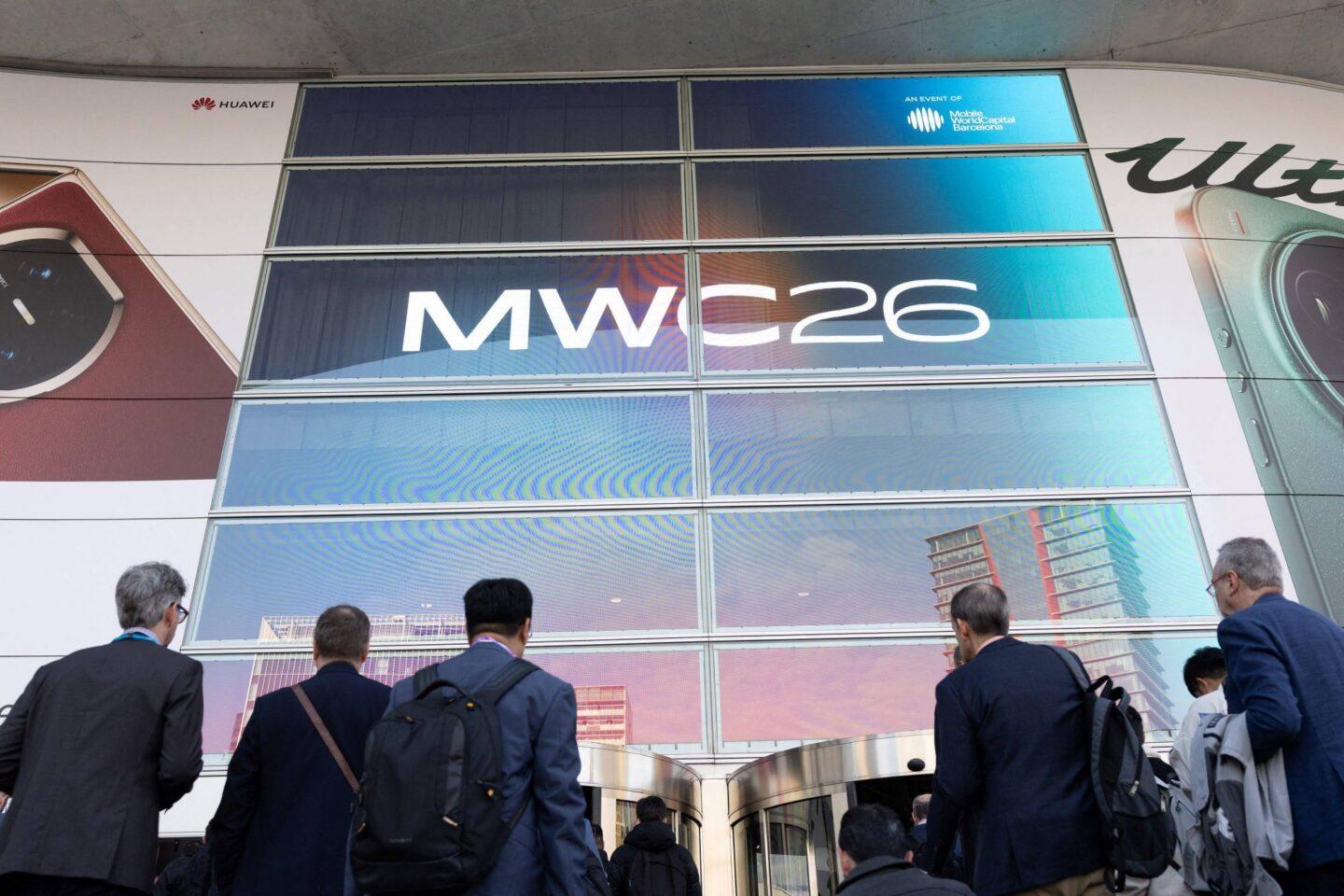
In 2026, Poland once again opened a national pavilion at Mobile World Congress in Barcelona. Each year, the event brings together thousands of participants from the telecommunications and new technologies sectors. According to the organizers, this year’s edition attracted around 109,000 visitors and 2,900 companies.
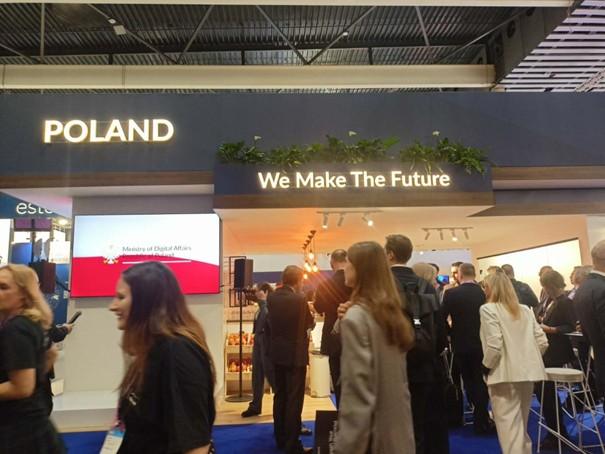
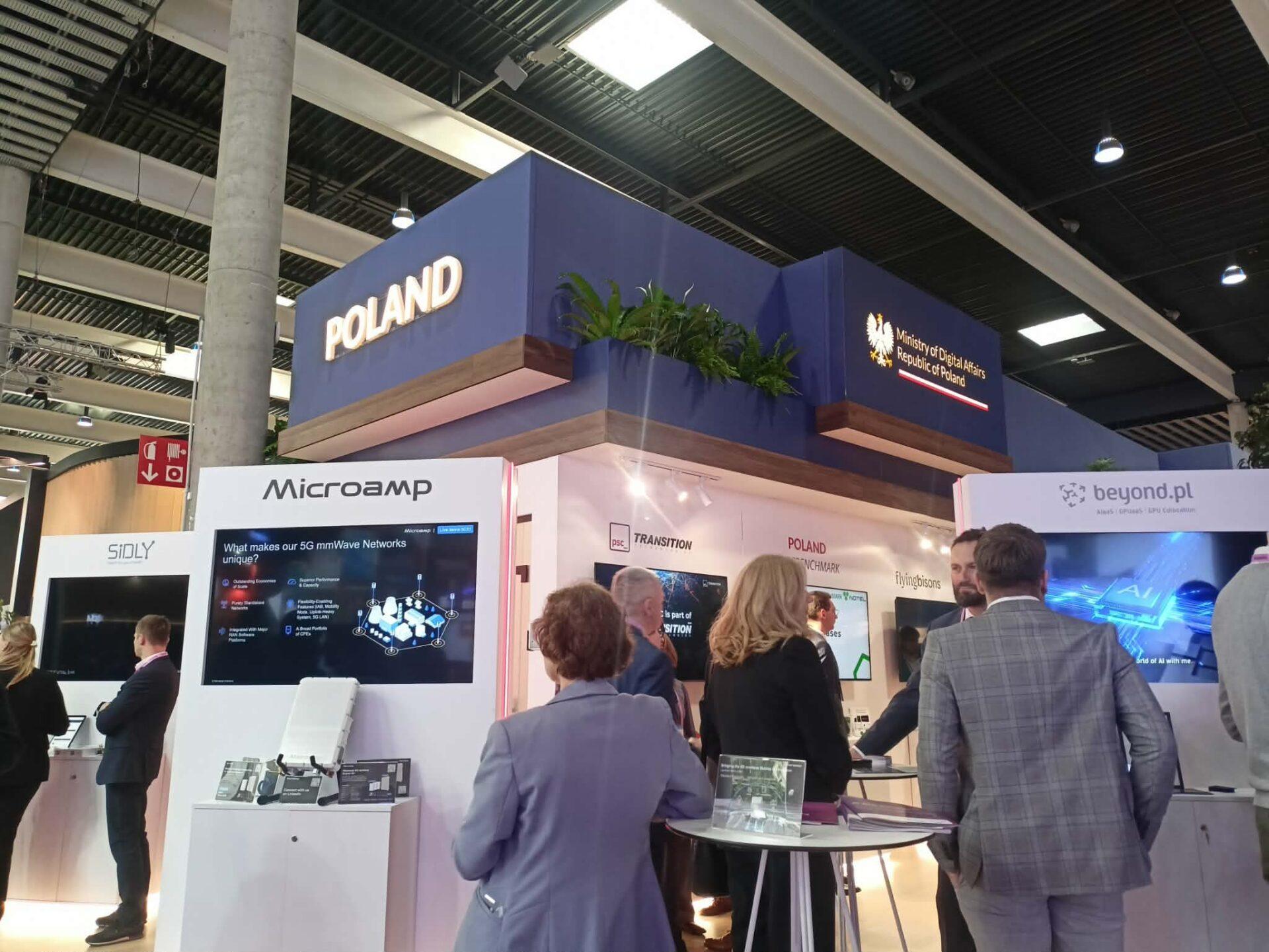
At the stand prepared by the Ministry of Digital Affairs, more than a dozen companies selected through a call organized by the Polish Investment and Trade Agency showcased their offerings. Public institutions were also present, including NASK, the Office of Electronic Communications (UKE), and the Central IT Centre (COI). Poland promoted, among other initiatives, the PLLuM language model and the mObywatel mobile application.
Explainer
NASK, UKE, COI
NASK (Research and Academic Computer Network) is Poland's state-run internet research institute, operating under the Ministry of Digital Affairs. It manages Poland's .pl domain registry, runs cybersecurity operations through its CERT Polska team, and conducts research into digital threats — including disinformation and online child safety. Think of it as Poland's digital watchdog and tech research hub rolled into one.
UKE (Office of Electronic Communications) is the independent telecoms regulator, roughly equivalent to Ofcom in the UK or the FCC in the US. It oversees the mobile, broadband, and broadcasting markets — issuing frequency licences, enforcing competition rules, and making sure operators don't overcharge or underserve consumers. If a Polish telecom company wants to build a 5G network, UKE sets the rules of the game.
COI (Central IT Centre) is the government's back-office IT provider — the agency that builds and maintains the shared digital infrastructure that other public institutions run on. It handles everything from cloud hosting for government systems to the platforms behind e-government services. Less visible to ordinary citizens than the other two, but essential plumbing for the state's digital operations.
Together, the three form a kind of division of labour in Poland's digital state: NASK researches and secures, UKE regulates the market, and COI keeps the government's own systems running.
“We are opening the Polish stand for the second time to be at the heart of the most important global and European developments. We hope that meetings held during the conference will translate into tangible business benefits for companies,” said Paweł Olszewski, Deputy Minister of Digital Affairs.
A dozen companies at Poland’s stand in Barcelona - from device design to AI
Poland’s technology sector was represented by both large incumbents and highly specialized startups:
- Asseco – a software developer and Poland’s largest IT company,
- Beyond.pl – a data-center operator,
- Chatporter – a developer of AI assistants for business,
- Chipcraft – a microelectronics company in the semiconductor sector, operating a fabless IC model (designing chips and outsourcing production to external foundries),
- Dynacon – an engineering firm specializing in industrial (OT) and IT cybersecurity,
- Electronic Prototypes – a designer of electronic devices and circuits,
- Flying Bisons – a UX/UI studio and digital product advisory firm,
- Microamp – a startup developing radio infrastructure for 5G and 6G networks,
- Rfbenchmark – a platform for independent measurement of internet connection quality and speed,
- Rimedo Labs – a spin-off from Poznań University of Technology specializing in advanced wireless systems,
- Sidly – a medtech company offering, among other solutions, telemedicine wristbands,
- Smabbler – a startup developing AI tools for analyzing large volumes of textual data,
- STP Polska – a supplier of payment terminals and cashless solutions for the public sector,
- Transition Technologies – a company delivering IT solutions for industry, energy, and the public sector.
Security in the spotlight
According to representatives of Polish institutions present at the opening of the national pavilion at Mobile World Congress, Poland has strong credentials – both as an economy and as an IT ecosystem. Participation in events of this scale is intended to raise the international profile of domestic companies and facilitate their expansion into new markets.
“We must be – and we are – present in the world’s most important arenas. We are showcasing our potential and our companies, and competing for new markets. This is a space to build relationships, exchange experiences, and strengthen security,” said the Deputy Minister of Digital Affairs.
Monika Krzepkowska, head of the Polish Embassy in Spain, emphasized that Poland no longer needs to justify its economic position.
“We are one of the largest economies in the world, and the numbers speak for themselves. Today, however, a country’s strength is measured not only by GDP. Security is key – the resilience of the economy and its ability to respond in a challenging geopolitical environment. Technological security and technological sovereignty are increasingly important. This is a topic the whole of Europe is discussing today,” Ms. Krzepkowska noted.
The importance of security was also highlighted by Przemysław Kuna, president of the Office of Electronic Communications. He stressed that, for Polish companies in the telecommunications and IT sectors, cybersecurity, network protection, and service continuity are now critical priorities.
“Polish companies offer solutions among the best in the world, and in some areas – absolutely leading. What has been missing so far is visibility and the opportunity to present these capabilities widely on international markets. Events like MWC give us that chance,” added Radosław Nielek, head of NASK.
MWC-scale event in Poland? Finance Ministry in talks about hosting Web Summit
Deputy Minister Paweł Olszewski stressed in Barcelona that presence at the world’s leading industry events represents a tangible opportunity for Polish tech businesses. Asked whether Poland should bid to host an event on a scale comparable to Mobile World Congress, he noted that discussions are already underway.
The reference is to Web Summit, an international technology conference recently held in Lisbon, bringing together several thousand companies and around 70,000 participants. As reported by XYZ, talks about hosting either the main edition of the event in Poland or a regional version are being conducted by Andrzej Domański, Minister of Finance and Economy, with the organizers.
“As the Ministry of Digital Affairs, we will certainly organize a large international event—the Cybersecurity Forum. Regarding Web Summit, I know Minister Domański is in discussions. How they will conclude is hard to predict at this stage,” said Paweł Olszewski.
The deputy minister added that his agenda at MWC also included a meeting with representatives of Open Cosmos, a British satellite producer offering alternatives to Starlink systems developed by Elon Musk.
He also reported on X that he participated in talks between EU state ministers and CEOs of the largest telecom operators concerning the proposed European Commission Digital Networks Act. In this context, MWC serves as a forum for strategic consultations between public administration and the private sector on regulatory and investment matters.
MWC 2026: Technology in the shadow of geopolitics
The issue of security, repeatedly highlighted by representatives of Polish institutions during the opening of the national pavilion at Mobile World Congress, clearly resonated with the mood surrounding this year’s edition of the event. The congress, which brings together exhibitors and decision-makers from across the globe, began two days after a joint U.S. and Israeli strike on Iran.
On the first day of the conference, speeches by EU Commissioners Teresa Ribera and Henna Virkkunen were canceled due to an extraordinary EU summit focused on the Middle East situation. Some attendees were unable to reach Barcelona because of disruptions in air transport following the closure of several regional airports.
King Felipe VI of Spain, who traditionally attends the inauguration meeting with congress organizers and Spanish government representatives, addressed the events in his speech. He called for restraint, respect for civilian life, and a return to diplomatic dialogue, warning of the risk of regional escalation and “unpredictable consequences.”
Spanish Prime Minister Pedro Sánchez described the U.S. and Israeli strike as having toppled a “militaristic regime” while also noting violations of international law and the risk of further regional destabilization. He called for de-escalation and the resumption of diplomatic talks.
The conference was accompanied by protests from human-rights groups and pro-Palestinian activists. Demonstrators called for the exclusion of companies supplying military technologies from MWC and highlighted issues related to the extraction of critical raw materials in the Democratic Republic of the Congo and Sudan.


Key Takeaways
- In 2026, Poland once again showcased its national pavilion at Mobile World Congress, promoting, among other initiatives, the mObywatel mobile application and the PLLuM language model. The stand featured more than a dozen technology companies.
- Participation in MWC is intended to enable Polish companies to establish contacts with international partners and to strengthen Poland’s image as a technology-driven, resilient, and secure economy.
- MWC serves not only as Europe’s largest telecommunications trade fair but also as a platform for informal discussions on international cooperation and EU regulations in the field of new technologies. In 2026, Spanish authorities leveraged their role as hosts to make a public appeal for de-escalation of the conflict in the Middle East.