

This article is a part of Poland Unpacked. Weekly intelligence for decision-makers
Who's who
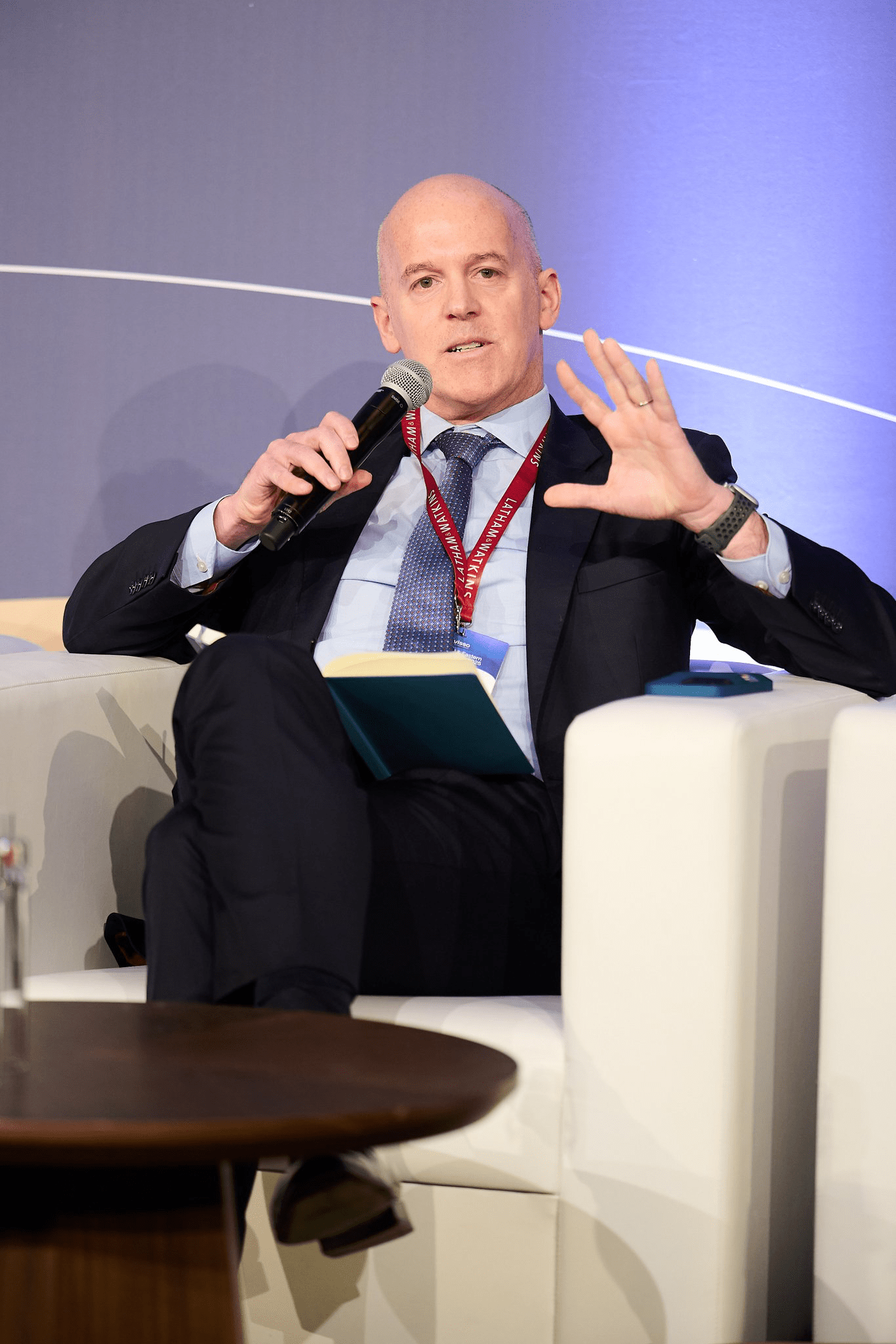
Geoff Gottlieb
Economist at the International Monetary Fund (IMF) who led this year’s IMF mission to Poland. He previously served as the IMF’s resident representative for Central, Eastern and South-Eastern Europe.
Marek Skawiński, Michał Kulbacki, XYZ: Let’s begin with a broad look at the Polish economy. How would you assess the current macroeconomic situation?
Geoff Gottlieb, head of the IMF mission to Poland under this year’s Article IV consultations: I would highlight three key points.
First, economic growth remains exceptionally strong - on both the demand and supply sides. On the demand side, private consumption is robust, and public spending is also elevated. On the supply side, labour productivity continues to perform well.
Second, the economy has shown remarkable resilience. It is worth underscoring that Poland has very low external debt, a small current account deficit, sizeable central bank reserves and a flexible exchange rate. Taken together, these factors give Poland a high degree of resilience.
Third, the fiscal position has shifted very rapidly - and the public debate has not kept pace. We are not sounding the alarm: public debt remains relatively low. But given the strength of the economy, the deficit is unquestionably too high.
Interviewers: In last year’s concluding statement, you recommended a more decisive fiscal tightening than the government had planned at the time. Yet fiscal policy ultimately turned out to be expansionary. On the one hand, this supported GDP growth; on the other, it carries fiscal risks. How do you assess that choice in retrospect?
Geoff Gottlieb: I would describe it as a missed opportunity. Again, the issue is not that Poland’s debt level is currently excessive. But an annual increase of around five percentage points in 2024–25, at a time when the economy is fundamentally strong, is - in our view - not an efficient use of fiscal space.
Interviewers: Poland seems to be at something of a crossroads. Public spending is now comparable to levels in Western Europe, while revenues as a share of GDP remain closer to those in Central and Eastern Europe. Reducing the deficit essentially means raising taxes or cutting spending. What options exist on the revenue side?
Gottlieb: Before I get into specifics, I want to stress that our position is not based on a preference for a large or small state. Both are perfectly viable models. What matters to us is that the state - whatever its size – is sustainably financed. The appropriate size of government is a decision for Polish society.
Taxes: High PIT and preferential treatment of real estate
The recent spending increase was broad, not limited to defense. If the government chooses to maintain current spending levels, the most significant area for potential revenue gains is personal income tax (PIT). Poland collects roughly the same amount as Western Europe in corporate tax (CIT), VAT, and social security contributions. But PIT revenues lag by around five percentage points of GDP.
Public perception often frames personal income taxes as high. Yet our analysis shows that Poland’s low 12% starting PIT rate is unusually generous compared with other countries.
VAT is another area to consider. Revenues are dampened by preferential rates and exemptions. Overall VAT collection is not particularly low, so the issue is less about fiscal capacity and more about efficiency. Reducing these preferences could help close gaps in tax policy.
A third, often overlooked issue is the heavy tax privileges granted to real estate. These go beyond property tax and include exemptions or reductions in rental income tax, VAT, and capital gains tax.
This matters for two reasons. First, it represents a direct loss of fiscal revenue. Second, it has structural implications: there is a widespread perception that Poland is overexposed to real estate. If the sector is overconcentrated while the deficit remains large, it makes sense to reduce incentives to acquire additional properties—particularly second, third, or subsequent homes.
In short, these are the three areas on the revenue side where we would begin: personal income tax, VAT preferences, and real estate privileges.
Expenditure: targeting benefits and protecting investment
Interviewers: And what would you recommend on the expenditure side?
Geoff Gottlieb: The first step is to target social benefits - this is the most obvious area for improvement. That includes, of course, the 800+ benefit, but there may also be some room to adjust the additional 13th and 14th pensions.
Good to know
800+ benefit
Poland's "Family 800+" scheme (previously "500+") provides a universal monthly child benefit of PLN 800 (about EUR 185) per child up to age 18 to all families regardless of income, aimed at helping cover childcare, food, clothing, and education costs
Public sector wages are another area to consider, though this must be approached carefully. Maintaining high-quality government services is crucial, but modest savings could be possible without undermining service delivery.
Above all, it is vital not to cut national investment spending. While investment will continue to benefit from the National Reconstruction Plan (KPO) funds in 2026, national funding should increase once KPO support expires to prevent a decline. Preserving investment is essential for sustaining long-term growth.
Interviewer: Let’s discuss the income criterion in the 800+ program. Critics argue that it discourages work and, in countries that have introduced such criteria, can stigmatize beneficiaries—so not everyone eligible actually claims the benefit.
Geoff Gottlieb: That’s correct. We’ve studied this extensively. In terms of inequality, policy goals can be addressed through both spending and revenue measures. On the spending side, an income threshold can be introduced; on the revenue side, tax progressivity can be adjusted—or both approaches can be combined.
There are several ways to mitigate the so-called cliff effect, where people avoid work to retain benefits, and other factors that discourage labor supply. Adjustments to the program’s structure could address these issues.
Two additional challenges are worth noting. First, administering an income-based program is more complex. Second, it is important to maintain a broad base of beneficiaries. These are compromises that can be managed - but once fiscal pressures rise, such compromises should be carefully reconsidered.
Fiscal frameworks and the limits of polarization
Interviewers: This year’s IMF statement notes that political polarization is already limiting fiscal consolidation. With parliamentary elections coming in 2027, is there a risk that they could further delay consolidation?
Geoff Gottlieb: Elections themselves are not inherently a problem for fiscal consolidation. But there are two points worth highlighting.
First, in 2024, Poland strengthened public finance management through the fiscal framework and the stabilizing expenditure rule, which gradually broadens the scope of covered spending, including in 2027. This could serve as a useful anchor to prevent fiscal loosening. The second development is the creation of the fiscal council in parliament, tasked with explaining this rule.
Ultimately, fiscal discipline boils down to one thing: either spending cuts or revenue increases. This should be at the center of political debate. If anyone argues that no action is needed, the public has a right to a clear explanation of how fiscal challenges will be addressed.
Interviewers: To sum up on fiscal policy: at what point might markets react sharply to Poland’s debt trajectory? Is there a specific debt-to-GDP level that would trigger investor concern?
Geoff Gottlieb: It’s difficult to pinpoint a single debt-to-GDP threshold that causes problems. Public debt crises usually result from a combination of factors, not just the level of debt. That said, as debt rises, so does the probability of stress. Poland’s low foreign debt and flexible exchange rate give it considerable resilience.
The main risk, in my view, is a serious external shock - something that slows economic growth, accelerates the debt-to-GDP ratio, and reduces budget revenues. That scenario could prompt investors to reassess the fiscal outlook. I’m mindful of this risk, but overall, Polish debt appears quite robust.
Another concern is rising debt-servicing costs. Even if yields remain moderate, a growing share of tax revenue goes toward interest payments. This means each zloty collected works harder to support the economy.
Structural policy: pensions, migration, real estate, and self-employment
Interviewers: There are some straightforward measures on both the revenue and expenditure sides. For example, freezing PIT thresholds or nominal benefit levels such as 800+. This could provide some relief, though not enough. But over the medium term, structural reforms are needed. In your view, which measures would make the most sense for supporting economic growth?
Geoff Gottlieb: One obvious area is the retirement age. Raising it gradually is primarily a long-term, structural issue rather than a short-term fiscal fix.
Another area is real estate. Measures that reduce incentives for excessive investment in property would have clear structural benefits and could help rebalance the economy.
A third structural challenge concerns self-employment. Economists often focus on the tax wedge—the difference between the total cost of employment to the employer and the net salary received by the worker. In Poland, the tax burden on the self-employed is actually too low relative to current spending, so it generates insufficient revenue. There are also numerous distortions in this area that appear unfair and contribute to revenue losses.
In short, gradual pension reform, more balanced taxation of real estate, and a fairer, more effective approach to self-employment taxes stand out as the key structural priorities.
Interviewer: In the medium term, demographic changes pose a serious challenge for Poland. Politically, the most obvious solutions seem to be raising the retirement age - especially for women—and encouraging broader immigration. Yet, as the Polish Development Strategy to 2035 shows, the government has been reluctant to pursue either. The IMF’s latest report suggests alternatives such as training programs. Can these really compensate for inaction on retirement age and immigration?
Geoff Gottlieb: So far, the negative demographic impact has not so much been offset as significantly delayed.
If the decline in population and working hours is seen as a problem, the most effective policy levers are raising the retirement age and encouraging immigration. The role of immigration is particularly significant. Since the end of 2013, Poland’s workforce has shrunk by around 200,000, while the number of Ukrainians in the labor market has grown by roughly 800,000. This shows that demographic pressures have been postponed rather than neutralized.
Moreover, over 70% of working-age Ukrainian immigrants are employed, compared with only 30–40% in France and Germany, highlighting their substantial contribution to the Polish economy.
The need for caution in monetary policy
Interviewers: Turning to monetary policy - your final statement from the mission to Poland recommended that the central bank pause interest rate cuts and adopt a wait-and-see approach, monitoring how previous cuts have affected inflation. What would you say is the current neutral interest rate for Poland?
Geoff Gottlieb: I would say we are approaching the upper end of the neutral range, though we probably won’t know the precise level for some time. I often liken this to walking in a dark room—you don’t know where the wall is, so you need to move slowly and carefully, especially given the lag with which previous rate cuts feed through the economy.
Inflationary pressures continue to ease, but given how long inflation has remained above target, it would be a mistake to loosen policy too quickly. Doing so could reignite inflation. That said, the easing process so far has been well-calibrated and cautious. To borrow a gymnastics metaphor, the key now is to “land well.”
Interviewers: Do you see any signs that inflation expectations are becoming destabilized in Poland?
Geoff Gottlieb: Not at this stage. Service prices remain relatively high, and much of the recent disinflation is driven by external factors rather than a decline in domestic demand. These influences can quickly reverse - for example, the strengthening of the zloty and deflationary pressures in Chinese industry. The latter is likely temporary, as many Chinese firms are operating at a loss; if conditions reverse, China could start “exporting inflation” again.
Next year, the minimum wage is set to rise by only 3%, and public sector wage growth will be similarly restrained. This cautious approach should anchor overall wage levels and help slow inflation in services. Based on our analysis, wage growth consistent with the inflation target is around 6%, so this policy is supportive in that regard.
It’s also worth noting that the real effective exchange rate, measured by unit labor costs, was essentially flat between 2010 and 2022. This stability, likely supported by an undervalued currency at the time, helped fuel growth. Adjusted for efficiency, labor costs were very competitive - a point confirmed by many firms.
However, in 2023 and 2024, unit labor costs rose by 20%. This doesn’t mean competitiveness is lost, but it has reduced the buffer. That is why we are cautious about the interaction between wages and productivity growth until inflationary pressures are more firmly anchored. Outside of this recent period, wages have generally tracked productivity closely over the long term.
Interviewers: In your view, is the zloty currently overvalued? The real appreciation over the past three years is comparable only to the surge seen between 2005 and 2007. Could this signal instability?
Geoff Gottlieb: Surprisingly, the real exchange rate hasn’t strengthened even more, given the extent of convergence with Western Europe.
No, we don’t see the zloty as overvalued. Looking at unit labor costs alongside the exchange rate, a 20% rise after more than 20 years without significant appreciation is not large in the long-term perspective. In fact, this is largely catching up for the lack of appreciation earlier. Of course, forecasts may always turn out differently.
We are, however, seeing a deterioration in the current account. A balance of around -1.5% of GDP would be appropriate. Ideally, the shift from surplus to deficit would have been driven by higher investment financed by foreign capital, but instead it has been accompanied by a decline in domestic savings.
In our view, both savings and investment are too low. A healthy adjustment would involve higher domestic savings alongside a much greater increase in investment, financed from abroad.
Poland needs its own innovations and a strong Europe
Interviewer: Finally, how optimistic are you about Poland’s prospects over the next 10–15 years in catching up with the EU? Will convergence continue, or is there a risk it stalls?
Geoff Gottlieb: I would focus on two points. First, Poland has relied heavily on imported technologies. Now, developing domestic innovation is essential. The recently announced investment instruments and initiatives to support companies overlooked by traditional banks are steps in the right direction. Poland can continue to benefit from foreign technologies, but it also needs to build its own. If you compare Poland with South Korea, for example, patent counts and R&D spending were much lower at every income level. This clearly needs to change.
Second - and crucially - Poland’s convergence prospects depend on a stronger, more integrated Europe. Until the EU develops a genuinely unified market, convergence will be difficult. Poland should focus not only on EU funds and ETS2, but on creating a single market for capital, energy, labor, and regulation. This will allow Polish firms to scale and create stronger external demand for their products.
Poland is simply not large enough to achieve convergence on its own. That’s why our final statement following the mission emphasized EU reforms. Poland, as a pro-EU country, has the opportunity to take the lead on this issue.


Key Takeaways
- A new model of development. Continued convergence with Western Europe requires a shift from relying on imported technologies to fostering domestic innovation. Equally important is deeper integration within the EU. Without a stronger, more unified European market—across legislation, capital, and goods and services - Poland is unlikely to close the development gap with the West.
- The need for fiscal consolidation in a strong economy. Despite robust growth and resilience to shocks, Poland’s budget deficit remains too high. The IMF recommends raising revenues by closing tax gaps compared with European peers - particularly in personal income tax, VAT, and real estate—while tightening rules around self-employment. On the spending side, introducing income criteria for social benefits, such as the 800+ program, could help improve efficiency.
- Demographic and structural challenges. Poland faces a serious long-term challenge from an aging population. Structural reforms are essential to sustain growth, including gradually raising the retirement age and maintaining openness to economic immigration, which has so far helped alleviate labor market shortages.