

This article is a part of Poland Unpacked. Weekly intelligence for decision-makers
 Interactive chart
 Inflation in Poland reached 3.0% year on year in March, according to a flash estimate from Statistics Poland (GUS). In February it stood at 2.1% y/y. The uptick is, of course, the result of a spike in oil and gas prices following the outbreak of the conflict in Iran. The detailed data bear this out: fuel prices in March were as much as 15.4% higher than in February, and 8.5% higher than a year earlier.
How far the CPN can bring inflation down
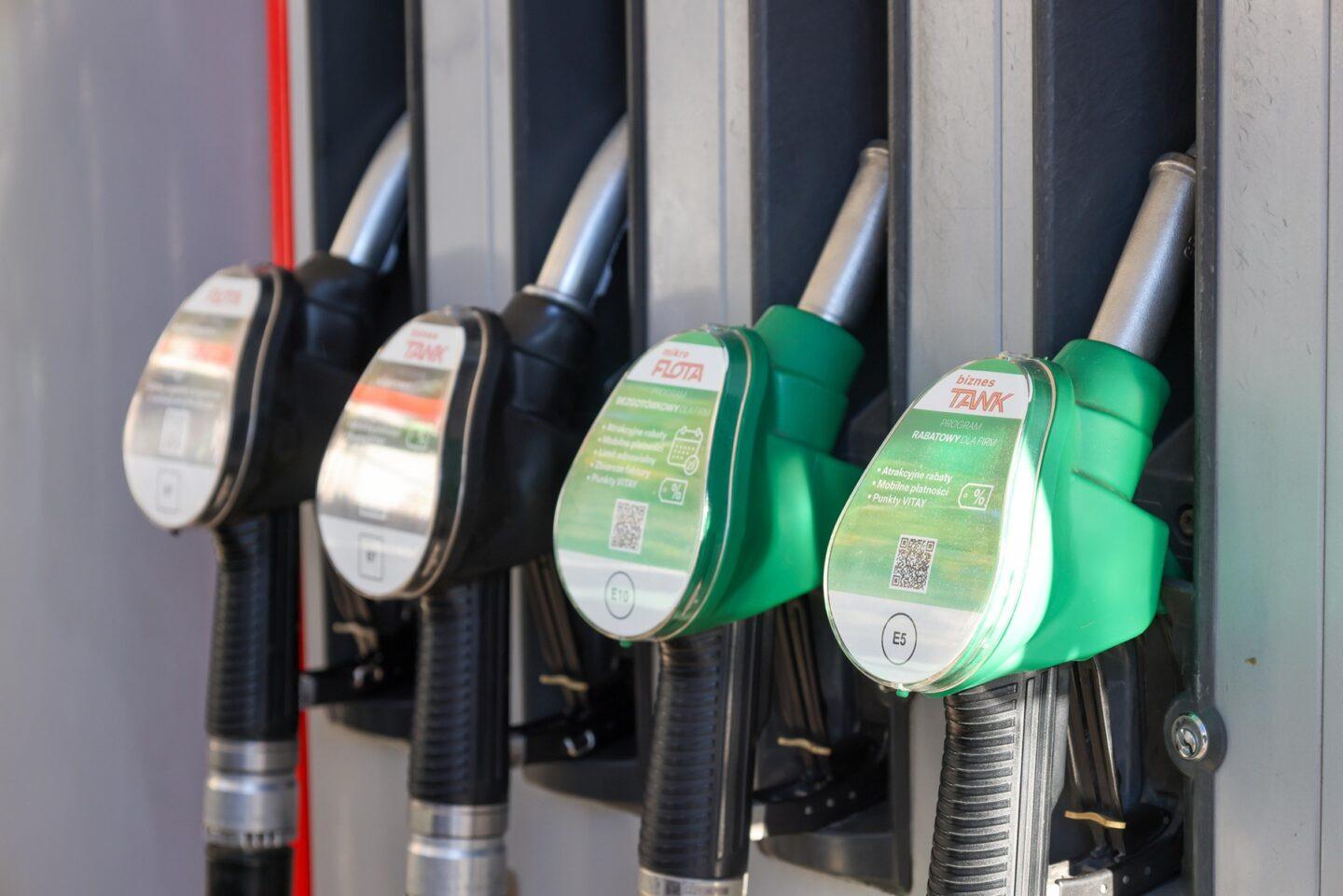
In the coming months, inflation should ease thanks to the government’s fuel price cuts. The “Lower Fuel Prices” program (CPN – a play on words, see the explainer – ed.) includes a reduction in VAT on fuels from 23% to 8%, alongside cuts to excise duties. A fuel price cap has also been introduced. As a result, prices are expected to fall by around 10% relative to the average level in March.
Explainer
CPN: the fuel station that fueled communist Poland
If you've spent any time in Poland talking to people old enough to remember the PRL – the Polish People’s Republic – you'll eventually hear someone mention CPN with a mix of fondness and exasperation. Fun fact: some of them still call any fuel station a CPN. Simple as that.
CPN stood for Centrala Produktów Naftowych – the Central Petroleum Products Authority. In plain terms, it was the only petrol station in Poland. Not one chain among many. The only one, full stop.
In 1981, CPN employed a total of 14,200 people and 5,600 petrol station agents, and had 43 fuel laboratories operating in the country. It was, in other words, an enormous state apparatus built around the simple act of filling up a tank.
When communism collapsed and Poland began its transformation, the days of CPN as a monopoly were numbered. CPN was restructured as a state-owned limited liability company in 1995. By the end of the decade, CPN's operations included more than 1,400 service stations, 156 fuel depots, a 600-strong fleet of tanker trucks, port operations, and 22 research laboratories.
In 1999, the Polish Council of Ministers decided to partially privatise and merge CPN with Petrochemia Płock, the state firm in charge of the oil refineries in Płock. The resulting company was renamed Polski Koncern Naftowy (PKN), with Orlen added several months later as the brand name.
Provided oil prices do not continue to rise, this could lower inflation by roughly 0.5 percentage points. That would imply a reading of about 2.5% in April.
The CPN program is set to cost around PLN 1.6bn (approximately EUR 370m) per month in the form of lower VAT and excise revenues. For now, it is scheduled to run until June this year. The government is, in effect, making a bet that the shock will be short-lived. Under such a scenario, CPN would cushion the impact of high prices on the economy while remaining tolerable for the budget, with the total cost coming in below PLN 5bn (around EUR 1.15bn), or roughly 0.1% of GDP.
In an alternative scenario, however, the conflict may not end quickly and oil prices could remain elevated. In that case, it would be politically very unlikely for the program not to be extended. In practice, this would amount to the government engaging in a form of indirect fuel price subsidization. The cost to an already strained budget would therefore rise proportionally. More importantly, keeping fuel prices artificially low would not encourage consumers to curb demand.
Alongside CPN, a “ZTM” is needed
This could prove problematic if the world faces a shortage of oil. In such circumstances, those economies that have already reduced demand appropriately will be in a better position. Others may find themselves forced to ration consumption.
That said, CPN reduces the likelihood of interest rate hikes in Poland. If there is no further sharp increase in oil prices, inflation should remain within the target range (2.5% ± 1 percentage point). But if prices were to climb to around $150 per barrel, even this may not suffice.
Either way, alongside the CPN program, a “ZTM” initiative would be welcome – Trust Public Transport (a nod to Warsaw’s Public Transport Authority whose official abbreviation is ZTM). Under such a scheme, the government should introduce measures encouraging the use of public transport and, where possible, remote work. That would better prepare the economy in case the conflict drags on.