

This article is a part of Poland Unpacked. Weekly intelligence for decision-makers
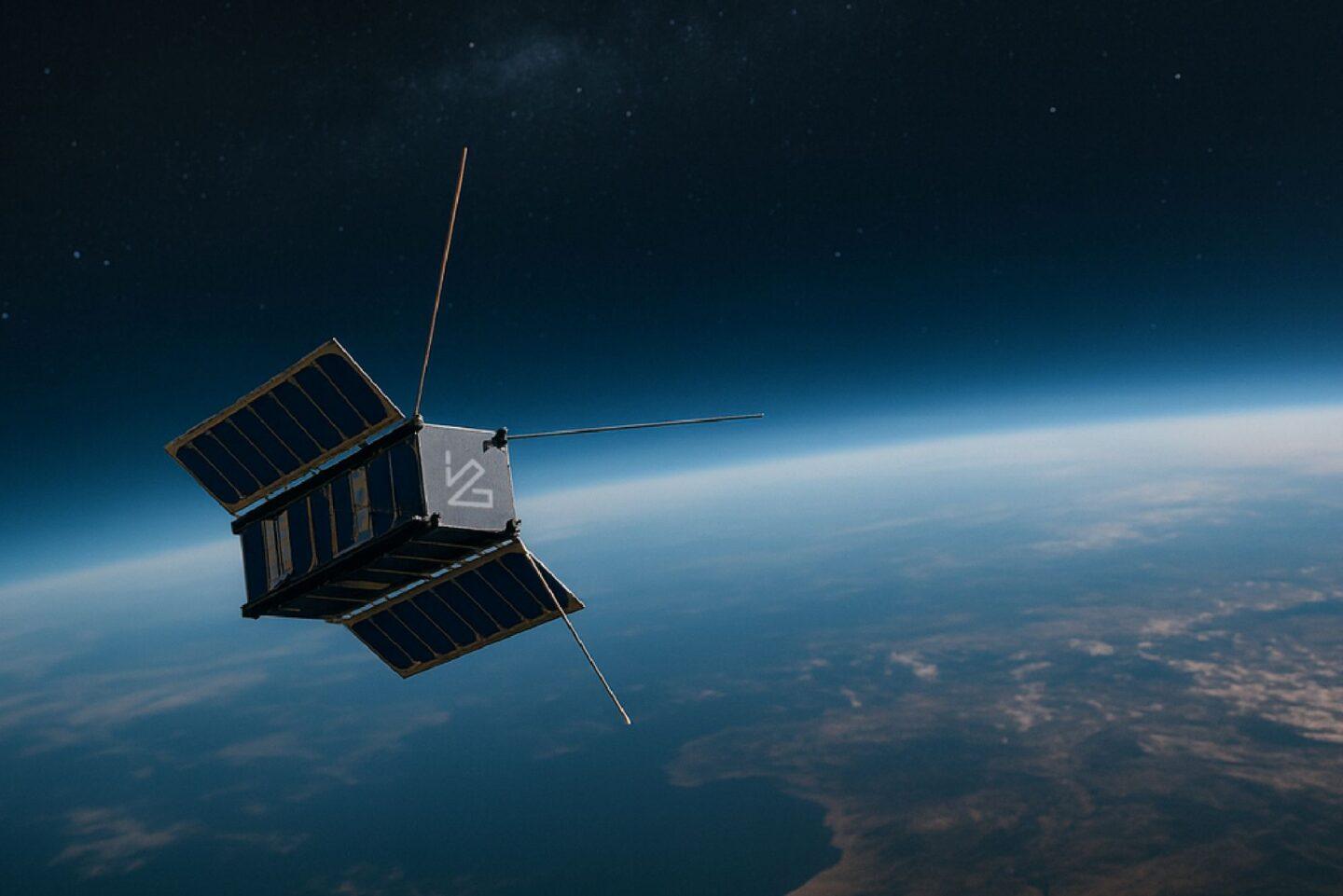
The Łukasiewicz Research Network has announced a ten-year Space Research Program, encompassing the execution of several dozen research projects. The initiative is also set to support the development of dual-use technologies, while leaving the door open for collaboration with private companies.
This marks the first large-scale initiative in the sector. The strategy is planned over a ten-year horizon, with the total estimated value of the projects reaching PLN 2.4 billion (around EUR 510 million).
The strategy encompasses several dozen projects across three areas:
- the development of satellite platforms,
- technologies for launching them into orbit, and
- work on so-called payloads, meaning scientific instruments and equipment deployed in space.
“In recent years, we have witnessed a rapid expansion of the space industry worldwide. This trend is almost certain to continue in the future. We want to make the most of the economic opportunities this creates and secure a strong position. The Łukasiewicz Research Network will support the domestic space industry – strengthening existing capabilities and developing new ones to help Polish companies compete internationally. Additionally, many space technologies have applications in the defense sector, enhancing national sovereignty and defense capabilities,” says Dr Hubert Cichocki, president of the Łukasiewicz Centre.
Ministerial perspective
Focus on Space Technologies


Funding for the Space Research Program
The budget for the Space Research Program stands at PLN 2.4 billion (current prices, excluding inflation adjustments). This funding pool combines Łukasiewicz’s own resources, public funds allocated to defense and space technology development, as well as cooperation with the private sector.
“A significant portion of the subsidies granted to our institutes will be directed to the Space Research Program, with 17 out of 22 institutes actively involved. The most capital-intensive work – related to deploying satellite launch technologies into low Earth orbit – will take place in 2029 and 2030, absorbing nearly PLN 600 million. For this phase, we will allocate almost half of the institutes’ annual subsidies. In addition, we will seek funding from public programs coordinated by the European Space Agency, the European Fund for Competitiveness, the European Defense Agency, the National Centre for Research and Development, and others. We also anticipate private capital participation, including debt financing. The plan includes, among other things, the development of R&D infrastructure, for which preferential financing may be available. We see numerous opportunities for cooperation with venture capital funds, expecting their support in the form of private investment,” explains Dr Hubert Cichocki.
Niches where Poland can strengthen its position
Expert's perspective
Public–Private Cooperation
Part of the program’s activities will be carried out in collaboration with private companies. Under the program, the institutes will also be able to offer research services to external Polish and international clients. Łukasiewicz already has a track record of cooperation with companies such as Scanway, Creotech, and Thorium Space.
“The specializations we are developing within the Space Research Program target niches that are either minimally or entirely unserved by the private sector. We will not be competing with them. At the same time, the projects were selected to maximize the use of existing competencies and experience within Łukasiewicz. For context, our institutes are involved in building the PIAST satellite constellation. The suborbital Bursztyn rocket, built by Łukasiewicz engineers, reached an altitude of 101 km, surpassing the conventional boundary of space. We also have a significant role in the SPARK satellite project, which is now completing preliminary design and contracting for launch services,” explains Dr Hubert Cichocki.
According to Dr Cezary Szczepański, director of Łukasiewicz – ILOT, the engineers’ achievements can be applied in practice – not only to launching satellites but also to servicing them.
“This is entry into a new segment of the space market with enormous growth and commercialization potential. Poland has the opportunity to become a European leader in satellite servicing, the development of digital technologies, and eco-friendly propulsion systems – all with its own satellite in orbit,” asserts Dr Cezary Szczepański.
Good to know
Which projects will be carried out in the coming years?
Among the strategic goals of the Łukasiewicz Research Network’s Space Research Programme is to achieve Poland’s technological independence in launching satellites weighing 100–200 kg. Plans also include deploying satellites into low Earth orbit using mobile launchers and aircraft.
The programme highlights the need to strengthen Poland’s international position in eco-friendly space propulsion technologies.
Selected projects to be implemented in close cooperation with the domestic industry include:
- A Polish rocket for launching small satellites into orbit
- Development of the Łukasiewicz satellite platform: SPARK 2 and SPARK 3
- Satellite data transmission system
- Next-generation GNSS receiver for satellites
- Payloads: validation of Polish technologies in space conditions
- Space propulsion components
- System for acquisition and management of hyperspectral patterns of selected objects (HYPERLAB)
- Development of long-term storable propellants for space applications
- Development of a mobile space propulsion test stand
- Facilities for testing and conducting satellite rocket launches
- Development of infrastructure supporting the production and integration of rocket and space systems
- Civilian space mission control centers
XYZ (information from the Łukasiewicz Research Network)
Defense and dual-use projects take priority
The Łukasiewicz Research Network’s Space Research Program is also expected to play a significant role in strengthening the country’s defense capabilities.
“Poland must now deploy all available resources to enhance national security. Given the current geopolitical situation, there is no time to waste. The involvement of public research institutes in developing the defense sector is natural, as many military technologies are based on research and development outcomes. The space sector plays a key role here as well, providing numerous new solutions that are directly applicable to defense. It is also a source of dual-use technologies,” says Dr Hubert Cichocki.
The Łukasiewicz Research Network has recently been heavily engaged in defense-related initiatives. According to Dr Cichocki, in 2026 as many as 67% of all projects conducted by the institutes are aimed at defense objectives or have dual-use potential, both military and civilian. This level is expected to continue in the coming years.
“Satellites provide an advantage in reconnaissance and communications: they enhance rapid response capabilities and the coordination of operations. Despite enduring alliances, the Polish Armed Forces today need solutions based on technological sovereignty, which ensures resilience and independence,” observes Gen. Mieczysław Cieniuch, former Chief of the General Staff of the Polish Armed Forces.
Expert's perspective
The program is needed – provided funding is stable
A ten-year strategy covering the development of satellite platforms, building sovereignty in low-Earth orbit launch technologies, developing payloads, and dual-use components provides concrete tools. In the future, it could stabilize the market and allow institutes and companies to plan staffing and infrastructure investments on a horizon longer than a single grant or ESA project.
From an economic perspective, such a programme is multidimensional. First, space technologies drive development in electronics, AI, materials science, automation, and cybersecurity – fields that are vital to the broader economy. Second, in terms of national security, access to domestic satellite data, communications, and launch capabilities becomes an element of genuine sovereignty, not merely a prestige goal. It also helps retain talent in the country. Polish universities train excellent engineers, but without systemic domestic programs, they are likely to engage primarily in foreign projects.
Crucial, however, will be whether the program receives stable funding, independent of political cycles. Equally important will be whether it creates a tangible bridge between research institutes and industry and whether it is integrated into the European program architecture rather than functioning in isolation.


Key Takeaways
- Space Technologies Critical for Security and Defense. Many of the technologies developed within the program are dual-use, with both civilian and military applications. Satellites can support reconnaissance, communications, and operational coordination, enhancing the country’s defense capabilities. In 2026, as much as 67% of projects conducted by Łukasiewicz institutes are related to defense or have dual-use potential.
- Long-Term Space Technology Development Program. The Łukasiewicz Research Network’s Space Research Program is planned over a ten-year horizon and encompasses several dozen projects. It focuses on three main areas: the development of satellite platforms, satellite launch technologies, and the creation of payloads. The total estimated value of the program is PLN 2.4 billion (EUR 510 million).
- Broad Funding and Industry Collaboration. The program’s funding will come from multiple sources, including the institutes’ own resources, public funds, and private-sector partnerships. Seventeen of the network’s 22 institutes will be involved in project implementation. The program also foresees collaboration with private companies and the possibility for institutes to provide research services to clients both in Poland and abroad.