Poland Unpacked week 52 (22-28 December)
Welcome to this week’s edition of our Poland Unpacked, where we deliver key insights and trends shaping the economic, corporate and political landscape. Catch the most important insights from Poland in this week’s briefing.
This article is a part of Poland Unpacked. Weekly intelligence for decision-makers
The very start of 2025 delivered a moment that would resonate throughout the year. In early February, while unveiling the government’s economic strategy, Prime Minister Donald Tusk unexpectedly invited Rafał Brzoska – one of Poland’s leading entrepreneurs – to take on economic deregulation, quipping: you sound so wise in interviews, so please, give it a try.
The businessman accepted the challenge and assembled a team of more than 600 experts. Working in 100-day sprints, they reviewed over 16,000 submitted proposals. So far, more than 500 projects have been handed to the government, 120 of which have already been written into law. Such a partnership between government and business is virtually unprecedented worldwide.
Profound and intriguing changes also swept through Poland’s banking sector. Citi exited retail banking, selling its operations to VeloBank. There was also one spectacular market entry and an equally notable comeback. After 25 years of attempts, Erste Group finally entered Poland. For EUR 7bn, it acquired control of Santander Bank Polska, the country’s third-largest bank. This was the largest acquisition in the Austrian group’s 200-year history - one marked by both dramatic rises and painful falls.
In 2017, Italy’s UniCredit decided to sell its Polish operations, then the market’s second-largest player. This year it returned, building a bank from scratch. To lead the effort, it recruited Wojciech Sobieraj – a manager already credited with a spectacular success in building a bank from the ground up. It is hard to find a European bank that has been as active recently in pursuing potential acquisitions in the financial sector as UniCredit. It is even harder to believe that not so long ago the group was backed into a corner, keeping EU supervisors awake at night. This is how UniCredit is building the bank of Europe’s future.
For the first time in history, competition appeared on Poland’s railways. The entry of Czech carrier RegioJet was meant to be revolutionary. FlixTrain was also preparing to enter the market. For now, however, both have run aground on formidable obstacles.
A potential turning point for Poland is expected to be the launch of the region’s largest airport: Port Poland (recently rebranded from CPK). Construction work is due to begin next year, and according to government plans, contracts worth PLN 40bn (EUR 9.5bn) are to be awarded in 2026.
A sharp rise in budget spending is being driven by defense outlays, prompted by Russia’s aggressive policy. The year’s largest contract was the purchase of three submarines under the Orka program. Although Italy was seen as the frontrunner – and France was also in the running – the contract, worth more than PLN 10bn (EUR 2.4bn), ultimately went to Sweden.
This, however, is only the beginning of major expenditures. In the coming years, spending on equipment will run into the hundreds of billions of zlotys, including nearly EUR 44bn from the EU’s SAFE program. How much of that money will reach Poland’s defense industry – and what share will go to private firms? How was the list of 139 projects submitted to Brussels compiled? What does cooperation with Ukraine look like in practice? These questions are addressed by Magdalena Sobkowiak-Czarnecka, the government’s plenipotentiary for the SAFE program.
Not every sector, however, is enjoying prosperity. The alcohol market is shrinking. Several years ago, when it was still expanding, Maspex – the largest Polish food company – invested heavily in acquiring alcohol producers. This year it added another acquisition in Romania. Does it regret the move, and what is its plan going forward? These questions are answered by Krzysztof Pawiński, the company’s founder and chief executive, in an interview.
The challenges facing food producers pale in comparison with the problems at JSW. The state-owned company, until recently Europe’s largest producer of coking coal, is teetering on the brink of bankruptcy. Poland’s entire coal sector is in deep trouble.
The year’s closing months brought a major American investment. Ascend Elements, a manufacturer of battery components for electric vehicles, will build a PLN 7bn (EUR 1.6bn) factory in Opole. Ascend Elements is also a partner of Poland’s Elemental Group in Zawiercie, where investments over the next seven years are expected to reach USD 1bn. That second project was discussed with us by Paweł Jarski, the founder of one of the few Polish companies to have reached the global top tier in its industry.
Another prominent Polish entrepreneur, Dariusz Miłek – the founder and chief executive of fashion group CCC – has found himself under attack from some of the most aggressive stock-market investors. First they bet on a share-price decline, then published a report of questionable quality aimed at discrediting the company. A second phase of the attack followed weeks later.
A political veto scuppered legislation intended to regulate Poland’s cryptocurrency market. The decision triggered a storm among internet users and politicians alike, with accusations flying that it favored murky interests.
Strong emotions also surrounded a law introducing price transparency for apartments. It shook up the market – but as XYZ revealed, some developers quickly found ways to circumvent the inconvenient rules. Poland’s deposit-return scheme came into force on 1 October 2025. Businesses were granted a three-month transition period to adapt to the new rules, which meant that relatively few beverages bearing the deposit symbol initially appeared on store shelves. Beverage producers that joined the scheme will, after 1 January 2026, introduce only products packaged with the deposit mark. Products manufactured earlier, without the symbol, may still be sold until existing stocks are exhausted. What does this mean in practice?
The past 12 months in Polish technology have been defined by big money, artificial intelligence, and a vigorous debate over the role of American tech giants. The government has announced a new innovation offensive, the startup ecosystem has picked up momentum, and the state is increasingly investing in AI infrastructure.
At the beginning of 2025, Prime Minister Donald Tusk signaled a stronger state hand in technology. The visits of Sundar Pichai (Google/Alphabet) and Brad Smith (Microsoft) were emblematic of this strategy. However, the meeting with Google drew criticism – the only concrete result (beyond a general memorandum on cooperation with the Polish Development Fund, PFR) was a pledge to spend just USD 5m on training programs. Microsoft, for its part, announced a USD 700 million investment in cloud region development as an extension of earlier projects totaling USD 1 billion. To date, few details have emerged about its implementation. Visits by big tech leadership – and their alignment with Donald Trump’s ecosystem – have sparked a wider debate about their influence on the state. The Ministry of Digital Affairs, led by a representative of the Left, has announced plans to work on a digital tax aimed at global technology firms.
The proposal met with resistance from the industry and triggered intense lobbying. In December, for example, representatives of Meta met with President Karol Nawrocki, who has been openly hostile toward the government. At the same time, a report by the Instrat Foundation showed that as many as 99% of tenders for office software for public administration in 2025 favored Microsoft.
Not all investment stories ended well. In July, Intel formally withdrew from plans to build a PLN 20 billion (about EUR 4.7 billion) semiconductor plant in Miękinia, near Wrocław - one of the biggest missed opportunities for Poland’s high-tech sector in recent years.
From May onward, we also covered the smoldering conflict at Saule. Until recently, it had been one of Poland’s most promising startups, developing perovskite technology - materials with potentially wide applications in areas such as energy generation and LED displays.
The company’s founder and chief executive, Olga Malinkiewicz, became embroiled in a bitter dispute with investors, including the head of Columbus Energy, a renewable-energy company. Ms. Malinkiewicz was removed from the management board, and Saule itself has, in effect, ceased to exist.
At the same time, the state is placing a strong bet on AI. Work is under way on the mObywatel app (Poland's official government app that gives you digital access to important documents and services) and on PLUUM, a Polish large language model. The first state-run “AI factory” is already operating in Poznań, with a second planned for Kraków. The most ambitious undertaking, however, is an AI gigafactory - an investment worth more than EUR 3 billion, to be delivered in cooperation with business and the European Union. The idea has sparked considerable controversy, but the Ministry of Digital Affairs remains determined to see the project through.
What is more, business interest in supporting the project is also growing. Rafał Brzoska, the chief executive of InPost, has said he would be prepared to invest up to EUR 100 million in the venture. Poland’s application is expected to be submitted to Brussels in early 2026. An important bottom-up initiative is the Polish large language model Bielik, supported, among others, by InPost and Beyond.pl. It stands as a notable counterpoint to state-led efforts, showing that domestic AI capabilities are also taking shape outside government structures.
At the intersection of state and science, it is hard not to mention the second spaceflight in history by a Pole. Sławosz Uznański-Wiśniewski flew as part of an Axiom Space mission. The results speak for themselves: 13 major experiments designed to advance Polish science - and a symbolic cornerstone for the further expansion of Poland’s space companies.
On the capital markets, the year’s pivotal development was the launch of the Innovate Poland program - PLN 4 billion (about EUR 950 million) to support 250 companies, with participation from PFR, private investors, and state-owned enterprises. PFR Ventures accelerated the selection of new management teams, while Karolina Mitraszewska took the helm of the institution. It marked the first leadership change in the organization’s history since its founding in 2016. New financial vehicles were also created, including the Polish Defence Fund and PFR Deep Tech. The aim is clear: to channel large sums into Poland’s modern technology sector—and to build the next generation of national champions.
The results are already visible. One example is the global success of ElevenLabs, which in 2025 closed a USD 180 million funding round at a valuation of USD 3.3 billion. Another standout, Iceye, founded by Polish entrepreneur Rafał Modrzewski, raised EUR 200 million. Synerise and Neptune - the latter acquired by OpenAI - have further confirmed the strength of Poland’s deep-tech ecosystem.
By the end of the third quarter, PLN 2.2 billion (around EUR 520 million) had been invested in Polish startups - more than in the entirety of 2023 and 2024 combined. The fourth quarter was equally heated. PFR Ventures alone signed additional agreements with teams set to invest nearly PLN 260 million (about EUR 62 million) in startups.
Looking ahead, 2026 promises to be just as intense. Details of the digital tax are expected to emerge; further components of Innovate Poland will be rolled out; PFR will implement a new investment strategy inspired by France’s Tibi Plan; and PFR Ventures has announced changes to its existing startup-support programs. The state is signaling a clear shift toward concentrating capital where it can deliver the greatest impact on an innovation-driven economy.
One of the most enduring tropes in popular culture – and one most cherished by audiences worldwide – is the “rags to riches” story, or more broadly, the “zero to hero” arc. On 1 June 2025, the sympathies of the majority of the Polish public swung toward Karol Nawrocki, a figure from outside the political establishment. The then head of the Institute of National Remembrance (IPN), backed by the opposition right-wing Law and Justice party (PiS), won the second round of the presidential election. In the runoff he defeated Rafał Trzaskowski, the liberal mayor of Warsaw from the Civic Coalition (KO). The victory of a political underdog over the clear front-runner of the presidential race undoubtedly deserves to be called the political event of the year.
Mr. Nawrocki had never before stood in a nationwide election. He nevertheless secured Law & Justice’s (PiS) backing, despite competition from several politicians, including the former prime minister Mateusz Morawiecki. During the campaign he was not derailed either by his lack of political experience or by an awkward past. Media outlets reported, among other things, that he had taken over an apartment from a pensioner he was supposed to care for under unclear circumstances, that he had been involved in football-hooligan brawls, and that he had maintained contacts in criminal circles.
President Karol Nawrocki quickly became, in the eyes of public opinion, the most important figure on the right. Although PiS politicians sometimes seek to curb his leadership ambitions, in practice they follow the directions he sets. He is also viewed favorably by voters of parties to the right of PiS, including more radical groups, and he makes an effort to cultivate their support.
In relations with the government, the president has opted for confrontation. In the space of four months he has already vetoed 20 bills and blocked government plans that require his consent, such as ambassadorial appointments. As early as August, the first dispute broke out between the president and the government over who should represent Poland in international forums.
In foreign policy Mr. Nawrocki is betting on close cooperation with Donald Trump. He takes inspiration from Mr. Trump’s style, his approach to working with the government, and his stance on Ukraine, from which he demands greater gratitude for Poland’s assistance.
After just a few months in office, Mr. Nawrocki is the politician who commands the greatest trust among Poles. Mr. Trzaskowski has dropped out of trust rankings altogether, and his political relevance is now largely confined to running the capital.
The winners of this year’s political reshuffle in Poland – though without taking office -also include figures from the far right. Sławomir Mentzen, the leader of Confederation (Konfederacja), won nearly 15% of the national vote. Grzegorz Braun, the openly pro-Russian leader of the Polish Crown Confederation (the most extreme grouping on the right), secured more than 6%. Toward the end of the year it was his ratings that were rising, while PiS and Confederation were weakening. Here's a look into controversial figures associated with Mr. Braun’s party.
Prime Minister Donald Tusk survived Rafał Trzaskowski’s bruising defeat and managed to consolidate support for his own party. Mr. Tusk invested in better online communication, appointed a government spokesman, and installed the media-savvy Waldemar Żurek as the new justice minister. He has also benefited from the intensifying infighting on the right. At the same time, however, he faces problems with his coalition partners: by year’s end only the Left is clearing the electoral threshold. As things stand today, Mr. Tusk -despite the Civic Coalition leading in the polls – is set to lose power in 2027.
In 2025, though, Mr. Tusk had graver concerns than sagging poll numbers. In September Russian drones attacked Polish airspace. It was the first such significant move by Russia against Poland since the invasion of Ukraine began in 2022. The attack stirred strong emotions, and in our pages we examined how prepared Poland is for further strikes of this kind.
A prize horse to anyone who can predict what we will be writing for you a year from now. Although calm in Polish politics is a scarce commodity, the authors of this roundup wish you, and themselves, a little more predictability in the course of events in Poland and in the wider world at least for the coming New Year’s Eve.
The past year was a fairly good one for the Polish economy. Preliminary results will not be known until the spring of next year. Even so, in its autumn projections the European Commission expects Poland’s real GDP to grow by 3.2% in 2025. The International Monetary Fund forecast the same figure in its October World Economic Outlook. Projections by Polish public institutions and commercial forecasters cluster slightly higher, around 3.4–3.6%. In any case, this would mark an acceleration compared with 2024, when real GDP rose by 3%.
That is a respectable outcome, particularly given the weak growth across the EU core. According to IMF forecasts, GDP growth in the euro zone is expected to reach 1.2%, compared with just 0.2% in Germany, 0.7% in France and 0.5% in Italy. Only Spain is set to post a pace comparable to Poland’s, at 2.9%. Growth is expected to pick up further in 2026, driven mainly by investment.
Inflation fell more sharply than expected in 2025. Suffice it to say that when drafting the budget law for the current year, the Ministry of Finance had assumed a 5% increase in the consumer price index. Current estimates put average annual inflation at 3.6–3.7%, while the latest data for November point to inflation of around 2.5%. As with its earlier surge, external factors were decisive: a slowdown in the rise of commodity and food prices. The impact of higher interest rates set by the National Bank of Poland (NBP) also mattered. Wage growth eased faster than anticipated, reducing inflationary pressure. In 2025 the Monetary Policy Council, the NBP’s decision-making body, cut the reference rate from 5.75% to 4%. Further monetary easing can be expected in 2026.
Poland’s fiscal position was far more dynamic in 2025. According to plans published in October 2024, the current year was meant to be the first in which the deficit would be reduced, to 5.5% of GDP in 2025.
Much has changed since then. First, the general government deficit in 2024 turned out to be significantly larger than expected, reaching 6.5% of GDP - 1.3 percentage points more than assumed. In addition, EU fiscal rules were relaxed through the activation by the EU Council of a national escape clause related to military spending.
The budget law for 2026 assumed a general government deficit as high as 6.9% of GDP in 2025. Only in 2026 is a modest tightening envisaged, to 6.5% - and even that is conditional on the implementation of tax increases planned in the 2026 budget. The president signed a law temporarily raising the corporate income tax paid by banks, but vetoed legislation increasing excise duty on alcohol and the sugar levy.
According to the European Commission, the deficit is expected to stand at 6.3% of GDP in 2026 and 6.1% in 2027. If these forecasts materialize, they would be the highest deficits in the European Union. Under the Ministry of Finance’s Debt Management Strategy published in the autumn, Poland’s public debt is projected to rise to 75% of GDP by 2029. Part of the increase reflects military needs, but part also stems from higher spending on other priorities – social transfers and health care – without corresponding new revenue sources. It is a risky game: in the event of an external macroeconomic shock, it leaves little in the way of safety buffers.
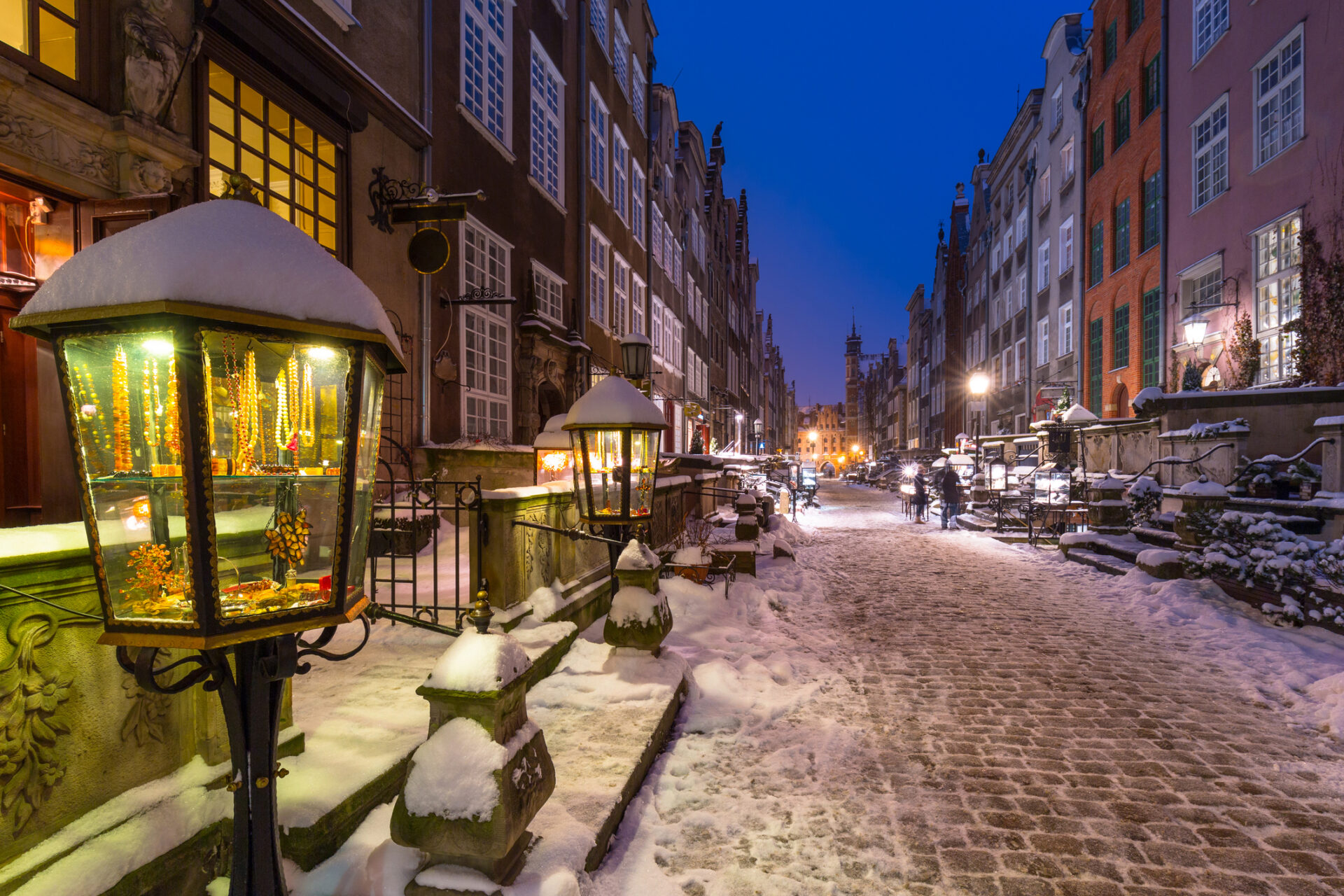
Gdańsk is where Baltic grit meets boardroom chic. And winter suits it perfectly. Our recommendations: wandering past the gingerbread façades of Długi Targ street, warming your hands on mulled wine or any other hot drink and swap networking for neck‑craning as you climb St Mary’s Church tower or the M3 Crane (pro tip: take the sunset hour!) for a cold‑air reality check on how small your inbox looks from above. Oh, and don’t forget to stroll down Mariacka, or Amber Street.
When the temperature drops, Gdańsk moves indoors without losing its edge: the Museum of the Second World War and the European Solidarity Centre are masterclasses in resilience and industrial design. Then some R&R along the Motława riverfront, where winter crowds, soft lights and the occasional pirate ship view make “work–life balance” feel a little less theoretical.
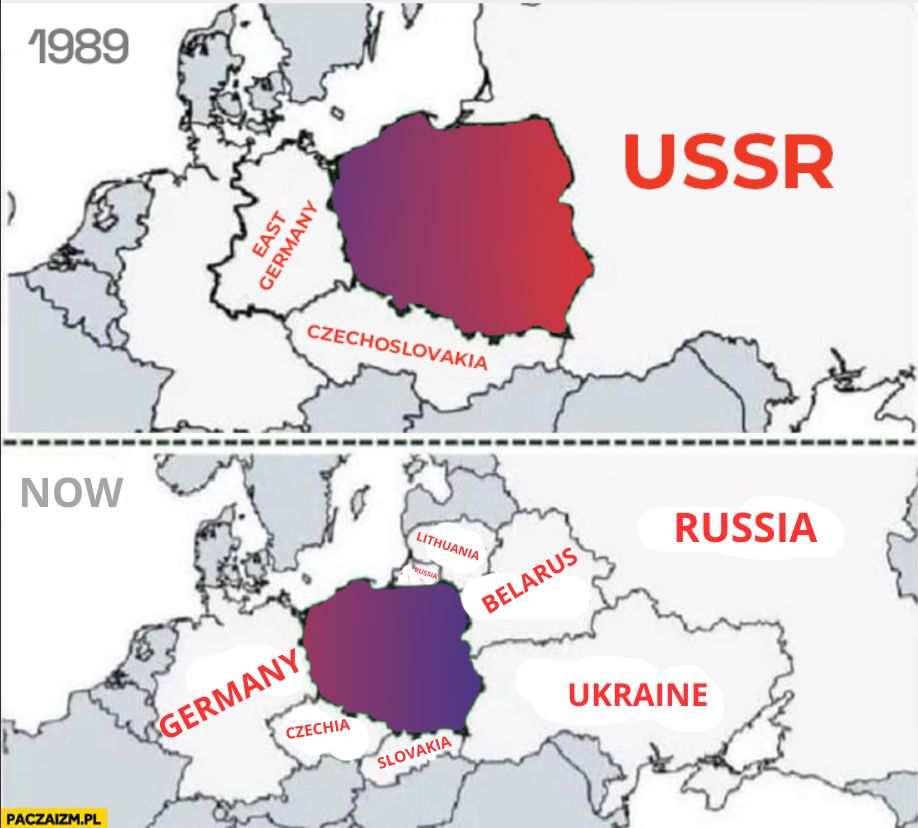
Especially the good ones. And so is 2025. But you know what does not end? Poland. Just take a look - all countries neighboring pre-1989 Poland no longer exist. And we're still here. Just sayin'.