Poland Unpacked week 10 (23 February - 1 March 2026)
Welcome to this week’s edition of our Poland Unpacked, where we deliver key insights and trends shaping the economic, corporate and political landscape. Catch the most important insights from Poland in this week’s briefing.
This article is a part of Poland Unpacked. Weekly intelligence for decision-makers
Autopay is a Polish company specializing in online payments. Had it not been founded back in 1999, it would be routinely labelled a fintech today: the firm has successfully developed innovative payment systems for years. After securing a strong position at home, it moved into neighboring markets. Over the past year, it has gone global, building a network of offices stretching from São Paulo, through Milan and Abu Dhabi, to Singapore. “We will be an important player in payments not only in Europe, but globally,” says the co-CEO in an interview with XYZ.
Rafał Brzoska, founder and chief executive of InPost, is one of Poland’s best-known business leaders and is also deeply involved in social initiatives. In recent days, speculation has intensified that he may now be turning to politics – either by founding a new party or by joining PSL as its leader. Political journalists and PSL politicians alike have fueled the rumors. What does the man himself say? Mr. Brzoska addresses whether he plans to swap business for politics, Europe’s crisis and his idea of “EEC 2.0” as a response, deregulation, the challenges facing Poland, and even a potential takeover of InPost. This is an interview without winks or evasions.
A few days ago saw the conclusion of a dispute over the largest road contract in Poland’s history, worth PLN 5 billion (about EUR 1.15 billion). The core of the case, heard by the National Appeal Chamber, concerned the participation of non-EU companies in the project. Adding spice to the affair is the fact that the claimant was a company owned by… a Turkish construction group, which sought to wrest the contract from a Polish-Turkish consortium. What was the dispute about – and who prevailed?
Enter Air is an airline founded in 2009 by three managers who had previously worked together at the now-defunct Centralwings. For 17 years the firm was run collectively by its founders. After one of them retired, Marcin Kubrak became CEO on February 3. He argues that the company’s stock-market valuation should not be PLN 1 billion, but several billion. He outlined plans that include expanding the fleet by 10% a year, investing in technical infrastructure, and developing a simulator and a flight school.
ING Bank Śląski is Poland’s fourth-largest bank. By assets, it is about 10% smaller than third-placed Santander, which is currently being acquired by Erste. For the past ten months, ING has been led by Michał Boleslawski, and in recent weeks several top bankers have joined its management board from rival institutions. Does this build-up mean ING is aiming for a place on the podium? In an interview, the head of the Dutch bank discusses that question, as well as intensifying competition, the impact of AI on banking, and the boundaries of risk.
The SAFE program dominated Polish politics last week. On Friday, the Sejm passed the bill implementing the fund, following amendments from the Senate. President Karol Nawrocki now has 21 days to make a decision. The president himself has not signaled his intentions, but his advisers are highly critical of SAFE, arguing that it could weaken cooperation with the United States.
SAFE faces opposition from Law and Justice (PiS), the party that supports the president and governed Poland from 2015 to 2023. Internal conflicts within the largest opposition party (PiS) are increasingly audible. It is possible that former Prime Minister Mateusz Morawiecki could face consequences for an online dispute with MEP Patryk Jaki, who criticized his government.
Mr. Morawiecki continues to meet regularly with supporters to bolster his position. At present, he is not among the names circulating as potential PiS candidates for prime minister. As we reported in XYZ, the former prime minister would like to become the new leader of PiS – but not against the current head and party founder, Jarosław Kaczyński. Under PiS rule, it has always been Mr. Kaczyński who appointed the prime ministers.
Meanwhile, Patryk Jaki and colleagues from a faction competing with Morawiecki – whose names are now on the list of potential PiS prime minister candidates – have embarked on a nationwide tour, debating with students under the slogan “Change Our Minds.” The inspiration is clearly Charlie Kirk. The debates will run until May and take place across Poland. We closely followed the first sessions in Wrocław and Lublin.
The dispute over the future of the judiciary has also escalated. After vetoing the government’s bill on the National Council of the Judiciary, President Nawrocki prepared his own draft judiciary law. It proposes severe penalties for judges who challenge the validity of judicial appointments made under the rules introduced during PiS rule. Moreover, it emerged that a co-author of the draft is the lawyer of Zbigniew Ziobro – the former justice minister, currently in Hungary, where he has been granted asylum. Mr. Ziobro originally introduced the provisions that the new government bill sought to reverse. Before his involvement came to light, Dr. Bartosz Lewandowski publicly praised the draft published by the Presidential Chancellery – without mentioning that he was a co-author.
Deputy Prime Minister and Foreign Minister Radosław Sikorski outlined the priorities for Polish diplomacy this year. He emphasized cooperation within the European Union and NATO, as well as support for Ukraine. He identified Washington as a key ally but also highlighted concerns regarding U.S. actions on the global political stage.
Last week brought a fresh set of data on retail sales, labor-market conditions and, above all, the state budget deficit for 2025. In the coming week, the most important release will be a more detailed estimate of GDP for the final quarter of 2025, including the breakdown of growth drivers. Recall that, according to the flash estimate published by the Statistics Poland (GUS), GDP grew by 4 percent year on year in the fourth quarter of 2025.
The state budget deficit for 2025 amounted to PLN 275.6 billion (approximately EUR 63.4 billion), the Ministry of Finance reported. This corresponds to 7.1 percent of GDP. Budget revenues totaled PLN 594.6 billion (around EUR 136.7 billion), while expenditures reached PLN 870.2 billion (about EUR 200.0 billion).
For economists, however, the key metric is the deficit of the entire general government sector. This comprises the central government (including not only the state budget but also off-budget funds, such as those housed at BGK, Poland’s development bank), local government, and social-security funds. This figure will be published in April and is expected to come in at 6.7–6.9 percent of GDP – still a high level.
Since 2020 there has been a sizable gap, measured in percentage points, between the state budget deficit and the general government deficit. The main reason is the much greater role played by off-budget funds since 2020. They were created out of concern that Poland might breach its constitutional public-debt thresholds, which in an extreme scenario would have forced a pro-cyclical fiscal policy – spending cuts or tax increases during a recession.
Retail sales in constant prices rose by 4.4 percent year on year in January 2026, the statistical office said. That is a strong reading, well above the market consensus of 3.1 percent. January’s data confirm the recent strength and resilience of Polish consumers. Over the whole of 2025, retail sales increased by 4.3 percent year on year – a very solid outcome, toward the upper end of forecasts made by analysts at the start of the year. What can be expected from consumption this year? Much will depend on the behavior of the household saving rate, which rose last year. We have possible explanations for this trend in our detailed analysis.
Poland’s labor market reached a historical peak in both employment and the labor-force participation rate in the fourth quarter of 2025, according to data from the Labor Force Survey. The figures stood at 17.35 million people employed and a participation rate of 59 percent for the population aged 15–89.
At the same time, employment growth is slowing. This largely reflects unfavorable demographics – the size of the population aged 15–89 – which, combined with a low unemployment rate (3.2 percent in the fourth quarter of 2025), allows for only limited gains driven by higher labor-force participation.
At the government and public administration level, Poland is stepping up efforts to make the financing of innovation and new technologies more effective. Among other initiatives, a new startup strategy is under development and is expected to be unveiled later this year. Meanwhile, the Innovate Poland program, announced in November 2025, is being rolled out. A key component of this initiative is Future Tech Poland – a dedicated fund launched earlier this year, designed to give a significant boost to the Polish startup ecosystem. The fund is managed by BGK and the European Investment Fund, which will pool PLN 1.5 billion for investments. The capital will be channeled to investment funds, which will then provide both financial and strategic support to startups. In recent days, further details of the program have emerged. The first four to five funds are expected to sign agreements and secure investment capital by the end of 2026.
In parallel, the Ministry of Development is working to streamline another key element of the ecosystem supporting innovation in the Polish economy. Following consultations on the new startup strategy, the focus has shifted to evaluating the R&D tax incentive system. The Ministry plans to assess, among other instruments, the Research and Development Centers (CBR). This review will examine how the market perceives the program and determine its future direction. In March, the Ministry intends to announce a tender and select a firm to carry out a comprehensive evaluation.
Market practitioners have proposed measures such as awarding additional points to CBRs in grant competitions, allowing cash refunds for unused R&D tax credits, and more actively promoting CBR services. The evaluation, scheduled to begin in March, will decide whether the instrument should be strengthened, restructured, or phased out.
Last week saw the announcement of several notable transactions involving Polish technology companies and venture capital funds. Highlights include:
KFB, founded over 16 years ago and specializing in acoustics technologies - including industrial noise monitoring and mitigation tools - has been bought out by its managers and original founders. Funds Nunatak Capital and Lowercap have exited the shareholder base. KFB’s CEO emphasizes that the management buyout is a strategic step preparing the company for its next growth phase. KFB plans to expand client services in environmental technologies and has launched the RAFA platform to support this effort. Acquisitions, both in consulting and technology, are also on the horizon.
American defense startup Vant Systems reported raising USD 60 million in a Series A round (the transaction was formally closed at the end of 2025). The round was dominated by U.S. and Asian capital, led by Bravo Victor Venture Capital. Other investors included Lockheed Martin Ventures, Hanwha Systems, Geodesic Capital, and Airbus Ventures. Joining the round was Polish R+ Family Office - the only European investor in this round, founded and managed by a Pole. Polish-managed VC funds and vehicles still participate relatively rarely in foreign, especially U.S. and Western European, VC transactions. R+, described by its founder as a European multi-family office, focuses on deep tech, dual-use, and defense technologies, with a strong emphasis on U.S.-based investments, supporting local companies in growth and expansion, including in Central and Eastern Europe.
With three of the four governing coalition parties having already elected new leadership, the Civic Coalition (KO) — the largest party in the government — is set to hold its own leadership vote on Sunday, March 8. Prime Minister Donald Tusk, who heads the party, is widely expected to run unopposed.
The current coalition government comprises four main groupings: Civic Coalition (KO), Third Way (itself an alliance of the Polish People's Party and Poland 2050), and the Left. Although Third Way is a joint bloc, its two member parties are holding their leadership elections separately.
This week discover “Lead Children” (Ołowiane dzieci), the gripping Polish miniseries storming Netflix charts since its February 11, 2026 premiere. This six-episode drama transports you to 1970s industrial Silesia, where a young doctor uncovers mass lead poisoning in children from a local factory’s toxic emissions, fiercely battling communist-era cover-ups and bureaucracy. You get a glimpse of everyday heroism amid PRL-era grayness, polluted streets, and systemic oppression. Blending true events with unflinching social commentary on environmental neglect.
 Zaakceptuj pliki cookies, żeby obejrzeć wideo.
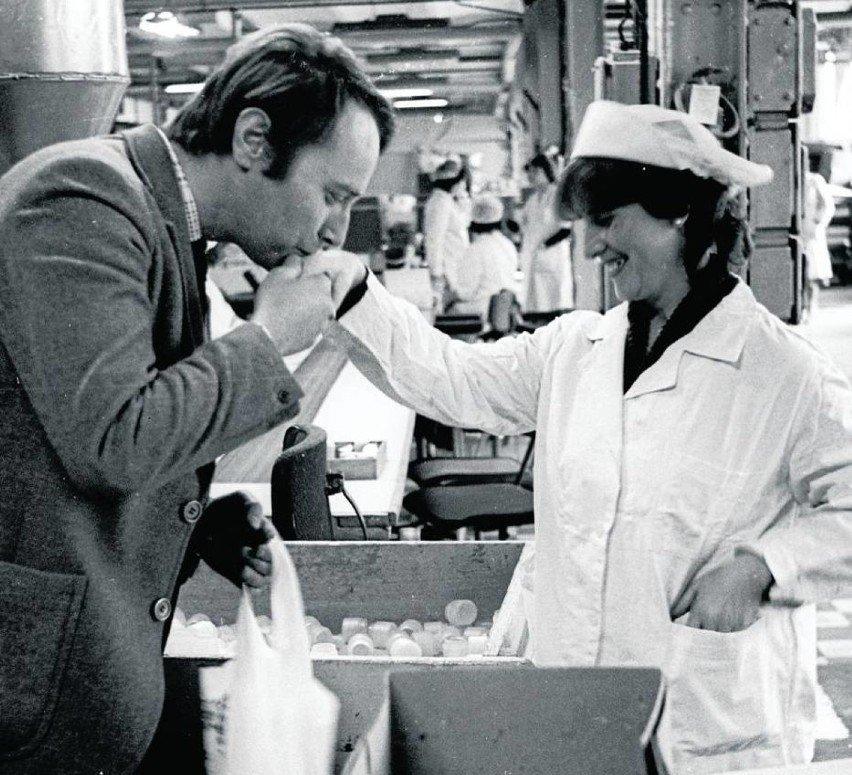
 March 8 is quite a date in Poland. It blends socialist-era pageantry with timeless gallantry – a PRL tradition where men queued for carnations (goździki), elusive nylons (rajstopy), and the classic hand-kiss, all state-sanctioned as “equality with flair.” It turned gray factories into fleeting flower markets. Today, it’s nuanced: widely cherished for its warmth (think office serenades and family toasts), yet debated amid feminist critiques – proving this chivalric custom endures as both heartfelt habit and cultural lightning rod. Just see how many street vendors in Poland will be offering flowers this week…