
Poland Unpacked week 19 (27 April - 3 May 2026)

Welcome to this week’s edition of our Poland Unpacked, where we deliver key insights and trends shaping the economic, corporate and political landscape. Catch the most important insights from Poland in this week’s briefing.

Loading the Elevenlabs Text to Speech AudioNative Player...
Business
Streaming millions, suing giants, shaking boards
Małgorzata Grzegorczyk

The week began on a high note, with Poles demonstrating their ability to unite behind a good cause. YouTuber Łatwogang raised more than PLN 280m (EUR 65m equivalent) in just a few days of streaming for the Cancer Fighters foundation supporting sick children – a global record for fundraising in this format. By comparison, French ZEvent, which has hosted a three-day streaming event annually since 2016, raised EUR 16m last year. That is also more than the amount raised this year by the WOŚP (The Great Orchestra of Christmas Charity, which for 34 years has mobilized the entire country at the start of each year to support the healthcare system. Why did a young online celebrity outperform an organization with such a vast institutional base? Read here.

It was also a strong week for Rafał Brzoska and Omenaa Mensah. The entrepreneurial couple took legal action against Meta Platforms. In 2024, fraudulent investment ads began appearing en masse across Facebook and Instagram, exploiting the likenesses of Brzoska and Mensah. Meta’s lawyers argued they had no control over ad content, citing the Digital Services Act. On March 27, however, the Warsaw Court of Appeal ruled that Meta bears responsibility for the content of advertisements. The decision could have far-reaching implications for how big tech companies are held accountable for cybercrime. Get to know the details here.

Beko Europe, which acquired Whirlpool’s European appliance factories in April 2024 and subsequently announced the closure of three plants in Poland, two in Italy, and one in the UK, has now revealed its next steps for the first time. In an interview with XYZ, the company’s CEO outlines how much it plans to invest in Poland, how it intends to compete with Chinese manufacturers, and what factors will determine whether further layoffs are avoided.

The week ended less favorably for the four members of the management board of the Polish Investment and Trade Agency (PAIH), the state body responsible for attracting foreign investment into Poland. On Wednesday, April 29, the supervisory board was reshuffled; by Thursday morning, the new board had dismissed the entire management team and seconded one of its own members, Artur Osuchowski, to the board. XYZ has reported on the reasons behind the move, how the change carried out, and what may lie ahead for an agency familiar to every foreign investor operating in Poland.

Economy & Markets
Inflation edges up as the government postpones fiscal consolidation
Michał Kulbacki

The most important data released last week was the preliminary inflation reading. Inflation reached 3.2% year-on-year in April, up from 3% in March. The increase was driven primarily by higher fuel prices, as well as a rise in electricity and gas prices, which climbed 4.7% y/y. Compared with March, prices in the economy rose by 0.6% in April.

That said, the figure can be seen as a negative surprise, as it came in higher than a month earlier despite the introduction of the government’s “Lower Fuel Prices” (CPN) program. The scheme reduced VAT and excise duties on fuel at petrol stations. April’s inflation reading remains within the National Bank of Poland’s target band (2.5%, with a tolerance of ±1 percentage point), but it increases the risk of a more hawkish monetary policy stance.

Another key development was the government’s report on the implementation of its medium-term budgetary and structural plan. The government assumes a reduction in the deficit from 7.3% of GDP in 2025 to 6.8% in 2026, while public debt is projected to rise to 65.1% of GDP. The problem is that previous forecasts have tended to be significantly underestimated. It is therefore unlikely that any meaningful fiscal consolidation will take place before the parliamentary elections scheduled for autumn 2027. The issue will resurface afterwards. The European Commission estimates that consolidation on the order of around 1 percentage point annually will be required through 2032.

In our longer analysis, we examine trust between nations in Europe. Poles, it turns out, rate themselves most highly – followed by Czechs, Slovaks, Britons, and Hungarians. Germans, by contrast, are rated the least favorably. The sentiment is mutual: Germans also rate Poles very poorly.

Politics & Policy
Calm on the right, tensions in government
Krzysztof Figlarz

April proved to be an unusually eventful month on Poland’s political stage. In recent weeks, even the most hardened connoisseurs of political life have been closely following the seemingly endless soap opera dubbed “The Breakup of Law and Justice”. In this newsletter, we have tried – no easy task – to guide you through the intricacies of a divided Polish right. By the end of the month, tensions within Jarosław Kaczyński’s party had temporarily subsided and – at least for now – the issue of former prime minister Mateusz Morawiecki, an advocate of a more centrist course, potentially leaving Law and Justice has been quietly shelved.

Yet the unwritten rules of Polish politics suggest that when the opposition calms down, the government is likely to start quarrelling. Surprise, surprise: the ruling coalition has entered a phase of public infighting and mutual threats.

It began with the opposition’s ritual motions of no confidence against the minister of climate and environment, Paulina Hennig-Kloska (Centre), and the non-partisan minister of health, Jolanta Sobierańska-Grenda.

Such motions are hardly unusual. They allow the opposition to seize the initiative and enjoy its five minutes of attention through the customary critique of government ministers. The parliamentary majority, in turn, rallies to defend its representatives and duly proclaims the expected victory. The opposition exercises its right to criticize; the government later claims its prerogative to declare success. Nihil novi sub sole.

This time, however, the motions stirred genuine emotion. Individual MPs from Poland 2050, a member of the ruling coalition, threatened to withhold their support for Ms. Hennig-Kloska. Why? She is a former member of Poland 2050 who lost the party leadership vote in February and shortly thereafter left, taking her allies with her. She went on to form the politically marginal Centre grouping, which nonetheless remains a loyal coalition partner to Donald Tusk.

Meanwhile, the new leader of Poland 2050, Katarzyna Pełczyńska-Nałęcz, has at times clashed with the finance minister, Andrzej Domański (Civic Coalition), as well as with the prime minister Tusk himself, with whom she maintains a distinctly cool relationship – mutually so.

On Thursday, the Sejm rejected the opposition’s motions of no confidence against both ministers. In the end, only a single Poland 2050 MP broke ranks in the vote concerning the climate minister.

It was always likely that much ado would come to little. At present, a split within the coalition is in no one’s interest.

As we have discussed at length this week, however, the votes were not Donald Tusk’s only concern. While his party’s ratings remain respectable and overall support for the government is stable – if hardly exceptional – the prime minister has more reasons to worry. He is losing more progressive voters, as well as those demanding accountability for his predecessors. Critics also accuse him of pursuing an opportunistic and cynical line. Yet Mr. Tusk still has an ace up his sleeve. What is it? We invite you to read our in-depth analysis here.

Startups / VC / Tech
Seed-heavy, growth-light: Poland’s VC imbalance
Anna Bełcik

The first quarter of 2026 on Poland’s venture capital market delivered what looked like strong results. In reality, they were largely driven by a single deal: ElevenLabs’ funding round worth PLN 1.81bn (approx. EUR 420m). This transaction alone pushed the total value of investments to around PLN 2.12bn (approx. EUR 490m). Excluding it, the market reached just PLN 308m (approx. EUR 72m), marking a relatively low level of activity – one of the weaker quarters in recent years.

The market structure reveals a clear imbalance. Seed rounds dominated, accounting for the majority of companies, while funding at later stages remained very limited. No growth rounds were recorded in the period, and the number of larger transactions was minimal. This points to a bottleneck in scaling companies further and a constrained supply of capital for more mature ventures. Read more about it here.

Venture capital investment in Poland still only marginally covers scientific and academic projects. By some estimates, only around 10% of transactions include a scientific component, while projects based directly on university intellectual property make up a negligible share of the market. This is despite the rising global importance of deep tech, increasingly seen as a future source of competitive advantage for economies. In line with global trends, investors are moving away from easily replicable models such as apps or marketplaces, shifting their focus toward more advanced technologies, often developed in academic environments.

Last week, we also reported that UniCredit had signed a financing agreement with Polish fintech Wealthon based on receivables sales, with a value of up to PLN 0.5bn (approx. EUR 116m). The company provides financing to SMEs and then sells the receivables to the bank, while retaining servicing and client relationships. The agreement ensures Wealthon steady access to capital, lowers its funding costs – by up to half compared with previous sources – and enables further scaling of its operations.

The partnership aligns with UniCredit’s Banking-as-a-Service (BaaS) and embedded finance strategy. The bank provides partners with technology, a license, and funding – among other things through the automated purchase of receivables – boosting lending capacity and operational flexibility for fintechs.

Wealthon is planning rapid growth. After extending approximately PLN 110m (approx. EUR 25m) in financing in 2025, it aims to reach as much as PLN 1bn (approx. EUR 232m) within three years. At the same time, it is expanding its ecosystem of services for entrepreneurs, covering financing, payments, and business management tools, including those based on its newly obtained National Payment Institution license. Here's the full story.

Are courts, understood as physical buildings, becoming obsolete? The role of artificial intelligence and technology is expanding across many areas of life and the economy. One such area is arbitration, which is emerging as an alternative to lengthy court proceedings. In Poland, court cases take on average more than a year, and in practice often several years. By contrast, online arbitration allows disputes to be resolved much faster – within weeks, or in extreme cases, within dozens of hours.

The development of so-called legal tech makes it possible to move dispute resolution processes online without compromising quality. Modern IT systems use AI to analyze documents, detect errors, build a “dispute map,” and automate formalities. As a result, preparing a claim can take minutes, and many administrative tasks are handled automatically.

AI, however, plays a supporting role – it does not replace the arbitrator, who remains the final decision-maker. Technology takes over repetitive tasks, allowing lawyers to focus on the substance of the case. At the same time, experts point to risks such as AI errors and data confidentiality concerns. Read our look on the matter here.

After hours
From Tokyo to Wrocław
Michał Szcześniewski

Looking for an excuse to visit Wrocław? You have it. This is one of those quietly striking exhibitions that rewards slow looking. “Sunrise in the West” brings together three Japanese-born artists – Koji Kamoji, Yoshio Nakajima, and Keiji Uematsu – who built their careers across Europe during the Cold War, each in a different corner of the continent. What links them isn’t style so much as sensibility: a shared focus on nature, space, and philosophical reflection, expressed through minimalist forms and conceptual gestures. The show moves between media – drawing, sculpture, film, performance – but keeps a contemplative rhythm, especially in the works of Kamoji and Uematsu, where simple materials like stone, paper, and wood carry surprising emotional weight.
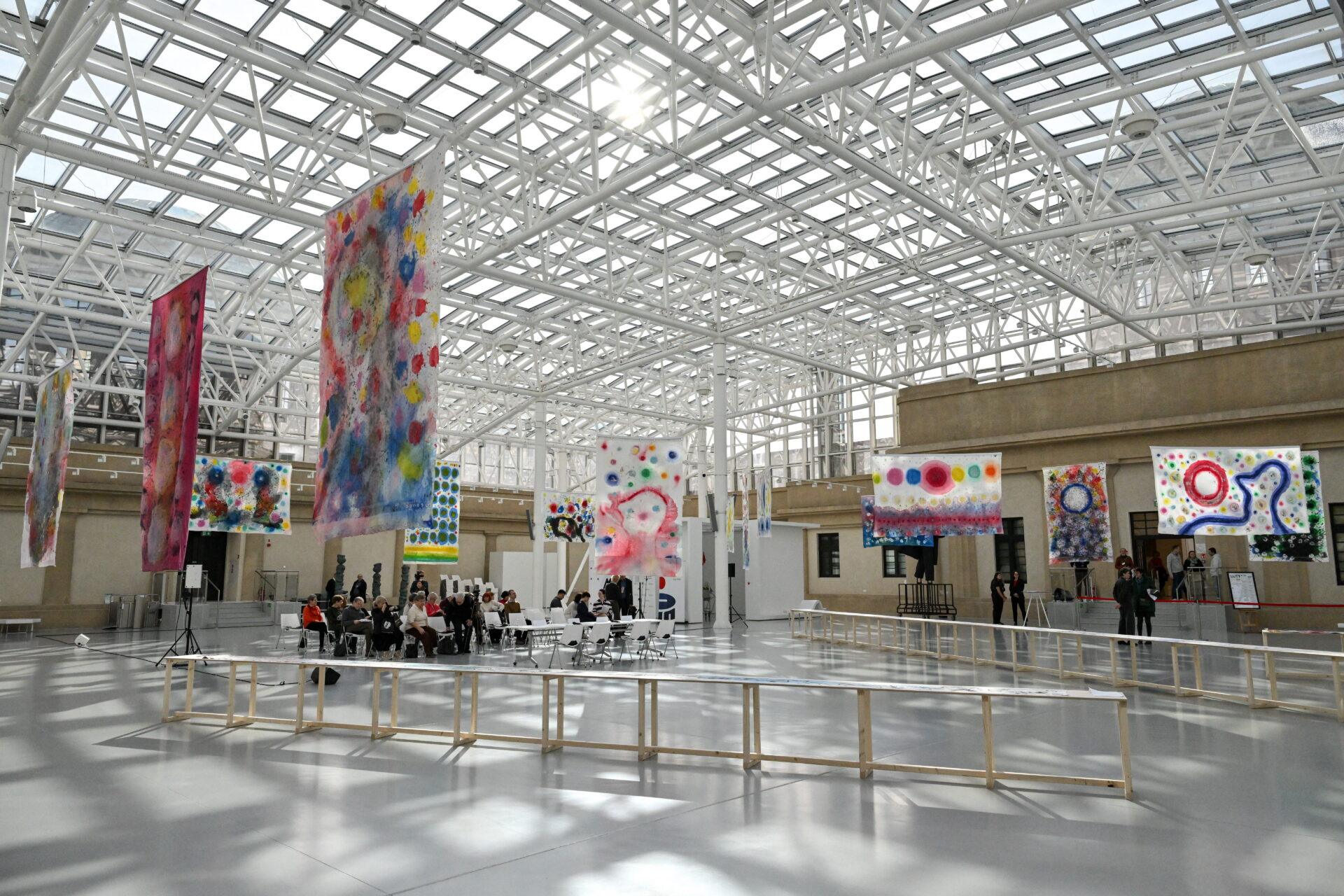
Set inside the striking space of the Four Domes Pavilion, the exhibition becomes a kind of meeting point between East and West, past and present, stillness and action. Photo: PAP/Maciej Kulczyński

There’s also a strong sense of process and movement across borders – both geographic and artistic. Nakajima’s section stands out for its energy and political edge, tracing his evolution from anti-consumerist happenings to performative paintings centered on the symbol of the sun; one piece was even completed live during the opening. Set inside the striking space of the Four Domes Pavilion, the exhibition becomes a kind of meeting point between East and West, past and present, stillness and action. It’s less about spectacle and more about attention – perfect if you’re looking for an art experience that lingers after you leave.

Where: National Museum in Wrocław (https://mnwr.pl/en/sunrise-in-the-west/)
When: 1 March – 31 May 2026

fun fact about poland
The constitution that tried to save a country
Michał Szcześniewski

In Poland we love a good underdog story. And the Constitution of 3 May 1791 is exactly that. It was Europe’s first modern constitution and the second in the world after the United States, which is impressive enough. But here’s the twist: it was passed in near secrecy, with reformers essentially outmaneuvering conservative nobles who might have blocked it. Think of it less as a sleepy parliamentary vote and more as an 18th-century political heist – complete with timing, intrigue, and a sense that history was being bent, just for a moment, in Poland’s favor.

The original manuscript of the Constitution of 3 May on display at the Office of the Prime Minister in Warsaw. Photo: PAP/Paweł Supernak

The constitution aimed to fix a state that was already wobbling under internal dysfunction and foreign pressure. It abolished the infamous liberum veto (which had allowed any single noble to derail legislation) and tried to strengthen central authority. In other words, it was Poland attempting a systemic reboot before the concept existed. It didn’t last long – Russia and its allies made sure of that – but its symbolic power stuck. Today, 3 May isn’t just about what worked. It’s about the rare moment when Poland tried to outpace its own problems – and nearly pulled it off.