
Poland Unpacked week 2 (5-11 January 2026)
Welcome to this week’s edition of our Poland Unpacked, where we deliver key insights and trends shaping the economic, corporate and political landscape. Catch the most important insights from Poland in this week’s briefing.
This article is a part of Poland Unpacked. Weekly intelligence for decision-makers
InPost, the Polish logistics operator renowned for its widespread parcel lockers across Europe and listed on Euronext with a market capitalization of EUR 7 billion (PLN 32.2 billion), announced on Tuesday that it had received an indicative proposal for the potential acquisition of all its shares. Notably, Rafał Brzoska, InPost’s founder and CEO, holds a 12.5 percent stake in the company. InPost said a special committee would evaluate the proposal. Following the news, more than 20 short-selling funds that had bet against InPost suffered significant losses exceeding EUR 100 million (PLN 460 million), with further losses expected.
Allegro, a leading Polish e-commerce platform, finalized on January 7 the sale of 100 percent of its stakes in Slovenian Mimovrste and Croatian Internet Mall. The two companies, which generated annual revenues of EUR 100 million (PLN 460 million), had incurred substantial EBITDA losses amounting to several dozen million zloty. Allegro had acquired them in 2022 as part of its EUR 881 million (PLN 4.05 billion) purchase of the Mall Group. The buyer is the German fund Mutares. Allegro will now focus on Czechia, Slovakia, and Hungary – markets with a combined potential client base of 25 million, compared with just 7 million in Croatia and Slovenia. Investors reacted positively: Allegro’s Warsaw Stock Exchange share price rose nearly 5 percent on January 7, lifting its market capitalization to PLN 35 billion (EUR 7.6 billion).
Vodeno, led by well-known Polish banker Wojciech Sobieraj, offers a Banking-as-a-Service (BaaS) platform. Leveraging UniCredit’s banking license, Vodeno enables other companies to seamlessly integrate banking services into their own ecosystems. BaaS is expected to account for one-third of Vodeno’s revenues, with another third coming from UniCredit’s banking operations in Poland, and the remainder from banking services in Western Europe.
Biuro Informacji Kredytowej (BIK), established by nine major banks and the Polish banking association (ZBP), is the sole source of credit information for the sector. Its 29-year monopoly is now under scrutiny: some argue it should be broken, while others believe centralization ensures lower costs and greater safety. Read on to learn what could change, how, and when.
PZL-Świdnik, the helicopter manufacturer under the Italian Leonardo Helicopters group (formerly AgustaWestland), is investing PLN 200 million (EUR 43 million) to expand capacity at its plant in Świdnik, southeastern Poland. This follows a 2022 order by the Polish army for 32 AW149 helicopters, a contract worth PLN 8.25 billion (EUR 1.8 billion). The first 10 helicopters were produced in Italy, and in November 2025, the Świdnik factory delivered its first locally produced helicopter.
Polish, often ranked among the world’s most difficult languages to learn, is rich in proverbs and sayings. One of them is literally “to greet the goose” and roughly means being on the verge of achieving a goal but ultimately falling short. In politics, as we know, such scenarios are all too common.
This time, the one “greeting the goose” was Agnieszka Dziemianowicz-Bąk, head of the Ministry of Family, Labor and Social Policy, who hails from the left-wing faction of the ruling coalition. The ministry had drafted a proposal intended to strengthen the powers of the National Labor Inspectorate (Państwowa Inspekcja Pracy, PIP), the body responsible for monitoring working conditions in companies. The key measure was to grant PIP the authority to convert civil law contracts – such as B2B agreements – into standard employment contracts by official decision following inspection, but only where an employment relationship could reasonably be presumed.
In certain sectors, notably IT, B2B contracts are a popular mode of employment, primarily due to favorable taxation. However, employees under such arrangements are not covered by the Labor Code – they have no statutory right to paid leave or sick leave unless the employer agrees. Among highly sought-after specialists, this practice is common. It is also no secret that a significant share of this workforce constitutes the electorate of the liberal Civic Coalition (KO).
Conversely, some institutions and companies use B2B contracts purely as a cost-optimization tool, with employees receiving no leave or sick pay, even where an employment relationship is presumed. The bill’s authors aimed primarily to protect less privileged workers and to level the playing field across the market. Viewed politically, the measure would mostly affect young people with unstable employment – precisely the demographic the Left, including Ms. Dziemianowicz-Bąk, seeks to engage.
Although the draft law was approved at the so-called Standing Committee of the Council of Ministers – or more simply, by the government – earlier this week Prime Minister Donald Tusk unilaterally announced that he did not support the proposal and that it would not proceed further. The decision caused consternation within the governing camp and once again split coalition partners. Civic Coalition (KO) deputies defended Mr. Tusk’s decision, but representatives of the Left did not hide their disappointment. Why did Mr. Tusk’s move provoke such strong reactions?
Last week, we also examined another political dispute – this time between the camp of right-wing President Karol Nawrocki and the Ministry of Foreign Affairs, led by Radosław Sikorski from the Civic Coalition (KO). The two have been at odds for months over ambassadorial appointments. As a result, many Polish diplomatic missions abroad are headed by lower-ranking officials.
The first full week of January brought little in the way of macroeconomic data or events. We therefore focused on the so-called freezing of tax thresholds. The term may sound technical, but the concept is straightforward: taxpayers’ incomes are rising rapidly, yet the tax-free allowance (PLN 30,000 / EUR 6,400) and the second income tax bracket (PLN 120,000 / EUR 25,500) remain unchanged. The result is a rising effective tax rate.
According to the Ministry of Finance (MF), freezing the thresholds added the equivalent of 0.44% of GDP in 2024 (around PLN 16 billion / EUR 3.4 billion) and 0.32% of GDP in 2025 (around PLN 12.5 billion / EUR 2.7 billion). MF analysts project roughly PLN 14 billion (EUR 3 billion), or 0.28% of GDP, in additional revenue in 2026. Over the 2024–26 period, the measure will therefore generate about PLN 42.5 billion (EUR 9 billion) in extra public revenue - more than 1% of GDP.
This is the government’s most significant revenue-side initiative. It helps restrain the projected deficit, expected to reach 6.9% of GDP in 2025, while offering a communications advantage: the rise in personal income tax occurs automatically, with no annual announcement required. For this reason, some economists describe it as a creeping, hidden tax increase.
We also looked at regional development across Poland. The Warsaw Metropolitan Region (RWS) stands out, with GDP per capita reaching 200% of the national average. Cities are the main engines of productivity and income: every voivodeship hitting at least 90% of the national average hosts a major metropolis. Other regions above the national average include Lower Silesia (Wrocław), Greater Poland (Poznań), and Silesia (Katowice).
Historically, attention has focused on the relative lag of eastern Poland, dating back to the Second Polish Republic (1918–1945). Our analysis confirms that voivodeships in the east generate the lowest per-capita income, though the north and northwest are only marginally better off.
Poland’s technology industry is kicking off the year with momentum. On Thursday, January 8, the Future Tech Poland fund officially launched. The joint venture, backed by Bank Gospodarstwa Krajowego (BGK, state development bank) and the European Investment Fund, is the first concrete step in the Innovate Poland program unveiled just weeks ago.
The fund aims to energize the domestic venture capital market, with a particular focus on increasing the engagement of Polish investors. Future Tech Poland will make PLN 1.5 billion (EUR 320 million) available for venture capital investments in young technology companies. Two-thirds of the capital comes from BGK, with the remainder – PLN 0.5 billion (EUR 107 million) – supplied by the European Investment Fund.
Future Tech Poland will back funds investing across the spectrum: from seed and startup rounds to later-stage venture and growth capital. BGK anticipates that roughly 10 to 15 funds will benefit from the scheme.
Poland’s tech landscape also saw a high-profile departure. Magdalena Kotlarczyk, Country Director at Google Poland, will leave after nearly 15 years at the helm.
“Twenty years of Google in Poland are behind us (almost 15 of mine), and I’m turning 50 – so the timing is right. In 2026, a new Country Director will take over at Google Poland. I will wrap up my Google mission on March 31 and set off into the world. I am proud and grateful for nearly 15 years of an extraordinary professional journey, for the chance to support our clients and partners as their businesses and projects grew, while Google Poland expanded rapidly,” Ms. Kotlarczyk wrote on LinkedIn.
Google is seeking a successor with at least 15 years’ experience in management within the internet, technology, or marketing sectors, as well as a track record of leading teams in international companies.
Poland’s artificial intelligence efforts are also gaining recognition. Version 3 of Bielik, a Polish language model developed by the SpeakLeash Foundation on the supercomputers of AGH University of Science and Technology’s Academic Computing Centre “Cyfronet” in Kraków, ranked fourth in multilingual tasks on EuroEval, a benchmark platform for large language models (LLMs). Typically dominated by global tech giants, the leaderboard saw the Polish model outperform Nemotron 30B (Nvidia), OLMo 32B, and Llama 3.1 8B (Meta).
Meanwhile, Poland’s government app mObywatel, which provides citizens with access to basic administrative services, launched its first virtual assistant. Powered by the Polish language model PLLuM, the chatbot helps users locate forms and applications and guides them step by step through administrative procedures.
This week, the key event will be the Monetary Policy Council’s (RPP) decision on interest rates. In addition, data on the balance of payments will be released, along with the final inflation figures for the past year.
Imagine a network of miniature railway exhibits that bring everyday Polish life to life in a visually stunning, Instagram-friendly way. Hop in to Kolejkowo. A blend of museum vibes and family-friendly fun. Locations span four cities: Wrocław, Gliwice, Jelenia Góra, and the newest addition since 2025 in Warsaw. What you get? Intricate models featuring trains, cars, mountain scenes, villages, and urban landscapes with a day-night cycle. A great way to familiarize with Polish scenery and customs.
Find all the info at: https://kolejkowo.pl/en
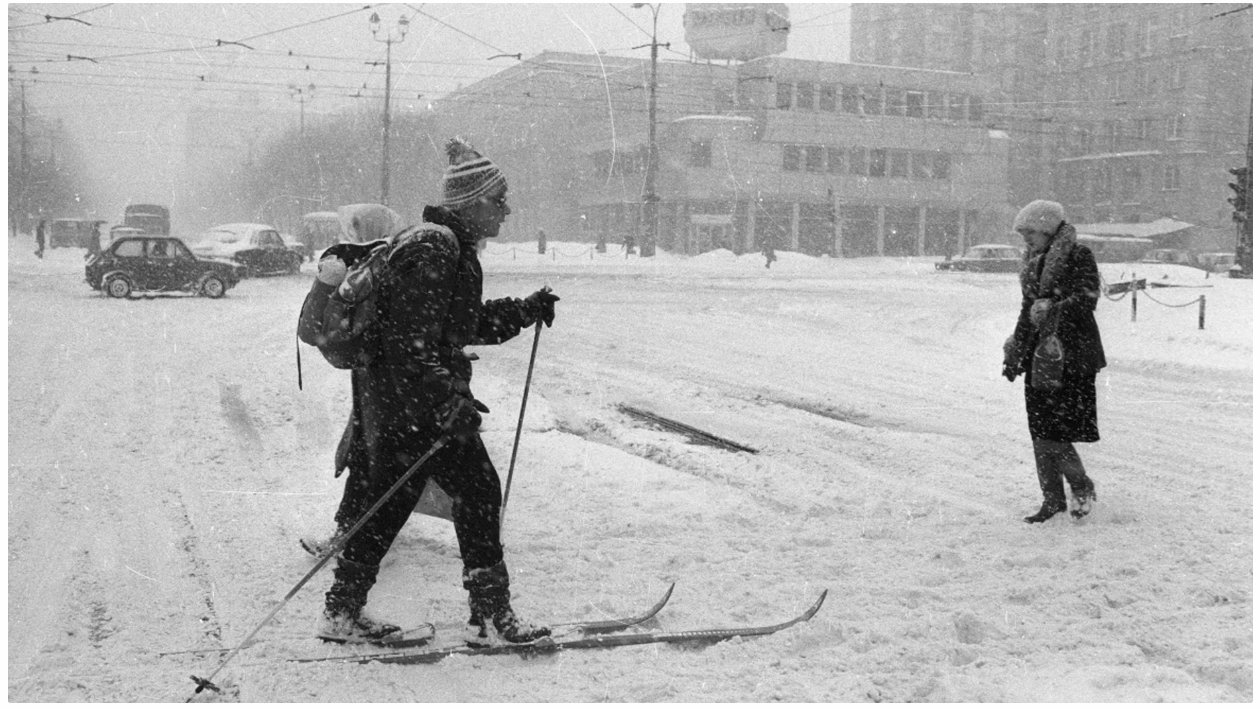
That time when winter decided to test whether the communist system could function when temperatures plummeted to -30°C. The ”winter of the century” (zima stulecia) descended upon Poland on New Year’s Eve 1978. It wasn't just meteorological drama – it was a full institutional meltdown: railway tracks shattered from the cold, power stations went dark because coal trucks couldn't move through snow drifts, and buses in some towns didn’t drive through streets but through tunnels carved into the white.
Fun fact: If you ask any random Pole about the zima stulecia, you’ll find they don’t just remember it – they lived through it with the intensity of someone who personally fought off snowdrifts using their bare hands and a revolutionary spirit. That includes those who weren't even born yet...