
Poland Unpacked week 51 (15-21 December 2025)
Welcome to this week’s edition of our Poland Unpacked, where we deliver key insights and trends shaping the economic, corporate and political landscape. Catch the most important insights from Poland in this week’s briefing.
This article is a part of Poland Unpacked. Weekly intelligence for decision-makers
We begin last week’s roundup with a major event that took place on Friday: Ukrainian President Volodymyr Zelensky visited Poland.
During his visit to Warsaw, President Volodymyr Zelensky met with Polish President Karol Nawrocki, Prime Minister Donald Tusk, and the speakers of both houses of parliament. Talks focused on security, military and financial assistance, as well as historical issues.
In recent weeks, Polish President Karol Nawrocki has suggested that Ukrainian President Volodymyr Zelensky should come to Poland and acknowledge Polish assistance. This rhetoric forms part of a broader narrative on the Polish right, which at times implies ingratitude on the part of Ukraine, with its most extreme elements exploiting anti-Ukrainian sentiments.
Zelensky, however, has repeatedly expressed his gratitude to Poland. During a joint appearance with President Nawrocki, the Polish president referenced a perceived lack of appreciation from Ukraine, while simultaneously reaffirming Poland’s support.
“This visit is bad news for Russia,” President Nawrocki said.
Zelensky thanked Poland for its active role in persuading EU partners to approve the EUR 90 billion loan to Ukraine – a decision he called a breakthrough that strengthens Kyiv both politically and financially. He stressed that Europe, including Poland, demonstrated unity despite Russian pressure.
Regarding bilateral relations, Zelensky warned that Russia seeks to undermine the Polish‑Ukrainian alliance and said both sides must avoid any actions that could damage it. He met President Nawrocki for the first time, describing it as an important step toward rebuilding trust.
He also addressed difficult historical topics, including the Volhynia issue, assuring that Ukraine “does not and will not block” exhumations and search efforts for victims. Volhynia, in Polish-Ukrainian relations, refers to the 1943-1945 massacres during World War II, when the Ukrainian Insurgent Army (UPA) conducted ethnic cleansing operations in the Volhynia region (now western Ukraine), killing 50,000-100,000 Polish civilians to secure a Ukrainian-majority territory.
Poland officially recognizes these events as genocide, while Ukraine describes them as part of a broader wartime conflict involving Polish retaliatory actions (resulting in 2,000-3,000 Ukrainian deaths), leading to ongoing tensions over exhumations, memorials, and UPA commemoration.
Zelensky expressed interest in joint defense industry projects, particularly in drone and missile production, and highlighted Poland’s role as one of Ukraine’s strongest advocates for EU and NATO membership.
From the Polish side, Prime Minister Tusk underlined that “Ukraine’s fight is a common cause for Poland and Europe,” while the Presidential Office spoke of a new opening in bilateral relations.
On the flipside, events in Ukraine are a historic and civilizational opportunity for eastern Poland - this is how Konrad Fijołek, Mayor of Rzeszów, describes the end of the war in Ukraine. He argues that “because of its geographic location, the time of prosperity for eastern Poland is finally arriving.” In the interview, he discusses both the challenges and the benefits facing a city that has become a pivotal hub for cooperation between the Western world and a Ukraine at war
Marcin Grzymkowski is a Polish entrepreneur who made his fortune in e-commerce. He built eObuwie, an online footwear platform, which he sold to the CCC Group in early 2021, pocketing around PLN 1 billion (EUR 237 million). Four years ago, he founded Sportano, an online sporting-goods retailer. Now he has secured what many in the industry call the Holy Grail: a direct agreement with global giant Nike. He told us how it came about and why the deal is so significant for a company that, in just four years, has reached revenues of PLN 0.5 billion (EUR 118m).
InPost’s acquisition of Yodel was one of the most spectacular Polish outbound investments of the year. The Polish company acquired the British parcel delivery firm for more than GBP 100 million. The former owner attempted to block the takeover, but a British court dismissed his claims. Now, in proceedings brought by the company’s new management, it has emerged that the businessman relied on forged documents intended to substantiate his case. The story has all the elements of a high-stakes corporate thriller – one that could easily serve as the basis for a business suspense film.
A revolution is beginning in Poland’s energy sector. The system’s greatest weakness lies in its transmission networks – but that is about to change. The central objective of the new strategy unveiled a few days ago by PSE, the grid operator, is to prepare the energy system to operate without coal- and gas-fired power plants. Achieving this will require revolutionary changes in the way the system is managed, as well as major investments in infrastructure. This is the plan.
dm is committing hundreds of millions of zlotys to Poland. The drugstore chain, which across Europe – including its home market of Germany – is significantly larger than Rossmann, is still building its position in Poland, effectively operating as a startup. Its expansion strategy in the Polish market is unusually distinctive, as Markus Trojansky, Managing Director of dm-drogerie markt in Poland, explains in our conversation.
Emotions were stirred by a symbolic decision of President Karol Nawrocki, who moved the famous Round Table from the Presidential Palace to the Museum of Polish History. The Round Table is historically significant as the site where, in 1989, the terms for a peaceful transition of Poland’s political system were agreed. Nawrocki represents a critical current toward that agreement – a move that displeased the government.
Tensions between the president and the ruling coalition were evident in other areas as well. Nawrocki vetoed laws raising the sugar tax and alcohol excise, as well as an education reform. The coalition attempted to override his veto on a law prohibiting keeping dogs chained. Some PiS MPs – normally supportive of the president – voted differently than they had months earlier. In just four months, President Nawrocki vetoed 20 laws.
On the judicial front, the European Court of Justice (ECJ) ruled that Poland’s Constitutional Tribunal does not meet the standards of an independent and impartial court. When PiS came to power in 2015, several judges were appointed to the Tribunal under legally questionable circumstances. The ECJ ruling now opens the door to challenging judgments issued with the participation of these judges.
Another surprise came from the polls, in which the Konfederacja Korony Polskiej (Confederation of the Polish Crown) took third place. The party is led by controversial MEP Grzegorz Braun, known for his pro-Russian and antisemitic views, who placed fourth in the presidential election. Mr. Braun’s party narrowly outperformed Konfederacja Wolność i Niepodległość, from which it had split. XYZ has provided a detailed profile of the political environment surrounding Mr. Braun.
Last week, a batch of current data on the Polish economy was released, covering the labor market, industry, and foreign trade.
On the labor market, the key trend in recent quarters has been declining wage growth. Nominal wage growth in the enterprise sector (covering firms with at least 10 employees) has fallen noticeably over the past year. In January, year-on-year growth stood at 12.4%, but by November it had dropped to just 7.1%. This represents a slight uptick from October’s 6.6%, yet in 2026 further slowing is expected, partly due to the modest 3% increase in the minimum wage. Nonetheless, wage growth will remain above inflation, boosting consumers’ real purchasing power.
Industrial output rose by 0.8% in November (seasonally adjusted). The industrial sector is expanding gradually, driven primarily by a rebound in capital-goods production, which has averaged nearly 10% year-on-year over the past three months. This momentum reflects spending from the National Recovery Plan (KPO), which Poland must utilize by the end of 2026, as well as renewed investment in the European energy sector. In contrast, output of other types of goods remains weaker.
Exports are growing faster than production. In October, goods exports rose by 4.5% year on year, supported in part by increased sales of consumer goods. This category has been experiencing a rebound in recent months, while growth in services exports is slowing, reaching 6.2% year on year in October. From the perspective of the Polish economy, services are a highly significant sector, generating over EUR 3 billion in monthly trade surplus.
One factor behind slowing growth in services exports is the strong zloty. This year, the zloty has appreciated by as much as 14% against the U.S. dollar, undermining the price competitiveness of Polish exports. Other regional currencies have strengthened even more. For now, the benefits of a strong currency dominate – cheaper imports help curb inflation – but over time, this calculation is likely to shift.
American and Chinese companies dominate the global race in generative artificial intelligence. This does not mean, however, that Europe is out of the game. Many firms - including Polish ones - are seeking growth opportunities beyond Europe. The clear “face” and leader of this effort is ElevenLabs, whose Polish founders were recently featured on the cover of Forbes in the United States.
There are more ambitious players. One example is the domestic project Bielik, an advanced next-generation Polish language model based on generative artificial intelligence (GenAI). The project emerged from the work of a team operating under the SpeakLeash Foundation and the Academic Computer Center Cyfronet AGH. It is a grassroots initiative driven by true enthusiasts. Bielik has been in development for years, and recently a strategic partnership was announced. The Polish model will be trained using the application of another homegrown champion – InPost, the logistics and technology company expanding across European parcel pickup networks (such as automated parcel lockers). In practice, Bielik will reach 15 million InPost users. Moreover, Rafał Brzoska, founder and CEO of InPost, has been appointed chair of Bielik’s Business Council. Both sides stress that this is just the beginning of their offensive.
Another key development last week in Poland’s tech landscape is the success of the startup Jutro Medical. The company raised PLN 101 million (EUR 23.5m) in an extended Series A funding round, bringing its total financing since inception to over PLN 150 million (EUR 35m). What attracted investors? The vision of the medical facility of the future – where doctors’ work is supported by modern technology. Imagine a clinic without a desk or large monitor, replacing the current setup where doctors must take rapid notes during brief visits. Jutro Medical is opening clinics designed for fast, efficient, and high-quality patient care. Importantly, the clinics operate within Poland’s public health insurance system. The company already runs more than 20 clinics nationwide, but its ambitions extend far beyond that.
Technological sovereignty is also tied to the influx of foreign technologies. Recently, the Instrat Foundation published a report showing that throughout 2025, 99% of public procurement contracts for office software in Polish administration effectively excluded competition for Microsoft. In practice, this has given Microsoft an almost monopolistic position within Polish public administration. Instrat analysts note that most of the requirements that limit competition are non-technical in nature. The report highlights examples and consequences of such policies, raising concerns about market openness and long-term technological independence.
Increasing attention is being paid to the impact of the rapid growth of Chinese e-commerce platforms. According to preliminary data from the Chamber of Electronic Economy (e-Izba) for 2025, over 80% of Polish internet users reported visiting at least one Chinese platform. Their share of Poland’s e-commerce market - worth more than PLN 150 billion (EUR 36bn) - is estimated at 6–11%. The rising popularity of Chinese platforms, often at the expense of local sellers, directly affects Poland’s economic revenues, measured in billions of zlotys. Interestingly, when it comes to paying taxes, Chinese firms are significantly more “locally patriotic” than their U.S. competitors.
Another notable development in recent days is a tender secured by the Polish-founded company Iceye for the German military. A consortium established by Iceye and Rheinmetall won a contract with the Bundeswehr for satellite reconnaissance services, with a gross value of approximately EUR 1.7 billion.
This week in Poland will be marked by Christmas celebrations, but significant political developments are also on the horizon. On Monday, a court will decide whether Zbigniew Ziobro, deputy leader of PiS and former justice minister, should be placed in custody. The prosecutor’s office intends to bring 26 charges against him, mostly related to the improper allocation of public funds. Ziobro is currently evading Polish justice and is reportedly in Hungary.
“The Woman Question 1550–2025” at Warsaw’s Museum of Modern Art redefines art history by showcasing nearly 200 works from almost 150 women artists across five centuries, challenging myths of their absence before the late 19th century.
The eight-part show traces women’s creativity from Renaissance “palette portraits” to contemporary pieces on war and motherhood. It explores themes like heroic femmes fortes, barriers to education, erotic liberation, and wartime agency, emphasizing feminist continuity.
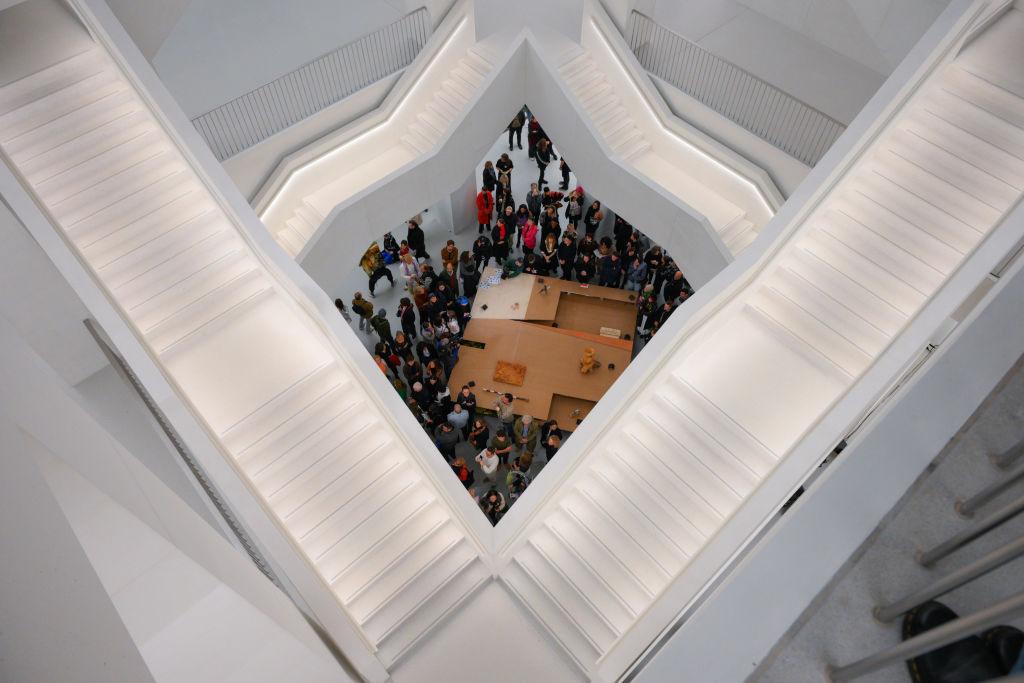
The museum’s sleek design – open atriums, natural light flooding galleries, and minimalist architecture – creates photogenic backdrops for selfies before you head for other central Warsaw spots.
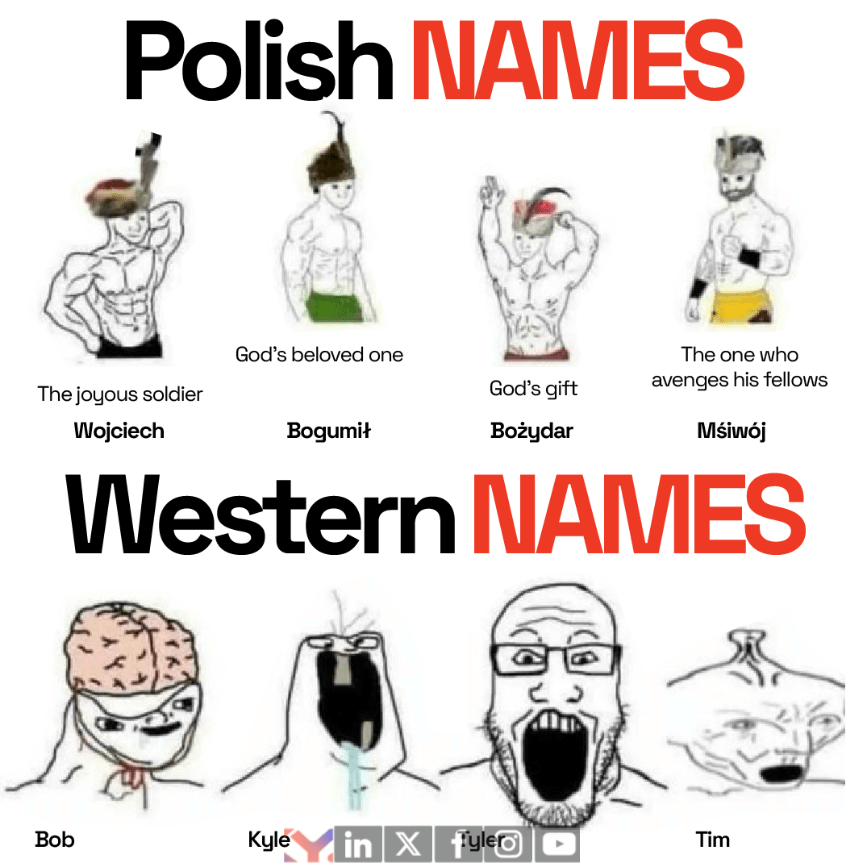
Some Polish names are not actually names, but superpowers. You see, Polish names often come with a built‑in epic origin story. And they sound like a folklor hero on a quest.