

This article is a part of Poland Unpacked. Weekly intelligence for decision-makers
Euvic Solutions specializes in developing IT infrastructure. In recent months, the company has shifted its focus towards expanding in fast-growing artificial intelligence-related technologies. This has led to its cooperation with Nvidia and the launch of its first major projects.
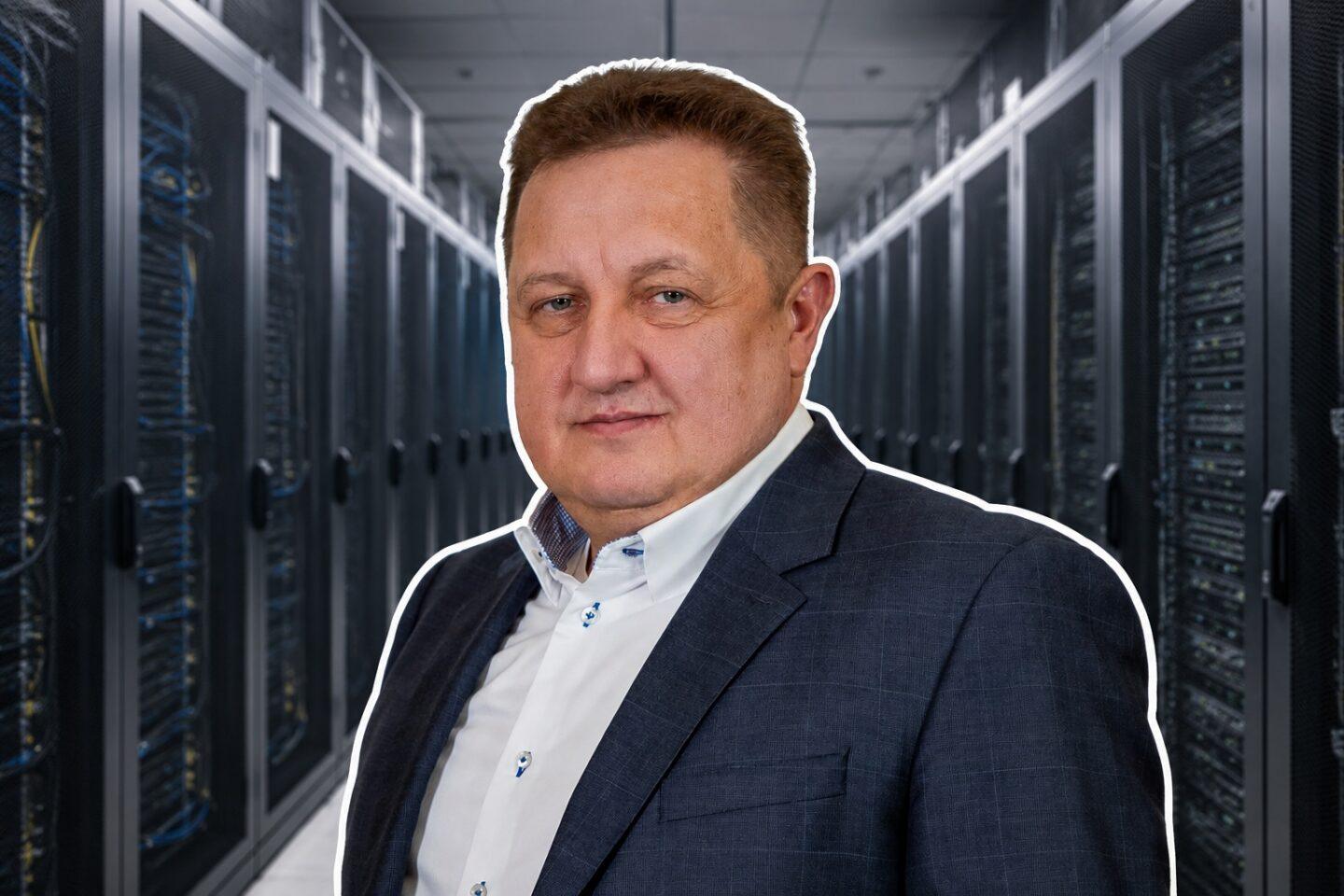
“We are delivering an AI Factory project in Greece, but we are also in talks regarding further investments of this kind with many clients across the Central and Eastern European region,” says Adam Bajura, CEO of Euvic Solutions.
He argues that the opportunities associated with such projects are vast. This is particularly true for Poland, which is only beginning to enter the race for computing power.
Euvic builds AI factory in Greece
The first project being delivered by Euvic Solutions is a specialized AI factory for the Greek company Kiefer. The company recently announced that it had secured financing for AI projects, with total funding amounting to PLN 35.5 million (approximately EUR 8.3 million).
“The total value of the project is several dozen million dollars. We cannot disclose too many details about the investment, but it will be a solution based on Nvidia SuperPOD architecture,” says Adam Bajura.
The project is being implemented in stages and is being built in Greece. The first four phases are expected to be launched this year. According to the company’s previous announcements, the total value of the initial contract ranges between USD 20 million and USD 22 million (approximately EUR 17 million–EUR 19 million).
It is one of the first contracts being delivered by Nvidia in the Central and Eastern European region. At the same time, Euvic has become an Nvidia partner in the region. This marks the beginning of a broader push into the construction of AI factories.
Good to know
Euvic continues to gain momentum
The Euvic Group is a Poland-based technology group providing IT services to businesses, public institutions and organizations operating across various sectors of the economy. Its activities cover consulting, software development and maintenance, IT specialist outsourcing, cloud solutions, data analytics, process automation, cybersecurity and IT infrastructure management. The group’s model is built around combining the expertise of multiple specialized companies, which deliver projects independently as well as as part of broader teams.
Euvic Solutions is one of the companies within this ecosystem. It focuses primarily on IT infrastructure, data centers, virtualization, communications, security, technical resource management and solutions for businesses and the education sector. The company is also developing its own AI products and Solutio software, which is used, among other applications, for managing data centers.
More projects to come
According to the CEO of Euvic Solutions, negotiations for further projects are already under way. The most advanced discussions concern cooperation with Poland’s Ministry of Health. Euvic Solutions could deliver a data center project for the ministry.
According to an April announcement, the value of the contract awarded to Euvic Solutions amounts to PLN 37.7 million net (approximately EUR 8.8 million). The agreement signed with the e-Health Center covers a period of 60 months. The company will provide computing infrastructure and software, as well as oversee the implementation of AI solutions.
The environment delivered by Euvic Solutions will support, among other applications, groundbreaking projects involving the automated analysis of medical images from diagnostic devices. The infrastructure will serve as the foundation for deploying advanced AI diagnostic models, which require the highest levels of computing performance to operate smoothly in hospital environments.
“Computing infrastructure for artificial intelligence is becoming one of the most important segments of the IT market. Projects such as the AI Factory demonstrate that the Euvic Group’s capabilities allow us to participate in the delivery of the most technologically advanced investments. We see significant potential for further growth in this area,” says Wojciech Wolny, CEO of the Euvic Group.
He adds that the entire group now views AI infrastructure as one of its key long-term development priorities.
“We clearly see that the market is moving from an experimentation phase to production deployments, where AI is becoming a real tool supporting business operations,” says Wojciech Wolny.
What Euvic Solutions’ investments involve
As part of its cooperation with Kiefer, Euvic Solutions is building an AI factory based on Nvidia SuperPOD infrastructure. It is one of the most advanced artificial intelligence infrastructure solutions currently available. In practice, this means creating an AI factory – an environment consisting of multiple server racks equipped with hundreds or thousands of GPU processors connected through an ultra-fast network. Such systems enable the training and deployment of AI models on an industrial scale. It is also one of the first projects of this kind in the Central and Eastern European region.
“These are not investments in the traditional sense of building industrial facilities. They are comprehensive infrastructure projects covering the computing layer, networking, data storage systems, software and integration with the client’s business processes,” explains Adam Bajura.
Euvic Solutions is responsible for delivering a solution that will enable Kiefer to use artificial intelligence effectively. The project is not limited to constructing a physical facility, installing server racks or deploying software. It also involves creating an integrated infrastructure with a middleware layer that provides a ready-to-use and secure framework for AI operations.
Euvic Solutions acts as the client’s direct partner, responsible for the end-to-end delivery of the technology project. The company designs the architecture, manages integration, oversees implementation and supports the further development of the environment.
For this project, Euvic Solutions is working with TD SYNNEX (distribution and financing) and Deloitte (business, operational and financial support).
Expert's perspective
AI investments represent an opportunity for Poland
As part of the project being delivered jointly with Euvic Solutions for Kiefer Tek in Greece, we are providing Nvidia DGX SuperPOD solutions with Nvidia AI Enterprise software. Together with the client, we are also implementing a market strategy built around specific artificial intelligence use cases.
This experience shows that the success of an AI factory depends not only on the infrastructure itself, but above all on the service model built around it. Key elements include GPU-as-a-Service offerings, MLOps platforms, AI applications and a clearly defined commercialization strategy.
The key takeaway for Poland is straightforward: demand for and adoption of AI will grow rapidly in the coming years, becoming a source of competitive advantage for both companies and the economy as a whole. Building the right AI capacity is a long-term investment process, and the first stages need to begin now, while strategies are refined and new trends emerging alongside AI development are taken into account.
A traditional approach – in which estimating and understanding sources of demand should precede infrastructure investment – would result in the loss of competitive advantages and force the import of AI services, expertise and computing capacity. We are at the beginning of the so-called technology life cycle of a new innovation comparable to the electrification of the economy. In the 20th century, we were delayed by several decades – let us avoid a similar situation in the 21st century.


The company’s long-term plans
According to the head of Euvic Solutions, projects of this kind will become standard practice in the region.
“Projects such as the one delivered for Kiefer show that clients today expect not only infrastructure, but also support in making effective use of it. That is why our approach is based on long-term partnerships in which we help clients plan, build and develop AI environments, optimize them and implement further business applications,” comments Adam Bajura.
As Bajura explains, the global data center market is growing at a rate exceeding 25–30% annually. The AI infrastructure segment is expanding even faster.
“Western and Northern Europe are currently leading in terms of the scale of investment. The CEE region has a lower level of investment, but is characterized by very strong growth momentum, at 30–40% annually. We view the project delivered for Kiefer as the first significant step in building our presence across Europe. It demonstrates that we are capable of delivering projects of this scale and operating in a regional model,” adds the company’s CEO.
Expert's perspective
Data centers in Poland are being developed mainly by private companies
Data centers in Poland are being developed mainly by private companies such as Atman and Beyond.pl. This infrastructure is built around networking, cloud and AI solutions (including Nvidia platforms), allowing companies to rent computing resources and storage capacity.
Most of the financial sector is consistently opting for hyperscalers and public cloud solutions. This is where their own “data factories” are being created today – distributed, scalable and available on demand.
Some organizations continue to maintain hybrid and on-premises infrastructure. However, expanding their own server facilities is becoming increasingly challenging. Constraints stem from growing demand for GPUs and RAM, rising costs and limited hardware availability.
From the perspective of the financial sector, the concept of shared “data factories” would make significant sense – particularly if AI is treated as a commodity. The challenge is that AI capabilities are currently viewed as a source of competitive advantage. As a result, there is little willingness to share infrastructure across the entire sector.
According to representatives of the Euvic Group, after a phase of numerous isolated projects (mainly PoCs and MVPs) that have ultimately resulted in a “spaghetti AI” architecture, the artificial intelligence market will move towards consolidating fragmented environments into a single, homogeneous AI factory. Greenfield investments will also emerge – particularly in areas where AI capabilities have so far been underdeveloped.
“What is crucial is that Nvidia’s architecture, as one of the market leaders, enables all of these scenarios. It is this homogeneity and integration that distinguish an ‘AI Factory’ from traditional, distributed environments,” comments Adam Bajura.
As the CEO of Euvic Solutions explains, the company’s goal is to develop AI as one of the key pillars of the Euvic Group’s business – both in terms of infrastructure and software solutions for clients.
“The project delivered for Kiefer shows that the CEE region has entered an intensive phase of investment in world-class AI infrastructure. This is a significant shift, marking the transition from pilot projects to full-scale production deployments,” adds Adam Bajura.
How the AI world is evolving
The potential for developing AI factories in Poland continues to grow. Polish companies are moving from the stage of testing AI to scaling its use and measuring business outcomes. The latest EY report, “How Polish Companies Are Implementing AI?” from 2026, shows that 53% of companies report cost reductions thanks to AI. In addition, 52% report improvements in service quality, while 49% point to revenue growth. At the same time, only 9% of companies have a complete data infrastructure ready for advanced AI models.
“For 99% of companies on the market, building their own physical AI infrastructure is by no means a necessity and is often even a business mistake. It is an area reserved for technology giants, state research institutions and a narrow group of specialized startups training their own foundation models. For the vast majority of businesses, the only economically rational approach is to use ready-made models available in the cloud. An in-house AI factory requires enormous capital investment and consumes vast amounts of energy. It also requires hardware upgrades, as equipment is becoming obsolete at an increasingly rapid pace,” notes Krzysztof Wojewodzic, founder of Escola.
This does not mean that such investments lack justification. The key issue is identifying the actual needs they are meant to address.
“Investing significant resources in hardware and infrastructure without a clearly defined strategy, specific use cases and a calculated return on investment is a straightforward path to wasting the budget. In my view, this is a case of falling victim to the FOMO (Fear Of Missing Out) syndrome. Naturally, government and European investments also play a role here, as they help drive demand,” adds Krzysztof Wojewodzic.
Expert's perspective
Public and private. How AI factories are being built
Computing power is becoming a strategic resource, comparable to access to energy or supply chains. Companies already building AI-based products and services need to think about where they will source compute capacity in two or three years. Those that fail to secure it will have to rent it on the supplier’s terms – and those terms are likely to become increasingly expensive.
The fact that “everyone is building AI factories” does not mean that every company should do so. Infrastructure without a clear business application is simply an expensive warehouse of servers. A company that does not yet have an AI strategy should start by asking, “What problem do I want to solve?” rather than by buying GPUs.
In Poland, I see two parallel trends today. On one side are public and European projects that are building the ecosystem and democratizing access to computing capacity. On the other is private capital positioning Poland as a computing hub for Central and Eastern Europe. Location, energy costs and growing expertise are genuine advantages. Interest is strong, but the operational readiness of most Polish companies is still lagging behind.
Business does the math – and counts the costs
The fact that companies have not rushed into large-scale investments in AI factories comes down to economic calculations.
“It is simply a matter of pragmatism. Polish businesses make careful calculations. We welcome investments from global players that are opening their cloud regions in Poland and providing the computing power we need. In Poland, proprietary supercomputing clusters remain largely the domain of the scientific community (such as Cyfronet AGH) or public institutions (such as NASK),” says the founder of Escola.
He points out that Polish technology companies and corporations are far more likely to invest in software development or training models in the cloud than in concrete, cooling systems and the physical infrastructure required for their own server facilities.
“Poland has outstanding engineers and programmers. And it is precisely this talent that Polish businesses are investing in today, leaving the construction of AI factories to global players,” comments Krzysztof Wojewodzic.
Adriana Proszak, a lecturer at Warsaw University of Technology and the University of Łódź as well as a business advisor, shares a similar view.
“For most organizations in Poland, the key issue is not owning a GPU-equipped server room, but having a mature AI strategy, the right skills within teams and the ability to use existing infrastructure effectively – such as cloud services, shared research and development centers and European ‘AI factories,’” says Adriana Proszak.
She emphasizes that companies that do not yet have a well-thought-out AI adoption strategy should not begin with infrastructure investments. Otherwise, they risk creating an expensive “technology monument” rather than a source of competitive advantage.
“A much more sensible approach is to test specific applications using the cloud and available platforms. Only then should companies decide whether an ‘AI mini-factory’ makes sense – and what form it should take. In Poland, appetite for AI and investment in infrastructure are clearly growing. Private AI factories, however, remain the domain of only a few leaders. The rest will compete not through hardware, but through their ability to translate AI capabilities into business processes, products and decisions,” comments Adriana Proszak.


Key Takeaways
- Euvic Solutions aims to capitalize on growing demand for artificial intelligence infrastructure. The company is building its position as a regional technology partner in this segment. The most prominent example is the AI factory project in Greece for Kiefer, based on Nvidia SuperPOD architecture. According to company representatives, it is one of the first projects of this level of sophistication in Central and Eastern Europe. Euvic Solutions sees it as a starting point for further expansion across the region – and as proof that a Polish technology group can participate in investments on a European scale.
- The AI infrastructure market is moving from testing and pilots to production deployments, but the right path forward is not the same for every company. On the one hand, demand for computing power is growing, and experts point out that access to it could become a strategic resource for the economy. On the other hand, many observers stress that building proprietary AI factories makes sense only for selected organizations. For most companies, a more rational approach remains using cloud services, ready-made models and AI-as-a-Service solutions – particularly if they do not yet have a clearly defined strategy, use cases and return-on-investment calculations.
- Poland and the CEE region offer significant growth potential, but also face infrastructure and organizational maturity gaps. Large public and private projects are already emerging. Companies increasingly view AI as a tool for improving efficiency, service quality and revenue growth. At the same time, only a small proportion of businesses have a complete data infrastructure ready for advanced AI deployments. Competitive advantage may depend less on access to hardware itself and more on the ability to combine technology, business strategy, data and team capabilities.