

This article is a part of Poland Unpacked. Weekly intelligence for decision-makers
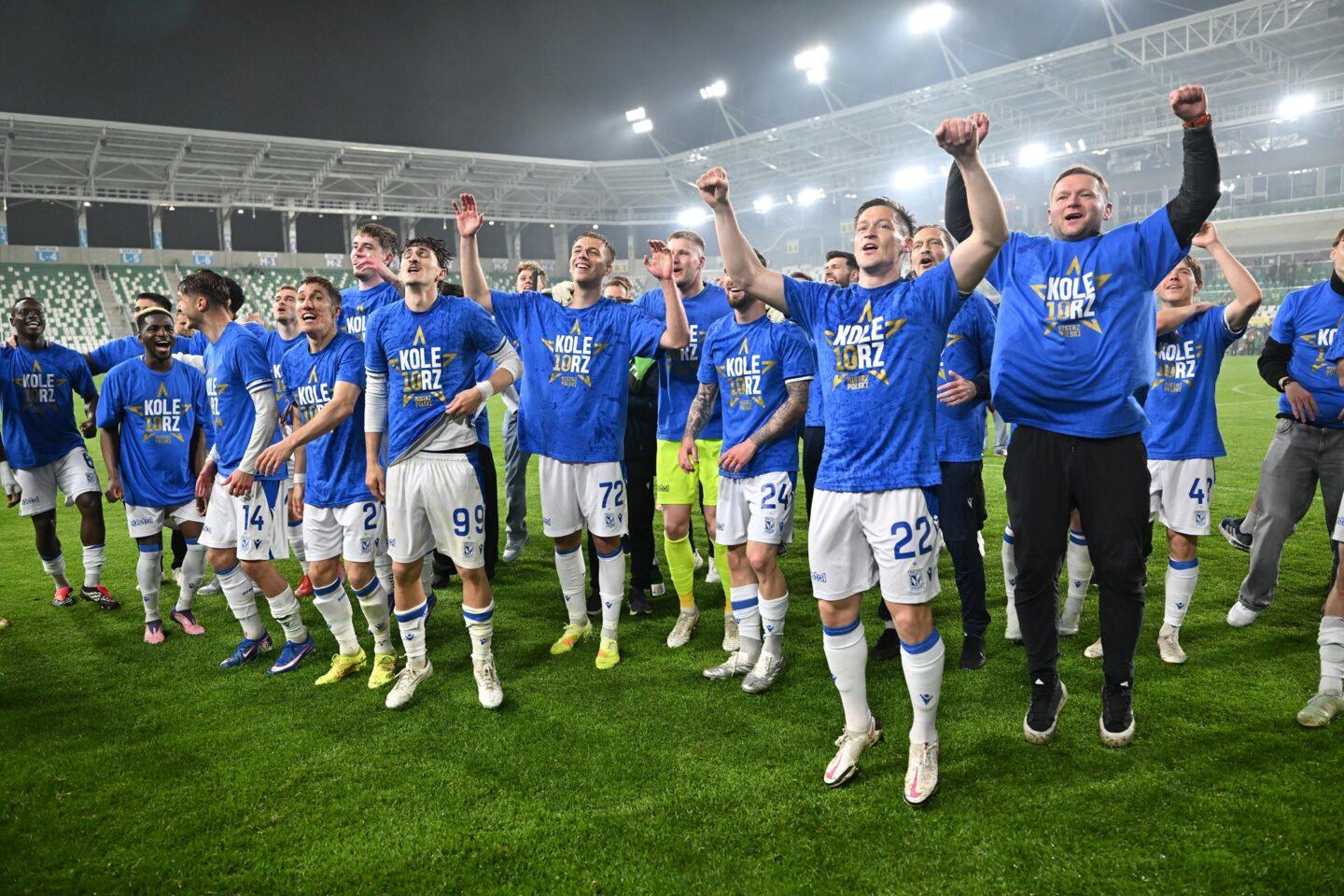
Kolejorz currently combines a championship-winning squad with the highest match attendance in the country, a strong academy, homegrown players in the first team, high-quality foreign signings, expanding merchandising operations, increasing control over stadium-related business, and an improving position in the UEFA ranking.
According to Grant Thornton, in the 2024/25 season the club generated total revenue of PLN 145.3 million (approx. EUR 33.8 million), including PLN 108.3 million (EUR 25.2 million) from core operations, with average attendance reaching 29,064 spectators.
Explainer
Lech Poznań aka Kolejorz
Lech Poznań is one of Poland’s key football clubs, both in terms of trophies and identity. Founded in 1922, it has won multiple national championships and cups, and its home ground in Poznań was one of the stadiums used during Euro 2012. The name “Lech” refers to the legendary founder of the Polish state, which gives the club a slightly “national” flavour, while still being deeply rooted in the culture of Poznań and the Greater Poland region. For many fans abroad, Lech is also a familiar name from European competitions, where the club regularly appears and occasionally causes upsets against better-known teams.
The nickname “Kolejorz” is essential if you want to understand what Lech means to the city. Historically, the club was closely linked to the national railway company; for years it functioned as a “railway sports club”, with a train motif in its crest and many employees of the railways among its players and fans. In standard Polish, “kolejarz” simply means “a railway worker”, but in the Poznań local dialect this morphed into “kolejorz” – and that version stuck as the club’s unofficial name.
Lech Poznań’s financial statements for the 2024/25 financial year also illustrate the cost of operating at this scale. The club reported PLN 120.9 million (EUR 28.1 million) in net sales revenue and PLN 150.1 million (EUR 34.9 million) in operating expenses, resulting in a net loss of PLN 10.7 million (approx. EUR 2.5 million). The club is entering a phase in which it cannot afford complacency: despite rising ambitions, it must continue to tightly manage wages, operating costs, and debt levels.
Lech Poznań steps up to a new level
According to Grant Thornton, Lech Poznań was the second-highest revenue-generating club in the Ekstraklasa in the 2024/25 season. Ahead of it stood Legia Warsaw with PLN 230.9 million (approx. EUR 53.7 million), followed by Raków Częstochowa with PLN 142.9 million (EUR 33.3 million) and Jagiellonia Białystok with PLN 129.2 million (EUR 30.1 million). Lech reached this scale without European competition, meaning it entered the 2025/26 season from a stronger underlying position than the league table alone suggested.
The new season adds a championship title, European fixtures, more matches at Bułgarska Street, higher attendance, and stronger merchandising. From Ekstraklasa’s broadcasting and marketing rights, Lech is expected to receive PLN 36 million (approx. EUR 8.4 million), while UEFA distributions are projected at around PLN 40 million (EUR 9.3 million). The PLN 200 million (approx. EUR 46.5 million) revenue threshold is becoming a measure of scale at which decisions on a head coach, transfers, a star player’s contract, ticket pricing, or stadium operations translate into commitments worth several or even several dozen million zloty.
The biggest lever remains the UEFA Champions League. Being seeded through to the fourth qualifying round of the Champions Path gives Lech its strongest starting position in history. Three two-legged ties are still required to reach the group stage, but a higher coefficient reduces the risk of drawing the strongest opponents, including in the playoff round.
Explainer
Ekstraklasa
The Ekstraklasa is the top professional football league in Poland, sitting at the peak of the country’s league pyramid and deciding the national champion each season. It currently consists of a fixed number of clubs (recent seasons: 18), which play each other home and away in a double round-robin format, with three points for a win and one for a draw, just like in most major European leagues. At the end of the season, the team with the most points is crowned champion and qualifies for European competitions, while the 3 lowest-placed sides are relegated to the second tier, known as the I liga (First League). Ekstraklasa is operated by a joint-stock company owned largely by the participating clubs and the Polish Football Association, and it is heavily dependent on broadcasting rights, sponsorships, and matchday revenues.
Historically, the Ekstraklasa has been dominated by clubs such as Legia Warszawa, Wisła Kraków, Lech Poznań, and more recently Piast Gliwice and Raków Częstochowa, reflecting both old industrial football traditions and newer investment-driven projects. Although Polish clubs rarely reach the later stages of European competitions today, the league plays a key role in developing domestic talent, with many players moving on to stronger leagues in Germany, Italy, England, or elsewhere.
The atmosphere in Ekstraklasa stadiums is famous for passionate fan groups, tifos, and intense local rivalries, which are an important part of Polish football culture and identity. In recent years, the league has invested in modern stadiums and VAR technology, aiming to improve both the fan experience and the international profile of Polish club football.
Failure in the fourth round would still guarantee UEFA payments of EUR 4.29 million, plus a similar amount for entering the Europa League league phase. Reaching the Champions League league phase would bring up to PLN 100 million (EUR 23.3 million) in UEFA prize money, full stadiums for the biggest fixtures, stronger sponsorship leverage, greater transfer-market appeal, and a more persuasive argument for retaining key players. It would also materially increase costs: player contracts, bonuses, transfer amortization, staff wages, academy investment, infrastructure, and matchday operations.
Advantage from TV and marketing rights
A less frequently discussed component of Lech Poznań’s competitive edge lies in the distribution of domestic television and marketing revenues in the Ekstraklasa. Based on my calculations (as of before the final round), Kolejorz is expected to receive around PLN 36 million (approx. EUR 8.4 million) for the 2025/26 season. By comparison, Górnik Zabrze is set to receive PLN 30 million (EUR 7 million), Jagiellonia Białystok PLN 25 million (EUR 5.8 million), and Raków Częstochowa PLN 21 million (EUR 4.9 million).
This gap is driven not only by the championship bonus, but also by an allocation formula that rewards current league position, final table ranking, investment in young players, and historical ranking.
Over a two-season horizon, the gap becomes even clearer. Lech collects PLN 72 million (approx. EUR 16.7 million), while both Jagiellonia and Raków receive PLN 51 million (EUR 11.9 million) each. Kolejorz therefore earns more in the present while also strengthening its position in the historical ranking covering the five most recent completed seasons, which in turn influences future distributions. A strong season thus increases both immediate payouts and the base for future calculations.
 Interactive chart
 Lech must maintain a high league position for this compounding effect to continue in subsequent seasons. A weaker campaign would reduce performance-based premiums and could close the path to European competition. From the 2026/27 season, Poland will have five European places, increasing the margin for error at the top end of the table. For Lech, which is building an increasingly expensive organization, dropping out of the European zone would carry significantly higher costs than for most other Ekstraklasa clubs.
A season without Europe reveals the cost of ambition
Grant Thornton’s report and KKS Lech Poznań’s annual financial statements offer two complementary perspectives on the 2024/25 season. In the league-wide ranking, Lech stands as the Ekstraklasa’s second-largest revenue generator, crowned with a domestic title and strong matchday income. The company accounts, however, show the price of operating at this scale: the absence of UEFA revenues, rising operating costs, and the expense of maintaining a squad built to win the title and return to European competition.
The management attributed the reported loss to a weaker 2023/24 season, failure to qualify for European competitions, rising operating expenses, and investment spending in the summer of 2024. Costs linked to the first team, coaching staff, academy, player amortization, and overall club operations remain embedded in the budget, while UEFA income dropped out entirely. In effect, Lech maintained its cost base in order to remain competitive for a renewed push toward the championship and European qualification.
The PLN 200 million (approx. EUR 46.5 million) revenue threshold does not translate into tens of millions of zloty in free cash available for discretionary spending. The true quality of a season is only revealed after accounting for performance bonuses, additional matchday operations, travel, transfer-related incentives, and higher player wages. European competition significantly boosts revenues, but it also accelerates the growth of squad and operational costs.
More data will follow
When budgeting the 2025/26 season, Lech Poznań has, for the first time, included participation in the UEFA Europa Conference League league phase in its base scenario, with the assumption of elimination after the first two-legged tie in the spring. From a sporting perspective, the minimum target remains the league title. From a financial standpoint, however, the club adopts a more conservative assumption: a second-place finish in the Ekstraklasa and qualification for European competition.
Interactive chart A similar approach applies to attendance. The budget assumes 26,000–27,000 spectators per match, while actual attendance is expected to be closer to 30,000. This creates an upside in ticketing revenue and broader stadium monetization per supporter.
In the autumn, a new edition of Lech’s financial audit is expected. It will be more narrative in form than previous releases. Instead of dense tables, it will feature more commentary, behind-the-scenes insights, and explanations. It is designed as a communication tool for fans, sponsors, media, and partners. Its purpose is to show where the club’s money comes from, where costs are increasing, how much the academy costs, how transfers are structured, and how European competition reshapes the assessment of a season.
In a league still largely defined by formal financial statements, Lech is seeking new ways to build its brand image, including through greater financial transparency.
Matchday as Lech Poznań’s strongest advantage
Matchday revenue is the most visible structural advantage of Lech Poznań. According to Grant Thornton, in the 2024/25 season the club generated approximately PLN 31 million (around EUR 7.2 million) in stadium income and recorded an average attendance of 29,064 spectators. This is the second-best result in the league, behind Legia Warsaw. Club management reports a similar scale, estimating nearly 29,000 fans per match at Bułgarska Street – more than 16% higher than the previous season – and seven matches exceeding the 30,000-spectator threshold.
In the 2025/26 season, the stadium effect may become even stronger. The budget was built on an assumption of 26,000–27,000 spectators, while actual attendance is expected to exceed 30,000. Using a simplified extrapolation of 2024/25 data, this implies roughly PLN 64 (EUR 14.9) of matchday revenue per spectator per game. This is not an average ticket price, as it also includes premium seating and other matchday monetization streams. At 27 home matches and an average attendance of 30,000, the stadium could generate around PLN 52 million (approx. EUR 12.1 million), equivalent to the entire league revenue base of a mid-table club.
UEFA Champions League qualifiers could amplify this effect further beyond the sheer number of fixtures. A two-legged tie for a place in the Champions League league phase allows for more expensive VIP packages, higher sponsorship exposure, and full stadium utilization even at elevated pricing levels. With attendance regularly exceeding 30,000, the fourth qualifying round of the Champions League – and potentially league-phase matches – would become the most valuable home product of the season.
The stadium could become Lech’s biggest lever
The second structural shift is control over the stadium operator. In the management report, Lech Poznań confirms the acquisition of 100% of shares in Stadion Poznań, the operator of Enea Stadion. For the club, this translates into greater influence over premium offerings, non-matchday events, space leasing, and partner sales. In effect, Lech is taking over a larger share of the stadium’s economic engine.
A similar logic can be observed at RC Lens in France. The club paid the city EUR 27 million for Stade Bollaert-Delelis, which had been valued by state authorities at EUR 55 million. The acquisition came with constraints, including a 20-year ban on selling naming rights. The example illustrates both the rationale and the cost of such a move: a stadium provides greater control over revenues and investment decisions, but it requires treating the venue as a year-round asset rather than a facility used only on matchdays.
The financial logic of Lech’s transaction is visible in the operating data. Stadion Poznań generated over PLN 40 million in revenue in 2023 and PLN 5 million in net profit, which was paid out as a dividend to Amica. In 2024, the company was expected to record PLN 45.8 million in revenue, PLN 41.0 million in costs, and PLN 4.6 million in net profit. Approximately PLN 2 million reported by Lech as dividends or profit participation is understood to originate from Stadion Poznań and relate to earnings from late 2024, even though the transaction was finalized on December 20, 2024.
Separate reporting
However, Lech Poznań will not consolidate the financial statements of Stadion Poznań with those of KKS Lech Poznań. Revenues and costs of the stadium operator will not be automatically added to the club’s profit and loss account. The transaction may nonetheless reshape the organization’s underlying economics through dividends, intra-group settlements, premium offerings, space leasing, non-matchday events, marketing potential, and stadium maintenance costs.
The Polish Super Cup also illustrates how the stadium itself represents an additional competitive advantage over domestic rivals. The match against Legia Warsaw was not merely a symbolic season opener. With a sold-out Bułgarska Street, it could generate around PLN 2 million (EUR 465,000) in profit from ticket sales alone. Additional revenue came from food and beverage sales, hospitality services, and merchandise.
For season-ticket holders, the Super Cup also functioned as an added-value benefit, increasing the attractiveness of a season pass. The sporting prize money awarded by the Polish Football Association (PZPN) – PLN 200,000 (EUR 46,500) for the winner and PLN 100,000 (EUR 23,300) for the runner-up – is marginal at this scale and does not materially affect the economics of the event. The real money lies in the stadium: attendance, matchday consumption, and the overall monetization of the game day experience.
Merchandising grows alongside a full stadium
Alongside stadium revenue and television and marketing rights, merchandising must be added to the picture. According to Grant Thornton, Lech Poznań generated PLN 16.1 million (approx. EUR 3.7 million) from this segment in the 2024/25 season. The club sold 43,000 scarves and 15,100 match shirts.
In the 2025/26 season, shirt sales alone have already exceeded 26,000 units and could realistically approach 30,000. This represents growth of more than 70% year on year, with potential for sales to nearly double. At this scale, the club shop is no longer an accessory to matchday operations. It becomes a standalone channel for monetizing the stadium, the Polish championship, and European competition.
In the official club store, an adult Lech Poznań 2025/26 home shirt costs PLN 379.90 (EUR 88.30), while the children’s version costs PLN 329.90 (EUR 76.70). Assuming that 20% of sales are children’s kits, the average price of a match shirt is approximately PLN 369.90 (EUR 86.00). The effective unit revenue may be higher, as prices increase with name personalization, UEFA Europa Conference League patches, and additional sponsor logos.
For the purposes of a conservative model, it is assumed that half of all shirts include personalization priced at PLN 50 (EUR 11.60). This raises the average revenue per shirt to approximately PLN 394.90 (EUR 91.80).
Under this framework, 15,100 shirts in the previous season would have generated roughly PLN 6 million (EUR 1.4 million) in gross revenue. At 26,000 units, this rises to around PLN 10.3 million (EUR 2.4 million), and at 30,000 units to nearly PLN 12 million (EUR 2.8 million). The PLN 10 million (EUR 2.3 million) threshold in gross sales is reached at approximately 25,300 shirts, meaning Lech has already surpassed it. This remains a conservative estimate, as it excludes additional merchandise items, while also not accounting for discounts.
A key client for Macron
The difference compared with the previous season amounts to approximately PLN 4.3–5.9 million (gross) in match shirt volume alone. Under a model assumption of a 35% net margin calculated on turnover, this would translate into roughly PLN 3.6 million (EUR 840,000) in net result at 26,000 shirts, and around PLN 4.1 million (EUR 950,000) at 30,000 units.
The incremental net result versus the 2024/25 season would therefore amount to approximately PLN 1.5–2.1 million (EUR 350,000–490,000). This remains a simplified model. Actual margins depend on VAT, procurement costs from Macron (the manufacturer), printing and personalization costs, logistics, discounts, and the mix of sizes sold. Still, the scale clearly illustrates that a full stadium and sporting success translate not only into ticketing revenue, but also into cash flow generated in the club shop.
This level of demand also strengthens Lech’s negotiating position vis-à-vis Macron. The club gains leverage to push for greater design customization, faster responsiveness to demand, and improved commercial terms for future collections. If the agreement includes volume thresholds or sales-based bonuses, rising shirt sales could further improve the economics of the partnership.
The match shirt itself is becoming a product with more than PLN 10 million (EUR 2.3 million) in gross seasonal turnover. On top of that come patches, scarves, and upselling in the club store – from keyrings to children’s merchandise purchased alongside primary items.
Championship shirts also sell
Championship shirts need to be considered separately. These are not match kits, but a commemorative product driven by a different purchase impulse. In the official club store, the “Polish Champions 2026” shirt costs PLN 79.90 (EUR 18.60) for adults and PLN 69.90 (EUR 16.30) for children. Assuming a product mix of 80% adult and 20% children’s versions, the average price is approximately PLN 77.90 (EUR 18.10).
Sales of more than 13,000 units within roughly a week of launch illustrate the scale of demand. However, the entire stock should not be treated as standard retail volume. A portion is distributed by Superbet as part of a promotional campaign. In a purely model-based calculation, 13,000 units at the average retail price would generate approximately PLN 1 million (EUR 232,000) in gross revenue. At a 35–40% margin, this translates into a net result of roughly PLN 350,000–405,000 (EUR 81,000–94,000), before accounting for the full costs of the sales channel.
This is a different product from the match shirt, but the underlying mechanism is the same: Lech Poznań is able to quickly convert sporting success, a full stadium, and European-season emotion into retail turnover and sponsor activation.
The scale effect is particularly visible in personalization. For a small club selling 500 shirts, the upfront cost of purchasing a heat-transfer press, plotter, materials, and setting up a station – say PLN 10,000 (EUR 2,330) – would translate into PLN 20 per shirt even before foil, labor, and errors are included. At 30,000 shirts, the same fixed cost falls to just PLN 0.33 per unit.
Interactive chart Lech amortizes such investments far more quickly and monetizes them through upselling: names, numbers, patches, children’s products, and limited editions tied to European fixtures.
Championship and Europe come with their own cost
The 2025/26 season highlights a structural shift across the Ekstraklasa. According to Football Meets Data, four Polish clubs collectively secured around EUR 34 million (approx. PLN 146 million) in guaranteed UEFA prize money: Lech Poznań EUR 9.4 million (PLN 40.4 million), Raków Częstochowa EUR 9.2 million (PLN 39.6 million), Jagiellonia Białystok EUR 7.7 million (PLN 33.1 million), and Legia Warsaw EUR 7.7 million (PLN 33.1 million). All of them competed in the Europa Conference League league phase, with some extending their campaigns into the knockout rounds. Lech remains the leader in this group, but European money is no longer a one-off advantage concentrated in a single club. As a result, it is increasingly difficult to build a lasting competitive edge on UEFA revenues alone.
For Lech, UEFA prize money is the starting point of the financial equation, not the end. In the 2022/23 campaign, roughly EUR 8 million in UEFA income worked alongside ticketing, catering, merchandising, sponsor exposure, player valuation gains, and operational experience. In the 2025/26 season, the mechanism is broadly similar: even with a shorter sporting run, total revenue may reach a comparable level, at around PLN 55 million (EUR 12.8 million).
On the cost side, however, the picture is more complex. Performance bonuses, European incentives, higher contract levels, more expensive coaching staff, transfer amortization, match organization, and travel expenses all weigh on the budget. Domestic incentives also matter: player bonuses for winning the league are higher than the prize money paid by the Ekstraklasa for finishing first rather than second.
In the 2022/23 season, the cost of competing in Europe was estimated at around PLN 25 million (EUR 5.8 million), including travel, match operations, and bonuses for players and staff. The final net gain from the European campaign was estimated at roughly PLN 30 million (EUR 7 million).
The 2025/26 season also has an operational dimension. Lech may finish the campaign having played a very high number of matches, strengthening the case for squad depth, investment in performance departments, and more sophisticated workload management. Financially, this means more bonuses, more travel, more match organization, and greater strain on the club’s infrastructure. Europe remains a powerful revenue driver for Lech, but the closer the club gets to the Champions League league phase, the greater the pressure on squad quality, bench depth, investment in higher-tier players, and the support structure around the team.
More expensive squad, more expensive coach, more expensive mistakes
In the 2024/25 season, Lech Poznań’s wage-to-total-revenue ratio stood at 52%, according to Grant Thornton. This is a level broadly under control, but at a larger scale each percentage point carries greater nominal weight. Here, the football version of Baumol’s cost disease applies: it is difficult to significantly increase the productivity of a coach, medical staff, analysts, or top players. When renewing contracts, the club must offer higher wages, as Lech is no longer competing only within the Ekstraklasa. Even if wage costs remain around 50% of revenues in 2025/26, the club will still spend more on salaries than a year earlier.
Seeding in the UEFA Champions League qualifiers further increases cost pressure. A club targeting the fourth qualifying round needs a squad capable of playing every three days and a budget resilient enough to withstand the time lag between incurring costs and receiving UEFA prize money. The risk emerges when fixed costs begin to rise as if Champions League participation were already guaranteed.
This calculation must be read alongside UEFA regulations. The squad cost ratio – UEFA’s metric for assessing wage-related spending relative to revenues – is set at 70%. However, it also includes bonuses, benefits, coaching staff costs, player amortization, impairment charges, and agent fees. At roughly 50% for wages alone, Lech appears comfortably within the limits. Yet this indicator does not fully capture the total cost of a sporting project. Top player contracts already exceed EUR 1 million per year. A failed transfer or a long-term injury can cost several million złoty and constrain the club’s ability to execute other moves.
Maintaining contracts, short-term exits
PZPN regulations allow clubs, after 180 days of a player’s inability to play, to reduce salary payments to 50% of the individual contract value – provided the club does not terminate the agreement. Lech Poznań does not use this mechanism, prioritizing its reputation among players and agents. The extension of Ali Gholizadeh’s contract illustrates this approach. The club signed a new deal after a serious injury, with a reduced salary during rehabilitation and an increase upon return to play. In the short term, this represents a cost; in the long term, it sends a signal to players the club aims to recruit or retain.
Risk costs also extend to the head coach. Niels Frederiksen represents a high-cost project. However, Lech mitigates exposure through termination clauses embedded in coaching staff contracts. These reportedly include notice periods of nine, six, or three months depending on the stage of the season. The club seeks to pay for quality appropriately, while limiting the financial cost of restarting a project in case of underperformance.
European competition increases both revenues and transfer spending capacity. In the previous summer window, Lech is understood to have moved from a planned budget of around EUR 5.4 million to approximately EUR 8 million in total expenditure. This improves squad quality but feeds back into costs through amortization, agent fees, and performance bonuses. The club maintains its financial framework but adjusts it dynamically during the transfer window. Experience from the 2022/23 season – particularly transfers such as Jesper Karlström and Antonio Milić – has reinforced the belief that paying for higher quality is justified when it delivers sporting results and, by extension, financial returns.
Lech Future, women’s football and brand-driven products
Part of Lech Poznań’s competitive advantage is built outside the first team. Lech Future already trains around 5,000 children, compared with 2,900 in Lech Poznań Football Academy (LPFA). At this scale, the project functions as a commercial and development pipeline: it expands the talent pool, gives the club continuous contact with families, and connects children to the brand several years before any potential progression to the academy in Wronki.
Lech monetizes this relationship through family- and stadium-oriented products: player escort experiences, stadium and museum tours, and “birthday with Kolejorz” packages. The most valuable offering is the player escort experience, which includes leading a player onto the pitch along with tickets, photos, parking, and merchandise, and in premium versions also VIP catering and meetings with players. This increases average spending in the family segment, where engagement can later translate into repeat purchases linked to matches, camps, holiday academies, and store visits.
The same category includes Lech Conference. The club sells a professional coaching event and monetizes the expertise of its academy, sports science department, and training structure. The 2025 edition was described as one of the most important coaching events in Poland. A year earlier, the base ticket price was reported at PLN 364 (€84.50), with the conference held at the UAM Hall in Morasko. Compared with UEFA revenues or transfers, this remains a small-scale initiative, but it is an important mechanism: Lech is selling know-how and building relationships within the football ecosystem.
Women’s football operates at a different financial level. The section generates revenues of over PLN 1 million (EUR 232,000) and costs close to PLN 2 million (EUR 465,000), meaning the club subsidizes it by several hundred thousand złoty annually. Lech treats the project as CSR activity, a brand asset, and a sponsorship platform. At least once a year, the women’s team is scheduled to play at Enea Stadion, with such an event costing around PLN 100,000 (€23,300) to organize. For the section, this is a significant expense; for the club, it is an investment in visibility and partner relations. Sponsorship space on the women’s team kit is already fully sold, signaling strong business interest, even if it does not determine profitability.
Lech Future, women’s football, conferences, player escort experiences, museum access, and stadium tours all increase the number of paid and relational touchpoints with supporters. A club aiming to operate consistently above PLN 200 million (EUR 46.5 million) in revenue must monetize its brand beyond first-team matchdays.
A major success, but not yet lasting dominance
Lech Poznań is currently closer than ever to the club long discussed at Bułgarska Street. It has won three league titles in five years, successfully defended the championship, operates a full stadium, has a head coach aligned with the executive structure, and runs a business that no longer depends solely on first-team results. Piotr Rutkowski’s references to the UEFA Champions League carry more weight today than they did a few years ago. Behind that ambition stands a larger revenue base, a broader management structure, an academy, scouting network, infrastructure, and increasingly sophisticated brand monetization. The Rutkowski–Amica era fits this phase well: first domestic operational advantage, then an attempt to scale up to European level.
A comparison with Jagiellonia Białystok and Widzew Łódź highlights how much Lech has built beyond the pitch. Jagiellonia holds the 2023/24 league title, European participation, and a strong squad, but operates on a smaller stadium and commercial scale. Widzew has attendance figures and brand recognition comparable to the league’s top tier, but is still building the structure needed to consistently achieve strong results and sustain them over multiple seasons.
Lech today operates with more layers of advantage. These include the stadium, academy, commercial sales, scouting network, European experience, and a management team that has already made mistakes in coaching appointments, transfers, and communications – and is now learning from them.
Poland’s advantage is only the first threshold
The nearest European reference point for Lech Poznań is not a top-tier Western European club, but rather a club such as SC Braga. The Portuguese side operates below Benfica, FC Porto, and Sporting CP, yet consistently competes in European competitions, sells players for fees largely out of reach in the Ekstraklasa, and has built its financial model on sustained UEFA participation.
In the 2024/25 season, Braga SAD reported EUR 34.5 million in operating revenue excluding player transfer operations, alongside EUR 34.8 million in revenue from player registrations. This scale clearly defines the challenge ahead. Lech can dominate domestically, while still needing to catch up to Europe’s mid-tier benchmark in terms of transfers, asset base, European experience, and recurring revenue generation.
Above that level are regional powerhouses such as Slavia Prague and Shakhtar Donetsk. Slavia is arguably the closest geographical benchmark for Lech: a club that has combined domestic dominance, a modern stadium, consistent transfer activity, and regular participation in UEFA group stages. Shakhtar, despite the war and playing away from its natural home base, remains a recognizable European brand with a Champions League history and player sales measured in tens of millions of euros.
Reaching this level would require several consecutive seasons without major setbacks: sustained participation in UEFA league phases, a higher-value squad, stronger player sales to wealthier leagues, and a stadium operating as a year-round commercial asset.
Risk grows with the budget
It is still too early to speak of lasting dominance. Lech Poznań remains dependent on European competition, transfers, and the cost structure of its first team. At its current scale, a failed transfer, the wrong head coach, or a rapid increase in wages does not disappear into a larger financial base – it becomes an even more expensive mistake.
Clubs such as FC Copenhagen and Olympiakos illustrate how quickly the comfort of domestic dominance can erode. After years of European participation, Copenhagen fell out of the championship pathway and only secured qualification for the least lucrative UEFA Europa Conference League after playoff rounds. Olympiakos, meanwhile, lost its domestic dominance after three consecutive titles – first to AEK Athens and then to PAOK.
Lech’s next phase resembles an ascent into higher terrain. League titles, full stadiums, and a budget exceeding PLN 200 million (EUR 46.5 million) mean the club has already established base camp well above most of the Ekstraklasa. What follows is a more difficult section: sustained European participation, a more expensive squad, higher wage pressure, and a smaller margin for error. The Europa Conference League should serve as a stage for adaptation, while the Europa League represents the next step up over a three- to four-year horizon.
The academy and player trading model must absorb part of the cost of the first team. Every additional step upwards becomes more expensive: a misfiring striker, an unsuccessful coach, or an overpaid contract has a greater impact than in a smaller financial structure. In Poland, Lech looks like a club pulling away from the rest of the league. In Europe, however, it is still accumulating the capacity needed to operate at the level where Braga, Slavia Prague, or Shakhtar Donetsk have functioned for years.
The second test is the stadium. With average attendance approaching 30,000, Lech is nearing the point of diminishing marginal returns. Growth from 30,000 to 32,000 spectators will be significantly harder than previous increases. This requires a stronger focus on premium segments, merchandising, catering, hospitality, and year-round use of the venue. Enea Stadion will only fully deliver if it generates revenue beyond first-team matchdays and develops naming rights income.
Seeding through to the fourth qualifying round of the UEFA Champions League gives Lech its strongest starting position yet in the race for the Champions League. Qualification would increase UEFA income, enhance the value of matchdays in Poznań, and strengthen the club’s negotiating position with sponsors. The coming season will show whether additional revenues genuinely lift sporting performance or primarily push the club onto a higher cost base. The latter would mean higher wages, increased transfer amortization, and obligations that could weigh heavily in a weaker campaign.


Key Takeaways
- Lech Poznań is moving into a higher financial tier, but the PLN 200 million (EUR 46.5 million) revenue threshold alone does not yet translate into a durable competitive advantage. The key question is whether revenues from UEFA competitions, matchday operations, broadcasting and marketing rights, player transfers, and merchandising will grow faster than the costs of the squad, bonuses, contracts, and infrastructure.
- The stadium and merchandising are becoming two of Lech’s most important growth levers. A full Bułgarska Street, higher shirt sales, premium hospitality offerings, non-matchday events, and greater control over the stadium operator can all increase revenues – but they require the venue to be managed as a year-round business rather than a matchday facility.
- Lech is currently the most structurally advanced club in Poland, but it still remains some distance from Europe’s mid-tier level. The example of SC Braga shows that true competitive advantage begins when a club consistently plays in European competitions, repeatedly sells players for fees in the tens of millions of euros, and does not rely its model on one-off successes.