

This article is a part of Poland Unpacked. Weekly intelligence for decision-makers
With just 60 employees, Polish startup Open Loyalty competes with SAP, Oracle and Salesforce, powering loyalty programs for 65 million registered users worldwide. Its technology supports USD 4bn in annual client sales, with a target of USD 10bn. Profitable and generating 99% of its business abroad, the company is now preparing for its next leap – potentially with a strategic investor.
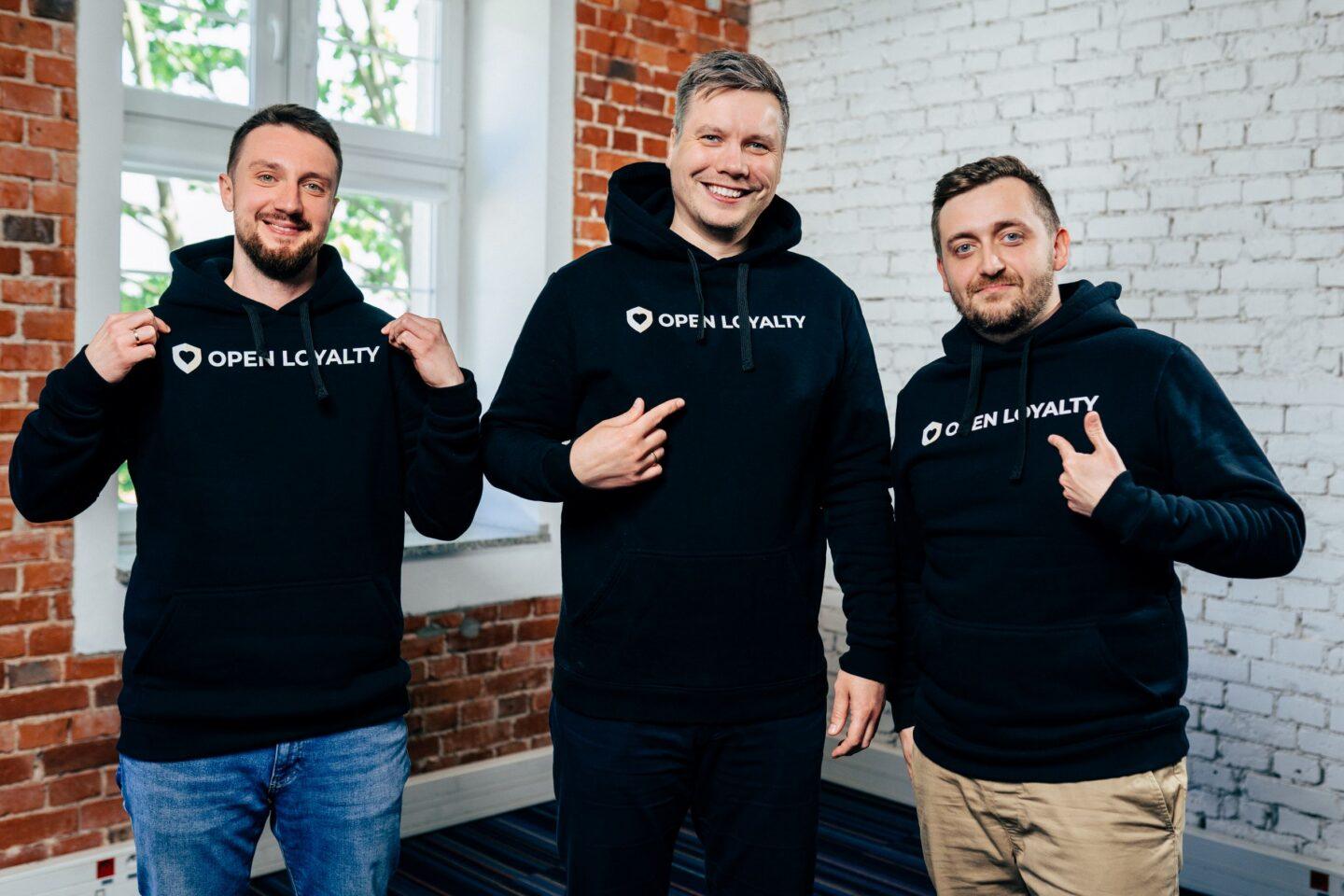
Open Loyalty, a Polish company developing customer loyalty programs, has operated globally from day one. Backed by OEX Group and the Karwatek brothers, it demonstrated its ability to compete with technology giants during the FIFA World Cup in the United States. Now it has a plan to more than double the scale of its business and attract a strategic investor.
International expansion is a defining moment in the life of most companies. Some, particularly in technology, have global ambitions from the outset. Open Loyalty is one of them. Backed by OEX Group and brothers Tomasz and Piotr Karwatek, the company generates 99% of its business outside Poland, primarily in Western Europe, the United States and the Asia-Pacific region.
The startup provides loyalty programs for more than 70 companies across 30 countries, including global brands such as Heineken, Aldo and Intersport. Annual sales generated through these programs in more than 60 countries are expected to rise from USD 4bn to USD 10bn over the next few years. That is just one of the objectives behind the company’s ongoing transformation.
“We expect to reach PLN 18m in annual recurring revenue (ARR) and PLN 6.2m in EBITDA this year. Our goal is to grow ARR by 40% annually, exceeding PLN 40m within two to three years, while maintaining a gross margin of around 80% and an EBITDA margin of 32%. Once we achieve that, we will accelerate expansion with a strategic investor. We are building the company so that we do not need to seek another funding round, but are ready to bring in an investor at any time. That is in line with the philosophy of Tomek Karwatek, one of our investors,” says Cezary Olejarczyk, CEO and co-founder of Open Loyalty.
An unusual startup spun out of Divante
Open Loyalty is an unusual startup, not least because it is EBITDA-positive. It has no venture capital funds among its investors and has completed just one financing round: EUR 2.3m (more than PLN 10m) in 2021.
More than half of that funding came from a grant awarded by Poland’s National Centre for Research and Development (NCBR). The remainder was invested by the company’s founders – Kacper Cebo, Cezary Olejarczyk and Karol Bzik – alongside OEX and the Karwatek brothers. The latter founded, among other businesses, software development company Divante, which later attracted investment from OEX. Open Loyalty was spun out of Divante before that company was acquired for PLN 260m in 2021.
“I was an IT architect, a purely technical person, but I always wanted to be an entrepreneur and build something. I joined Divante in 2015 after an unsuccessful startup venture. The company wanted to develop its own products alongside its service business, and so did I. We noticed a recurring leaky-bucket problem among clients: they were acquiring new customers while existing ones kept leaving. We could not find good technology to address it, so we developed our own loyalty product internally,” recalls Olejarczyk.
Revenue and profits rise rapidly
Work on the product began in 2017, with the intention of making it profitable in its own right. That milestone was reached approximately three years later, justifying its separation into an independently developed company in October 2021.
Two years later, the company generated PLN 1.5m in EBITDA on revenue of almost PLN 8m. In 2025, sales increased by 50% to PLN 14.4m, while EBITDA tripled to PLN 3.8m. The company also expects to generate a net profit of around PLN 1m this year, although investment in product development remains the priority.
“Achieving profitability and becoming independent of successive funding rounds gave us considerable freedom to shape the right strategy. There was no single obstacle we had to overcome to get there. Many elements had to come together: a good product arriving at the right moment in the market, an excellent team, a partnership-oriented approach to customers and a little luck as well,” says Olejarczyk.
Good to know
A Polish success story at the World Cup
Open Loyalty played a supporting role in organizing one of the world’s biggest sporting events: the 2026 FIFA World Cup, held in the United States, Canada and Mexico. The United States Soccer Federation based its Insider loyalty program on technology supplied by the Polish company.
“It is a great example of implementation and a dream come true. Supporting the World Cup increased our visibility among US customers and sports clubs. Nobody approached us directly because of it, but clients often mention that they have heard about our involvement in the technological infrastructure behind such a major sporting event. It gives us credibility and opens conversations with Europe’s biggest soccer clubs,” says Open Loyalty CEO Cezary Olejarczyk.
The business transformation
The company’s improving financial performance reflects, among other things, a change in its business model. Just three years ago, Open Loyalty sold a “loyalty engine,” discussing APIs and technical documentation with customers’ developers. Today, its discussions are with chief financial officers, marketing executives and loyalty program managers, who want to know which business metrics will improve and by how much.
“We stopped selling access to technology and started selling changes in customer behavior. We evolved from a loyalty engine into a platform that helps companies retain customers through gamification. We offer more than a dozen mechanisms that influence behavior, including challenges, missions, levels, lotteries, prize wheels, rankings and badges. We also support clients with expert knowledge and consulting based on data from the platform,” explains Olejarczyk.
As a result, the company has also changed its pricing model, moving away from a base license plus a usage-based component toward outcome-based pricing.
“Linking our compensation to results means the entire organization focuses on one objective: delivering the outcome the customer expects. This is a long-term direction, and the entire category is moving that way,” the entrepreneur explains.
Expert's perspective
Brands are fighting harder for direct customer relationships
At the same time, a loyalty program is not a competitive advantage in itself. Our research shows that customers primarily expect tangible benefits: attractive prices, personalized discounts, points or other clearly recognizable rewards.
The best programs work when they create a simple, understandable exchange of value. Consumers receive a real benefit, while companies gain a better understanding of their needs and behavior. Our research into the Polish market also shows that a loyalty program is rarely the main reason customers choose a particular store. The fundamentals – price, product range, convenience and relevance – remain far more important.
What has changed most in recent years is the ability to make much more precise use of these relationships. Data and technology allow companies to personalize offers more effectively, increase purchasing frequency, capture a greater share of customer spending and raise customer lifetime value. From a business perspective, well-designed loyalty mechanisms can therefore do more than improve retention. They can also generate additional revenue streams.
The key, however, is not to start with the technology or the app. It is to understand what would give consumers a sufficiently compelling reason to enter into a direct relationship with a brand. In practice, that might be a financial benefit, convenience, access to services, content, a community or more relevant offers. Good solutions usually provide a simple, easily communicated benefit that customers genuinely value.


Competing with tech giants for major clients
The transformation has also changed Open Loyalty’s target customers. The company now focuses on medium-sized and large enterprises. Although it serves only a few dozen businesses, they launched 19,000 loyalty campaigns over the course of a year.
The platform processes 83 million transactions and 1.3 billion customer interactions annually. More than 65 million people have registered for loyalty programs powered by Open Loyalty, with an average of 17 million active users each month.
“We want to work with market leaders and companies aspiring to become leaders in their segments. These clients match our ambitions. They understand the importance of customer retention and engagement and are willing to work with us on implementing new technologies,” says Olejarczyk.
To win these large customers, the Polish startup must compete with global technology giants such as SAP, Oracle and Salesforce. With a workforce of around 60 people, it cannot match their marketing budgets or headcounts. Instead, it relies on different competitive strengths.
“Our advantages are flexibility, rapid decision-making and close collaboration with customers. As a small, agile company, we can respond to change and introduce innovations much faster. There is a reason why the biggest technology companies tend to acquire products rather than develop them internally. Their relatively rigid structures leave limited room for this kind of innovation,” says Olejarczyk.
AI: both an opportunity and a challenge
Open Loyalty’s biggest competitor is often not another technology provider but a company’s decision to postpone a project or build the system itself. To address this, the startup has lowered the barrier to entry. It offers a trial version with full API access, allowing a prospective customer’s developers to build an integration before deciding whether to proceed with a full implementation.
“For some companies and use cases, developing a system in-house makes sense, and AI has made that easier. But sometimes customers come back to us after trying because the real competitive advantage is not the code. It is years of expertise and data: loyalty mechanisms proven effective across multiple countries, tested settlement and reporting systems, fraud prevention tools – I could go on. You also need to know how to use the technology to achieve the desired outcome. Customers pay us to deliver results, not for a piece of code,” says Olejarczyk.
AI embedded in Open Loyalty’s product helps automate the collection and organization of customer data. This enables companies to launch personalized campaigns at scale, tailoring them to individual users.
“For example, a sports footwear manufacturer wants to engage people with different levels of running experience. A marathon runner might receive a challenge to run 30 kilometers a week to earn points, while a beginner would be given a target of just a few kilometers, suited to their abilities. That way, customers feel understood and return more often, while the company gains a better understanding of their needs, can predict them more accurately and builds a lasting relationship,” explains Open Loyalty’s CEO.
Expert's perspective
Polish technology companies can compete with global providers
Working with large enterprise clients involves procurement procedures that can last many months, alongside demanding formal requirements. Each market has its own legal framework and consumer habits, while companies often operate extensive, complex IT ecosystems. Integrating with existing infrastructure therefore requires considerable technical precision.
For a smaller, agile organization, another important challenge is scaling implementation and customer support while maintaining service quality and flexibility as it expands into new countries.
The strengths of Polish solutions include the expertise of our engineers and the combination of high-quality technology with operational efficiency. Poland has a strong pool of IT specialists capable of developing modern, secure products that meet complex business requirements.
Large global technology providers offer extensive systems, but these can be rigid and difficult to customize. Introducing changes or developing new features may take many months. At Sparta Loyalty, we take a different approach. We provide a flexible omnichannel ecosystem tailored to each customer’s business model and requirements, then develop it as their needs and market opportunities evolve.
International brands, from retail chains to fuel companies and FMCG manufacturers, recognize that partners like us can combine enterprise-grade technology with flexibility and speed. They benefit from extensive customization options, rapid responses to changing requirements and a favorable balance between functionality and the total cost of implementation.
In our experience, agile Polish teams can successfully deliver complex, multinational projects and compete effectively with global technology suppliers.
From local contracts to global partnerships
The startup intends to continue expanding across several continents. Its strategy has two parallel elements: entering new markets alongside existing customers and acquiring new clients. The approach adopted at the company’s founding has helped make this possible.
“When you build good technology, you attract customers from around the world. We believed in our product’s global potential from the beginning. Initially, we spoke with technical specialists – developers, engineers, IT architects and technology executives – whose task was to find the best solution for customer retention and engagement,” says Olejarczyk.
Winning over those specialists and successfully implementing a solution in one market often opened the door to discussions with a client’s global headquarters. Expansion was also supported by multinational companies’ preference for consolidating their technology systems rather than using different solutions in each country.


Key Takeaways
- From a Divante spin-off to a global growth strategy. Open Loyalty develops customer loyalty programs and was spun out of technology company Divante in 2021. Divante, founded by Tomasz and Piotr Karwatek, received financial backing from OEX Group before being sold for PLN 260m. Both OEX and the Karwatek brothers invested in Open Loyalty, whose founders are Kacper Cebo, Cezary Olejarczyk and Karol Bzik. The company’s ongoing transformation is intended to prepare it to attract a strategic investor within the next few years.
- A shift from selling software to delivering business results. Open Loyalty has changed several aspects of its strategy. Its pricing model is moving from a base license and usage-based fees toward outcome-based compensation. Rather than merely selling access to technology, it helps companies design personalized campaigns that influence customer behavior. The startup is also increasingly focused on medium-sized and large enterprises, where it competes with global technology providers. It sees flexibility, faster decision-making and close customer relationships as its principal competitive advantages.
- Global reach and ambitious financial targets. Open Loyalty has operated internationally from the outset, generating 99% of its business outside Poland, primarily in Western Europe, the US and Asia-Pacific. It serves more than 70 companies whose loyalty programs reach 65 million registered users across more than 60 countries and generate approximately USD 4bn in annual sales. The startup aims to increase that figure to USD 10bn within a few years. It also plans to exceed PLN 40m in annual recurring revenue within two to three years, with an EBITDA margin above 30%. For 2026, it forecasts PLN 18m in ARR and PLN 6.2m in EBITDA, representing growth of several dozen percent.