

This article is a part of Poland Unpacked. Weekly intelligence for decision-makers
Younger generations are growing up in a world shaped by new technologies and use them with ease—both for entertainment and education. This creates broad opportunities for innovative solutions, including those based on artificial intelligence (AI), as well as for business.
This trend is recognized by Smartschool’s founders: Matt Masłowski, Paul Burzyński, and Kajetan Lewandowski. Beyond its economic dimension, their venture also has a social goal: to democratize access to tutoring in the United States.
Seed round and notable investors
Smartschool quickly attracted investor attention. The company closed its seed round, raising $3 million (approximately PLN 12 million / EUR 2.8 million). The financing came from founders of technology companies as well as venture capital funds, some of which had supported the project from its early stages.
Among the investors are, among others, Mati Staniszewski (co-founder and CEO of ElevenLabs), Marcin Żukowski (co-founder of Snowflake), Konrad Howard (co-founder of Booksy), as well as the funds Inovo.vc, 16z Scout Fund, and The Explorer Fund.
This is not a chatbot. It’s a tutor
Based in Palo Alto, Smartschool is developing a personalized AI tutor whose functionality is aligned with school curricula.
According to company representatives, the platform is used in 30 U.S. school districts, including the New York City Department of Education and Boston Latin School.
Access to the system is offered in two models: for schools—as a tool supporting teachers—and directly for parents who want to provide their children with an additional learning resource.
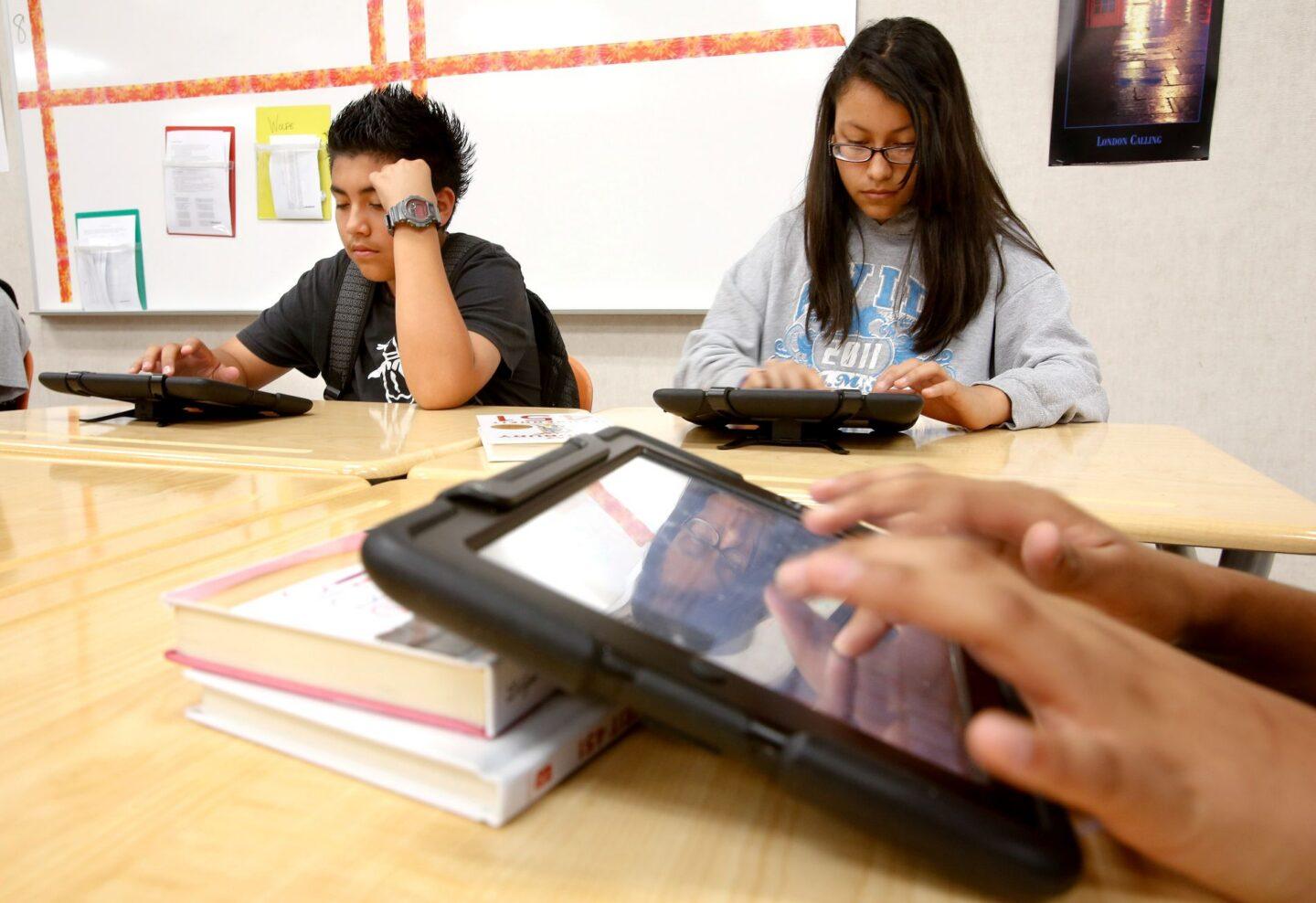
Smartschool supports teachers in their daily work by, among other things, generating personalized assignments, assisting in grading and assessment of student work, and analyzing learning progress. For students, it provides an individual “learning companion” tailored to their needs and learning style.
“We created Smartschool so that every child, regardless of where they live, receives the same high-quality personalized education,” says Matt Masłowski, co-founder and CEO of Smartschool.
“Most edtech tools are just wrappers around ChatGPT—they have no understanding of what a student is actually working on in class. We built our own AI models that understand curriculum standards, read handwritten math, and adapt in real time to a student’s way of thinking. This is not a chatbot. It’s a tutor,” says Paul Burzyński, co-founder and Chief Product Officer.
Investor perspective
Investor's perspective
AI in education and in the investor’s portfolio
Artificial intelligence in education is undoubtedly a growth direction for the market. Today, solutions in this space—from simple AI tutors to more advanced platforms—already generate hundreds of millions of dollars in revenue.
Smartschool has opted for a demanding, long-term market entry strategy through cooperation with schools and sales via regional authorities responsible for the education segment. Although more difficult at the outset, this model allows the company to build a durable competitive advantage.
The company’s revenue dynamics are solid, although it is not the fastest-growing AI project in Inovo’s portfolio. Given the chosen go-to-market strategy, this was expected. The first signed and implemented contracts confirm that the company has built a product that genuinely addresses the needs of teachers and schools and delivers tangible value to their work.


Early stage, initial revenue, and scaling
According to Matt Masłowski, the company is still at an early stage of development but already has a product, customers, and approximately USD 500,000 in revenue.
The company is currently focused on scaling the platform, refining user segments by adapting the product to different education levels—from primary school to high school—and increasing sales. The newly raised capital will be allocated to these efforts.
Why the United States is ahead of Europe
Smartschool’s platform currently operates in the U.S. market and has not yet been deployed in Europe.
“The United States develops and adopts new technologies faster than Europe, including in education. The U.S. education system is divided into independent districts—each of which has developed its own technology implementation model over the years. In each district there is a person responsible for implementing new solutions, and teachers receive support in using them. The readiness to adopt AI tools is higher. In many other countries, students still carry heavy textbooks, and teachers write with chalk on the board,” notes Matt Masłowski.
Expert perspective
Expert's perspective
Technology and real business value matter
Following the post-pandemic boom, funds are approaching edtech much more cautiously. Today, they primarily analyze retention, monetization, pricing strategy, and sales repeatability—not just user growth. A product idea alone is no longer sufficient. In B2B and B2G segments, the key is demonstrating the ability to secure contracts despite the caution of schools and large organizations, while in B2C—maintaining paying customers.
Demand for educational technologies remains strong enough that the number of new startups will continue to grow. At the same time, the market has shifted toward solutions that genuinely help users acquire specific skills faster.
AI’s impact today is primarily practical: products can be built faster and at lower cost while offering new features such as better personalization, faster content generation, and adaptive learning paths. This lowers the barrier to entry but also increases competition.
However, it does not automatically lead to a market reshuffle. Particularly in B2B and B2G segments, experience, credibility, implementation capability, and customer trust still matter most. As a result, scale and capital will primarily flow to companies that deliver real business value in addition to technology.
Opportunities and risks of AI in education
Smartschool’s founders recognize both the potential and the risks associated with the use of artificial intelligence in education.
“The biggest risk associated with AI is that students, instead of completing assignments independently, use answers generated by ChatGPT or similar tools. They stop thinking independently, which slows their development. This is now the norm in both schools and universities, where lecturers see students copying work without reflection. Educators are aware of this problem and are addressing it, for example by changing students’ incentive systems—reducing the emphasis on grading homework and increasing the importance of work done in class without access to so-called cheating tools such as AI chats or tools like the notorious Photomath,” says Matt Masłowski.
At the same time, AI is becoming an integral part of modern education.
“Its knowledge is essential for students who want to acquire future-proof skills. On the other hand, AI is extremely effective in one-on-one learning, identifying reasoning errors, and explaining tasks. A student working with a tutor learns much more effectively than without one, and AI can be just as helpful as a human. However, it is crucial to control whether the student uses AI for support or merely to copy ready-made answers. That is why schools use solutions like Smartschool—our system allows students to receive support in learning, but it does not allow them to obtain ready-made answers without effort,” emphasizes Matt Masłowski.


Key Takeaways
- Artificial intelligence is playing an increasingly important role in education, offering effective support for individualized learning while also posing risks of misuse, such as the uncritical use of ready-made answers. As a result, proper implementation of AI tools and control over how students use them are critical.
- Smartschool is developing an AI-based platform that functions as a personalized tutor, supporting both students and teachers. The system adapts to curricula and individual user needs, and is already used across dozens of U.S. school districts.
- The company has raised seed funding from prominent entrepreneurs and venture capital funds, enabling further product development and scaling. Its market entry strategy—working with schools and education authorities—is more demanding but supports the creation of long-term competitive advantage.