

This article is a part of Poland Unpacked. Weekly intelligence for decision-makers
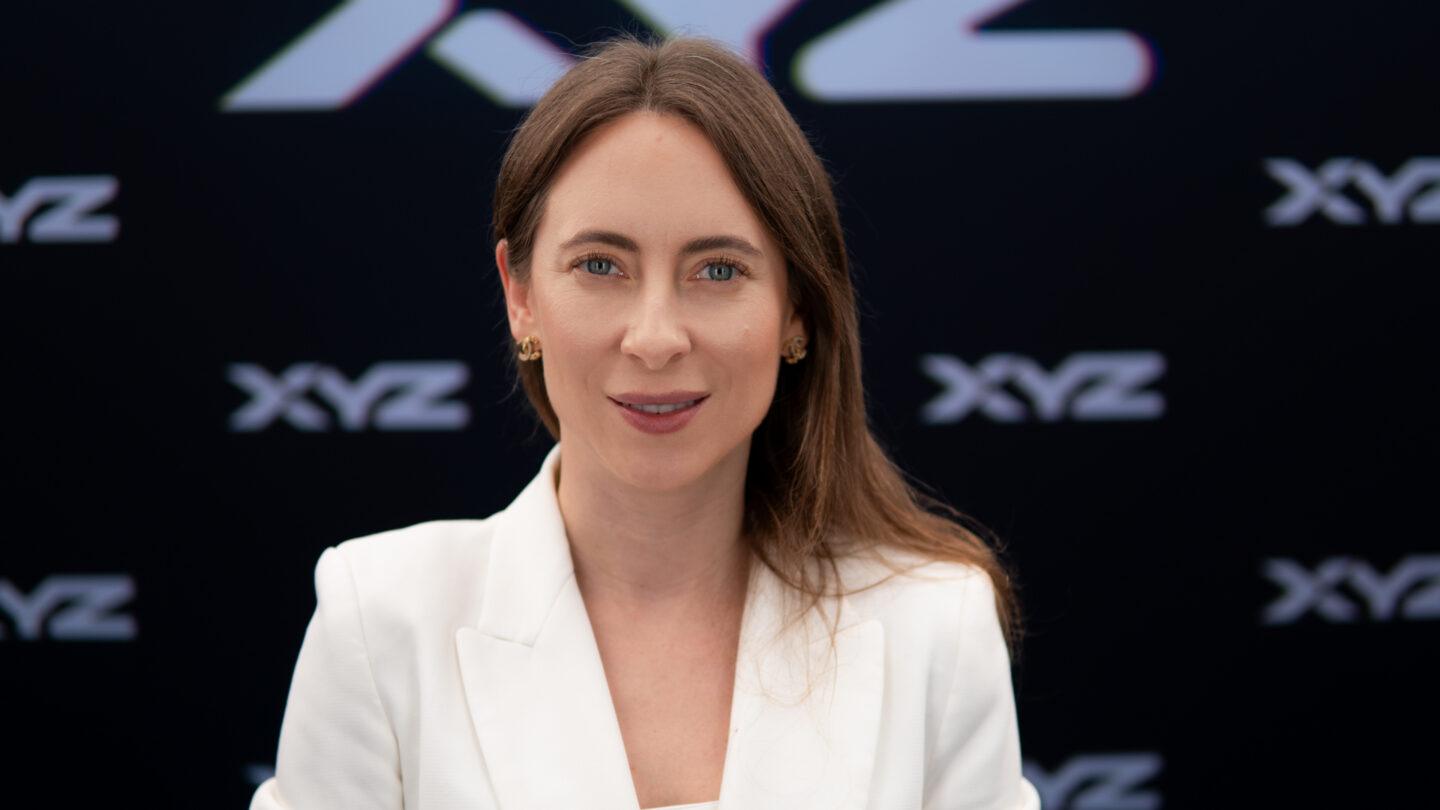
Rozalia Urbanek, the new CEO of PFR Ventures, outlines the institution’s key priorities in her first interview since taking office. The Polish venture capital market is expected to see the arrival of new, long-term investors. “At this point, the scale of capital is not more important than the number of new investors,” she tells XYZ.
The Polish startup market has reached a stage where the mere presence of public funding is no longer sufficient. Capital matters, but even more important is who provides it - and whether they remain in the market for the long haul.
This is the objective set for PFR Ventures by Rozalia Urbanek, who has just assumed the role of CEO. In an interview with XYZ during the European Financial Congress in Sopot, she says the most important task today is to attract new investors to the venture capital market.
“We are, as a market, at a turning point in the effort to bring in additional investors. We are doing this through the Innovate Poland (Innovate PL) program,” says Rozalia Urbanek.
As she adds, PFR Ventures’ goal is to build a new group of investors in the market who will not treat venture capital as a one-off experiment.
“A top-down and very important objective is to create a new group of investors in this market who will stay with us for the long term,” emphasizes Rozalia Urbanek.
Private investors expected to join in the coming weeks
The Innovate Poland program is currently valued at PLN 4 billion and consists of two vehicles. The first is Future of Tech Poland, financed by the European Investment Fund and Bank Gospodarstwa Krajowego (BGK, a state development bank). This vehicle is closed to external investors.
The second is the Innovate PL fund-of-funds, managed by PFR Ventures. It currently stands at PLN 2.4 billion, including co-investments. The capital is provided by the Polish Development Fund (PFR), BGK, and PZU.
It is this program that raises the most important question: when will strictly private investors join? Critics of the VC market have long argued that Poland’s ecosystem relies too heavily on public money.
Rozalia Urbanek responds that one commercial investor is already involved.
“PZU is investing these funds on a commercial basis. They do not have the status of a public investor,” says the new CEO of PFR Ventures.
But the real test still lies ahead for PFR Ventures. According to Urbanek, nine investors are currently conducting in-depth due diligence on the investment proposal.
“We assume that between three and five investors should join at the next closing, which is expected in the coming weeks,” the PFR Ventures CEO announces.
This could mark one of the most important moments for the Polish VC market in the near future.
“Today, the number of investors matters more than the amount of capital itself”
The new CEO of PFR Ventures does not hide the fact that more capital is needed. In her view, the fund-of-funds should ultimately grow to at least PLN 4 billion (around EUR 1 billion).
In a more ambitious scenario, Poland should even be thinking in terms of EUR 3 billion. This would still be below France, where a similar mobilization of institutions resulted in EUR 6–7 billion in its first iteration.
Rozalia Urbanek emphasizes, however, that Poland is at a different stage of market development.
“France mobilized institutions to increase the scale of financing. We need to create new investors in this market and ensure they remain investors,” says the CEO of PFR Ventures.
For this reason, she considers a greater success not so much a rapid increase in the program’s value, but rather attracting new institutions that will learn how to invest in VC funds and remain in the segment for the long term.
“Today, the scale of capital is not more important than the number of new investors,” says Rozalia Urbanek.
As she assures, it would be a greater success to bring in at least five new investors who stay in the market for the long term than to increase the scale of capital in the short term.
Why would investors enter Polish VC?
The simplest answer is: returns.
Rozalia Urbanek emphasizes that Innovate Poland is structured on a commercial basis, and its primary objective is to generate returns for investors.
“This market delivers attractive rates of return,” says the CEO of PFR Ventures.
In her view, the performance of regional funds does not lag behind European benchmarks. The best of them manage to place in the first or second quartile in terms of returns and offer a more favorable distribution profile.
This is an important argument, as private investors will not enter venture capital solely for reputational or patriotic reasons. They need to see clear economic logic behind such an allocation.
Urbanek adds a second argument. The development of innovative companies can also strengthen the core businesses of large financial institutions operating in the region. In other words, investing in startups is not only exposure to an attractive asset class. It is also an investment in future markets, clients, and technologies that can drive the broader economy.
Poland and Europe aim to keep technology at home
One of the key themes is technological sovereignty. Poland likes to highlight the success of its founders, but many of the most promising tech companies eventually shift their center of gravity to the United States.
The reason is straightforward: a larger market, deeper pools of capital, and easier access to subsequent funding rounds.
Rozalia Urbanek acknowledges that this has long been a real problem.
“Europe did not have the structure or the scale of capital needed to finance the development of these companies to that extent. Simply put, money was more available and on more attractive terms in the United States than in Europe,” says Urbanek.
In her view, this balance is beginning to shift. Europe is building instruments designed to finance companies at later stages of development. One of them is a European scale-up fund to be managed by EQT. Urbanek speaks positively about this choice.
“I believe this is a very good choice,” says the new CEO of PFR Ventures.
Why? Because EQT has a pan-European footprint and, in Urbanek’s view, should not focus exclusively on the largest markets such as France or Germany. That is good news for Poland.
“To win Europe, perhaps you need to stay in it”
Capital is only part of the problem. Another is demand for technology. Europe is not as unified or as easy a market as the United States. But in certain areas – especially deep tech, dual-use technologies, and defense – it now has a chance to build an advantage. The war in Ukraine and rising defense spending across Europe have reshaped thinking about local technologies.
“Europe’s ambition is to develop these solutions locally, so that they are later purchased here,” says Rozalia Urbanek.
This is an important signal for founders. If Europe not only funds but also buys technology, some companies may conclude that there is no need to relocate to the United States as quickly as before.
“Europe will also be an important market in terms of sales, and perhaps to win Europe, one needs to stay in Europe,” the CEO of PFR Ventures emphasizes.
PFR Ventures aims to support this shift. For years, many founders were told that if they wanted to raise large funding rounds, they needed to move to the United States. Urbanek believes that with stronger European financing, this mechanism could weaken.
“If there is a truly strong project, a U.S. fund, in order to invest in that company, will not necessarily require relocation to the United States, because there will simply be others who are also able to provide that financing,” says the new head of PFR Ventures.
In her view, Europe must act coherently: provide financing, but also create a strong market that buys technology.
PFR Ventures aims to become a competence hub for the market
The conversation also turns to the complexity of Poland’s startup ecosystem. Founders may struggle to navigate where to seek funding: PFR Ventures, the National Centre for Research and Development (NCBR), ARP, BGK Vinci, private funds, grants, or subsidies.
Rozalia Urbanek responds that PFR Ventures has a clearly defined role. The institution does not provide grants or finance basic research. It is a fund investor – selecting entities that subsequently invest in companies.
“We are a specialist in investing in funds, meaning in selecting entities that will make these investments independently, combining our capital with private capital as well,” she says.
PFR Ventures currently has more than one hundred funds in its portfolio, including buyout funds. According to Urbanek, this gives the institution one of the most comprehensive views of the regional market.
PFR Ventures aims to remain a leading fund investor, but also to act as an institution that helps shape the conditions in which the entire ecosystem operates. Urbanek speaks about close cooperation with funds, gathering feedback, and advocating for regulatory changes that would make life easier for both funds and founders.
Deep tech, dual use, and defense: Poland responded faster than Europe
Rozalia Urbanek points out that one of the areas where PFR Ventures can respond quickly to market needs is deep tech, dual-use technologies, and defense. Poland, due to its geographic position and geopolitical situation, began treating this area as strategic earlier than many other European countries.
“One such area was deep tech and investments in companies with dual-use potential,” says Urbanek.
PFR Ventures has developed a fund-of-funds structure that enables investments in dual-use and defense sectors. According to the CEO, Poland was able to demonstrate relatively quickly at the European level that it is willing to allow such investments.
“We want to allow funds to invest in dual use, and also in companies from the defense sector,” says Urbanek.
In her view, such actions are possible when competencies and public capital are to some extent concentrated. The goal is to ensure the ability to rapidly create investment solutions and provide adequate scale of financing.
Australia shows what Poland is missing
Rozalia Urbanek arrived in Sopot almost directly from Australia, where PFR Ventures presented the Innovate Poland program to institutional investors. What made the strongest impression on her were the local pension funds – Superannuation funds. Their scale is enormous from a Polish perspective.
“On average, such a fund manages around 100 billion Australian dollars, which is about PLN 200 billion – in a single fund,” says Urbanek.
The Australian system is based on high pension contributions. The funds enjoy a steady inflow of capital and are therefore structurally overliquid, which forces them to seek investment opportunities also outside the domestic market.
For PFR Ventures, Australia turned out to be one of the most interesting directions for discussions.
“Among all the international directions we have visited while presenting the Innovate Poland program, the conversation with them has been the most intensive,” says Urbanek.
Poland does not have such a local pool of capital. Urbanek says openly that building it would take years and would not be possible without increasing pension contributions.
“I can say that this is the kind of market we would like to have locally,” the new CEO of PFR Ventures admits.


Key Takeaways
- The Polish venture capital market is entering a phase in which not only the availability of capital matters, but also its source and the durability of investors’ commitment. Rozalia Urbanek, the new CEO of PFR Ventures, argues that the main objective of the Innovate Poland program is to attract new private and institutional investors who will treat venture capital as a permanent element of their investment strategy. In this context, a greater success may lie in securing a handful of long-term investors rather than rapidly increasing the program’s overall size. This addresses one of the most common criticisms of Poland’s startup ecosystem: its excessive reliance on public funding.
- Innovate Poland is intended not only as a financing tool for startups, but also as a mechanism for building a new class of investors in the market. The program is currently valued at PLN 4 billion and consists of two vehicles, with the Innovate PL fund-of-funds managed by PFR Ventures playing a particularly important role. According to Rozalia Urbanek, nine investors are currently conducting due diligence on the investment proposal, and between three and five are expected to join in the coming weeks. The CEO of PFR Ventures emphasizes that Poland is at a different stage of development than mature Western markets. It must therefore first build a base of investors who will learn how to allocate capital to VC funds and remain active in this segment over time.
- A key theme of the discussion is European technological sovereignty and the effort to retain innovative companies within the region. Rozalia Urbanek notes that for years startups have relocated to the United States due to a larger market, greater availability of capital, and easier access to follow-on funding rounds. In her view, however, Europe is beginning to develop instruments that could change this dynamic, particularly in deep tech, dual-use, and defense sectors. If the European market not only finances but also purchases local technologies, founders may have stronger incentives to build companies in Europe. Poland, due to its geopolitical position, may be able to develop competencies in dual-use and defense technologies faster than some Western countries.