

This article is a part of Poland Unpacked. Weekly intelligence for decision-makers
The company is already in talks with potential partners for the recovery of metals from black mass, as the technology it has developed may not prove to be the leading one. CEO Paweł Jarski believes that the coming years are a good time to change the head of the group, which could use someone who is a "more organized manager."
Małgorzata Grzegorczyk (XYZ): The Elemental Group is investing USD 1 billion in Zawiercie. Will you be the largest urban mining company in Europe?
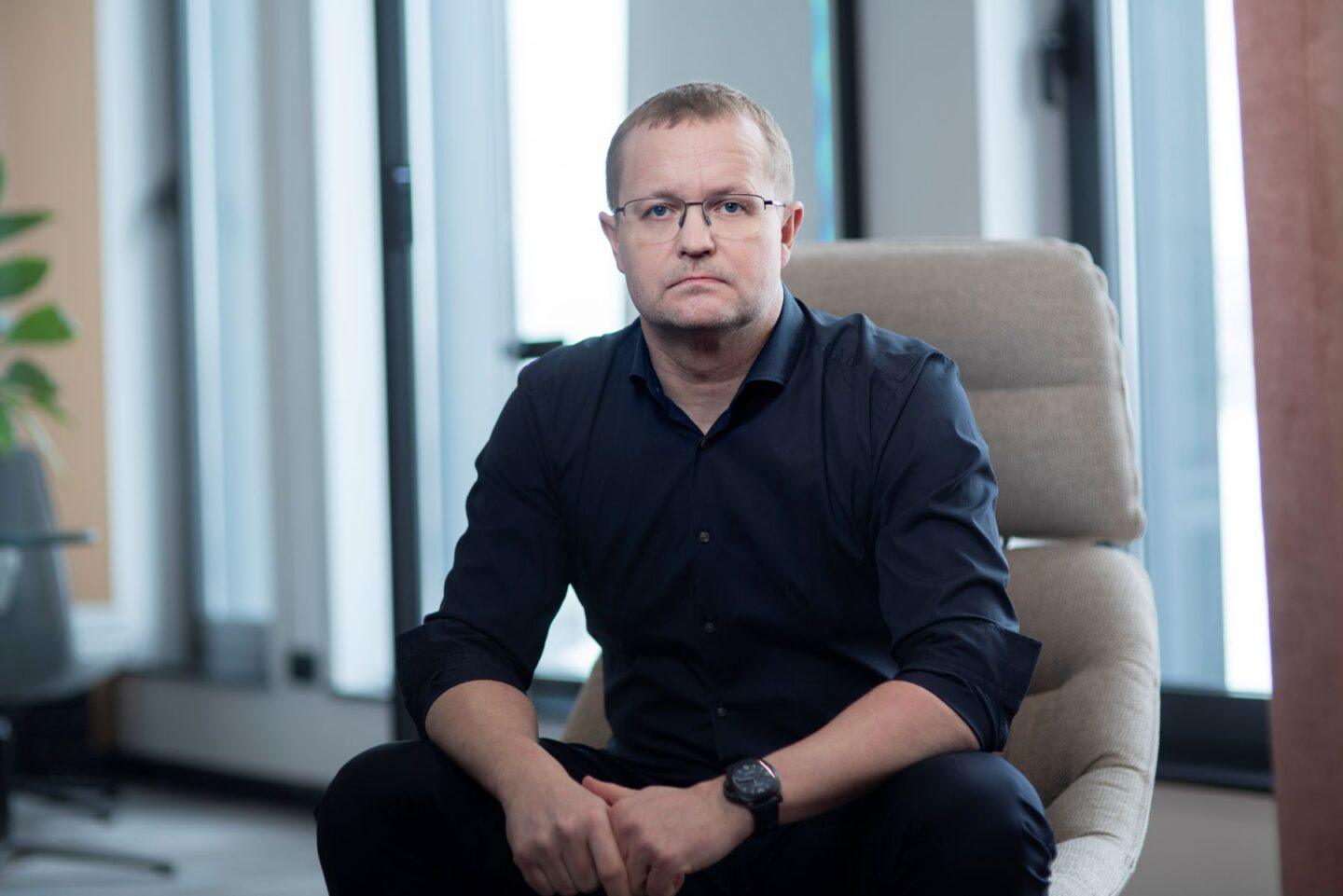
Paweł Jarski, CEO and co-owner of the Elemental Group: We have been the largest company in this area in Poland for at least 10 years. There are probably companies in Europe that are comparable to us. However, there are no direct benchmarks because the business models of the companies we compete with are different. If we manage to carry out and complete the investment in Zawiercie, we will be in the top three in Europe and in the top ten in the world.
If we manage to complete it?
This is not a simple investment. No one has done anything like this in this part of the world before, it is uncharted territory. There will be challenges. After the first stage, i.e. the investment in the production of recycled platinum group metals, we already know that these are not simple matters. That is why we want to find a strategic partner for the second stage.
What is this stage?
The first part involves the production of metals such as copper, gold, and silver from e-waste, i.e., electronic waste. The second part involves battery metals: nickel, lithium, and cobalt produced from electric car batteries.
Good to know
Elemental is not Mr. Jarski's first business
Paweł Jarski, CEO of the Elemental Group, is a graduate of the Kozminski University in Management and Marketing in the field of IT in Management and Human Resource Management. He is a scholarship holder of the Helsinki School of Economics and Jonkoping Business School.
In 2004, he co-founded Synergis Electrorecycling and Electro-System, which operated on the e-waste market in Poland. Five years later, in 2009, they were sold to , a strategic investor. In 2010, Paweł Jarski founded the Elemental Group and launched its first plant in Grodzisk Mazowiecki. In 2012, the company was listed on the Warsaw Stock Exchange, where it remained until early 2021. The company operates in Europe, North America, Asia, and Africa—in 40 countries in total.
Paweł Jarski was the president of the Polish Triathlon Association (PZTri) and a member of the Polish Olympic Committee from 2016 to 2024, and is currently the vice president of PZTri. He is the winner of many prestigious awards, including EY Entrepreneur of the Year.
A new partner may appear
But doesn't the Elemental Group already have a partner in Zawiercie – Ascend Elements from the US?
For now, we are working very well with Ascend Elements. We will see if they are interested in a deeper investment. Our joint project envisages recycling to the level of black mass. The second stage of the investment in Zawiercie is a more chemical process – in fact, metals in the form of salts or carbonates are produced from black mass, which is much more complicated. We are in preliminary talks with our partner. We will not make a decision now, but only in 2-3 years, because today the market is still immature.
Who else besides Ascend could become a partner?
We are considering Asian companies – Korean and Chinese. We have 55 hectares of land in Zawiercie, which is enough to carry out all stages with partners.
Is a partner needed for financing or technology?
Technology. We have secured financing. This is over EUR 400 million in grants from two programs, and we expect to obtain the remaining EUR 400 million in cooperation with partners and in the form of project finance. We estimate our capital contribution at approximately EUR 100 million. We intend to maintain control over the entire project.
Support from Brussels and Warsaw
Will you be applying for any more grants?
It would be inappropriate to be overly greedy, and we realistically assess that we are already financing a large part of the investment with grants. However, we will be watching to see if a support program for recycling and production of rare earth metals emerges - in which case we will want to apply for it, as it would be very complementary to our project. We expect such a program to be announced in the second half of next year.
What exactly are the grants that Elemental has received for the project in Zawiercie?
The project in Zawiercie consists of two stages. The first stage, which is already operational, cost USD 200 million and enabled the production of platinum group metals. The second stage, the Polvolt project, consists of two parts: the production of copper, gold, and silver from e-waste, and the production of metals from batteries.
We received a grant of over PLN 1 billion (EUR 236m) from the Polish government for the Polvolt project. This is a program from the TCTF (Temporary Crisis and Transition Framework). At the same time, the European Commission has offered us a grant of EUR 150 million from the Innovation Fund. We are currently working on this agreement. In my opinion, obtaining the funds is a formality and we will receive this grant at the beginning of next year.
Was it planned from the outset to produce exactly these metals in Zawiercie, or did you adapt the plan to EU grant programs?
It was part of our strategy from the very beginning.
A turning point
How much does the company earn from recycling and recovering metals from platinum group metals, electronics, and batteries?
Current metal prices are very important in every segment. The last two years have been difficult for platinum group metal production – prices fell by about 66% from their peak in 2022, but are now rapidly returning to their previous levels. That is why we have such a diversified business, so that we are not dependent on price fluctuations. We have not suffered any losses, but it does happen that a given segment is much less profitable in a given period than before.
When will the company start making money from recycling car batteries, for example? When will the processing capacity, which reaches 12,000 tons of battery raw material per year, or 28,000 batteries, be utilized?
Looking at the volumes, we estimate that we will reach the break-even point at the beginning of next year. I predict that we will reach significant volumes, which will allow us to open the second stage and start processing black mass, in three years.
The market's transition to electric cars will not happen overnight. I expect that in Europe there will be a decline at the expense of hybrid cars. The European automotive industry has no chance of competing with China and will hold back the entry of electric cars from Asia. From our point of view, this is not very important. We recycle catalytic converters from combustion engine cars. Investing in metals used in battery production is a project for the future. We assume that in the long term, electric cars will account for an increasing share of our raw materials and in 15-20 years it will equal that of combustion engine cars.
Black mass is the future
And how is the black mass refinery pilot project going?
We have the technology, the design is complete, and about 20 people are working on it. However, there is a long way to go from piloting to full-scale production. In 2-2.5 years, we will know the size of the market and then we will select a partner and technology. Battery chemistry is changing – there are more and more lithium-phosphate batteries, and our pilot project focused on lithium-ion batteries. We cannot bite off more than we can chew.
Does this mean that you may not use your technology to produce metals from black mass at all?
It is possible that our technology will be useful in a specific niche, but it will be so narrow that we will use our partner's technology in cooperation with them.
Good to know
Black mass – what is it?
Black mass is a powder produced after grinding used lithium-ion batteries and separating metals and plastics. It contains, among other things, lithium, nickel, cobalt, and manganese. It is a key raw material in battery recycling, from which pure metals needed for the production of new cells are recovered through chemical processes.
European acceleration
Do you see acceleration in the market? The EU wants to stimulate it – the Critical Raw Materials Act shortens the period for issuing a permit for a recycling plant for pure raw materials from several years to 17 months.
I have heard about the program, but in practice I do not see any changes. It's a bit like fairy tales about the iron wolf.
Does Elemental plan to recover rare earth metals from mine tailings? Prof. Adam Piestrzyński from AGH University of Science and Technology in Kraków said that there are 7 million tons of rare earth elements in them.
We have approached projects to extract rare earth elements from waste heaps several times. However, the problem with waste heaps is that the metals are not distributed in a repeatable manner. They are present in one borehole, but five meters away, they are not. This discourages us. We are unable to plan resources, and it is difficult to develop extraction technologies. China has a huge advantage in this area. Entering the market for recovering metals from waste heaps or ash would be suicidal.
In Europe, urban mining of rare earth metals is, in fact, the recovery of metals from components containing neodymium magnets. These are found in electric motor parts, hard drives, and wind turbines. This market is just emerging. Our strength lies in collection and processing. We see a clear niche here. Of the entire spectrum of 17 rare earth metals, we are only interested in four: neodymium, dysprosium, samarium, and praseodymium.
Apparently, almost 11 million tons of electronic waste is generated in the EU every year. How much of this can Elemental process?
It is difficult to comment on these figures. We operate in specific areas and collect large and small household appliances and audio/video equipment for recycling, and we specialize in printed circuit boards found inside computers.
Waste from all over the world goes to Zawiercie
You mentioned a strong collection network. How big is it?
We have 100 locations in 40 markets. We built the network mainly through acquisitions, and one-third of it grew organically.
Will the network continue to grow?
Ultimately, it should have about 150 points. This would allow us to secure material for all large investments.
Do you want to bring waste from Asia to Zawiercie?
We already import most of our material from around the world. In the US, the metal content is high and the cost of the catalyst is so high that logistics should not be a problem in the long term. It will not make sense to import waste from all Asian countries, but 70-80% of our subsidiaries' material should be imported and processed in Zawiercie. After all, we are talking about the recovery of precious metals.
Good to know
Giga recycling factory in Zawiercie
In November this year, the Elemental Group received a proposal for a grant of over EUR 150.5 million from the European Commission for the Polvolt project. The EC awarded EUR 2.9 billion in funding to 61 low-carbon technology projects from the Innovation Fund. One of them is the Polvolt project, implemented by Elemental Battery Metals, a company belonging to the Elemental Group.
In September this year, the Elemental Group signed an agreement with the Ministry of Development and Technology for a grant of PLN 1.038 billion (EUR 236m) from the EU's TCTF (Temporary Crisis and Transition Framework) program.
Over the next seven years, the company will invest approximately USD 1 billion in Zawiercie. The first stage of the investment program was the opening of the Elemental Strategic Metals plant in Zawiercie in June 2024. It houses a lithium-ion battery recycling plant, including batteries from electric cars, energy storage devices, drones, smartphones, and laptops. There is also a plant producing platinum group metals from used catalytic converters. Elemental Strategic Metals recovers eight of the 34 raw materials that the EC has identified as critical: cobalt, lithium, manganese, copper, nickel, and platinum group metals – palladium, platinum, and rhodium. The Elemental Group estimates that it has a 15% share of global platinum group metal recovery.
The second stage of the investment program in Zawiercie is the Polvolt project, i.e., the production of critical raw materials from the so-called black mass already obtained from a mixture of battery metals. From 2031, Elemental Battery Metals will produce gold, silver, copper, and battery metals, i.e., cobalt, lithium, nickel, and manganese, on an industrial scale. The plant has the potential to recycle 12,000 tons of batteries and 6,000 tons of catalysts per year. Worldwide, the Elemental Group processes over 40,000 tons of PCB boards and over 110,000 tons of electronic waste.
The Innovation Fund, from which the Elemental Group will receive EU funding, is one of the largest global financing programs for low-carbon technologies. It is powered by revenue from the auctioning of EU CO2 emission allowances and, depending on their price, can reach up to EUR 10 billion per year. The program aims to support the decarbonization of the EU economy.
In 2024, the EU adopted the Critical Raw Materials Act, which stipulates that by 2030 at least 10% of consumption should come from EU mining, 40% from processing, and 25% from recycling.
First Poland, then the US
Is Zawiercie the Elemental Group's largest investment?
Yes. We have a lot of projects, but usually worth several to several dozen million euros, we are expanding our plants to keep up with the development of metal processing technology.
Do you receive funding for investments in other countries where the group operates?
No, not yet. So far, we have received grants from Poland and the European Commission. We are keen to obtain grants in the US. However, we are currently implementing so many projects that we do not want to get distracted – it is very demanding. That is a song for the future. We are, of course, considering the option of building a replica of the Zawiercie plant in the US. But the construction of Zawiercie will take another five years. If grants and money are available, we may consider investments on other continents.
Today, however, we are implementing so many projects that we do not want to get distracted – it is very demanding. It is a song of the future.
Is Poland the best place in Europe for recycling?
The aspect of patriotism is important to us. But objectively speaking, Poland has no weaknesses compared to any other EU country. Unlike metal mining, in the urban mining industry there is no single place where raw materials, i.e. waste, are produced. You need to build up a large mass and have geographical exposure to the whole world or continent.
The best European country to invest in depends on two or three factors. It is a matter of subsidies and incentives. From our point of view, Poland is a leading player within the EU and on its own. Another issue is energy costs. Here, the situation is not so rosy. However, we are trying to minimize this problem. In Zawiercie, we are investing some of the money in renewable energy sources and storage facilities. The third aspect is the speed of obtaining permits and cooperation with local authorities. From our point of view, this is going well. Obviously, it is not like in the US, where all you need is the consent of the local authorities to start construction, but the situation in Zawiercie is good. Therefore, we see no reason to consider another location in Europe.
The embargo is not working
Has the company's situation improved since such a major player as Russia has been removed from the market due to sanctions?
It is an open secret that Russian platinum and palladium, key raw materials in our business, are being sold on the market by other Asian countries, such as Kazakhstan, Azerbaijan, and Turkey, despite the embargo, without disclosing their source of origin and at a lower price.
Are you trying to lobby for a tighter embargo?
We are not involved in that. In the US, a large producer of these metals is trying to introduce an embargo on the American market. If it succeeds, we will consider similar steps in Europe. However, we do not have such clout at the European level. And in Europe itself, there is also a relatively large divergence of positions between individual countries.
The timing was not good, but the plans are big
What results did the Elemental Group achieve? You announced PLN 7 billion (EUR 1.6bn) in revenue for this year. There are several different companies in the National Court Register, the holding company is registered in Luxembourg, and you also have a joint venture with Ascend Elements – it is difficult to extract consolidated data...
We would prefer not to disclose our financial results. Our businesses are spread across Europe and the US. The market has gone through a purgatory, results have fallen, but much less than those of our competitors. We don't want to flex our muscles and feed our competitors with data. We are currently focusing on gaining as large a market share as possible.
The market has gone through purgatory, results have fallen, but much less than those of our competitors. We don't want to flex our muscles and feed data to our competitors.
Then please tell us what results you want to achieve.
If we succeed in implementing the project in Zawiercie, our revenues in five years should not be less than USD 3.5-4 billion. This will depend on metal prices, so it could just as well be USD 5 billion.
How much has the group spent on acquisitions and investments?
In the last ten years, investments and expenditures on mergers and acquisitions have exceeded USD 500 million.
Stock market history, stock market plans
Why was the company's headquarters moved to Luxembourg?
This was related to the private placement process, i.e. attracting investors for the company three years ago. The World Bank, EBRD, Polish Foreign Expansion Fund, and an Asian fund hold 33 percent. One of their requirements was to establish a holding company in Luxembourg. This is also related to our IPO plans on European markets. Once the investments in Zawiercie have been partially consumed and the results show growth resulting from these investments, we will want to conduct an IPO. Whether this will be in three, five or seven years, I do not know.
Have you ever regretted that the company left the stock exchange?
No. Over the course of 10 years on the Warsaw Stock Exchange (WSE), our company has experienced both very good and very bad periods. At that time, we were a much smaller company. Conditions on the Polish stock exchange were and still are very good for companies with a capitalization of up to EUR 300-400 million. For larger companies, it is not so obvious. The market is too shallow – when we talk about raising EUR 0.5 billion, this is already a very big feat at the WSE level. Perhaps companies from selected industries, such as technology, like Allegro, can obtain such financing. In more traditional businesses, such cases in the last 20 years can be counted on the fingers of one hand. Nevertheless, we are keeping our fingers crossed for the WSE, and I personally believe that the current CEO has interesting ideas and a real chance to take the WSE to the next level.
Conditions on the Polish stock exchange have been and continue to be very good for companies with a capitalization of up to EUR 300-400 million. For larger companies, this is no longer so obvious.
A good time for a change of direction
How do you manage such a large holding company?
The company is large enough that the management board is geographically and functionally diverse. I am in daily contact with seven or eight people. The second line of managers is twice as large. Every year, we add more corporate components. Before a potential IPO, the company will be even more structured. Despite our growth, we try to maintain flat structures. Most often, the path from the manager of a given collection point to the CEO is no more than two levels.
When will you hand over the reins of the company?
The next few years will be a good time for me to pass the baton to someone who is a more organized manager. I am an entrepreneur. This has many advantages, but also disadvantages. We are not masters of procedures and structuring, and with each passing year this seems to become more and more important.
Will it be someone from your family?
I don't have a successor in my family because my children are still too young and have their own ideas about life. It will probably be someone from outside the family. I currently manage the company from Grodzisk near Warsaw. It will be difficult to find someone with the right international experience in Poland – it will probably be a foreigner. Over 40 subsidiaries around the world require slightly different skills. I'm not saying that Poles don't have them, but we are open because we have an international background.


Key Takeaways
- Elemental Group, Poland’s largest—and one of Europe’s leading—urban-mining companies, is expanding its recycling plant in Zawiercie. Over the next seven years, the company plans to invest around USD 1bn. The first phase of the investment programme was the opening in June 2024 of Elemental Strategic Metals, a facility recycling lithium-ion batteries—from electric vehicles, energy storage systems, drones, smartphones and laptops. The site also includes a plant producing platinum-group metals recovered from used catalytic converters.\
- The second phase will focus on producing metals such as copper, gold and silver from e-waste, as well as battery metals—nickel, lithium and cobalt—sourced from electric-vehicle batteries. In November, Elemental Group received a proposal for an EU grant of over EUR 150.5m for its Polvolt project. In September, it also signed a grant agreement with the Ministry of Development and Technology worth PLN 1.038bn (around EUR 239m) under the EU’s Temporary Crisis and Transition Framework (TCTF).
- For the second phase, particularly the recovery of metals from black mass, Elemental is seeking a partner. One candidate is the American company Ascend Elements, which was a partner in the first phase. The group is also in talks with Korean and Chinese firms to leverage their technology. Although Elemental has developed its own technology and continues to refine it, it does not rule out adopting another solution within the next two to three years.