

This article is a part of Poland Unpacked. Weekly intelligence for decision-makers
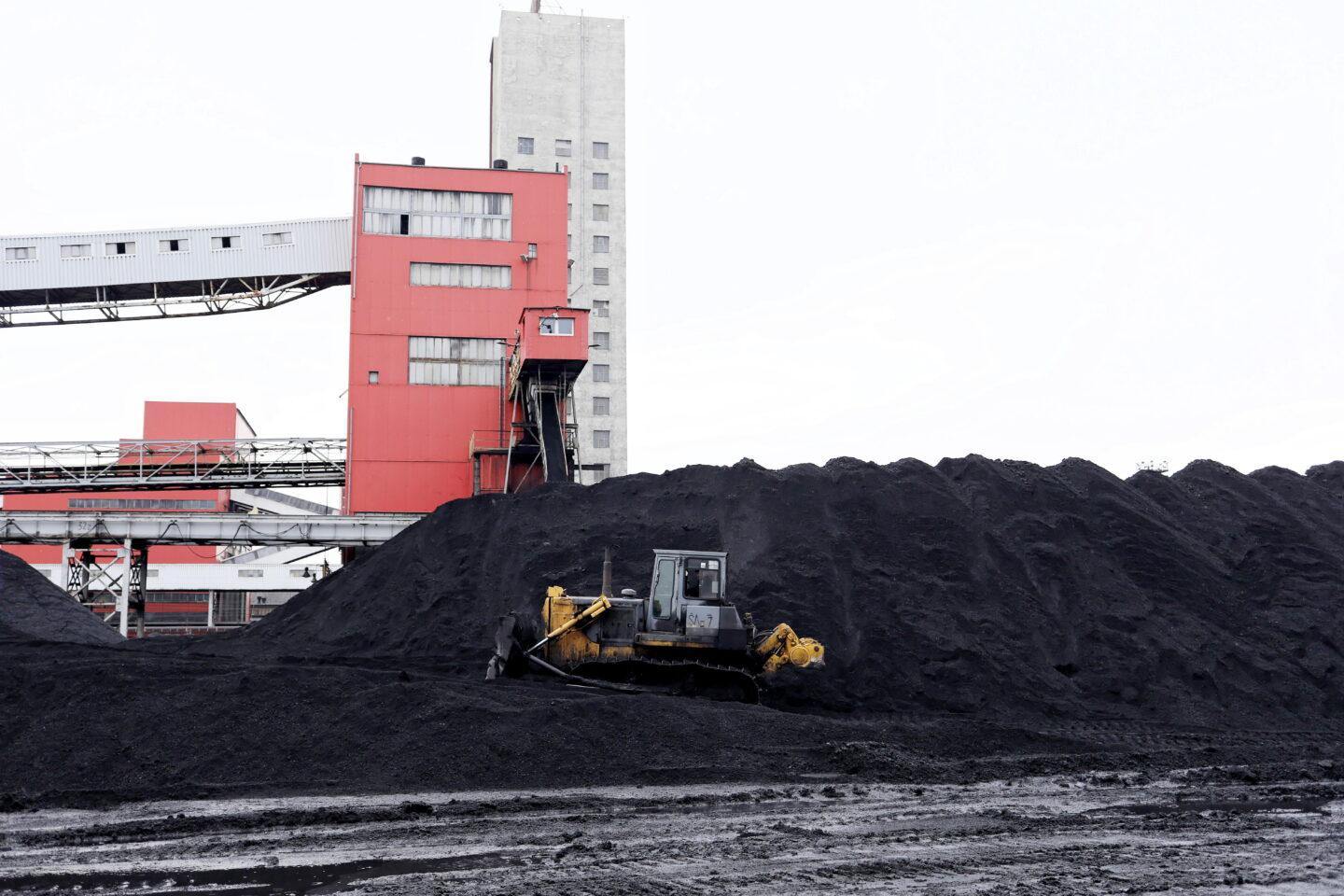
By the end of 2026, Coal Energy plans to submit an application for a license to explore or exploit the Bobrek–Miechowice hard-coal deposit, located on the border of Zabrze and Bytom. The company is registered in Luxembourg but is primarily associated with Ukraine, where it operated ten mines before the outbreak of the war. It is also well known to Polish investors: since 2011 its shares have been listed on the Warsaw Stock Exchange.
“Because of the war, we had to move our operations from Ukraine to other European countries, mainly Poland. We already have a subsidiary in Poland that provides services to the mining sector. But our ambitions go much further,” says Aleksander Reznyk, Coal Energy’s director of business development. “Our new strategy for 2025–2027 involves a return to extraction activities in Europe - not only coal, but other raw materials as well. We are focusing on Poland, Romania and Albania.”
A new mine
Coal Energy’s plan in Poland includes launching a coal mine in Silesia. The company already has a legal and technical analysis confirming the feasibility of exploiting the Bobrek–Miechowice deposit. Estimated resources in the area earmarked for the first stage of extraction exceed 9m tonnes, while total resources are put at around 25m tonnes. That, the company argues, offers the prospect of many years of operation.
Explainer
Silesia: Poland’s industrial heartland with a twist
Silesia (Śląsk in Polish) is one of Poland’s most distinctive regions.It sits in southwestern Poland, bordering Czechia and Germany. The main hub is the sprawling Katowice metropolitan area – a conurbation of interconnected cities including Katowice, Gliwice, Zabrze, Bytom, and Chorzów that blend into one massive urban zone.
Here’s where it gets interesting. Many Silesians don’t just see themselves as Polish. In the 2021 census, over 460,000 people declared Silesian nationality. You’ll hear people speaking a distinct Silesian ethnolect (some call it a dialect, others insist it’s a separate language). This regional identity runs deep, shaped by centuries of being passed between different empires.
Silesia’s complicated past explains a lot. It’s been ruled by Poland, Bohemia, the Habsburg Empire, Prussia, and Germany at various points. After World War I, it was divided. The eastern part (Upper Silesia) was split between Poland and Germany after uprisings and a plebiscite. After World War II, the entire region became Polish.
For over a century, Silesia meant one thing: coal and heavy industry. The region powered Poland’s economy with mines, steelworks, and factories.
By the end of 2026 Coal Energy intends to apply for a license - either to explore the deposit or to proceed directly to extraction. The final decision will follow an assessment of which option proves faster and procedurally less complex. Before that, the company will need to prepare, among other things, an environmental impact assessment and a development plan for the deposit.
Coal Energy says it has the funds to carry out the licensing procedures and preparatory work. In November 2025 it received the first tranches of financing under an agreement with a fund belonging to the ABO Securities group. So far it has raised PLN 4.5m (about EUR 1.0m) to pursue its projects.
Without political obstacles?
In previous years, foreign investors have appeared on the Polish market seeking to develop coal mines. They included Australia’s Prairie Mining (now GreenX Metals), Australia’s Balamara Resources and Germany’s HMS Bergbau. All of them ran into serious difficulties obtaining the necessary permits. Prairie Mining took its dispute with Poland to international arbitration and was awarded compensation of about PLN 1.3bn (roughly EUR 300m). Poland may still appeal the ruling.
The failure of these predecessors, however, has not deterred Coal Energy’s management.
“The companies you mention were trying to obtain coal-mining licenses under the previous government,” says Aleksander Reznyk. “At the time, the policy was such that securing a license to extract strategic mineral resources by a private entity - let alone a foreign one - was in practice almost impossible. That, in turn, led to court proceedings as companies sought to defend their rights. Today, such barriers no longer exist. The only decisive factor is the project’s economic viability.”
Whether the project can in fact be profitable remains an open question. The financial performance of domestic coal producers is weak. Polska Grupa Górnicza, Południowy Koncern Węglowy and Jastrzębska Spółka Węglowa are unable to operate without systemic state support. Extraction costs are rising, while demand for coal from the power sector is steadily declining.
“Our focus is on producing high-quality coal in relatively small volumes—around 150,000 to 300,000 tonnes a year,” Mr. Reznyk explains. “We assume that a significant share of output will go to the Ukrainian market, as well as to customers such as cement, sugar and ceramics producers.”
A plan hard to execute
Michał Sztabler, an analyst at Noble Securities, is far less sanguine. In his view, Coal Energy’s plan to build a coal mine will be difficult to deliver for both social and commercial reasons.
“Europe is moving away from coal, so the obvious question is: why invest billions of zlotys in a new mine?” he asks. “Even if such a facility were more efficient than state-owned mines, more modern and profitable in its early years, it is hard to imagine it remaining a viable business over the long term. The problem may arise as early as the financing stage, because European banks are reluctant to lend to coal projects. Resistance could also come from trade unions, which are fighting to preserve jobs in state-owned mines.”
Mining unions have reacted with astonishment to reports of the foreign investor’s plans. They point out that the same deposit was previously worked by the state-owned Bobrek mine, which is now being wound down. After a strong underground tremor, the government agency responsible for overseeing all mining operations in the country (WUG) banned further extraction activity in the area.
“So we are closing a mine, and someone else is supposed to build a new one right next door? That is certainly something we will not agree to,” says Bogusław Hutek, head of the national hard-coal mining section of Solidarność. “It could look like a deliberate move to make the deposit available to a foreign company. We have a social agreement that provides for the gradual closure of Polish mines. We are shutting down Bobrek; soon Wujek and Bielszowice will follow. We are closing state-owned mines because, supposedly, we no longer need coal - and at the same time we are to open private ones? What is this really about? Before issuing any decision, the Ministry of Energy should clearly state whether Polish coal is needed or not.”
Not just its own mine
Coal Energy’s ambitions in Poland extend further. The company also plans to expand the operations of its services arm, Advanced Industrial Technologies, which carries out underground work such as driving tunnels and installing mining infrastructure — among others for Jastrzębska Spółka Węglowa. The aim is to broaden the offering to include specialized extraction services.
Here, however, the same question resurfaces: will trade unions accept state-owned mines outsourcing part of their work to a foreign company?
Coal Energy says the idea is to leverage experience gained in Ukraine and focus on the most demanding mining projects—such as seams located in difficult geological conditions or deposits that cannot be exploited using conventional methods.
“At present, carrying out such work in-house is unprofitable for mines,” explains Aleksander Reznyk of Coal Energy. “They focus on extracting coal from longwalls that deliver the best operating metrics. Technically more challenging resources can nevertheless provide an additional source of revenue if entrusted to a specialized external contractor. This is not about replacing workers, but about complementing extraction activity, which in turn can increase overall output.”
According to analysts, this business model stands a better chance of success than building a new mine.
“All sides could benefit: mines would make better use of their resources, while miners would gain additional contracts,” concludes Michał Sztabler of Noble Securities. “The key issue, however, remains how the foreign investor will be received by the Polish government and by the trade unions.”
Coal Energy’s plans extend beyond Poland as well. In 2026 the company intends to take part in auctions for licenses covering the prospecting and exploration of hard-coal deposits in Romania. It is currently acquiring and analyzing geological data from the country.
In Albania, meanwhile, the company has signed a cooperation agreement with two firms owned by a Romanian partner. The partnership concerns the potential extraction of copper, gold and cobalt, as well as an assessment of opportunities to recover rare-earth elements.
Coal Energy does not rule out a return to Ukraine either. Before the war it operated ten mines in the Donbas region, but activities were suspended following Russia’s invasion. The company says it is monitoring developments and, once hostilities end, plans to assess the possibility of participating in projects linked to the extraction of raw materials deemed critical for Europe.
“The European Union has clearly identified the raw materials it needs to carry out the energy transition and support the further development of industry. We have to take that into account,” says Wiktor Wiśniowiecki, founder and chief executive of Coal Energy. “If the EU needs critical raw materials, that is precisely the direction in which we should be developing. In Poland as well, alongside coal, we are looking for other resources.”


Key Takeaways
- Coal Energy’s management has announced plans to build a hard-coal mine in Poland. The project would be located on the Bobrek–Miechowice deposit, on the border between Zabrze and Bytom. By the end of 2026, the company intends to apply for a license to explore or extract the deposit. If approved, the move would mark Coal Energy’s return to coal mining. The company previously owned ten mines in Ukraine, which it lost as a result of the war.
- The management of the Luxembourg-registered company says it does not fear difficulties in obtaining a license—despite the fact that several years ago investors from Australia and Germany unsuccessfully tried to enter the Polish market. Coal Energy argues that those failures were the result of policies pursued by the previous government, which was hostile to foreign investors. “At present, such problems and restrictions no longer exist. The only decisive factor is the project’s economic viability,” says Aleksander Reznyk, Coal Energy’s director of business development.
- Analysts, however, remain skeptical. They point out that as Europe steadily phases out coal, a new mine may prove unprofitable over the long term. Mining trade unions are also opposed to the investment, citing Poland’s binding plan to wind down thermal coal production. “We are closing state-owned mines because supposedly we no longer need coal, and at the same time we are to open private ones? What is this all about?” asks Bogusław Hutek, head of the mining section of Solidarność.