

This article is a part of Poland Unpacked. Weekly intelligence for decision-makers
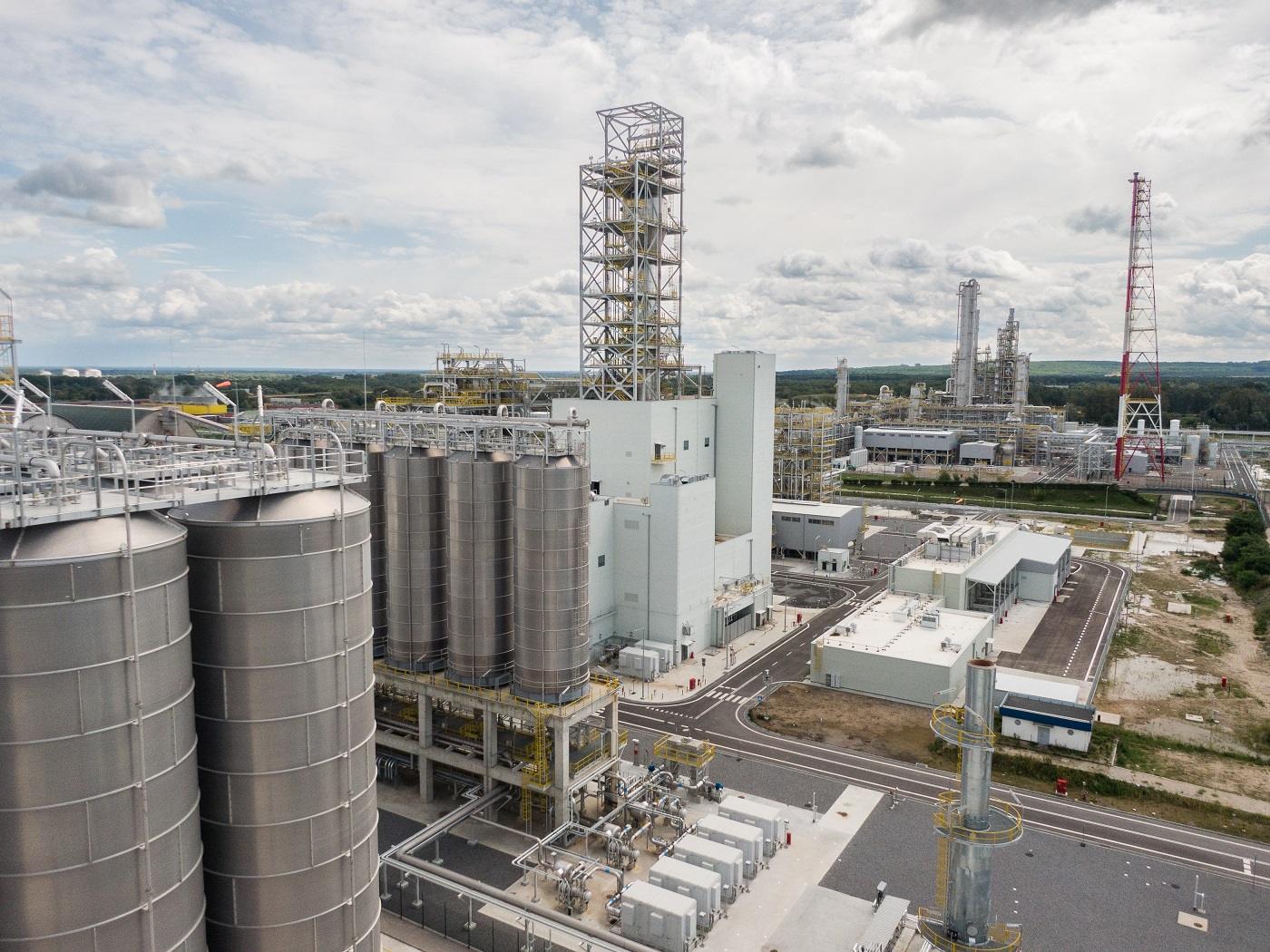
Months of negotiations between Grupa Azoty and its creditors have so far failed to produce any outcomes favorable to the chemical group. On the contrary, 2026 brought grim news for its subsidiary GA Polyolefins, the owner of the newly built polypropylene plant in Police. The facility — producing a plastic widely used in industry — was ceremonially opened in June 2023, yet the investment has still not been completed. One of the largest industrial projects in Poland in recent years, it absorbed more than PLN 7 billion (approx. EUR 1.6 billion). Today it has become a millstone around Azoty’s neck: the plant is not operating and is generating losses — estimated by analysts at around PLN 100 million per quarter (approx. EUR 23 million).
The banks financing the project have lost patience and demanded the immediate repayment of loans from GA Polyolefins totaling nearly PLN 4 billion (approx. EUR 920 million). Orlen then made a similar claim, seeking repayment of a USD 28.7 million loan (around PLN 100 million / EUR 23 million) provided to finance the purchase of propane, the main feedstock for plastics production. GA Polyolefins, however, lacks the funds not only to service its debt but even to carry out essential repairs at the new facility — without which production cannot resume.
Negotiations under pressure
Against this backdrop, Grupa Azoty is negotiating a long-term restructuring agreement with more than a dozen institutions that financed either the parent group or GA Polyolefins. The situation is so serious that, without partial debt reduction and a planned state recapitalization, the company may not survive. At the end of the third quarter of 2025, the group’s total debt stood at PLN 7.7 billion (approx. EUR 1.77 billion).
According to unofficial sources within the company, talks with banks are extremely difficult. All decisions require unanimity among financial institutions — a formidable obstacle. The European Investment Bank is said to be the main blocker.
Azoty is seeking to divest the unfinished plant in Police and is in talks with Orlen. Shortly after its official opening, the facility began production, but it could not enter into long-term customer contracts due to incomplete investment procedures. In 2025, serious technical defects emerged that required urgent repairs. Azoty is now in a legal dispute with the project’s general contractor, South Korea’s Hyundai Engineering. Hyundai is seeking about EUR 457 million in payments, while Azoty is demanding EUR 2.98 billion in compensation.
In August, the Polish group received more than EUR 107.5 million under performance guarantees for improper contract execution. The funds were intended to finance repairs and restart production. Ultimately, however, the money was seized by banks to cover outstanding liabilities. As a result, the polypropylene plant in Police remains idle.
Orlen steps in
Orlen maintains that its offer — submitted at the end of last year — to acquire GA Polyolefins remains valid. It is valued at PLN 1.022 billion (approx. EUR 235 million). Not all the banks that financed the project, however, are convinced. Construction of the plant cost more than PLN 7 billion. Orlen insists that its demand for immediate loan repayment is not part of the negotiations and has no bearing on the offer price.
“Orlen’s offer remains valid, and the expectation of repayment is unrelated to the ongoing talks. It is simply a consequence of the maturity of the credit obligations,” the company’s press office said. Orlen already owns 17% of GA Polyolefins.
This is Orlen’s second attempt to take over the Police facility. An earlier approach was abandoned, despite the project being widely viewed as a rescue mission for Azoty. According to sources familiar with the matter, this was one of the reasons behind the dismissal of Orlen’s then CFO, Magdalena Bartoś, in August 2025. Critics argued that she failed to take sufficient account of the political context and the state-interest dimension. In October 2025, Orlen returned to negotiations over the acquisition of GA Polyolefins.
“We assess that Orlen’s actions fall within standard financial procedures and do not affect the ongoing restructuring process at GA Polyolefins. The company is conducting proceedings to approve a restructuring arrangement aimed at stabilizing its financial situation and agreeing repayment terms with creditors. At the same time, in line with Orlen’s assurances, we are discussing further steps regarding the sale of GA Polyolefins in its entirety. Actions taken by creditors do not affect day-to-day operations or the execution of Grupa Azoty’s core business objectives,” said Andrzej Skolmowski, CEO of Grupa Azoty.
A case of megalomania
Analysts stress that Grupa Azoty has been in deep trouble for many months.
“The group’s situation is far from enviable. Creditors are tightening the screws, advancing ever more claims. The fertilizer market is improving — even accounting for rising gas prices — but that will not be enough to put Azoty back on its feet. The group is burdened with a new polypropylene plant that is not operating and is generating around PLN 100 million (EUR 23m) in losses per quarter. At the same time, the company is balancing on the edge of liquidity,” says Łukasz Prokopiuk, an analyst at DM BOŚ.
In his view, most of the group’s problems stem from the decision to build the Police plant in the first place.
“The project was far too large for Grupa Azoty’s financial capacity and was a manifestation of megalomania on the part of the company’s former management and the PiS government. We said this years ago. We warned that investing in petrochemicals was a mistake and that Azoty should focus on its core business — primarily fertilizers. The same happened at Orlen, which launched a massive petrochemical project while simultaneously expanding its fertilizer capacity. Two state-owned companies ended up competing with each other. Nothing good came of it,” Mr. Prokopiuk argues.


Key Takeaways
- Analysts describe Azoty’s financial position as critical. According to Łukasz Prokopiuk of DM BOŚ, the crisis is the direct consequence of the Police investment, which cost over PLN 7 billion (approx. EUR 1.6 billion). “The project was far too large for Grupa Azoty’s financial capacity and was a manifestation of megalomania on the part of the company’s former leadership and the PiS government,” he concludes.
- Banks and Orlen are demanding immediate repayment from GA Polyolefins, a subsidiary of Grupa Azoty. Nearly PLN 4 billion (approx. EUR 920 million) in bank loans financed the construction of the polypropylene plant in Police. Orlen is seeking repayment of USD 28.7 million (about PLN 100 million / EUR 23 million) lent for propane purchases. The plant remains unfinished, and production has been halted due to a lack of funds for repairs.
- Azoty is negotiating a make-or-break agreement with creditors. Without partial debt forgiveness and a planned state recapitalization, the group may not survive. Talks with a consortium of banks are extremely difficult and require unanimity. Azoty is also in discussions with Orlen, which may acquire the Police plant for around PLN 1 billion (approx. EUR 230 million). Orlen insists its claims have no bearing on the negotiations.