
Poland Unpacked week 13 (16-22 March 2026)

Welcome to this week’s edition of our Poland Unpacked, where we deliver key insights and trends shaping the economic, corporate and political landscape. Catch the most important insights from Poland in this week’s briefing.

Loading the Elevenlabs Text to Speech AudioNative Player...
Business
AI ambitions, old bets, fresh capital
Grzegorz Nawacki

The most intriguing piece of business news in Poland this week was the launch of an AI assistant within the InPost app, developed by the logistics company best known for its parcel lockers – self-service machines for collecting deliveries. The unveiling of the new service was staged in a style reminiscent of American tech product launches. The Polish logistics giant argues that this marks the beginning of an AI-driven revolution in e-commerce – one that will reshape how we shop online. Here is how the new service works, and what experts make of it.

If you had been in Poland in the 1990s, you would almost certainly have come across Mokate’s iconic instant cappuccino. Today, alongside coffee and tea, the company also produces raw materials and semi-finished products for the food industry. These are supplied to manufacturers of ice cream, Asian instant soups, and ready meals. Mokate generates annual revenues of around PLN 1.5 billion (approximately EUR 350 million) and exports to nearly 80 countries. Sylwia Mokrysz, representing the fourth generation of the family business based in Ustroń, southern Poland, spoke to us about the company’s transformation.

Poland’s electric car project under the Izera brand was a flagship initiative of the previous government. Following the change in power, the project was not scrapped – and now stands a strong chance of receiving PLN 4.5 billion (approx. EUR 1.05 billion) from the National Recovery Plan (KPO). But should it? XYZ has obtained documents showing that between 2018 and 2023, ElectroMobility Poland incurred expenditures of nearly PLN 600 million (approximately EUR 140 million). The funds flowed to a Chinese R&D center, an Italian upholstery manufacturer, companies in Germany and Austria, as well as to consulting firms. Yet neither a factory nor a Polish electric car has materialized. Here is who has profited from Izera so far, why the car has yet to appear, and what the company’s new strategy entails.

For years, the dietary supplements market both enticed and deterred Enterprise Investors, a pioneer of Poland’s private equity industry. On the one hand, the sector offered billion-zloty revenues and strong growth; on the other, it was weighed down by questionable product quality and a less-than-stellar reputation. Eventually, the fund found Formeds, a producer of “no-nonsense” supplements. The goal: to double production and reach millions of Polish consumers. Here is the plan.

Politics & Policy
SAFE and the shadow of history: Poland’s continuing political strife
Krzysztof Figlarz

Events from mid-March continued to reverberate loudly across Polish politics. President Karol Nawrocki’s veto triggered a political earthquake and sparked a wave of expert commentary. At XYZ, we decided to take a closer look at the president’s arguments in a joint political-economic analysis. We also examined whether similar SAFE-related disputes had arisen in other EU countries that joined the program. Spoiler alert: Poland is an unfortunate outlier.

Beyond SAFE, attention was drawn to another episode in the ongoing rule-of-law dispute.

To recap: for more than a decade, rule-of-law issues have been one of the main points of contention between the current governing coalition under Donald Tusk’s Civic Coalition (KO) and the former, now-opposition Law and Justice party (PiS). In 2015, the dispute was sparked by the appointment of three judges to the Constitutional Tribunal. Even before leaving office that year, the then-Civic Coalition pushed through the appointments of three judges to the tribunal.

It was also decided that judges could be appointed “in advance.” This was no coincidence: the president at the time was Bronisław Komorowski, aligned with the Civic Coalition, but it was known that his successor would be Andrzej Duda from Law and Justice. The president’s role was crucial, as only the president signs off on appointments. Mr. Duda appealed to then-Prime Minister Ewa Kopacz to delay the nominations until after his own inauguration. That did not happen.

Shortly thereafter, PiS won the parliamentary elections and, almost immediately upon taking office, reversed the Civic Coalition’s decisions and appointed new judges in their place. Some media outlets and legal experts labeled the new judges “substitutes.” This marked the beginning of a rule-of-law dispute that continues to this day.

We recount this history because another chapter is now unfolding – though in reverse. The term of the “substitute” judges appointed by PiS is soon ending, and the current government intends to appoint new judges in their place. President Karol Nawrocki, aligned with the right, may, however, refuse to sign these appointments. Rafał Mrowicki has more on the current dispute in his analysis here.

Speaking of right-wing politicians, XYZ also attended a Law and Justice (PiS) event with students at the University of Warsaw. While the debate – modeled on Charlie Kirk-style meetings with American students – at times resembled a “shitshow” more than a serious discussion, it offers insight into social divisions, particularly around SAFE, which has once again split Poland down the middle.

Economy & Markets
Services drive growth, but energy shock clouds Poland’s horizon
Marek Skawiński

Last week, a series of current data on the Polish economy were released. In February, the average wage in the corporate sector rose by 6.1% year on year. The same nominal wage growth was recorded in the previous month. This marks the slowest pace of wage growth in nearly five years, going back to early 2021.

Industrial production at constant prices, after adjusting for seasonal factors, increased by 1.7% year on year. By comparison, growth for the full year of 2025 was 3% year on year. In the construction sector, a harsh winter triggered a sharp slowdown in activity. In February, production was 12.4% lower after seasonal adjustment and slightly weaker than in January. This was the weakest month since the pandemic trough.

However, these figures are, in a sense, a look in the rearview mirror. The reason is, of course, the ongoing conflict in the Middle East, which is driving up energy prices, including crude oil and natural gas. In the absence of a supply shock, the data on moderate wage growth would have reinforced the Monetary Policy Council’s (RPP) view that inflationary pressures are easing. That, in turn, would have supported further monetary policy easing.

What are the consequences of rising energy prices? Uncertainty about their trajectory will curb firms’ willingness to raise wages or pay bonuses, as businesses seek to protect margins amid higher indirect costs. This points to a slowdown in real wage growth - both due to slower nominal wage increases and rising inflation, likely above 3% over the year. Inflation expectations in Poland have already risen sharply.

This will weigh on consumption and slow GDP growth relative to expectations. The shock will, however, be partly offset by high planned investment under the National Recovery Plan (KPO). Lower-than-expected wage growth is unlikely to prompt interest rate cuts. That would require a positive resolution of the Middle East situation and a dissipation of the energy market shock.

From a structural perspective, we highlight the role of services as the main driver of the economy in recent years. We also present the extent of SAFE instrument utilization in Poland compared with other countries.

Startups / VC / Tech
More (big) millions for startups, not just from Poland
Cezary Szczepański

On Tuesday, March 17, PFR Ventures announced the results of its latest calls for teams managing investment funds ready to support the growth of startups and technology companies.

The new funds are Epic Investments, Invento F2, YouNick Mint, and Pomerangels Tech Ventures. They will receive a total of PLN 190 million (EUR 41 million) from EU resources. The institution estimates that additional private capital will raise this figure to PLN 260 million (EUR 56 million).

With this new round of funding from FENG, PFR Ventures has already backed 19 funds, allocating more than PLN 1 billion (EUR 216 million) in total.

Another key event of the week was the announcement of a new fund: Montis VC. The team has raised over PLN 200 million (EUR 43 million) and is already planning investments in startups from the Central and Eastern European region that develop solutions in AI, energy, and advanced industry. The fund aims not only to provide financing but also to help companies scale faster and access additional sources of capital across Europe.

In its first stage, the fund plans to invest EUR 50 million in up to 25 startups, with a further closing planned.

In Poland, Apple’s acquisition of the Polish company MotionVFX from Bielsko-Biała has made waves. The firm develops plugins for Apple’s Final Cut Pro video editing software. Terms of the transaction have not been disclosed.

A third headline topic concerns Polish AI models Bielik and PLuuM. The former was once again recognized by Nvidia during Jensen Huang’s keynote at GTC 2026, the company’s flagship annual conference. However, a study by a local Polish company judged them to perform much worse in Polish than American competitors.

“This is false,” say experts, who explain (including in an interview with us) the strengths of Polish models, which could also play a significant role across Europe.

In recent days, there have also been reports of new funding rounds. Data analytics startup Navigara raised USD 2.5 million at the seed stage, including from Inovo fund; gastronomy startup Choice secured USD 7.1 million, including from Polish Smartlink; and Polish fund OTB Ventures co-led a Series A round for Paris-based Waiv, which raised a total of USD 33 million.

We also recommend taking a look at the results of the first-ever VC/PE Sentiment Barometer. The key takeaway? The Polish PE/VC market “is expensive and will stay expensive.”

After hours
The Polish chapter in Barbara Kasten’s visual language
Michał Szcześniewski

This is a rare treat: Barbara Kasten. Postabstrakcja at Zachęta gives you six decades of a quietly influential American artist whose experimental eye was partly shaped by Poland’s own bold textile‑and‑sculpture tradition. Kasten’s work is less about what you see than about how you see: photographs, installations and sculptures that turn light, geometry and space into a kind of stage‑set illusion, where mirrors, steel rods and colored filters make the gallery itself feel like part of the artwork.

If you’ve ever wanted to understand how abstraction can feel alive, spatial and almost architectural, this is the exhibition to visit – especially if you enjoy the thrill of slow, deliberate looking rather than passive scrolling.
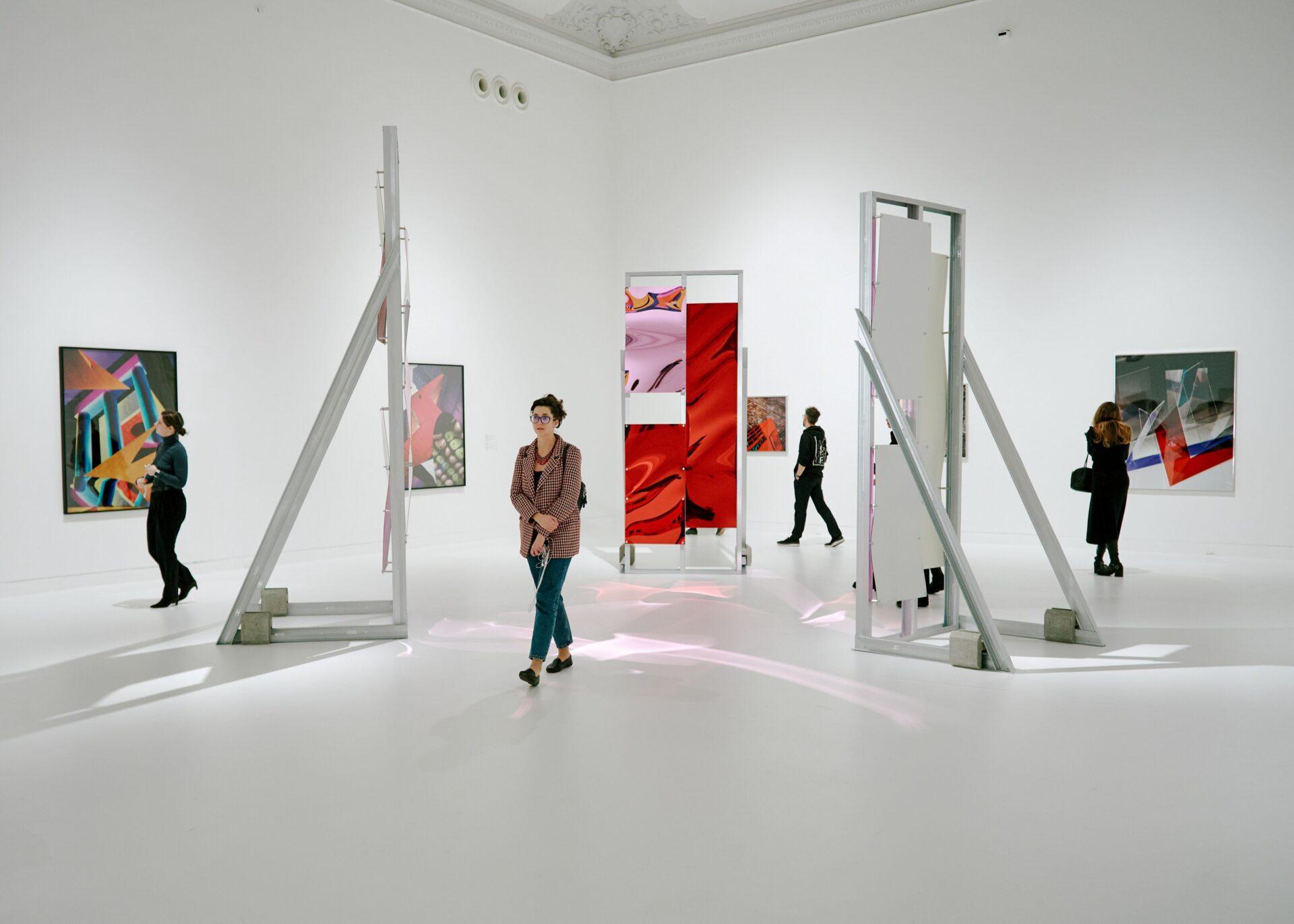
Wernisaż prac Barbary Kasten w Zachęcie
The exhibition is dominated by Barbara Kasten's photographs. Photo: Bartosz Górka, courtesy of Zachęta

When: 13.03 – 07.06.2026
Where: Warsaw, Zachęta – Narodowa Galeria Sztuki (https://zacheta.art.pl/pl/wystawy/barbara-kasten-postabstrakcja)

FUN FACT ABOUT POLAND
A hut above the clouds
Michał Szcześniewski

Perched on Kasprowy Wierch, Poland’s highest‑ever building at nearly 2,000 meters, the IMGW weather observatory is a tiny mountain fortress that has been quietly measuring blizzards and ice‑coat on the cables since 1938.

So, every 23 March, as the World Meteorological Organization celebrates global forecasts, the Kasprowy station stands as a reminder that Poland’s contribution to the world’s weather models comes also from a granite‑clad outpost where the “office view” is sheer drops and incoming storms.
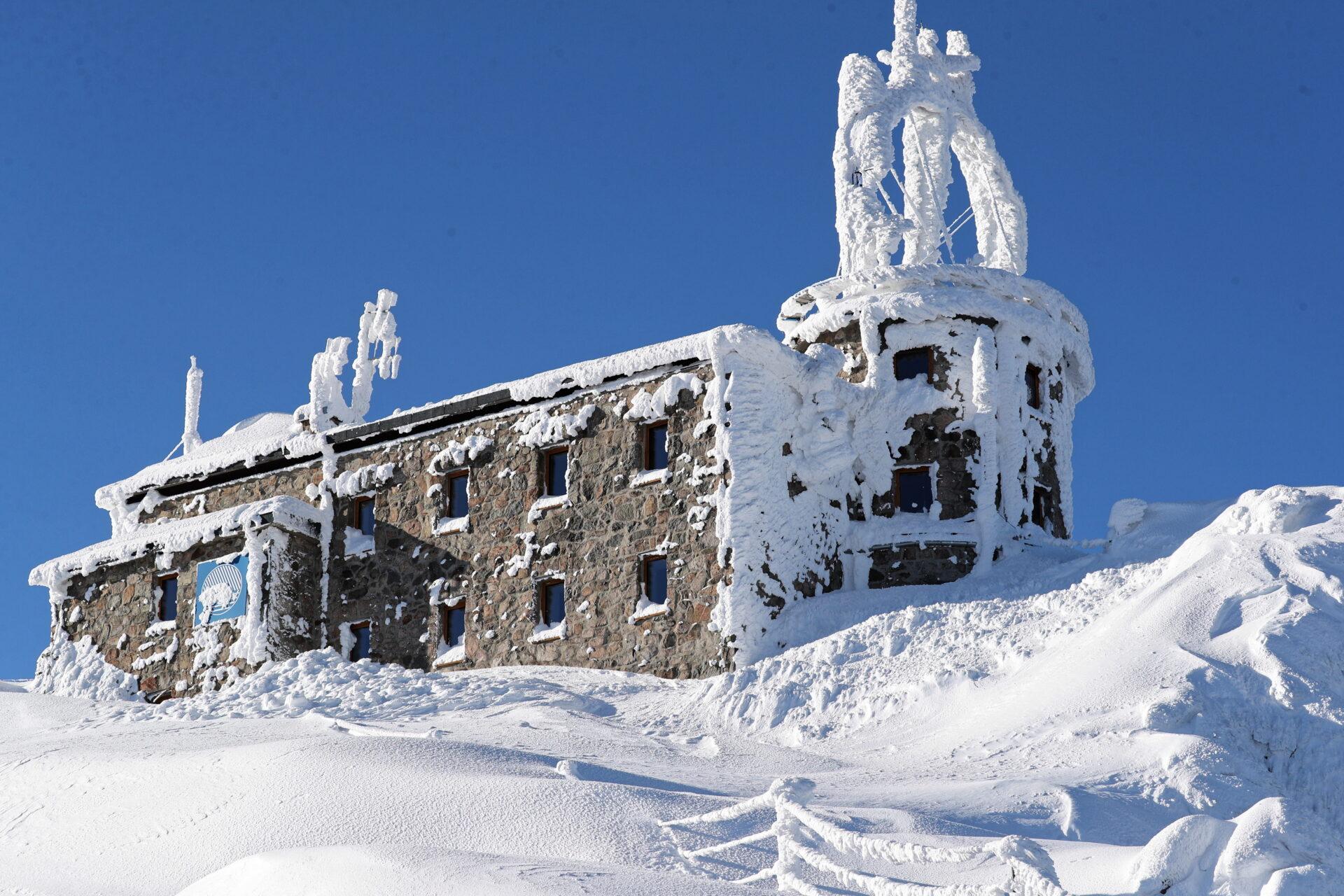
"Baby It's Cold Outside". Photo: PAP/Grzegorz Momot