

This article is a part of Poland Unpacked. Weekly intelligence for decision-makers
The Mokate Group, once famed for its iconic 1990s cappuccino, now produces not only coffee and tea but also raw materials and semi-finished products for the food industry. These supplies reach manufacturers of ice cream, Asian instant soups, and ready meals. Based in southern Poland, the company exports to nearly 80 countries and now generates around PLN 1.5 billion (approximately EUR 325 million) in annual revenue.
Many members of Generation X and Y likely remember the first food commercials appearing on Polish television in the early 1990s. Among them was “Mokate Cappuccino” – an ad featuring a catchy tune that, for many viewers, became a symbol of Western lifestyle.
Today, more than 35 years on, the Mokate Group earns around PLN 1.5 billion annually from sales, with roughly 80 percent coming from exports to almost 80 markets worldwide.
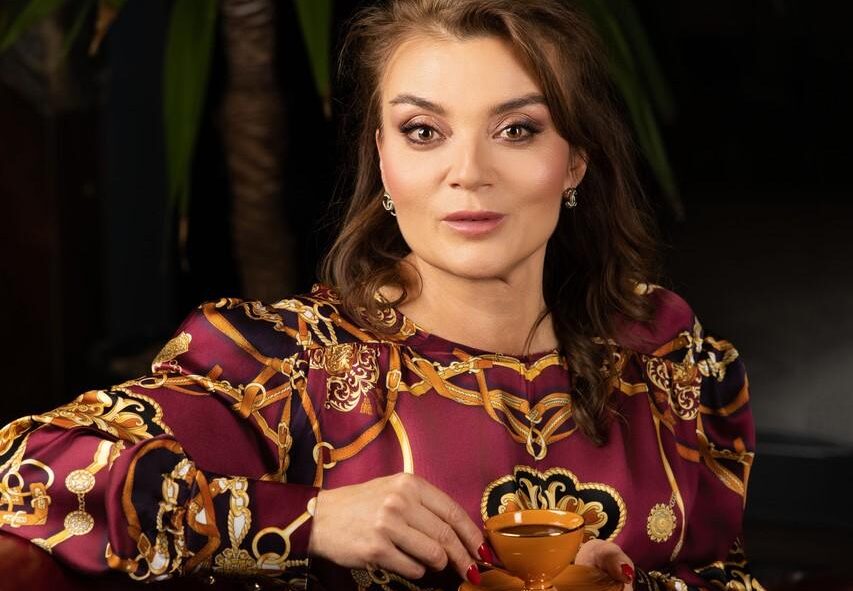
“We anticipate about 10 percent year-on-year revenue growth,” says Sylwia Mokrysz, board member and authorized representative of Mokate, who represents the fourth generation of the family business in Ustroń, southern Poland.
In 2025, the group completed a major investment in Ustroń, expanding its facility and boosting capacity in the tea segment.
“We doubled our production capacity. The new part of the plant has been equipped with advanced technological lines as well as automation and robotics systems. This makes it easier to develop new tea product formats and scale up production,” says Sylwia Mokrysz.
The Mokate Group – more than just coffee
Today, Mokate is no longer just about cappuccino.
“Semi-finished products, such as creamers for beverages, frothing bases for cappuccino, milk-fat concentrates, and topping bases used by the food industry, now account for more than a third of our revenue,” says Sylwia Mokrysz.
The remainder of sales comes primarily from consumer products: coffee, cappuccino, and tea.
Although the HoReCa segment represents only a small portion of the group’s sales, it remains strategically important.
“Its value is mainly in terms of brand image. We are present, for example, on WARS trains, onboard airplanes, and in hotel chains. This requires a dedicated structure and product offering, different from what is available in retail,” explains Sylwia Mokrysz.
Expert's perspective
Mokate – brand sentiment and business growth
In my view, this is not necessarily a problem. I would even argue it is more a success than a curse. The fact that Mokate is no longer “just cappuccino” but is also expanding coffee, tea, and semi-finished product segments for industry speaks more to the scale of its capabilities than to a loss of identity. In FMCG, strong brands today need to be able to do two things at once: preserve the emotional code that makes them memorable, while simultaneously developing new sources of growth.
Brand sentiment is now a valuable form of capital. Kantar research shows that communication rooted in nostalgia enhances ad recall and deepens consumers’ emotional bond with a brand, because it evokes positive memories and a sense of security.
Meanwhile, NielsenIQ data demonstrate the enduring strength of established brands: 62 percent of consumers say they still default to brands they know and trust, and as many as 95 percent state that trust is critical when choosing a brand. This shows that a brand’s history, recognition, and credibility can be tangible business assets, not just sentimental extras.
For companies like Mokate, the key question is not “should we change?” but “how can we change without losing our heritage?” The worst-case scenario would be cutting ties with that history. If a brand leaves consumers with only an old jingle and nostalgia for “cappuccino,” it risks becoming purely a memory brand. A far better path is to continue telling that story – but in a contemporary way, speaking the language of today’s consumers, their needs, aesthetics, and lifestyles. Not as a relic of the 1990s, but as a brand with a history that remains relevant to modern audiences.
I would treat that sentiment as capital and combine it with modernity – showing that the brand has long understood pleasure, flavor, and beverage technology. In my view, this offers a dual opportunity: emotional and commercial. In practice, it means using your history as proof of expertise, not just as a nostalgic narrative.


Mokate as an export brand
The Mokate Group is present in nearly 80 markets worldwide.
“In exports, our strongest markets are primarily in Southern Europe, Czechia, Slovakia, Hungary, and the United Kingdom. In all of these countries, we have our own sales structures. In some, our brand is either the market leader or a close second. We also have less obvious successes – for example, in Chile our value tea brand, Minutka, sells exceptionally well. Our semi-finished products reach Italian ice cream producers and Asian manufacturers of instant soups and ready meals in Malaysia and the Philippines,” adds Sylwia Mokrysz.
Can Polish brands go global?
“Just over a decade ago, Polish food brands abroad were mainly associated with products like Krakus ham or Prince Polo. Today, more and more domestic brands are entering international markets, and there’s no reason to feel insecure. Recently, friends sent me a photo from a store in Singapore showing Mokate coffee and LOYD tea on the shelves,” says Sylwia Mokrysz.
She notes that the same applies to Mokate’s semi-finished products.
“Although often invisible to consumers, these products are ingredients in many well-known international brands. Take Italian ice cream, which people associate exclusively with Italy, even though the production base is in Poland. The same happens in Asia: various sauces, soups, and dumplings use semi-finished products manufactured in Europe. In that sense, we are truly global,” emphasizes Sylwia Mokrysz.
In her view, Polish food brands now have a real chance to succeed internationally.
“But this requires a humble and realistic approach,” the entrepreneur adds.
Challenges in the coffee market
In the 1990s, the Mokate brand was synonymous with cappuccino.
“Attempts to expand the range to black coffee or stronger drinks were not always met with consumer approval. People tend to view cappuccino as a dessert-like, sweet product. That’s why today Mokate is primarily a cappuccino brand, while our other coffee products are developed under different brands,” says Sylwia Mokrysz.
The company is also monitoring emerging consumer trends.
“We aim to ensure that each year adds value both to the brand and to the group as a whole. It’s not a simple process, but we track trends in individual categories and respond accordingly. In recent years, matcha has gained significant popularity, finding applications not only in beverages but also in ice cream and confectionery,” adds Sylwia Mokrysz.
The greatest challenge, however, remains striking a balance between tradition and modernity.
“We want to draw on our DNA and what has proven successful in the past. At the same time, we intend to move with the times,” emphasizes Sylwia Mokrysz.
The new consumer
According to Sylwia Mokrysz, today’s consumer is markedly different from the one thirty years ago.
“In the 1990s, exposure to other cultures and coffee-drinking habits was limited. Today, travel is common, and consumers are familiar with many different ways of preparing coffee,” says Sylwia Mokrysz.
For this reason, the company is also developing products that meet new market needs.
“We introduced coffee mixes in convenient 2-in-1 and 3-in-1 ‘sticks,’ which are particularly popular among younger consumers. They can be prepared quickly and, if desired, strengthened with an extra portion of instant coffee. Innovations like these help grow the instant coffee category and maintain its presence in the market,” adds Sylwia Mokrysz.
Good to know
Mokate Group by the numbers
The Mokate Group consists of several companies operating in Poland, Czechia, Slovakia, Hungary, and the United Kingdom. The company has three production facilities - in Ustroń (PL), Żory (PL), and Votice in Czechia – employing over 1,500 people.
Among Mokate’s best-known brands are LOYD, Minutka, and Babcia Jagoda teas, as well as the coffee brands Mokate, NYCoffee, Marila, and Marizzi.
In 2022, the Mokate Group acquired a 50 percent stake in the family-owned company Kubara, owner of the Dobra Kaloria brand. This expanded the group’s portfolio to include health-focused snacks and plant-based products.
Tea market challenges
The tea category in Poland is dominated by large international corporations with massive marketing budgets.
“We don’t aim to compete with them head-on. Instead, we try to go beyond a simple battle for sales volume or shelf space. In the past, for example, we explored entering the iced tea segment. But we asked ourselves whether we wanted to compete in that market with global corporations or develop our own product categories. We decided to focus on what we do best. That’s why we are also developing more innovative product formats, such as teas inspired by Asian cuisine or new flavor compositions and functional tea blends,” says Sylwia Mokrysz.


Key Takeaways
- Global presence. The Mokate Group’s products are available in nearly 80 markets worldwide. In exports, the strongest markets are Southern Europe, Czechia, Slovakia, Hungary, and the United Kingdom. The company also has less obvious successes – for example, its value tea brand, Minutka, sells very well in Chile. Mokate’s semi-finished products reach Italian ice cream producers and Asian manufacturers of instant soups and ready meals in Malaysia and the Philippines.
- Revenue and growth. The Mokate Group generates approximately PLN 1.5 billion (EUR 325 million) in annual sales and anticipates around 10 percent year-on-year revenue growth. About 80 percent of sales are exported to nearly 80 markets worldwide.
- Business beyond cappuccino. Today, Mokate’s activities extend far beyond the cappuccino category. Semi-finished products – such as beverage creamers, cappuccino frothing bases, milk-fat concentrates, and topping bases used by the food industry – now account for more than a third of the Group’s turnover. The remainder of sales comes primarily from consumer products: coffee, cappuccino, and tea. Although the HoReCa segment represents only a small share of total sales, it remains important for brand image.