

This article is a part of Poland Unpacked. Weekly intelligence for decision-makers
 Interactive chart Interactive chart
 The fastest-growing category was solid, liquid and gaseous fuels. In real terms, sales in this segment rose by as much as 10.2% y/y. This reflects higher demand for heating fuels, especially gas. To some extent, therefore, this was forced demand, which says little about households’ underlying consumption patterns. A rough estimate suggests that if demand in this category had remained at last year’s level, overall retail sales growth would have been closer to January’s reading.
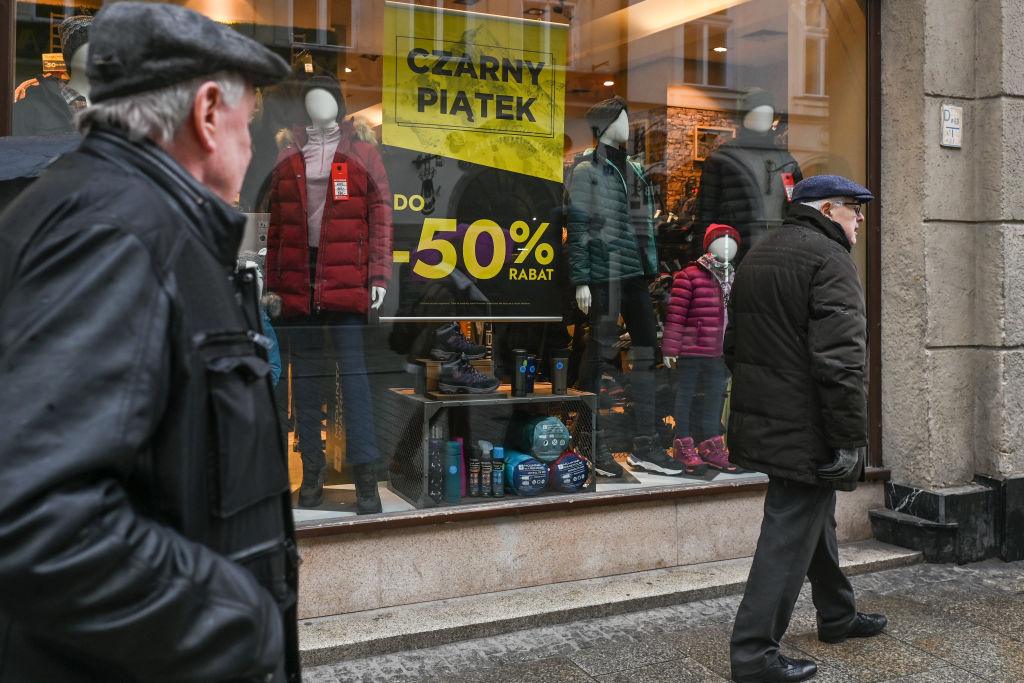
The freezing winter also had the opposite effect, dampening purchases in some categories. This is most evident in textiles, clothing and footwear, where sales rose by just 0.8% y/y. The reading for food, beverages and tobacco was also weak, with real sales increasing by 0.2%. Consumers were reluctant to leave their homes – and it shows.
Dark clouds are gathering over consumption
The growth in retail sales is driven primarily by the strong increase in real wages over recent quarters. This has been supported by rising nominal wages combined with declining inflation. In February, nominal wage growth in the enterprise sector (companies employing at least 10 people) stood at 6.1%, with inflation at 2.1%, resulting in real wage growth of 4% year on year. In the broader economy, wages are rising somewhat more slowly.
Nominal wage growth, however, has been slowing in recent months. In February it reached its lowest level since 2021. If inflation were to remain around February’s reading of 2.1%, real wage growth would still be clearly positive.
The problem lies in the recent increase in oil and gas prices driven by the conflict in the Middle East. This will feed through to inflation, although it is not yet clear how strong the acceleration in prices will be. An increase toward around 3% is becoming increasingly likely. This could mean that real wage growth in the economy falls below 3%. Under such a scenario, consumption – and retail sales growth itself – may weaken significantly in the second half of the year.