Poland Unpacked week 14 (23-29 March 2026)
Welcome to this week’s edition of our Poland Unpacked, where we deliver key insights and trends shaping the economic, corporate and political landscape. Catch the most important insights from Poland in this week’s briefing.
This article is a part of Poland Unpacked. Weekly intelligence for decision-makers
Amid the war, rising concerns over fuel prices and government efforts to ease the burden on motorists ahead of Easter, it is easy to overlook that 2026 was supposed to mark the launch of production of Poland’s electric passenger car, Izera. The construction of the factory was announced in 2016 by the Law and Justice (PiS) government. To date, production has not yet begun, even though the state has already committed PLN 500m (EUR 115m) to the project.
Recently, the company tasked with producing Izera, ElectroMobility Poland (EMP), secured PLN 4.5bn (EUR 1.0bn) in funding from the National Recovery Plan (KPO). XYZ has discovered that the applications were assessed by Deloitte Advisory - the same firm that had previously advised EMP, earning more than PLN 4m (EUR 0.9m) in the process. What do the government agency that awarded the grant and Deloitte Advisory itself have to say on the matter? We have covered it here.
While on the subject of large state-led investments, it is worth noting that the signing of the contract for Poland’s first nuclear power plant – valued at PLN 200bn (EUR 46bn) – has been delayed. “Reaching a sound agreement takes time, and in this case haste is not a good adviser,” Mirosław Kowalik, chief executive of Westinghouse Poland, told XYZ. Will the first nuclear unit come online in 2036 – and what is currently holding the project back? Read here.
OSHEE, the Polish functional drinks brand, by contrast, appears unstoppable, with ambitions to rank among the global top three. Dariusz Gałęzewski, co-founder of Oshee, explains here what Polish companies need in order to grow and become global brands. He also recounts how he and his business partner took on debt, mortgaged their apartments and reinvested every available zloty into the company’s development. Founded in 2008, Oshee now generates revenues of PLN 800m (EUR 184m). It spends PLN 100m (EUR 23m) annually on research, development and marketing, and PLN 50m (EUR 11.5m) on international expansion. The brand operates in 50 countries and holds the number-one position in several, including Poland, where it commands a 65% market share.
Others, meanwhile, seek shortcuts and are tempted by job offers in Malta with GCC7. The offer promises a Monday-to-Friday schedule, free office lunches and discounted gym membership, along with comprehensive training in financial markets. Salaries range from PLN 6,500 to PLN 15,000 gross (EUR 1,500–3,450) on an employment contract. As an added incentive, the company covers flights and assists with relocation to the sunny island. However, individuals who responded to the offer and later contacted the XYZ newsroom paint a different picture. They describe a system designed to pressure clients into incurring ever greater losses and making additional deposits. Read here how our reporter investigated how it works.
Explaining a change of heart is never easy. President Karol Nawrocki has struggled with it. In the autumn he cancelled a meeting with Viktor Orbán after the Hungarian premier’s visit to the Kremlin. Last week, however, he travelled to Budapest for the Polish-Hungarian Friendship Days to meet Mr. Orbán – at a time when the latter is finding it increasingly difficult to hold on to power, and as further reports emerge of cooperation between Hungarian authorities and Russian intelligence services.
Before departing for Budapest, President Nawrocki was asked what he made of Orbán’s closeness to Vladimir Putin. The question angered him; he snapped at the journalist. He has repeatedly stressed – also by publishing photographs with Mr. Orbán – that Poland and Hungary are divided by their stance towards Russia, which he regards as an existential threat. He did not, however, explain why his presence lends support, in the midst of a political campaign, to a politician sympathetic to Putin. His stance drew criticism from Prime Minister Donald Tusk.
Orbán was also visited in Budapest by politicians from the far-right Confederation, which sits in the same group in the European Parliament as his party, Fidesz. Read our article here on this "it's complicated" situation.
Prime Minister Tusk has decided to cut excise duty and the VAT rate on fuel, which has become more expensive following the attack by the United States and Israel on Iran. Parliament rushed the bill through, and President Nawrocki signed it on board a plane en route to Texas for the CPAC conference, where he is scheduled to speak.
Last year, ahead of the second round of the presidential election, American Republicans organized the CPAC conference in Poland. It served as campaign support for Mr. Nawrocki.
The Sejm also once again attempted to override a presidential veto – this time concerning pre-trial detention rules. The effort failed again. Mr. Nawrocki was criticized in football stadiums for vetoing legislation that would have introduced limits on the use of pre-trial detention. He himself comes from a football-fan milieu, which supported him during the election campaign.
A reset has been announced by Poland 2050 party. It recently appointed a new leader: Katarzyna Pełczyńska-Nałęcz has replaced Szymon Hołownia, the former speaker of the Sejm and, in the past, a Catholic commentator and talent-show host. The party’s priorities are to be workers’ rights, decent pay and housing, with the middle class as its target constituency.
Poland 2050 faces a difficult task. With 18 months to go before the parliamentary elections, the crisis-battered party is polling at between 1% and 2%. Read the full analysis here.
After returning from the United States, President Nawrocki announced that he would take a decision on the Constitutional Tribunal. Under the rule of Law and Justice (the governing party in 2015–23, now in opposition), the Tribunal was brought under political control. Recently, the Sejm elected six new judges to fill vacant seats. The president, however, is delaying inviting them to take the oath of office, which would allow them to begin adjudicating.
Poles are growing happier, according to the latest edition of the World Happiness Report. In 2025, Poland ranked 24th – the highest position since the index began in 2011. Life satisfaction among Poles is now rated almost as highly as in the United States (23rd), and higher than in Canada (25th), the United Kingdom (29th), France (35th), and Italy (38th).
A marked improvement in life satisfaction is visible across much of Central and Eastern Europe. As many as six countries from the region placed in the top 30 of the 2025 ranking. Alongside Poland, these include Kosovo (16th), Slovenia (18th), Czechia (20th), Lithuania (28th), and Serbia (30th). By contrast, none of the region’s countries featured in this group in the inaugural edition of the ranking. That said, life satisfaction is not rising everywhere. Read all about in our article here.
Much of the increase can be attributed to robust economic growth. Our analysis shows that average lifetime economic growth for individuals born in Poland – for example, in the 1990s – has hovered around 4%. For those born in the 1980s, it is around 3%, and for those born in the crisis-stricken 1970s, just over 2%. These are strong figures compared with developed economies such as the United States, Japan, or Italy, and they translate directly into faster income growth over a lifetime. Full analysis is available here.
Last week also brought another set of fairly solid data from the Polish economy. Retail sales in February (in constant prices) rose by 5% year-on-year. The figures were somewhat distorted by the coldest winter in 16 years, which on the one hand boosted fuel consumption, and on the other dampened sales of clothing and food. In the coming months, however, consumption may soften due to rising energy prices linked to the conflict in the Middle East. Full story here.
The impact of higher global oil prices is to be mitigated by the fast-tracked “Lower Fuel Prices” bill. The package includes a reduction in VAT on fuels (from 23% to 8%), lower excise duties, and the introduction of a daily maximum fuel price. This could reduce inflation by around 0.5 percentage points – from an expected roughly 3.5% year-on-year in April to about 3%.
A wholly new – and highly promising – labor market is now taking shape in Poland. In April, a new three-year program to prepare talent for the nuclear sector will be launched. Its aim is to develop a roadmap for securing specialist capacity through 2040, including an assessment of market needs and education capabilities, as well as recommendations for the ministries of education and science. The consortium is led by the Silesian University of Technology.
The analysis will be scenario-based, reflecting different pathways for the development of nuclear energy. It will cover, among other things, an assessment of the competencies of the current workforce, the capacity to train new personnel, and competition for specialists from other major public projects. The project is divided into two phases: first, analysis and recommendations; then consultation and implementation, including the expansion of training infrastructure and cooperation among stakeholders. All you need to know is in our article here.
A new niche – both technological and commercial – is also emerging domestically. The Virtus Group is launching a project to recover critical raw materials from industrial waste, post-metallurgical slag heaps, and electronic waste, using technologies developed in cooperation with a scientific team.
The investment will include, among other elements, two selected sites in Lower and Upper Silesia, where the presence of metals such as copper and zinc has been confirmed in post-industrial waste heaps. Here is all you need to know about this.
The project also envisages processing secondary materials and producing semi-finished products and industrial raw materials, including for the defense sector. It aligns with the EU’s strategy to increase the share of critical raw materials sourced through domestic extraction and recycling, while reducing dependence on imports – particularly from China. Initial capital expenditure will amount to approximately PLN 3 million (around EUR 700,000) per site, with installations expected to reach processing capacities of up to 300 tons per day. The project could contribute to more efficient use of domestic resources and the development of a circular economy.
The number of patent applications filed from Poland to the European Patent Office fell by 10% in 2025 (to 621) – the first such decline in five years. At the same time, the number of patents granted increased, to 327 from 239 the previous year. Poland ranks 12th in the EU and remains the leader in Central Europe. Over the past decade, the number of applications has risen by 58%, outpacing the EPO average. Experts suggest the recent decline may reflect macroeconomic factors and more selective project pipelines, rather than a drop in innovation. The strongest growth in Poland has been recorded in biotechnology and pharmaceuticals, as well as in technical sectors such as automotive and energy. Universities account for half of the top 10 applicants. Details in our article here.
Cyber risk is rising not only in Poland but globally. The case of the BlackSuite group, which extorted around USD 500 million over two years, illustrates the growing effectiveness of targeted ransomware attacks. Such organizations do not act randomly: they select targets with the highest operational sensitivity, and gaining access to critical infrastructure enables them to demand multimillion-dollar ransoms.
Cyberattacks have become an organized and profitable model of criminal activity. Modern companies are highly dependent on IT systems, data, and interconnected supply chains. In practice, this means that virtually any business can become a target. Read our article here to know how to prepare.
In Poland, the number of cyber incidents has increased by 150% year on year, pointing to a rapidly deteriorating environment. At the same time, digitalization and geopolitical tensions are heightening the risk of both technical and hybrid disruptions. Protecting critical infrastructure is no longer solely an IT function; it is becoming a core element of enterprise risk management.

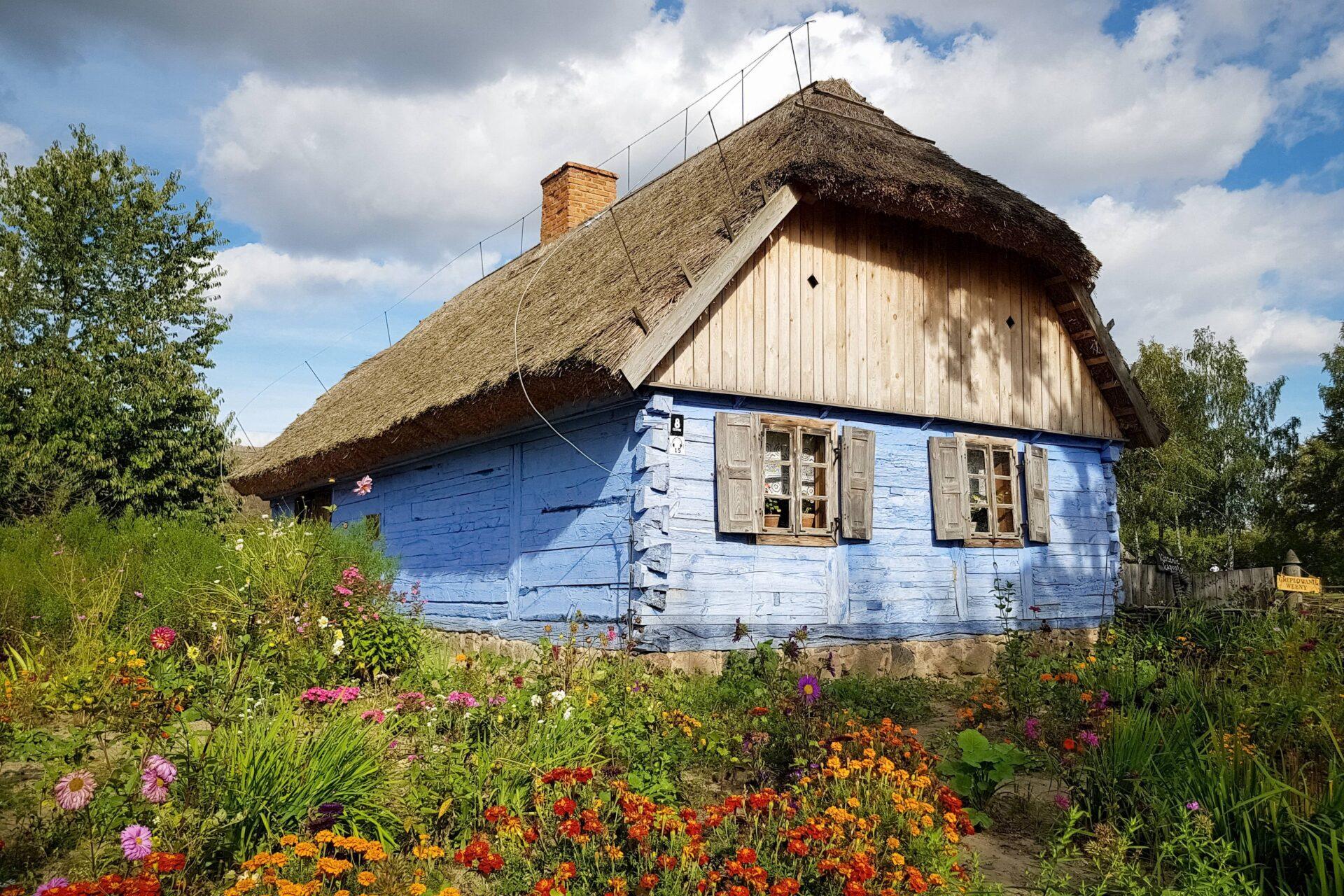
In the countryside outside Sierpc, the Museum of the Masovian Countryside resurrects a largely forgotten Easter universe: between Palm Sunday and late April, its open‑air cottages and manor houses turn into a living archive of how Masovians cleaned, limewashed, blessed, and decorated their homes for the holiday.

Visitors move from humble peasant interiors – where Easter palms were woven by hand and Easter baskets reflected rural modesty – to the more ornate rooms of manor houses, whose baskets and eggs quietly flaunted wealth and taste, revealing how the same feast could play out so differently across social classes. The exhibition leans into contrasts: simple folk designs next to elaborate decorations, scrubbed‑down cottages next to softly polished salons, and everywhere the meticulous preparations that turned Easter from a date on the calendar into a multi‑day ritual of renewal, faith, and domestic theatre.
Where: Sierpc, 2-2.5 hour drive from Warsaw (www.mwmskansen.pl)
When: between Palm Sunday (29 March) and late April
Lany Poniedziałek, or Śmigus‑Dyngus, is Easter Monday turned into a national water‑fight known as “wet Monday”: a tradition that blends pre‑Christian fertility rites and Christian symbolism with the very practical test of how well you waterproofed your wardrobe. In theory, sprinkling water purifies, blesses, and wards off evil. In practice, it is Poland’s most chaotic office‑outing‑cum‑children’s‑party, where buckets, water pistols, and the occasional hose turn streets into a lightly choreographed, slightly soggy free‑for‑all.
If you are caught outside on Easter Monday, assume you are the target. Just treat getting drenched as the admission fee to one of the world’s most endearing and efficiently organized public acts of collective mischief.