
Poland Unpacked week 15 (30 March - 5 April 2026)
Welcome to this week’s edition of our Poland Unpacked, where we deliver key insights and trends shaping the economic, corporate and political landscape. Catch the most important insights from Poland in this week’s briefing.
This article is a part of Poland Unpacked. Weekly intelligence for decision-makers
Marek Piechocki, the founder of LPP, Poland’s largest fashion company, known for brands such as Sinsay and Reserved, is without doubt one of the country’s most intriguing entrepreneurs. He has been building the business since the 1990s. His first corporate loan was for $120,000; more recently, banks have been willing to lend him around EUR 4.6bn. Despite creating one of Poland’s most valuable companies, he lives modestly. In an extensive interview, he explains what lies behind LPP’s success and that of the Polish economy.
For the past eight months, Poland’s minister of state assets has been Wojciech Balczun. It is a rare case of a business executive, rather than a politician, taking on the role. In a wide-ranging interview, he discusses how he has adapted to the job and the changes he is introducing at the ministry. He also addresses past and forthcoming reshuffles in the management of state-owned companies, the difficulties facing firms long regarded as national champions, the situation surrounding Orlen, Poland’s leading fuel group, and the future of Izera, the country’s electric-car project. Read the full interview here.
For years, there has been talk in Poland that domestic banks should play a bigger role abroad. They have been slow to act. A Polish fintech has moved first. ZEN is set to acquire Ukraine’s PIN Bank, a small, troubled lender that was nationalized three years ago. It paid several million euros. What exactly is it acquiring—and how will it use it?
What shape is Poland’s insurance market in? We analyzed insurers’ results for 2025—a year in which much happened. We have for you the key figures, trends and developments across eight charts - right here.
A Polish-American biotech has secured millions of dollars from investors to develop a breakthrough drug it describes as “exercise in an injection”. It is led by a former scientist, a student of a Nobel laureate, who has already built a successful startup. Here is how the new venture came into being—alongside an in-depth analysis of the state of biotech financing in Poland.
Inflation in Poland rose by 3% year on year in March, up from 2.1% in February, according to data released by Statistics Poland (GUS) last week. It was the first reading of price growth since the outbreak of the war in Iran. The main factor behind the increase was higher fuel prices. On a month-on-month basis, they rose by 15.4%; year on year, the increase was 8.5%. It is worth noting, however, that inflation of around 3% still remains within the central bank’s inflation target, defined as 2.5%, plus or minus 1 percentage point.
From April, inflation should be lower, owing to measures introduced by the government to reduce fuel prices. Under the Lower Fuel Prices (CPN) program—the Polish acronym deliberately echoes the former name of Poland’s largest fuel group CPN — the VAT rate on fuel was cut from 23% to 8%, excise duty was reduced, and daily maximum prices at gas stations were introduced. The package could lower inflation by about 0.5 percentage points, to roughly 2.5% in April. The problem, however, is that it weakens incentives to curb fuel demand. The program costs 0.5% of GDP a year, although for now it has been introduced for only one quarter.
That cost may seem modest, but it should be viewed in the context of the public-finance deficit. In 2025 it reached as much as 7.2% of GDP, according to GUS’s preliminary estimate. That is one of the highest deficits of recent years. Since 2000, it was higher only during the financial crisis. It was lower even during the pandemic, when it stood at 6.9% in 2020. For now, there is little sign on the horizon of any meaningful reduction.
We also recently examined the intense competition in Poland’s grocery-retail market, focusing in particular on two chains: Biedronka and Dino. The former belongs to Portugal’s Jerónimo Martins and has for years been the leader in Polish retail. The latter, by contrast, is controlled by Polish capital, and for many years its strategy of rapid expansion relied on opening stores in small towns and rural areas. Although both continue to increase the number of stores, the market has not been kind to them. Dino’s results in particular have recently disappointed investors badly. See data, figures and the story here.
Days leading up to Christmas—or, as now, Easter—are a rather peculiar period in Polish politics. Politicians do what they can to make themselves memorable to voters ahead of family gatherings. It has long been said among political spin doctors that voters should be given topics to discuss over the holidays.
We do not know how effective these political spins will be (or not), but we do know which issues dominated the past week. Thanks to the Presidential Palace, we followed another episode in the long-running saga surrounding the Constitutional Tribunal. A few weeks ago, the Sejm nominated six judges to the Tribunal to replace those whose nine-year terms are coming to an end. Formally, the president’s role should be limited to signing the nominations and administering the oath of office.
In practice, however, the situation around the Constitutional Tribunal has for more than a decade been deeply shaped by political disputes. Of the six appointed judges, President Karol Nawrocki administered the oath to only two. The Presidential Chancellery explained that only two vacancies had arisen during Nawrocki’s term. Politicians from the governing coalition and legal experts, however, have raised serious doubts about the president’s authority in this matter. Rafał Mrowicki explains the latest episode in the battle over the Tribunal here.
On April Fools’ Day, meanwhile, a wholly serious meeting took place between former prime minister Mateusz Morawiecki of Law and Justice and current deputy prime minister and defense minister Władysław Kosiniak-Kamysz of the Polish People’s Party. Both politicians are associated with the center-right, though they operate on opposite sides of the political divide.
The very fact of organizing such an unexpected debate between prominent politicians sparked wide interest among political commentators. Morawiecki, positioned closer to the center, finds himself in a difficult situation within a party that is shifting toward more hardline rhetoric. Kosiniak-Kamysz, by contrast, holds a strong position within a party that is struggling in the polls. Their conversation was substantive, but what mattered most were the political interests of both men, which—simply by virtue of the meeting—were effectively served. We write about this rare win-win situation in Polish politics here.
Finally, we look at new research by leading Polish sociologists, who examined the attitudes and views of residents in a municipality in central Poland. Inspired by the work of the American sociologist Arlie Russell Hochschild, the researchers studied attitudes toward political opponents. The conclusions?
Susceptibility to radicalization and the coarsening of public debate may affect anyone—regardless of whether their views are more conservative or more liberal. Respondents who follow liberal media felt besieged by supporters of Law and Justice. Conservatives, in turn, expressed, among other things, a sense of being wronged by Ukrainians and other migrants. What unites both electorates? A growing acceptance of political aggression.
Who benefits more from this? You can read more about the findings in our article here.
BGK (a Polish state development bank) has selected three funds to join the Future Tech Poland program. Funding will go to three teams: Cogito Fund II, Expeditions Fund II, and Balnord Fund I. The total allocation amounts to PLN 365m (EUR 84m).
These funds will invest across different stages of company development and in a range of technology segments, including defense, dual-use technologies, the space sector, fintech, and medtech. The total pool of public funding in the program stands at PLN 1.5bn (EUR 345m).
Next Frontier AI is entering Poland. The initiative was created by SPRIND, which supports innovation. Its aim is to identify teams capable of building world-class technology labs. It has more than EUR 120m at its disposal. Teams will be selected during a series of “roadshows”, which will also reach Warsaw. Previous events have taken place in Munich and Paris, with upcoming meetings planned in Zurich and Amsterdam. A jury will select ten projects, each eligible for funding of EUR 3m.
This week saw one notable startup funding round. Smartschool, an educational platform developing a personalized AI-powered tutor, raised USD 3m (EUR 2.8m). It is an interesting company, built by Polish founders in the United States. The business remains at an early stage, but already has a product, customers, and around USD 500,000 (EUR 460,000) in revenue. Its growth potential is significant, as it addresses weaknesses in the US public education system.
Back on the domestic front, CloudFerro, a Polish cloud services provider, has launched a new infrastructure region in Łódź in central Poland, focused on AI-related projects and large-scale data processing.
According to the company, the new region enables the installation of more than 300 server racks, delivery of up to 2.4 MW of IT capacity, and data processing and storage of up to 1 exabyte. The centers will be equipped with NVIDIA GPUs (H200, B300, RTX 6000 PRO) for AI applications. CloudFerro recently secured EUR 75m to support the project’s development.
Warsaw’s Museum of Modern Art is currently showing Kairos / Hauntological Variations, a Julie Mehretu exhibition that offers the sort of cultural outing best approached with curiosity, patience and perhaps a coffee beforehand.
Mehretu, an American artist with Ethiopian and Polish roots, is making her first appearance in Poland, and the show brings together works from across her career, from late-1990s diagrammatic pieces to more recent large-scale paintings that feel like maps, storms and history lessons happening all at once.
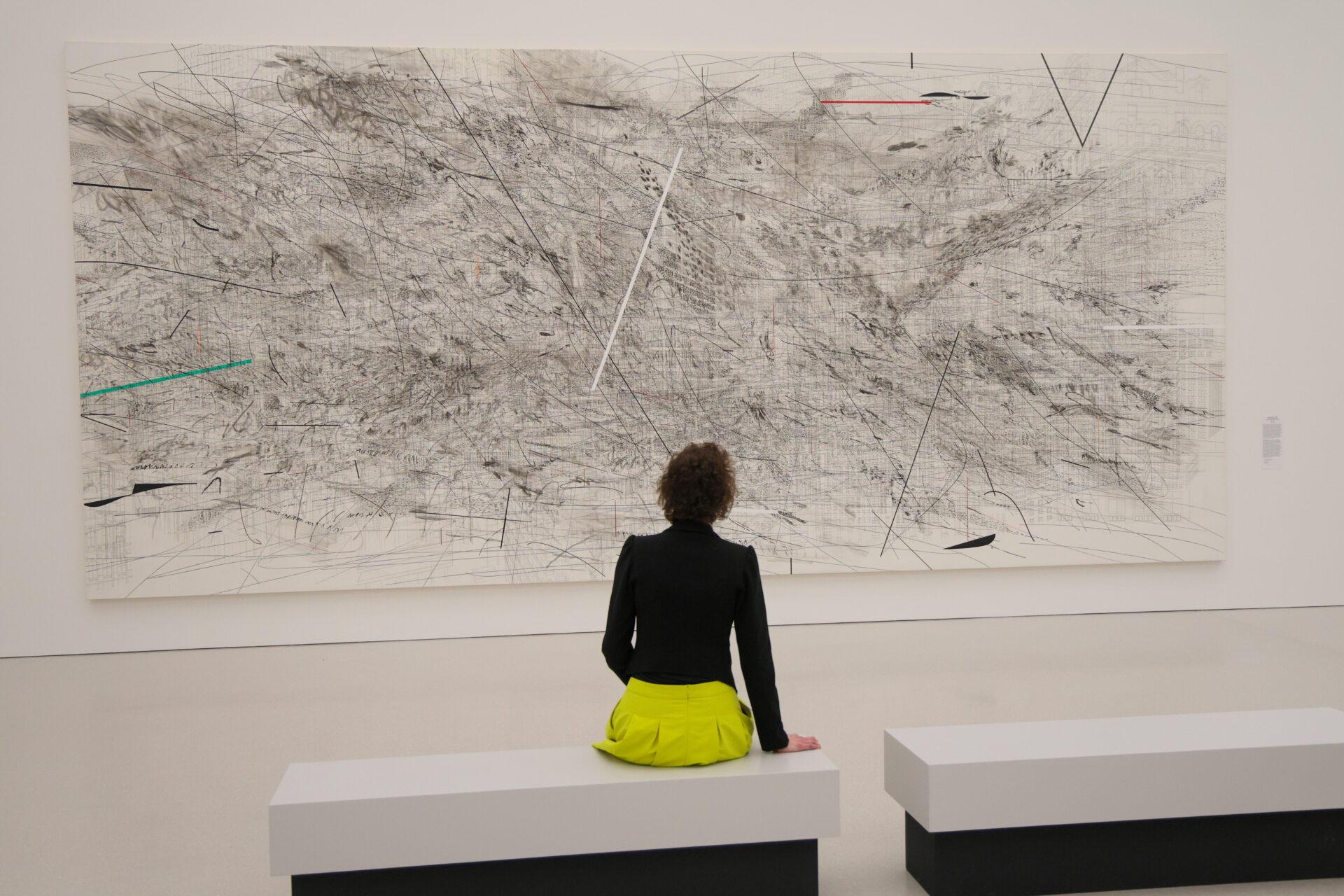
The title alone pairs the ancient Greek idea of a decisive moment — kairos — with Derrida’s hauntology, or the notion that the present is forever pestered by unresolved ghosts of the past. A rather good fit for Warsaw if you ask me.
Where: Warsaw (https://artmuseum.pl/wystawy/julie-mehretu-kairos-wariacje-duchologiczne)
When: 20 March – 30 August 2026
On April 12th, as the world marks the International Day of Human Space Flight, Poland can note – perhaps with justifiable smugness – that it has produced not one but two spacefarers.
The first was Mirosław Hermaszewski, who blasted off in 1978 aboard Soyuz 30, becoming the first Pole in space back when such things were arranged through Moscow rather than meritocratic application forms and glossy ESA brochures.
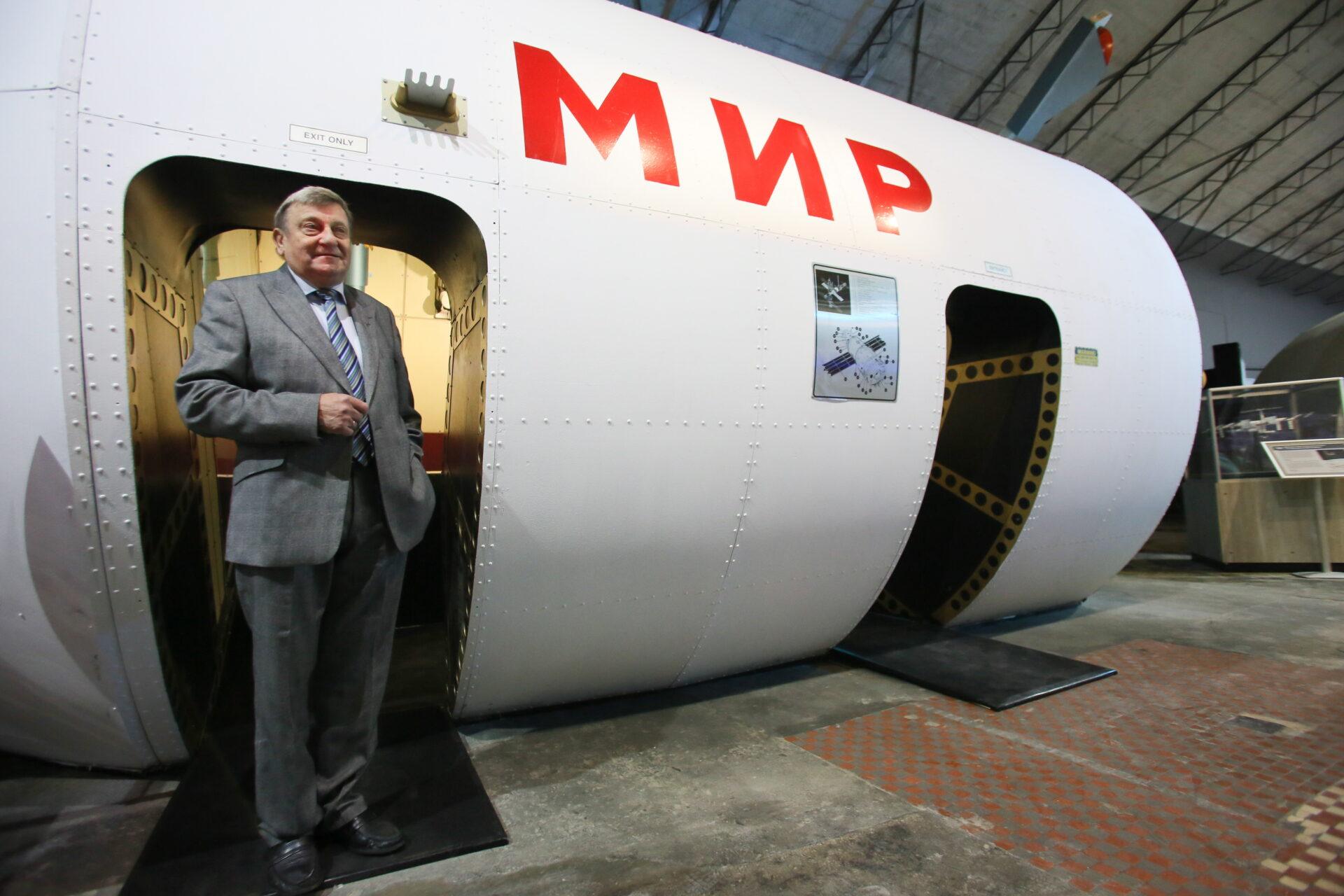
The second is Sławosz Uznański-Wiśniewski, who gave Poland a more up-to-date cosmic calling card by becoming the second Pole in space and the first to reach the International Space Station.

If Mr. Hermaszewski was a hero of the Soviet age – equal parts pilot, symbol and propaganda asset – Mr. Uznański is a creature of modern Poland: brainy, technical and thoroughly European. In space, as on Earth, Poland has come a long way: from being strapped into someone else’s grand imperial narrative to earning its seat on a rather more respectable rocket.