

This article is a part of Poland Unpacked. Weekly intelligence for decision-makers
Poland must implement EU rules on the transparency of political advertising ahead of the upcoming election year. However, the opening of Senate work has already exposed a jurisdictional dispute between state institutions. Why is the implementation of the TTPA important, and who in Poland should be responsible for overseeing campaign activity?
“If we look at the calendar, there are 17 months left until the elections, so I believe we should also have the tools to ensure that the political and electoral future of our country is, as far as possible, transparent and clear,” said Senator Maciej Karpiński at the conclusion of the Senate Committee on Human Rights and the Rule of Law session.
Lawmakers are aware that the coming months represent the last viable window to introduce changes to campaign rules ahead of the 2027 elections.
These changes will be crucial for the shape of Polish campaigning, as they will concern the labeling and identification of political advertising.
What is the TTPA?
In spring 2024, the Regulation of the European Parliament and of the Council on the transparency and targeting of political advertising, known as the TTPA, entered into force. The adopted rules introduced a uniform legal definition of political advertising at EU level.
Any material qualifying as such advertising must be clearly labelled as political advertising. In addition, information on the sponsor of the message, sources of funding (distinguishing between domestic and foreign, as well as public or private sources), the amount spent, the duration of publication, and the reach of the advertisement will have to be made public.
The regulation also strictly prohibits the profiling of advertising audiences based on personal data, such as political views or religious beliefs. Ads may not be targeted at minors either – meaning individuals who are at least one year away from reaching the age of majority.
Crucially, the regulation also bans, for three months prior to elections, the publication of political advertisements financed by entities from outside the European Union. While not stated explicitly, this provision is intended to limit the financing of European campaigns from sources in the Kremlin, as well as the United States.
The main objective of the rules is to enable EU citizens to more easily recognize political messaging and make more informed electoral decisions. The regulation also states that it seeks to counter disinformation and manipulation of information, while preserving fundamental EU rights such as freedom of expression, privacy, and political debate.
Several EU member states have already implemented the TTPA provisions, including Sweden, Finland, Lithuania, and Estonia. In most countries, work is underway to incorporate the rules into national legislation. However, there are also exceptions where no legislative process has yet begun, such as Portugal, Latvia, and Hungary. The common denominator? Elections are scheduled for 2026 in all of these countries.
A reality without EU rules would resemble Hungary’s online election campaign
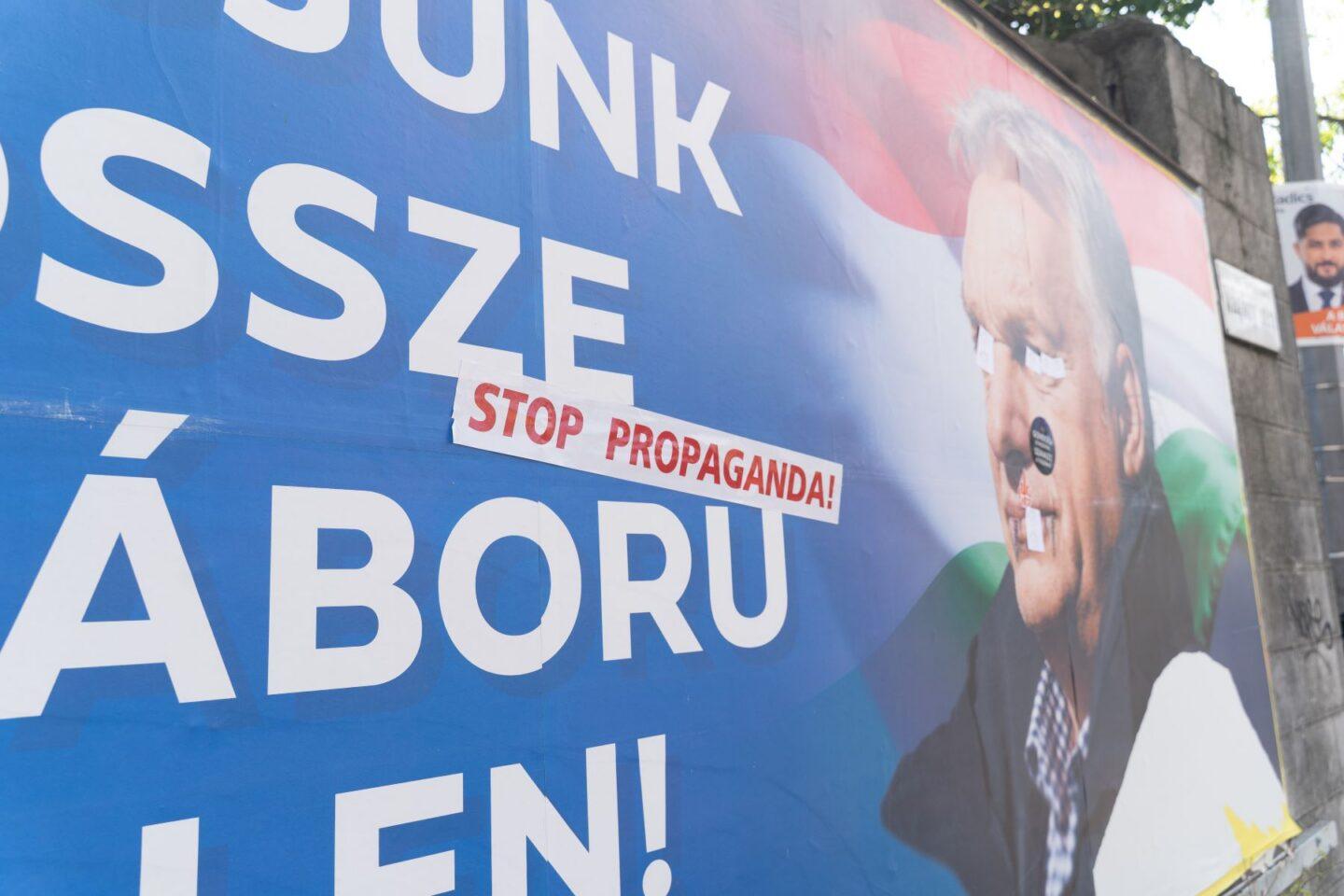
Why does the entry into force of the EU’s proposals matter? A clear illustration of what reality looks like in the absence of EU law enforcement was provided by Hungary’s recent election campaign.
Viktor Orbán’s Fidesz party (and, to a lesser extent, Péter Magyar’s Tisza party) flooded the internet with thousands of posts containing AI-generated content, as well as pro-government messages distributed by influencers and accounts of unknown origin. Although the TTPA is formally already in force, the absence of a designated supervisory authority in Hungary has effectively rendered these rules toothless.
“When Facebook began restricting these ads in order to comply with the TTPA, it disrupted Fidesz’s strategy of flooding the country with advertisements. As a result, they shifted toward influencer-generated content that appears organic, although they still manage to push through many political ads via Facebook’s verification algorithms. Under the TTPA, influencer activity is treated as political advertising and must be reported, but it remains a complete grey zone because the Hungarian state has deliberately failed to appoint a supervisory authority to enforce the regulation,” said Sándor Léderer, head of the Hungarian watchdog K-Monitor, in an interview with XYZ.
Hungary’s inaction could produce similar scenarios in next year’s election campaign in Poland.
To prevent this, changes at the level of national legislation are required—and they are critical. In particular, it is necessary to either establish or designate an authority responsible for initiating proceedings against unfair political actors. There is also a need to specify sanctions for violations of the rules.
First hurdles
This is where the first problems begin. Who should, in fact, be designated as the institution responsible for overseeing compliance with the rules? In draft provisions prepared by the Chancellery of the Senate, it is proposed that this role be taken over by the National Electoral Commission (Państwowa Komisja Wyborcza, PKW).
The Commission would be assigned a broad set of new responsibilities. According to the draft legislative assumptions, the PKW would, among other things, be responsible for requesting information from providers of political advertising services and enforcing the rules; acting as the national contact point; initiating proceedings in cases of violations ex officio or upon request; and finally issuing binding decisions on breaches, including warnings, orders to cease violations, periodic financial penalties, orders to publish statements acknowledging violations, as well as the imposition of fines.
Senate drafters have proposed substantial financial penalties for non-compliance. The maximum level of fines would amount to up to 6% of an entity’s annual income or budget, or up to 6% of its global annual turnover from the preceding year. Sanctions would apply both to providers of political advertising services (including publishers) and to advertisers themselves for failure to comply with the imposed obligations, including transparency requirements, advertising labelling rules, and proper record-keeping obligations.
PKW pushes back against excessive new responsibilities
Representatives of the National Electoral Commission (PKW) firmly rejected the proposed scope of duties assigned to the body during the session of the Senate Committee on Human Rights and the Rule of Law, which is working on the legislation.
“Adopting the planned solutions, in the view of the National Electoral Commission, would undermine the credibility of electoral processes in Poland, including the system for monitoring the financing of political parties and election campaigns, for which the National Electoral Commission is also responsible,” said Tomasz Gąsior from the National Electoral Office (Krajowe Biuro Wyborcze, KBW) during the meeting.
The KBW representative also pointed to risks of undermining the independence, non-partisanship, and overall credibility of Poland’s electoral system if the PKW were required to take decisions targeting specific electoral committees. The proposed rules would also oblige the PKW to handle complaints as late as 48 hours before elections, which – according to the KBW – would destabilize the organization of voting at the final stage of the electoral process.
Representatives of other state institutions were also present at the committee meeting, including the Office of Electronic Communications (Urząd Komunikacji Elektronicznej, UKE), the Personal Data Protection Office (Urząd Ochrony Danych Osobowych, UODO), and the Office of Competition and Consumer Protection (Urząd Ochrony Konkurencji i Konsumentów, UOKiK). This was no coincidence, as lawmakers propose that these bodies also play roles in enforcing the new rules.
The President of the UODO would be tasked with monitoring provisions concerning the use of personal data for targeting and delivering advertisements. The draft assumptions suggest considering whether the UODO should have the power to independently initiate proceedings in these matters alongside the PKW.
Meanwhile, the President of the UKE would oversee so-called intermediary service providers in relation to transparency obligations, as well as impose fines and periodic financial penalties.
The UOKiK, in turn, would conduct inspection proceedings on the instruction of the PKW.
Objections from UKE and UOKiK
Representatives present at Tuesday’s meeting raised a number of concerns regarding the Senate’s proposals.
“The President of the Office of Electronic Communications (UKE) does not have access to the materials, and is then expected to impose a fine. On what basis, exactly?” asked rhetorically Ewa Morawska-Sochacka, Director General of the UKE. She called for the issue of overlapping competences to be addressed in the future text of the law.
The Office of Competition and Consumer Protection (UOKiK), in turn, presented a position rejecting the idea of conducting proceedings at the request of the PKW.
“The proposed and drafted solutions do not fall within the constitutional scope of the President of UOKiK’s competences. They raise serious doubts as to the institutional independence of this authority,” said Aneta Mijal of UOKiK.
The dispute over the division of competences between individual institutions is likely to resurface at subsequent stages of work on the detailed provisions of the legislation.
Government: we are waiting for the draft law
Deputy Minister of Digital Affairs Dariusz Standerski also attended the meeting. The politician declared support for the work on the legislation, while at the same time refraining from presenting the government’s position until an initial draft of the law has been prepared. He also warned against delaying the process.
“I would only like to note that the failure to implement provisions on political advertising will make the supervision of compliance with electoral law increasingly illusory, due to the development of information technologies,” Mr. Standerski stressed.
What comes next? Maciej Karpiński, chair of the Senate Committee on Human Rights and the Rule of Law, has tasked legislative drafters with preparing an initial version of the bill. If the senator’s words are anything to go by, the draft could be made public shortly after the May holiday period.
Expert: swift action is needed
According to Konrad Kiljan, an expert from the Foundation for the Digital Democracy Observatory, the ambitious pace of work is a positive signal.
“The regulation is already in force across the European Union, but without proper implementation there is no chance that political messages – both online and offline – will be clearly labelled and their financing made transparent. Recent campaigns, such as the one in Hungary, show that with today’s tools, the creation and dissemination of unlabeled, difficult-to-identify advertisements has reached a massive scale. We must act efficiently so that during the 2027 campaign, citizens are not overwhelmed by political content of unclear origin,” the expert stressed.
Kiljan also noted that, regardless of the final division of responsibilities, the relevant authorities will need to adapt to an entirely new area of regulation.
“In Poland, the competences of the UODO currently cover only targeting and data protection, while oversight of ad labelling and publishers’ obligations still remains in a legal vacuum. I hope that the institutions assigned new responsibilities will have sufficient resources and time before the elections to learn how to effectively monitor advertising and respond to incidents,” Konrad Kiljan concluded.


Key Takeaways
- Work on the Polish bill is meeting resistance from key state institutions. The National Electoral Commission (PKW) and regulatory authorities are unwilling to assume additional supervisory responsibilities. Representatives of these bodies warn of a potential loss of political independence and the risk of operational paralysis in the critical pre-election period.
- The EU regulation imposes obligations to label political advertising and ensure transparent disclosure of its financing. Polish lawmakers aim to implement these rules ahead of the 2027 election campaign. Senate drafters plan to publish the first version of the bill in May.
- The new law would fully prohibit voter profiling based on sensitive personal data and ban the targeting of political messages at minors. Political advertising would also be subject to full transparency regarding the origin of funding. In addition, three months before the vote, it would become illegal to finance such campaigns from entities outside the European Union.