Poland Unpacked week 18 (20 - 26 April 2026)
Welcome to this week’s edition of our Poland Unpacked, where we deliver key insights and trends shaping the economic, corporate and political landscape. Catch the most important insights from Poland in this week’s briefing.
This article is a part of Poland Unpacked. Weekly intelligence for decision-makers
It was another week of bad news for Zondacrypto, the cryptocurrency exchange under investigation since April 17 by the Regional Prosecutor’s Office in Katowice over alleged fraud and money laundering. Katowice also hosted the European Economic Congress (EKG), which brought together hundreds of business leaders and policymakers.
Meanwhile, XYZ was the first to report on a business network some liken to a cult. It is BNI, which brings together 2,500 companies in Poland, and Corporate Connections, aimed at firms with revenues above PLN 100m (about EUR 23m; it now has 300 members, with far greater ambitions).
Membership is by recommendation, fees are high, and members must demonstrate their value by supporting others with business leads. BNI came to Poland from the United States, but local entrepreneurs refined the model and created Corporate Connections after concluding that owners of larger companies had different expectations and needs. The Polish entity has just signed an agreement to teach its American counterparts how to organize networks of large-scale entrepreneurs.
Another Polish firm taking an unconventional approach is GCG Partners. Founded a year ago, the advisory boutique – whose partners include a former CEO of footwear giant CCC – focuses not only on consulting but, crucially, on implementation. To that end, it has expanded into a new line of business: executive recruitment. Presentations alone are not enough; the hardest part is implementation, which requires the right people, the partners argue. Their plan for this year is to double the value of signed contracts.
Meanwhile, Erste Group is rebranding Santander Bank Polska, acquired three months ago. The Spaniards, however, are not leaving Poland. They have retained the smaller Santander Consumer Bank, which specializes in installment and cash loans. It is soon to be merged with Openbank, Santander’s digital bank, and will operate under that brand in 26 countries, including Poland.
By contrast, Cukiernia Sowa – a confectionery chain – is focused solely on Poland. Founded in 1946 in Bydgoszcz, the family-owned company runs 173 outlets across 15 of the country’s 16 regions. It did open a pâtisserie in London, but the experience discouraged further expansion abroad. The company now plans to invest tens of millions of złoty (several million euros) in expanding its network, digitization, new technologies and increased production capacity. “We want to be customers’ first choice across Poland, with a presence in every region,” says Michał Sowa, co-owner of the chain. Anyone who has not yet tried a pastry from Cukiernia Sowa should make a point of doing so.
In the past week, the most significant development was the release of Poland’s 2025 deficit figures, along with the government’s projections for 2026 under the so-called fiscal notification. Twice a year, EU member states report their fiscal data to Brussels.
Poland’s general government deficit reached 7.3% of GDP in 2025, according to Statistics Poland (GUS). This is – once again – higher than the Ministry of Finance had projected in the budget law (6.9%). Over the past 30 years, the deficit has been higher only once, and only marginally so: in 2010, it stood at 7.4% of GDP, just 0.1 percentage point more. At that time, however, the economy was still grappling with the aftershocks of the 21st century’s largest financial crisis.
Over the past two years, Poland has pursued the most expansionary fiscal policy in the EU. This has supported economic growth but raises systemic risks for the years ahead. The government forecasts a deficit of 6.8% of GDP for the current year – the highest in the EU. The debt-to-GDP ratio is expected to reach 65%.
Recent releases also included a solid batch of data on current economic conditions. Retail sales, measured in constant prices, rose by 8.7% year on year in March, according to GUS. This marks the strongest result since April 2022 and a significant improvement on February, when growth stood at 5% year on year. That said, several one-off factors were at play: a low base in March 2025, a surge in fuel sales driven by precautionary stockpiling by consumers, and a marked improvement in weather conditions between February and March.
March also brought a turnaround in Poland’s weak industrial performance. According to GUS, industrial output – seasonally adjusted – rose by as much as 8.8% year on year, the strongest increase since 2022.
Activity in construction was less spectacular than in industry. Seasonally adjusted construction and assembly output fell by 2.1% year on year in March. Despite the decline, this represents a clear improvement on January and February, when the respective readings were -10.8% and -2.1%.
In our structural analysis, we present a map of Polish exports over the past six years. Since 2019, their value has increased by more than 50%, reaching USD 411bn (approx. PLN 1.6trn / EUR 380bn) in 2025. The largest gains have been recorded in European markets, particularly Germany, though strong growth is also visible in a number of other countries, including the United States, Turkey and Mexico. A key strength of Poland’s export sector is its diversification – both geographic and product-based – which enhances resilience to external shocks.
Last week, the OECD also published its analysis of taxation on employment income as part of its flagship report, Taxing Wages 2026 (TW2026). In Poland, the tax burden increased in 2025 for all household types. For families with children, two factors were at play: frozen tax thresholds amid rising nominal wages, and a real decline in the value of family benefits such as the “800+” child benefit program, which are paid as fixed nominal amounts. For households without children, the increase in the tax wedge was driven solely by the first mechanism. Even so, Poland continues to offer the most generous pro-family tax preferences among OECD countries. The gap between the tax wedge for a family and for a single individual stands at nearly 21 percentage points, compared with an OECD average of around 9 percentage points. Enjoy our long read here.
Przemysław Kral, head of the cryptocurrency exchange Zondacrypto, which is facing solvency problems, has been located in Israel. The number of affected clients may reach 30,000, with losses estimated at PLN 350m (approx. EUR 80m).
Prime Minister Donald Tusk has shifted responsibility for Mr. Kral’s actions onto the political right. Mr. Kral had financially supported foundations linked to right-wing politicians, as well as the CPAC conference ahead of the second round of the presidential election. President Karol Nawrocki vetoed two government bills aimed at placing the cryptocurrency sector under state supervision. The prosecutor’s office is expected to examine these links.
A significant personnel change has taken place in President Nawrocki’s circle. Sławomir Cenckiewicz has stepped down as head of the National Security Bureau (BBN). A historian by training, he is the author of, among other works, a book on the alleged collaborationist past of former president Lech Wałęsa. Mr. Cenckiewicz is also a former head of the commission on Russian influence, which under the previous Law and Justice (PiS) government sought to prevent Donald Tusk’s return to power. Following the change in government, the intelligence services denied Mr. Cenckiewicz access to classified information.
He leaves the post after eight months, though he has signaled he will continue to support the president and Law and Justice - the largest opposition party - in next year’s elections. Here's what you need to know about the case.
Tensions have also flared on the right around a new association launched by former prime minister Mateusz Morawiecki. He aims to court moderate voters, while the party’s mainstream competes for support with more radical right-wing groups. Despite internal rivalries, Mr. Morawiecki and party leader Jarosław Kaczyński have sought to defuse the situation. Here's more on the latest developments.
The Senate has begun work on changes to election advertising rules. The proposed legislation is intended to increase transparency, though state institutions have resisted taking on new oversight responsibilities.
Last week brought new details on the Innovate Poland program, one of the flagship initiatives aimed at supporting the development of innovation in Poland. PFR Ventures has launched the application process for the Innovate PL FoF (fund-of-funds). Up to PLN 2.4 billion (approx. EUR 558 million) may be allocated to investments in private equity, private debt, and venture capital funds.
The program is designed to address one of the fundamental challenges facing Poland’s startup ecosystem: the lack of a fully complementary financing and support system for technology companies. Gaps are visible across early-stage financing as well as in mid-stage and growth segments. As a result, capital availability is uneven, and every financing gap translates into fewer transactions and slower company growth.
Startups that support the digitalization of Polish companies have strong growth potential. As we noted recently, the adoption of artificial intelligence in Polish firms remains at an early stage.
Interestingly, Polish entrepreneurs differ from their foreign peers in terms of expected ROI from AI investments. They see the greatest potential in planning and forecasting. The picture is quite different when it comes to learning and development.
The biggest barrier remains concerns over security, cited by 39% of companies, and as many as 46% in the energy sector.
In recent days, several Polish startups announced new funding rounds. Zynt, which builds tools for intelligent analysis of B2B purchasing signals in sales, closed a financing round worth PLN 1.7 million (approx. EUR 0.4 million). The company, founded by Cezary Raszel and Wojciech Ozimek, was backed by Polish fund 24Ventures and a group of experienced business angels. Meanwhile, Solar Spy is set to raise PLN 3–4 million (approx. EUR 0.7–0.9 million) by year-end from VO2 Ventures.
Polish investment funds, however, were also active. The Polish fund WEG led a financing round for startup &Charge. The company raised a total of PLN 21 million (approx. EUR 4.9 million), with participation from Porsche Ventures, among others. &Charge develops solutions for electric vehicle charging infrastructure. Rather than building new stations, the startup focuses on managing and technologically optimizing existing networks.
Meanwhile, Inovo Fund (together with Khosla Ventures and business angels) invested USD 9 million (approx. PLN 36 million / EUR 8.4 million) at seed stage in GRAI, a startup building AI tools for music creation. The “icing on the cake” is the successful conclusion of an investment we first reported on a year ago. PsiBufet has opened a factory in Zabrze. The new facility will allow the company to expand its offering and begin mass production. The investment is valued at PLN 310 million (approx. EUR 72.1 million). PsiBufet is a Polish brand offering fresh dog food. The startup was founded in 2018 and acquired in 2023 by the international group Butternut Box.
This week will test the coalition’s unity. On Thursday, the Sejm will vote on a motion of no confidence in Paulina Hennig-Kloska, the minister for climate and environment.
Some MPs from Poland 2050 - the coalition party to which Hennig-Kloska belonged until recently - may vote against her, despite an ultimatum from Prime Minister Tusk, who has warned that doing so would result in expulsion from the coalition.
Here's an idea for what to do in Warsaw. Head to the Elliott Erwitt retrospective at DSH (History Meeting House). Born in Paris, shaped by Italy, and matured in the US, Erwitt spent decades photographing the 20th century as it unfolded – politics, celebrities, and everyday life – often all at once. He even made two reporting trips to Poland in the early 1960s, capturing Warsaw and beyond through his signature mix of curiosity and understatement.
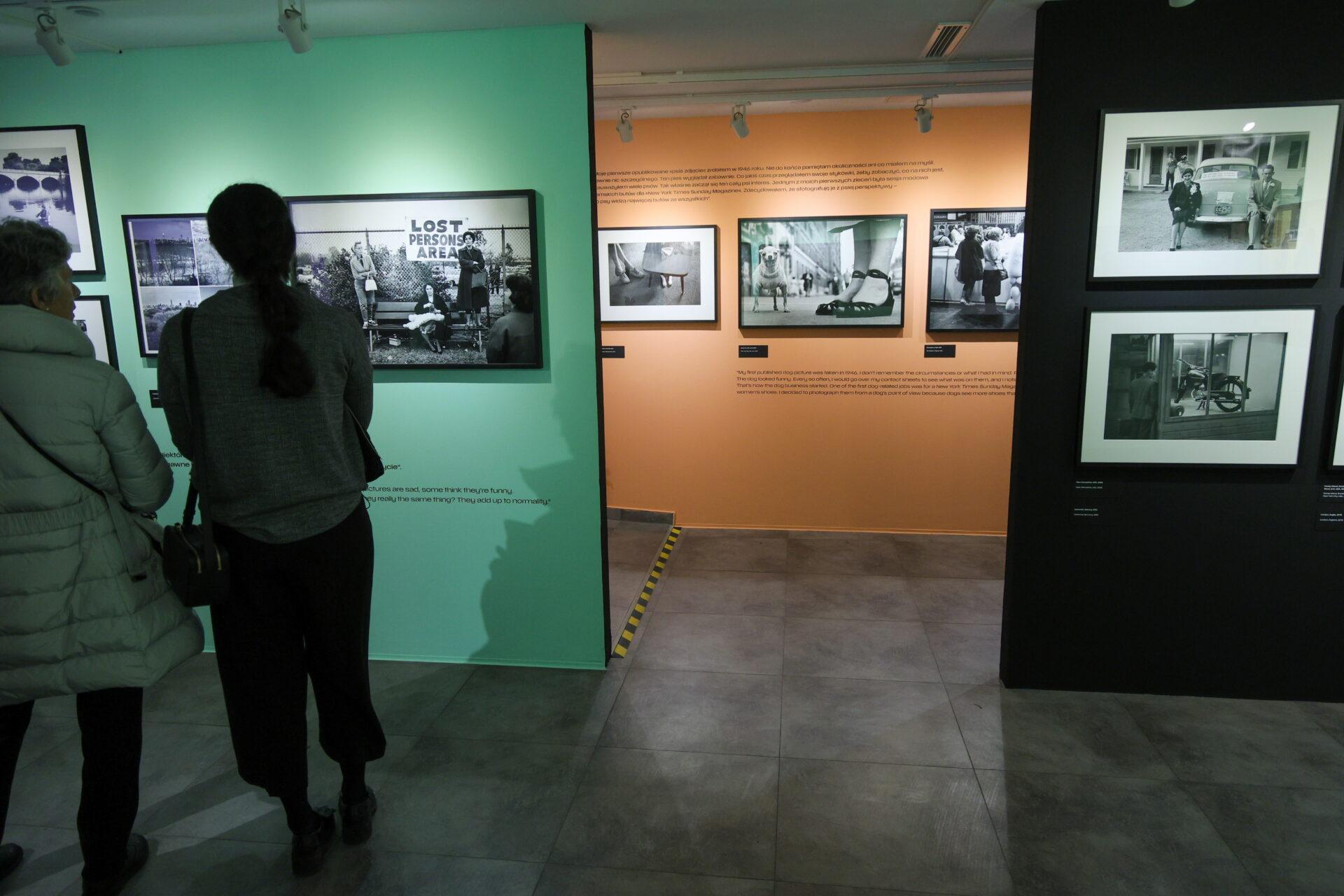
What makes this show land, though, isn’t just its historical weight – it’s the lightness. Erwitt had a rare gift for spotting irony, tenderness, and quiet absurdity in ordinary scenes (and, famously, in dogs that somehow reveal more about their owners than themselves). The result is a retrospective that feels less like an archive and more like a gentle nudge: look closer, smile more, don’t miss the small moments. On view until 20 September at DSH on Karowa Street in Warsaw (https://dsh.waw.pl/en/program/elliott-erwitt-retrospective/).
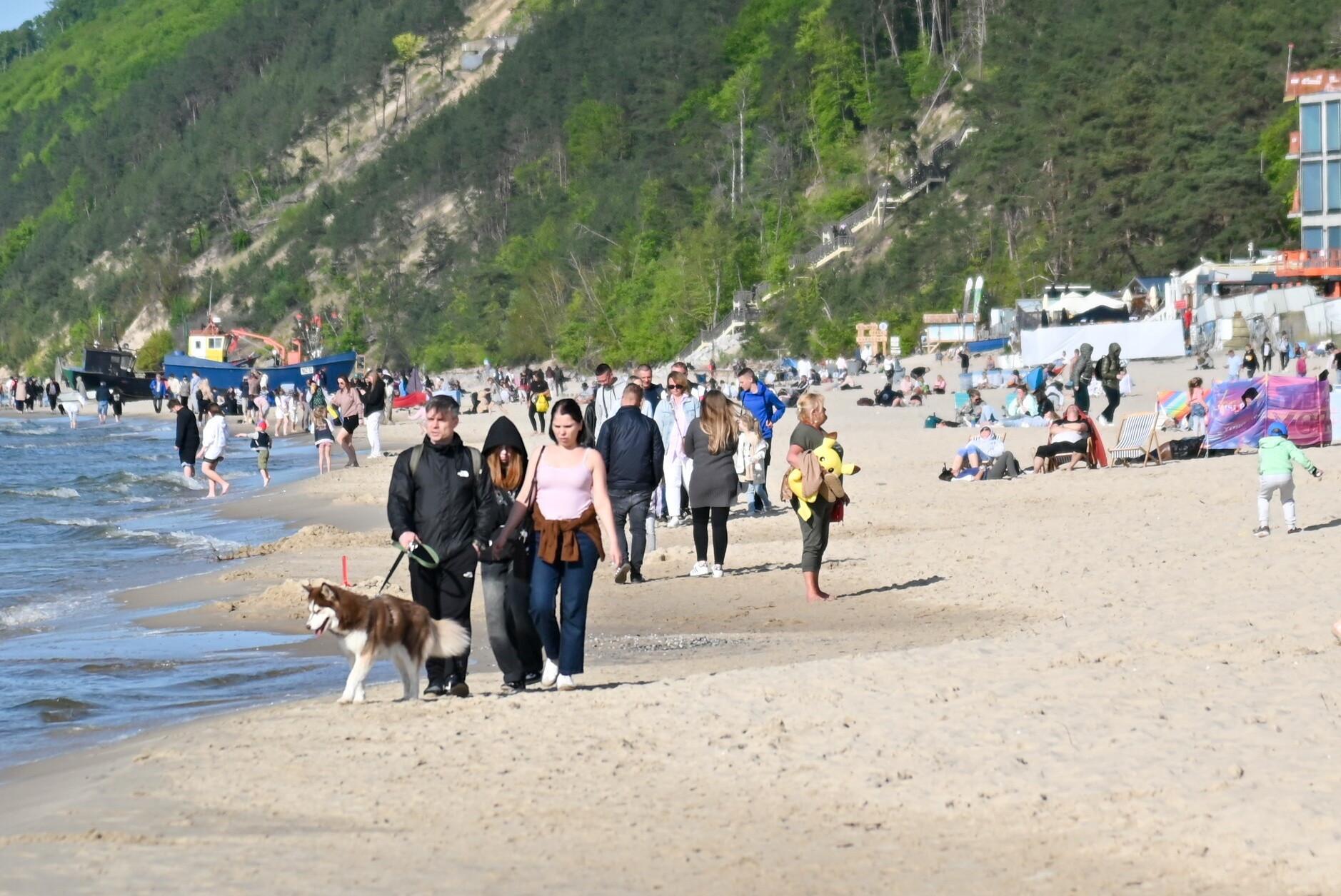
Poland has perfected a peculiar art form: stretching time. When early May rolls around, the country collectively eyes the calendar like a seasoned tactician. With May 1st (Labor Day) and May 3rd (Constitution Day) sitting tantalizingly close, a single well-placed day of leave can unlock the mythical “długi weekend” aka long weekend.
In practice, that often means 4–5 consecutive days off – sometimes more if the dates fall kindly. Surveys suggest a majority of working Poles take at least one extra day off in this period, and in some sectors entire teams quietly vanish. Inbox replies slow to a trickle. “I’ll get back to you after majówka” becomes a socially accepted auto-response. You may also think of majówka less as a holiday and more of as a national migration. Many leave cities for a few days. Heading to lakes in Mazury, the Baltic coast, mountain trails, or simply their działkas (allotment garden). Barbecues (grill) become obligatory and even the weather – often unreliable – rarely discourages the ritual. Roads clog, trains fill up, and DIY stores report brisk sales beforehand. So. If something can wait until after majówka, it will. Poland, for a brief moment, collectively logs off.