

This article is a part of Poland Unpacked. Weekly intelligence for decision-makers
After acquiring Whirlpool’s European operations, the Turkish conglomerate shut down three factories in Poland within a year and a half. The reason: excessive production capacity. The company now promises investment and is counting on customers – and on Brussels – to help protect European manufacturing.
April 2, 2024
Completion of the acquisition of Whirlpool EMEA by Beko, a company owned by the Turkish conglomerate Arçelik. Beko Europe is established, with 75% owned by Arçelik and 25% by Whirlpool. Beko Europe employs more than 20,000 people and has production capacity of approximately 24 million household appliances per year. This makes it the number one player in Europe.
Autumn 2024
Beko announces a European optimization plan, citing overall business instability as the rationale.
Poland, Italy, and the United Kingdom – plants to be closed
The story continues. The company announces that by April 2025 it will shut down a cooking range, dryer, and plastics components plant in Łódź, central Poland (ultimately, however, the latter facility finds an investor and is not closed), as well as a refrigerator factory in Wrocław, south-western Poland. It will also lay off part of its office staff in production-related departments.
The conglomerate explains that its Polish manufacturing sites, operating within the Whirlpool Group, have posted losses for several years. For example, the Wrocław plant produced over 1 million refrigerators annually at its peak, but by late 2024 output had fallen to just 360,000 units.
In Łódź, 1,100 employees lose their jobs; in Wrocław, 700. Workers receive generous severance packages. Local media report compensation ranging from up to five severance payments depending on tenure, to as much as 12 monthly salaries for employees with eight years of service, plus additional payments for each year beyond 15 years of tenure.
The parts manufacturing company, together with 250 employees, is acquired from Beko Europe by the Turkish firm Mefa.
In Italy, the company announces plans to lay off nearly 2,000 of its 4,400 employees. Local media report that it is simultaneously promising EUR 110 million in investment, although negotiations over the final amount are still ongoing. In Varese, Beko lays off part of the workforce at its refrigerator plant. It closes a freezer factory in Siena, as well as a washing machine and dryer facility in the Marche region, in November 2025.
In the United Kingdom, the Hotpoint dryer factory in Yate near Bristol – operating for over 100 years – is shut down on December 31, 2024. Around 140 employees lose their jobs.
Good to know
Others are also closing factories or scaling back production
At the end of last year, LG Electronics Wrocław ended production of refrigerators.
In 2022, Samsung Electronics Poland Manufacturing produced 4 million washing machines and refrigerators in Wronki, operating below full capacity. In subsequent years, output declined, and this year it is expected to shrink by a further 30 percent.
In autumn 2025, BSH announced the closure of its washing machine, oven, and extractor hood factories in Nauen and Bretten, Germany. The two sites employ a total of 1,400 people. Production will continue there until mid-2027 or the first quarter of 2028. Output will be transferred to other plants within the group in Germany and across Europe.
A few days ago, Sweden’s Electrolux announced that it will close its Hungarian factory in Jászberény by the end of the year, affecting 600 employees. The plant produces built-in and freestanding refrigerators. The company is also restructuring factories outside Europe.
Two years later
In spring 2026, Beko Europe employs 14,000 people, operates five R&D centers, and manages 16 brands. Among them is still the historic Polar brand, although the Wrocław production hub now manufactures only ovens.
In Găești, Romania, the company produces refrigerators, including those under the well-known local brand Arctic, as well as washing machines. In Radomsko, it manufactures washing machines alongside dishwashers.
The group also maintains factories in Poprad, Slovakia (washing machines); Ulmi, Romania (washing machines); and in the Italian towns of Cassinetta, Comunanza, and Melano (cooking ranges, hobs, and microwaves).
Now, the challenge is to find customers.
A Beko product at Eurocuccina. Photo: Salone del Mobile.Milano
At Eurocucina 2026 in Milan, Beko Europe presents its products at a large stand alongside exhibitors from 17 countries. Two-thirds of them are Italian manufacturers such as Scavolini, Stosa, Smeg, Lube, and Veneta.
Among the exhibits is a new dishwasher produced in Radomsko, notable for its unusually large internal capacity.
Beko’s message at the fair is: “Europe: Legacy, Design, Purpose.”
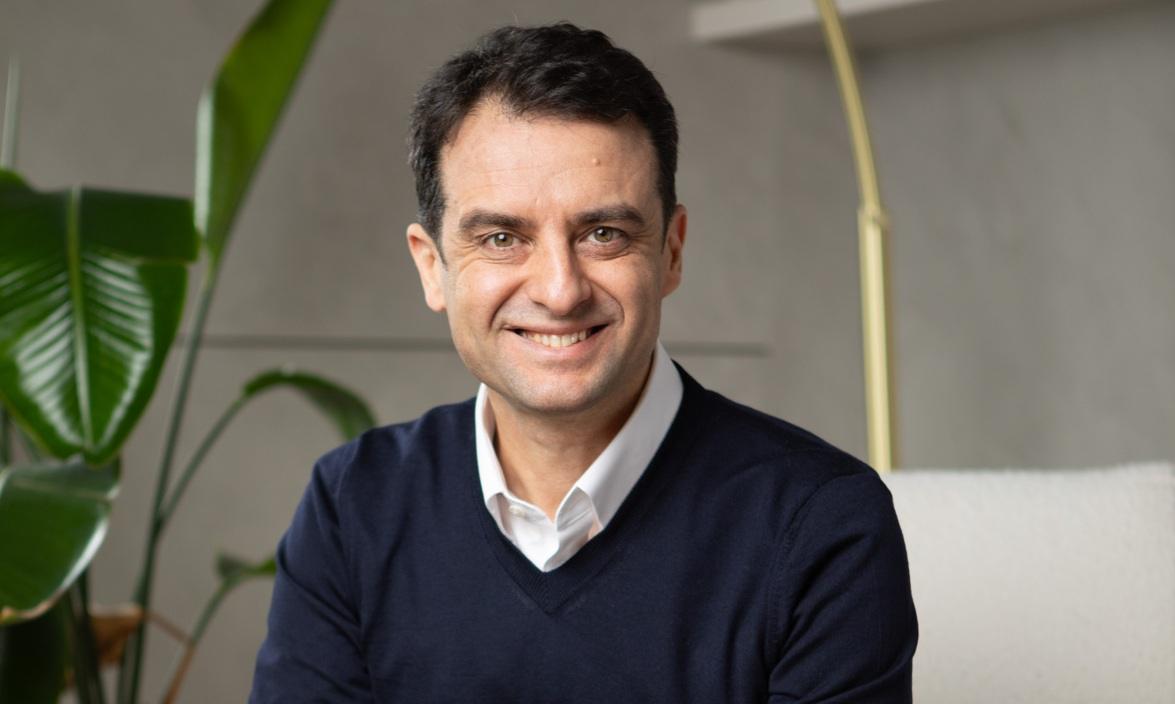
Akin Garzanli, CEO of Beko Europe, emphasizes that the company’s layoffs and factory closures were necessary.
“When Beko Europe was formed in 2024, many European factories were not operating at full capacity and were still producing on outdated platforms. At the same time, they had to compete with appliances—primarily from China—that are not subject to EU regulations. That was our perspective. For this reason, optimisation was necessary. Had Beko not acquired Whirlpool’s operations, other factories might also have been closed. In the long term, we have saved many jobs,” says Akin Garzanli.
Asked whether he is satisfied with the results, he replies:
“We are pleased that we carried out the optimisation so quickly. It is not motivating when changes drag on.”
 Interactive chart
 Will there be new products in Radomsko? And are further layoffs in Poland ruled out?
“Beyond our factories, we also have a shared services centre in Łódź employing 400 people. It will continue to operate and support our competitiveness. As for factories—if the situation does not change, this is the end of layoffs. Unless it worsens,” says Akin Garzanli.
What comes next?
“We still have strong plants in Poland, Italy, and Romania. Now we need strong brands that will sell our products. Today we must create quality without killing price competitiveness, and we must optimise production capacity. We are now able to invest. In Poland, we see opportunities for new products in Radomsko, where we have Beko Europe’s only dishwasher factory. The oven plant in Wrocław is also important. Over four years, starting this year, we will invest EUR 110 million (approx. PLN 470 million) in Poland,” announces Akin Garzanli.
Nearly PLN 470 million over four years is not an eye-catching figure. In 2006, Indesit (later Whirlpool, now Beko Europe) announced the construction of a dishwasher factory in Radomsko with an investment of EUR 80 million. Samsung Electronics Poland Manufacturing invested PLN 673 million to expand its washing machine and refrigerator plant in Wronki. BSH recently invested PLN 600 million in a small domestic appliances factory near Rzeszów. This year, the German company announced another PLN 250 million investment in its Polish plants.
The CEO of Beko Europe argues that Polish factories are highly automated and praises local suppliers. He also values the Polish work ethic.
“We had greater flexibility in operations and cooperation with government and local authorities than, for example, in Italy. We are fortunate to have our Polish factories,” says Akin Garzanli.
He adds that cooperation with, among others, the authorities in Łódź resulted in 98 percent of laid-off employees in the city finding new jobs.
Fireside chat
Turkish firms are set to grow in number
XYZ: How many Turkish companies operate in Poland?
Marek Nowakowski, President of the Polish–Turkish Chamber of Commerce:
If we include sole proprietorships selling kebab, producing ayran, or baklava, there are around 4,000–5,000 such entities. Around 200 Turkish companies operate only in the Ptak Center in Łódź, selling fabrics, zippers, buttons, clothing, and accessories.
Poland and Turkey maintain strong cooperation in the automotive sector, driven by investments from automotive groups producing both components and complete vehicles in both countries. On top of that, there are hundreds of subcontractors. Bilateral trade exceeds EUR 12 billion (approx. PLN 52.3 billion), with Turkey holding a slight surplus, of which EUR 2 billion relates specifically to automotive.
How do Turkish companies operate in Poland?
We are observing discriminatory practices inspired by Brussels. An amendment to the public procurement law may result in Turkish companies being excluded from tenders. This has not only legal but also substantive consequences. Even the President of the Public Procurement Office recently acknowledged that not only ownership criteria but also competence should be taken into account.
In Poland, major projects remain to be delivered, including a pumped-storage power plant worth PLN 5 billion (approx. EUR 1.1 billion). There are no Polish companies with the technological or financial capacity to implement such a project. I understand the desire to create barriers for Chinese firms, which have both capabilities and access to cheap capital due to state support. But large Turkish companies combine capital strength and competence with independence from government control.
Experience shows that while model conditions can be designed on paper, in practice different decisions are required. A case in point is the Kozienice power plant, which is installing a 1,100 MW turbine – one of the largest in Poland. The tender was announced twice, but no bidders came forward. Ultimately, the project was awarded without a tender to the Turkish company Çalık Enerji, which triggered controversy in Poland.
A few years ago, Turkish companies were skeptical about the Polish market, but their approach has changed. It is now attractive: large, stable, wealthy, and offering a gateway into the EU. Turks will therefore increasingly look toward Poland, and we will help them enter the market. They have competencies, capital, a sound business mindset, and experience in delivering public projects through private business – an example being Istanbul Airport, built in four years.
In which sectors could cooperation develop?
The war has forced cooperation in the defense sector. Aselsan, one of Turkey’s largest private defense groups, has opened an office in Warsaw. Both countries are, in a sense, frontline states, as the distance from Turkey to Crimea is just 100 km in a straight line across the sea.
The Chamber has also helped initiate cooperation between universities. Last year, the first rectors’ forum took place at Gazi University in Ankara, attended by several dozen Polish university rectors. This year, in June, the University of Gdańsk will host the event. It is expected to foster cooperation in high technologies. Turkish defense solutions are based 60 percent on domestic technological expertise.
An emerging area is agri-food trade. Turkey offers a strong portfolio of fresh and processed agricultural products that are not overly “chemically enhanced.”
Tourism is another key area. Polish travelers are already among the top visitors to Turkey. Last year, their number reached 1.5 million.

EU regulations set for change
However, the CEO of Beko Europe believes that Brussels itself still has work to do.
“I fully agree that the EU must find a way to maintain innovation. I am not referring to tariffs. They help in the short term. We need measures that deliver long-term effects,” says the CEO of Beko Europe.
From January 1, 2026, household appliance manufacturers in Europe will face higher raw material costs. This is because steel producers will no longer receive free CO₂ emission allowances under the EU Emissions Trading System (ETS1). In addition, the cost of emissions is also applied to raw materials imported into the EU from third countries under the Carbon Border Adjustment Mechanism (CBAM). The mechanism is designed to level the playing field between European steel mills and their Asian competitors.
This means that appliance manufacturers pay an additional CO₂ emission cost either embedded in the price of steel produced within the EU (ETS1) or applied to imports from outside the EU (CBAM). For example, producing one ton of steel generates around two tons of CO₂, and the cost of emission allowances is €140. Although this year manufacturers bear only 2% of the emissions cost, this share will gradually increase, reaching 100% in 2034. According to APPLiA (the European association of household appliance manufacturers), by 2034 this will make home appliances in Europe EUR 4.5–EUR 8 (approx. PLN 20–35) more expensive per unit.
In December 2025, a list of 180 finished products was drawn up that will also be subject to CBAM charges on import into the EU from 2028. In the household appliance category, it includes three product types: refrigerators, clothes dryers, and washing machines. However, ovens, cooktops, dishwashers (where Poland accounts for 60% of EU production), and range hoods were not included. The industry is lobbying to expand the list. Votes in the European Parliament on the matter are scheduled for mid-June.
“Good, because it’s made in Poland”
What strategy has Beko Europe adopted?
“We aim to produce more price-competitive products in Turkey, while premium products are manufactured in Europe,” says Akin Garzanli.
The CEO of Beko Europe also issues a direct appeal to Polish consumers.
“Poles tend to prefer Chinese household appliances, as we believe – mainly due to price. We need to sit down with policymakers and develop ways to promote Made in Europe and Made in Poland products. We have already started working in this direction. It is not impossible that we will cooperate on this with our European competitors,” Garzanli says.
Interactive chart He points to Italy’s Bonus Mobili program, a tax incentive for purchasing furniture and large household appliances with high energy efficiency ratings. It allows taxpayers to deduct 50 percent of eligible expenses (up to EUR 5,000 this year, approx. PLN 22,000). In 2022, the Greek government introduced a subsidy scheme for household appliances covering 30–50 percent of the purchase price, with a budget of EUR 150 million (approx. PLN 655 million).
In Poland, APPLiA discussed a similar program in 2022–2023. The then Minister of Development, Waldemar Buda, expressed support for the industry’s proposed pilot scheme. However, Prime Minister Mateusz Morawiecki ultimately did not approve it. Is it time to revisit the idea?
Expert's perspective
“Let’s return to the idea of an appliance voucher”
European manufacturing is suffering not only from reduced orders, but also from increased imports – mainly from Asia (China and Korea). Beyond competitive pressures, the weak condition of the industry is also driven by structural issues, including excessive regulation and limited access to low-cost raw materials. The lack of a focused, export-oriented EU policy is also having a negative impact. Entire production capacities have been geared toward meeting internal demand.
According to our expert analysis, the “pulled-forward” demand effect from pandemic-era purchasing should now be fading, which creates room for a potential rebound in consumption.
Beyond our sector, we are also seeing shifts in product design and production environments driven by the new reality shaped by artificial intelligence, although in this area Far Eastern competition is particularly strong.
Factory closures are painful and result from pressure in the economic environment. In the private sector, however, hard market rules apply, and short-term leniency may lead to significantly higher costs in the future. This is why production capacity relocation is necessary. I still remain hopeful that, despite the closure of five plants in our country last year, Poland can defend its position as the leading manufacturing hub in the European Union. Our workforce and work culture are highly valued, translating into high quality.
I also see opportunities in further automation and robotization of leading plants, as well as in the ecosystem of key suppliers. A degree of cautious optimism is also justified by a shift in mindset among EU policymakers and a stronger focus on supporting production and investment within the Union.
We are also continuing to promote our idea of a voucher scheme for energy-efficient household appliances, which would benefit consumers, manufacturers, and the climate.


Key Takeaways
- Manufacturers producing in Europe face higher raw material costs than their Asian competitors due to CO₂ emissions charges. Although these costs are embedded in raw material prices, including steel, they do not apply to finished goods imported from outside the EU. From 2028, an additional charge will apply to 180 products, including three categories of household appliances: refrigerators, tumble dryers, and washing machines. Work is underway to expand the list to include other products. Industry representatives argue that, alongside protection from Asian competition, appliance purchase vouchers are a viable policy tool. Such schemes have already been introduced in Italy and Greece. In Poland, the APPLiA industry association held discussions with government representatives in 2022–2023 about introducing a similar program, but it was ultimately not implemented.
- In April 2024, Beko Europe was established, with 75% owned by the Turkish conglomerate Arçelik and 25% by Whirlpool. Production capacity reached 24 million household appliances per year, making it the number one player in Europe. A few months later, Beko Europe announced a European-wide optimization plan. As a result, it closed cooking range and dryer plants in Łódź, as well as a refrigerator factory in Wrocław (1,800 jobs), a freezer plant in Siena and a washing machine and dryer facility in the Marche region, and cut employment at a refrigerator plant in Varese (nearly 2,000 jobs in total). It also shut down a dryer factory in Yate near Bristol (140 jobs).
- Today, Beko Europe employs 14,000 people, operates five R&D centers, and manages 16 brands. In Găești, Romania, the company produces refrigerators, including under the well-known local brand Arctic, as well as washing machines. In Radomsko, it manufactures dishwashers and washing machines. It also operates a washing machine plant in Poprad, Slovakia, a facility in Ulmi, Romania (washing machines), and plants in the Italian towns of Cassinetta, Comunanza, and Melano (cooking ranges, hobs, and microwaves). The only dishwasher factory within Beko Europe, located in Radomsko, may be assigned new product lines. Akin Garzanli, CEO of Beko Europe, stresses that the company’s layoffs and factory closures were necessary. He announces that over four years, starting in 2026, the company will invest EUR 110 million (approx. PLN 470 milion) in Poland.