

This article is a part of Poland Unpacked. Weekly intelligence for decision-makers
7R is beginning construction of one of the largest urban logistics projects in Europe. But Nowa Huta is only part of a broader story. The company, which has completed more than 100 projects in Poland with a total value of EUR 1.4 billion, is increasingly positioning itself as a regional player.
The warehouse market in Poland is entering a new phase of development in which scale alone is no longer the key differentiator. Diversification, presence across multiple markets, and the ability to manage risk in an unstable environment are becoming increasingly important. Against this backdrop, 7R’s activities illustrate the direction in which the entire industry is moving.
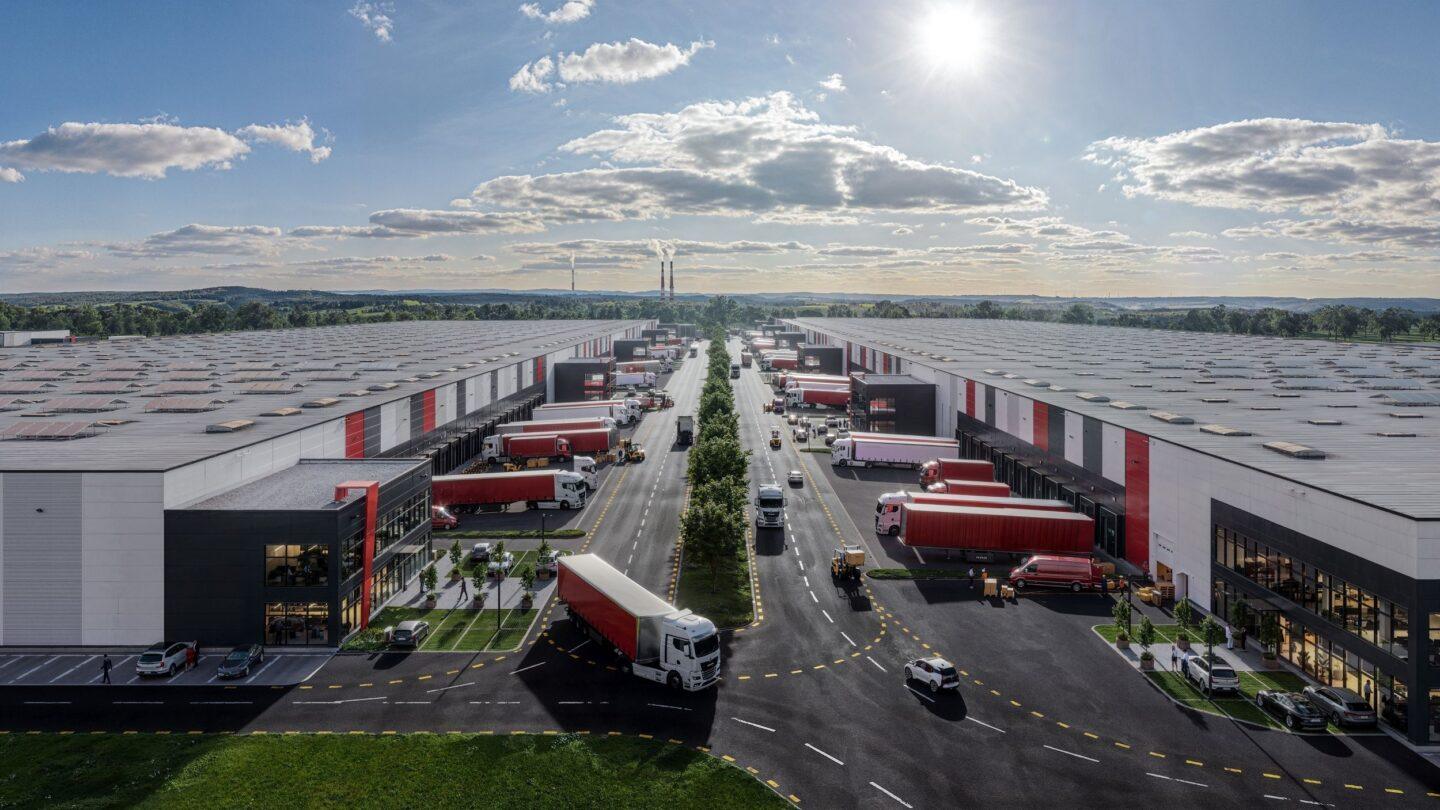
The starting point is the company’s new investment in Kraków. On May 6, a ceremonial groundbreaking will take place for 7R Hub Nowa Huta. The project is set to become one of the largest urban logistics complexes in Europe.
Nowa Huta as a new address for logistics and industry
7R Hub Nowa Huta is being developed as part of the “Nowa Huta of the Future” program, on the site of the Ruszcza Logistics and Industrial Center. Once completed, the complex will offer approximately 230,000 sq. m. of technical and production space, significantly reshaping the scale of the warehouse market in the Małopolska region, where total supply currently stands at around 1.2 million sq. m.
The project is designed to combine logistics, production, and technology functions. Its location – near national road No. 79 and the planned S7 high-speed road junction - will provide access both to Kraków’s city center and to key transport corridors.
“Our investment in Nowa Huta is an important step in delivering modern industrial and logistics infrastructure. By combining excellent transport connectivity with advanced technological solutions, we are creating an efficient project for our tenants and the wider community,” says Magdalena Uler-Kłeczek, Director for Investments and Business Development and Management Board Member at 7R.
The significance of the investment goes beyond warehouse space alone. The project is expected to generate more than 2,000 jobs and deliver approximately PLN 12 million (about EUR 2.8 million) in annual tax revenues for the city from property tax alone. Additional spillover effects are expected in industrial services and sectors supporting business operations.
Scale as the foundation of strategy
7R is currently one of Poland’s largest warehouse developers. The company has been active on the market for more than 15 years, has completed over 100 projects with a combined value exceeding EUR 1.4 billion, and has delivered more than 2 million sq. m. of space.
Today’s market participants react faster and more consciously, but that does not mean further repercussions will not follow.
The company’s portfolio currently includes more than 850,000 sq. m. of space under management and approximately 2.5 million sq. m. of projects in the pipeline. This scale allows 7R to run parallel investments across different market segments and financing models.
“This market is clearly more mature than it was 5, 10, or 15 years ago, which is only natural. Tenants, investors, banks, and all other participants have simply learned the rules of the game. We also see that, despite the uncertain environment, the first signals of improving sentiment are emerging,” says Andrzej Wroński, CEO of 7R.
The changing nature of the market translates into greater selectivity among both investors and tenants. Decisions are now made more cautiously, and projects must be better aligned with real demand and evolving supply chains.
A maturing market, but risk remains
The macroeconomic and geopolitical environment is one of the key factors shaping the warehouse sector. In recent years, the industry has had to respond to the pandemic, the war in Ukraine, changes in tariffs, and tensions in the Middle East.
“Let’s not forget that the post-pandemic ‘Eldorado’ effect only came after a period of turbulence. Today, market participants react faster and more consciously, but that does not mean further repercussions will not follow,” emphasizes Andrzej Wroński.
At the same time, the experience of recent years has changed how investment decisions are made. Companies are avoiding extreme reactions and are trying to operate in a more balanced way.
“One of the most important lessons is that moving from one extreme to another does not deliver good results. Caution is necessary, but a complete withdrawal from the market is also not a solution,” notes the CEO of 7R.
Expansion as a natural stage of growth
For 7R, the next step in its development is international expansion. The company is building its presence in the Czech Republic and, since 2024, has also been active in the German market.
“A developer does not exit the expansion phase. We are turning toward Czechia and developing new operations in Germany,” says Andrzej Wroński.
Entry into the German market was achieved through the acquisition of a project that combines an existing asset with further development potential. The company is building an operational structure there that is intended to ultimately mirror its model in Poland.
“In the coming years, we aim to develop around 800,000 sq. m. to hold on our own book, rather than only for sale. This is an important element of our strategy,” adds the CEO of 7R.
Poland as a base, Europe as the direction
The expansion of Polish warehouse companies fits into a broader market trend. Poland has become a natural starting point for many developers and logistics operators.
“Many companies built their operational strength precisely in Poland, and only after reaching sufficient scale decided to enter markets such as Germany or Czechia,” says Monika Rykowska, Head of Market Research and Analysis at AXI IMMO.
“Examples include players such as Panattoni, MLP, or 7R – companies that consolidated their position in Poland and then began expanding across other European countries. This development model is highly characteristic of our market,” she adds.
The international expansion of operations is, of course, driven by the current needs of individual companies. However, the sector can be further divided into additional groups.
“The second important group consists of logistics operators. In their case, international expansion often follows directly from securing contracts – if a company wins a client in Germany or the Czech Republic, the natural next step is to lease warehouse space in those markets,” emphasizes Monika Rykowska.
Such players include both international firms and those with Polish roots, such as TVM Transport and Seifert Logistics, as well as operators like Fiege and DSV, which operate simultaneously in Poland and Germany.
“The third category includes large companies from the consumer and retail sectors that expand by building efficient distribution networks. Here I refer to entities such as LPP, CCC, or Allegro – for them, warehouse presence in the region is part of the competition for market share,” the AXI IMMO analyst explains.
A similar mechanism can be seen in the FMCG sector. Companies such as Maspex and Mokate are expanding into neighboring markets, leveraging competitive production costs and efficient logistics.
“The next group includes industrial sectors, including chemicals and broadly defined automotive. In the case of Polish companies, we often talk not about production itself but about distribution – parts, subassemblies, or components – which requires a warehouse presence in several countries simultaneously,” adds Monika Rykowska.
Czechia and Germany: a similar product, different conditions
Although the warehouse product in Europe is broadly similar, the conditions for executing investments vary significantly. Poland remains one of the easiest markets in terms of project delivery.
“The process of obtaining construction permits in Poland is still relatively straightforward, and we also benefit from a well-developed land bank,” says Jan Kamoji-Czapiński, Director at Colliers and an expert in the warehouse and logistics market.
The situation in Western markets is different. Administrative procedures are more complex, and investment preparation times are significantly longer.
“In Germany or the Czech Republic, the process of acquiring land and obtaining planning decisions alone can take several years, which significantly increases investment risk,” notes Jan Kamoji-Czapiński.
At the same time, differences also concern market structure and the level of competition.
“The Czech market is clearly smaller and less dynamic than Poland’s, which limits investment opportunities. Germany, on the other hand, is the largest warehouse market in Europe, but also one of the most demanding,” says Andrzej Wroński.
Supply, demand, and market correction abroad
Markets in Western and Central Europe also differ in terms of the relationship between supply and demand. Poland still offers relatively low rents and high space availability.
“In many locations in Poland, effective rents fall below EUR 3 per sq. m., while in the Czech Republic or Germany they reach as much as EUR 6–7,” notes Jan Kamoji-Czapiński.
The Czech example illustrates how quickly market conditions can change.
“Not long ago, low vacancy rates and high rents attracted developers, but today we are seeing rising supply and an increasing amount of unleased space,” adds the Colliers expert.
This demonstrates that investment decisions now require a broader perspective and consideration of future trends.
“The key is to anticipate where real demand will emerge, rather than simply reacting to current indicators,” emphasizes Jan Kamoji-Czapiński.
 Interactive chart
 Efficiency over simple parameters
Rising operating costs mean tenants are increasingly less likely to view warehouses solely through the lens of rent levels or location. What is becoming critical is a holistic approach to business efficiency.
“Energy is one of the key challenges, but we look at it more broadly – at warehouse efficiency as a space where tenants build their competitive advantage. For years, we have been delivering energy-efficient and operationally efficient solutions,” says Andrzej Wroński, CEO of 7R.
This shift in mindset means that individual technical parameters are losing importance. What matters more is how all elements of an investment work together and affect the tenant’s operations.
“Efficiency is not only about energy. It is also about transport costs, the alignment of location with the supply chain, access to labor, and even wellbeing factors. Today, you need to offer a comprehensive product, not isolated solutions,” emphasizes Andrzej Wroński.
In practice, this requires designing warehouses in a more flexible way, with the ability to adapt to different business models and client expectations.
“It is always a trade-off between cost and what the tenant receives in return. You need a product that can be tailored to very different needs and levels of corporate expectations,” adds the CEO of 7R.
Stability on construction sites, uncertainty in the background
After a period of rapid growth, the construction sector has entered a phase of greater stability. Lower investment volumes have translated into higher availability of contractors and more competitive project delivery conditions.
“On our side, the situation is stable. Smaller volumes over the past two to three years have made resource management easier, while on the contractor side we see stronger competition and better opportunities to secure projects,” says Andrzej Wroński, CEO of 7R.
At the same time, new risk factors are emerging that could affect investment costs in the medium term.
“Pressure may come not from labor availability, but from pricing – driven by energy, fuel, or raw material costs. In addition, large infrastructure projects such as CPK or the nuclear power plant will compete for contractors,” the CEO of 7R points out.
Efficiency is not only about energy. It also includes transport costs, alignment of location with the supply chain, access to labor, and even wellbeing considerations.
The tenant side is also changing, particularly in the context of the labor market. Workforce availability is no longer a clear competitive advantage for Poland.
“Labor is more expensive today and has more choice than before. Still, we continue to have advantages as a logistics hub – no longer just regional, but increasingly European,” emphasizes Andrzej Wroński.
Stable rules instead of intervention
In such an environment, regulatory predictability becomes particularly important. For investors and developers, a stable legal framework is essential to enable long-term project planning.
“Honestly, the only thing I would expect from policymakers is that they neither help nor hinder. Stability and predictability of rules are what matter most in business,” concludes Andrzej Wroński.


Key Takeaways
- Competitive advantage in the warehouse market is shifting away from purely technical and cost-based parameters toward comprehensive efficiency – covering energy, logistics, labor availability, and design flexibility – which is forcing a change in how projects are designed and delivered.
- The warehouse market in Poland has entered a mature phase in which scale alone is no longer sufficient. What matters now is project selectivity, operational efficiency, and the ability to manage risk in a volatile environment.
- International expansion among Polish developers, including 7R, is no longer an option but a natural stage of development. However, markets such as Czechia and Germany require a fundamentally different approach due to limited land availability, longer administrative processes, and higher investment risk.