

This article is a part of Poland Unpacked. Weekly intelligence for decision-makers
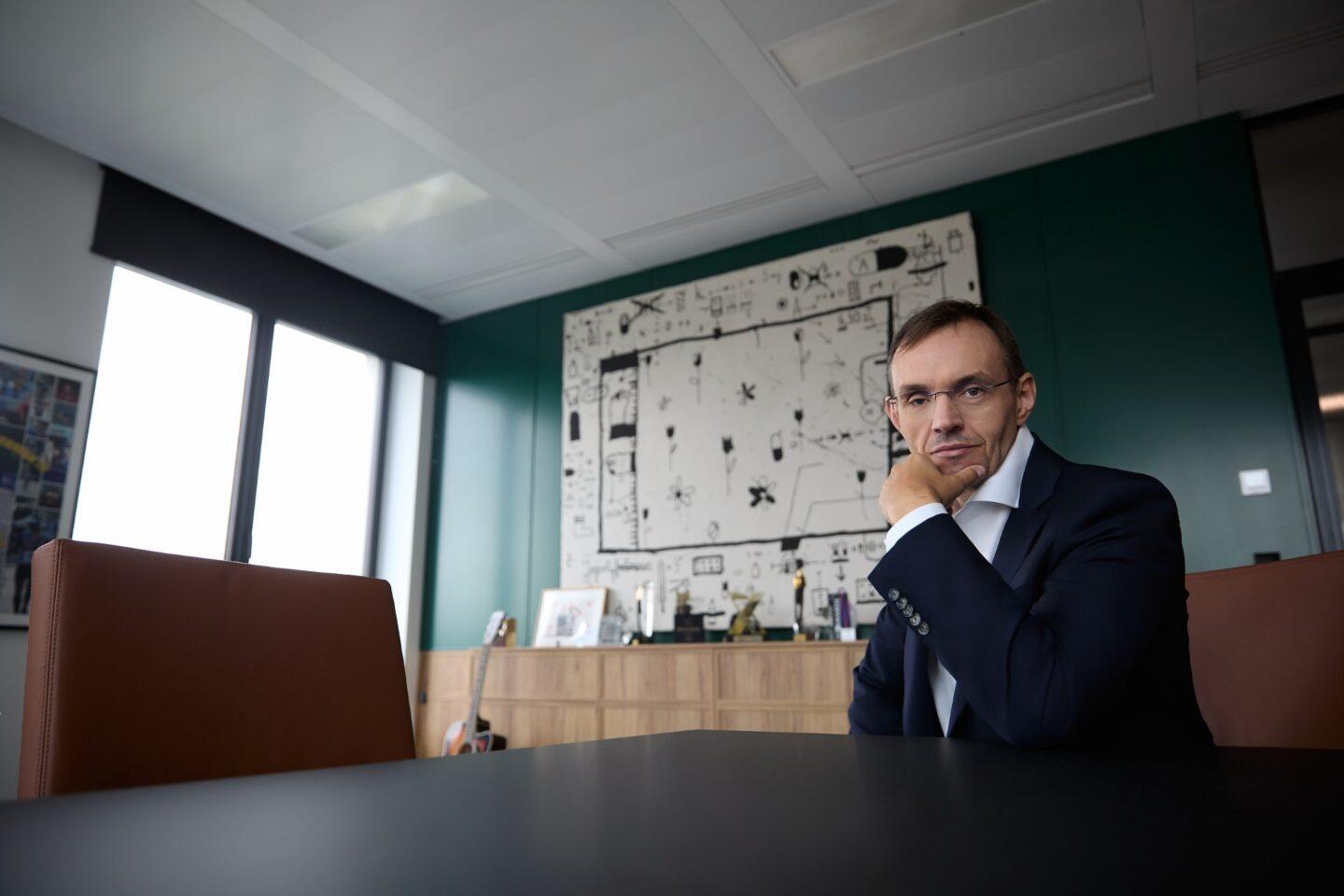
CEO Piotr Krupa reveals an acquisition strategy designed to avoid spending a decade building everything from scratch. The expansion will be driven by AI systems that automate processes and by a new corporate structure that dramatically reduces the cost of raising billions in capital.
Piotr Sobolewski, XYZ: PZU and Zen.com are acquiring institutions in Ukraine, PKO BP is opening a branch in Lithuania, BLIK is entering Romania, and Autopay is launching hubs across the Atlantic. These are just a few examples of the international expansion undertaken by Polish financial and payments companies in recent months. Kruk has been operating abroad for years. What matters most when entering new markets?
Piotr Krupa, CEO and co-founder of Kruk: Indeed, looking at the structure of our revenues, Kruk is now more of an international company than a Polish one. In terms of both investments and repayments collected from indebted individuals, 60% of our business already comes from outside Poland. We have been present in Romania for 20 years, and in Spain and Italy for more than a decade. We also entered France two and a half years ago.
Read also: BLIK goes its own way in Europe
When expanding abroad, the business model is what matters most. A key question is whether a company focuses on exporting services or, for example, on building local manufacturing facilities in each market. We belong to the former category. We purchase non-performing consumer debt from large financial institutions. It is a fairly mature market: every major bank seeks investors to whom it can transfer non-performing loans (NPLs), allowing it to focus on its core business rather than debt recovery.
To operate successfully in this sector, however, you need to have a local presence. That is why, in each of these markets – Romania, Spain, and Italy – we employ more than 500 people.
Who's who
Piotr Krupa - CEO, Founder and largest individual shareholder
In 1998, he and a fellow university student founded Kruk, a legal publishing company. After several years, however, he identified a gap in the market and established a debt-management business.
He has served continuously as CEO of Kruk since 2003. During that time, he led the company’s international expansion and, in 2011, took it public on the Warsaw Stock Exchange.
He controls a 8.7% stake in Kruk, making him the company’s largest individual shareholder. Only two institutional investors hold larger stakes: NN Open Pension Fund (OFE) and Allianz Polska Open Pension Fund (OFE).
When expanding abroad, it pays to assume the worst-case scenario
Does this kind of expansion require substantial investment?
Based on my experience, companies planning international expansion should double their financial projections, timelines and expected costs. In other words, if you expect to reach break-even in a given market after three years, assume it will take six. If that pessimistic scenario still makes business sense and the company can afford to execute it, then it is worth pursuing.
That said, companies preparing to expand internationally need to understand that they are entering a very high-risk environment, particularly in Western Europe.
Have you experienced that firsthand?
Yes, we came face-to-face with that reality in Spain and Italy. We brought with us experience from Poland, where we assumed we could accomplish certain things within eight to twelve months. In the new markets, everything took considerably longer.
Part of the reason was that we were newcomers. Nobody knew us, and although the culture was broadly similar, it was still different from what we were used to in Poland.
Does a company need to be a market leader in Poland before considering international expansion?
A company certainly needs to be strong in its home market. If it has not yet established a solid position in Poland, it may be wise to postpone expansion for a while.
On the other hand, international growth also requires a great deal of courage and ambition. At some point, you simply have to take the plunge.
How do you know when the timing is right?
As for timing, the best moment is usually when your business is already profitable. The challenge is that success can create a temptation to remain in that comfortable position.
Opportunities arise in every industry – and sometimes we have to create those opportunities ourselves.
It is much easier to launch a business abroad when you have a proven and profitable business model, the right people in place, and secure financing.
Kruk focuses on large markets and high-volume portfolios
At a recent press conference, you mentioned that Kruk is considering expansion into the United States and the United Kingdom. What determines the company’s choice of new markets today?
We are interested only in large, developed consumer markets – countries with populations of more than 20 million. There is little chance that we would enter Portugal or Greece, even though those countries historically had high levels of non-performing loans. For the same reason, we decided to withdraw from Czechia and Slovakia.
We focus on large markets because our main competitive advantage lies in our ability to execute high-volume projects involving portfolios that contain hundreds of thousands of individual borrower cases. We are better equipped than our competitors to manage projects of that scale.
Do such markets make commercial success easier to achieve?
They provide operational leverage. We do not want to spend significant time and resources building local operations only to feed them with small portfolios.
In smaller markets, you reach a ceiling very quickly. We operated in Czechia and Slovakia for 15 years.
Czechia and Slovakia will be closed within a few months
Did you suffer a setback, or did you simply change priorities?
The latter. We entered those countries by acquiring a portfolio and a team from a bank that was exiting those markets. We were generating profits of several million PLN annually, but we concluded that other markets offered significantly greater potential. As a result, those smaller markets also absorbed a disproportionate amount of attention from the entire Kruk Group.
By contrast, in Italy alone, in 2025 we generated close to PLN 300 million (approximately EUR 70 million) in EBITDA [earnings before interest, taxes, depreciation and amortization – ed.], and we are still far from reaching a ceiling there.
When will you fully exit those two countries?
There is still a small team in place, and a legal entity in which we have begun the liquidation process. We expect to close it within the next few months.
Czechia and Slovakia aside, there was also an attempt to enter a much larger market – Germany.
A decade ago, when we entered Spain, we also planted a flag in Germany. At the time, we made a kind of bet, assuming that major German banks would begin selling receivables on a much larger scale than before.
In Germany, banks typically work with a panel of five or six firms to which they outsource long-term portfolio servicing. However, there is no transfer of ownership, as is the case in Poland.
We expected EU regulations to change, opening up new business opportunities. We wanted to be present when that happened. After three to four years, however, no breakthrough materialized. We were unable to gain traction because the market remained highly local. Today, we have no activity there.
Kruk plans to expand abroad by acquiring portfolios and investing in experienced local firms
Let’s turn to your plans. Are the United States and the United Kingdom an 18-month horizon?
We do not have a fixed timeline for entry, but it is a reasonable outlook. We also do not need to enter both markets at the same time, although we are currently evaluating both.
In the United Kingdom, the expansion could take three forms. The first is acquiring a debt portfolio worth GBP 10–20 million from financial institutions and assigning its servicing to a local company. This is a common model used by hedge funds.
The second option is to buy a portfolio and build a local start-up on the ground – essentially a team that, using our operating system, would manage a specific debt portfolio. This is how we entered Spain and Italy, although it required both capital and time.
The third option is to acquire a portfolio while simultaneously investing in a debt collection company that has been active in the market for years. We can imagine such companies generating GBP 10–20 million in profit and employing around 300 people.
Which option is most likely?
The first and the third. We are considering acquiring a portfolio, assigning it to two or three firms for servicing, and – if cooperation goes well – offering them an acquisition of 60–80% of their shares. I do not want to spend another 10 years building yet another start-up.
Why would such a company agree to that?
If the owners are also running the company, then for them and their teams it would be an opportunity to continue developing within one of the largest debt collection groups in the world. Of course, it would also give the owners a chance to partially monetize the value they have already built.
“The true measure of successful expansion should be net profit”
What should be the measure of success in international expansion? The number of countries where you have planted a flag, improved profitability to a certain level, or the share of foreign revenues in the group’s total results?
It is certainly not about the number of countries, because I know companies that operate in 20 markets, make money in five, and in all the others simply waste time and resources.
The true measure of success is net profit. It is worth noting that today we invest PLN 2–3 billion annually in debt portfolios, and by entering just these two additional countries, we could double that figure. This means that in five years Kruk could become a company twice as large as it is today. If that happens, Poland would account for just 10–15% of our overall business.
We started with expansion, but Kruk is also dedicating significant attention to restructuring the group so as to separate its operational business from its investment activity. This would be achieved, among other things, through the creation of an alternative investment company (ASI).
What is driving this move?
We plan to invest nearly PLN 15 billion in debt portfolios within the next five years—roughly the same amount we invested over the previous 16 years combined. There are very few Polish companies with plans of this scale.
However, I prefer to think about strategy in a longer-term horizon, such as ten years. In an optimistic scenario, if our plans to enter the United Kingdom and the United States are successful, we could invest as much as PLN 40 billion over a decade.
Kruk is working on separating its investment and operational activities
Even more than many investment funds.
Given the scale of its investments, it has become clear that these two areas must be separated to avoid conflicts of interest and excessive interdependence. Today, Kruk functions both as an investor and as a headquarters coordinating other countries, but also as a debt collector engaging directly with individuals to recover repayments. This separation would benefit Kruk’s shareholders and could increase their returns.
A key element of this plan is also the potential to reduce the cost of raising debt. As an alternative investment company (ASI), Kruk would gain access to cheaper financing. Given the scenario in which the company plans to raise several billion złotys from the market for investments, this could translate into savings of millions of złotys.
In summary, the ASI would exclusively manage the investment portfolio and would not engage in operational activities. Those would remain with the operating companies owned by the ASI or with external firms entrusted, for example, with portfolio servicing.
What is the biggest challenge in this process?
The main challenge is compliance with legal requirements and completing all formal procedures, including consultations with the Polish Financial Supervision Authority (KNF) and the National Revenue Administration (KAS). This involves transforming the structure of a public company into an investment model, also in the form of a joint-stock company. The entire process will take up to a year and a half.
The second challenge is changing the operating model within the organization. The ASI will sit at the top of the group, and the company must be prepared for this transformation.
Kruk plans minority stakes in startups. It has PLN 200 million allocated (EUR 46–47 million)
Does the planned ASI structure also open the door to investing in technology startups?
Absolutely. We have told our shareholders that we incur costs of up to PLN 1.5 billion (EUR 345 million) annually. We want to start investing in startups, but only in those where we see value from the perspective of a customer.
An example? Twenty years ago, when we began working with Przelewy24 (online payment services – ed.) or InPost, we assessed that these were companies with strong potential. Today, I can imagine investing in startups specializing in data mining, for instance. Our business is fundamentally about generating value from customer data. We must be able to clearly estimate what cash flows will look like over five, seven, or even more years.
Where would you look for such companies – Poland, Europe, or globally?
We best understand the markets where we already operate. At the same time, we remain open to different business opportunities.
You have announced investments totaling PLN 200 million (EUR 46–47m). How large would these equity stakes be?
They would be mostly minority stakes. In Poland, there are many private equity teams, and we do not want to compete with them. Instead, we aim to act as an additional investor in situations where private equity is looking for a partner that understands the market and can further support the development of a given company.
Webcon will change how Kruk operates
In March, Kruk announced a digital transformation using a solution developed by the Polish company Webcon. This is somewhat unusual at a time when many financial institutions rely on global – typically American – systems and services. Is this a matter of local patriotism or pragmatism?
Indeed, the strongest competitor to Webcon at the final stage was a solution from a global player based in Boston. However, it was the Polish company that submitted the best offer. Moreover, I have also been given opportunities in business myself, so we hope Webcon will make the most of this chance.
With their technology, we want to build an AI-driven, data-based workflow. The idea is that when we acquire, for example, 100,000 debt cases from a bank, we load them into the system, press “enter,” and a communication process with customers begins automatically. We indicate where and how much they should pay, as well as the next steps in case of non-payment.
Is this currently done by people?
Yes. Ultimately, we want people to only supervise the process.
What kind of cost savings does this bring?
We estimate around 20% of our current expenses. Today, most of the time is spent waiting for reactions from one side or the other. Either we are trying to contact a client, or we are waiting for information on a settlement. We also wait for court rulings.
Sometimes the court requests clarification, then we call the client, inform them about the judgment, and offer installment payments. Some agree, others do not. Those who refuse may face enforcement proceedings involving a bailiff.
By changing this way of working, we will be able to process cases significantly faster.
“We have tripled the business and want to double it again within the next 4–5 years”
How is technology further changing your business?
It will have an impact on the solutions used in the self-service channel. Today, when we inform a client that their debt has been acquired by us, we indicate that by logging into their e-Kruk account they can access all details and arrange installment payments.
Around 10% of clients currently use self-service. We want to increase that share to 50%.
At present, many bank customers use mobile apps and are therefore already accustomed to fully digital, remote servicing. We now want to strengthen targeted communication to clients, so that we address people with specific profiles in different ways and use arguments that are more likely to convince them.
What will this achieve?
I believe this will make us the number one technology player in the debt management industry globally. All our competitors are also working on technology, but we have been doing so for a longer time – effectively building a second system in parallel.
Competitors have faced financing constraints, and others have had to significantly slow down their operations. Meanwhile, Kruk has been generating around PLN 1 billion (EUR 230 million) in annual profit for the past three years.
We have tripled the business, and my ambition is to double it again over the next 4–5 years.


Key Takeaways
- International profitability requires scale and pessimistic budgeting. According to Piotr Krupa, CEO of Kruk, success in international expansion depends on selecting mass-scale markets. These are countries with populations of more than 20 million consumers, which provide operational leverage. When planning budgets and break-even thresholds, a realistic approach is essential: assume timelines are twice as long and costs twice as high as in the home market.
- The ASI model optimizes the cost of billion-scale investments. The alternative investment company (ASI) structure separates investment activity from operational activity. This eliminates conflicts of interest within the group. In addition, placing the entity under the supervision of the Polish Financial Supervision Authority (KNF) enhances credibility with creditors. In practical terms, this reduces the cost of raising debt capital.
- Automation of debt-collection processes is key to margin expansion. Manual handling of large debt portfolios is a thing of the past. Transitioning to AI-driven, data-based workflow systems could deliver up to 20% in operating cost savings. Another key objective is to shift 50% of the customer base to digital self-service channels, i.e. e-collection. This significantly shortens case-processing times and reduces costs.