Poland Unpacked week 25 (8 - 14 June 2026)
Welcome to this week’s edition of our Poland Unpacked, where we deliver key insights and trends shaping the economic, corporate and political landscape. Catch the most important insights from Poland in this week’s briefing.
This article is a part of Poland Unpacked. Weekly intelligence for decision-makers
Piotr Krupa is a Polish entrepreneur who founded Kruk in 1998 as a publisher of legal books. A few years later, however, he spotted greater potential in debt collection, and so the largest debt collection company in Poland was born. Today, 60% of its cash inflows come from outside Poland. And this is only the beginning, as the company is now setting out to conquer the largest global economies. In an interview with XYZ, Krupa reveals a growth strategy based on acquisitions and the use of AI. He boldly states: “we will become the world’s number one technology company.” Here is how he plans to do it.
Europe is in need of reindustrialization, and Brussels is seeking to strengthen industry and generously support critical projects in clean tech, batteries, biotechnology, and deep tech. Unfortunately, Polish STEP programs are significantly more stringent than their EU counterparts, which may cause us to lose investments from companies outside the EU. Investors may instead turn to Germany and Italy. Here's the story.
PKO BP, Poland’s largest bank, controlled by the State Treasury, is running an experiment unlike anything the Polish market has seen before. Today, it is launching a new gamified application. Users can earn rewards from a pool of PLN 3.54 million (approximately EUR 0.81 million) for daily activities and scanning receipts. The goal is half a million active users by the end of this year, alongside a low-friction acquisition channel for new banking customers. Here are the details of the project.
Poland may get its own wind turbine. The National Center for Energy Analysis is working on a Polish-designed 5 MW wind turbine. The initiative aims to strengthen domestic industry, enhance energy security, and create an alternative to foreign technologies. Talks with potential investors are ongoing. Read more in our article here.
Last week, the FIFA World Cup kicked off. On that occasion, we asked ourselves a simple question: what if economies, rather than national teams, were competing in a World Cup? To find out, we ran a simulation.
We constructed a ranking of 109 countries based on 12 economic and social indicators – ranging from GDP per capita and export complexity, to institutional quality, unemployment levels, and citizens’ life satisfaction. On this basis, we selected the 48 strongest economies and drew them into 12 groups, mirroring the format of a football World Cup. We then played out the entire tournament, introducing a degree of randomness into the results.
Even in the group stage, one of the world’s strongest economies was knocked out. The Netherlands found itself in a true “group of death” – alongside Sweden, India, and the United Arab Emirates – and failed to make it through. In the knockout rounds, the Czech Republic eliminated Spain. Poland, in turn, knocked out a country against which it would have had little chance in a real football World Cup. Several matches had to be decided on penalties. Who won, who emerged as the dark horse? And finally, how far did the Polish economy advance in the tournament? Click here for the answers.
Last week also saw the release of data on revenue from the solidarity levy. This tax is paid by individuals earning over PLN 1 million (EUR 230,000). In 2025, it amounted to PLN 1.94 billion (EUR 450 million) compared with PLN 2.14 billion (EUR 495 million) a year earlier – a decline of 10 percent. Relative to 2022, when revenues peaked, the drop is even steeper at 30 percent.
Why, in a context where the economy – and therefore citizens’ incomes – is growing, are tax revenues falling? This is the result of changes in the Polish tax system linked to the so-called “Polish Deal.” We examine these effects and explain why they can be described as a form of “silent redistribution.” Grab our full analysis here.
President Karol Nawrocki has set a new record. In his first 10 months in office, he has vetoed 36 bills. The previous record was held by President Aleksander Kwaśniewski, who used his veto power 35 times. He reached that figure over a full 10-year presidency (1995-2005), not 10 months. The veto has become one of President Nawrocki’s preferred tools, used to block legislation passed by Prime Minister Donald Tusk’s government.
This time, the president vetoed three bills, including legislation regulating the crypto-asset market. It was the government’s third attempt to regulate the sector, and the finance minister has already announced a fourth draft. On July 1, the European Union’s transitional period comes to an end. If no national rules are in place by then, companies in the sector will seek licenses abroad.
The Polish Air Force has taken delivery of its first F-35 fighter jets. By the end of the year, Poland will have 14 such aircraft, rising to 32 by 2029.
Poland has already spent around PLN 120bn (approx. EUR 27.6bn) under the SAFE program, with PLN 60bn (approx. EUR 13.8bn) still to be allocated. The program’s second phase is expected to create opportunities for Polish shipyards. According to Deputy State Assets Minister Konrad Gołota, negotiations are under way for an order for the rescue ship Ratownik. Here's what we know about potential purchases.
Prime Minister Donald Tusk has come to dominate the liberal segment of the political scene, weakening the opposition by adopting its rhetoric on key cultural and ideological issues, according to Łukasz Pawłowski, head of the Public Opinion Research Group. He argues that Krzysztof Bosak, one of the leaders of the far-right Confederation party, is gaining strength on the right. More on the key political players’ potential one year before the election in our interview here.
A business lobby group has drafted a bill aimed at curbing the abuse of pre-trial detention in economic cases. The authors point to systemic cases of prolonged detention of entrepreneurs who were later not convicted. XYZ is the first to report on this here.
The National Council of the Judiciary has begun operating in a new composition. Its chair is Judge Dariusz Zawistowski, who received the highest number of votes in preliminary elections within the judicial community.
The Sejm has elected another judge to the Constitutional Tribunal: Professor Sławomir Patyra. President Karol Nawrocki has not yet invited him to take the oath of office. He has also withheld invitations from three of the five judges elected by the Sejm in March. He may take a similar approach with Professor Patyra, given his past cooperation with Civic Coalition politicians for whom he prepared legal opinions.
A decision from President Nawrocki is expected in the coming week on whether to strip Ukrainian President Volodymyr Zelensky of the Order of the White Eagle. The chapter of the order met last week, but its decision has not been disclosed. The president did not immediately act on the matter.
The move follows President Zelensky’s decision to name a military unit after the Ukrainian Insurgent Army, whose soldiers were responsible for the massacre of Poles during World War II. XYZ examines Polish–Ukrainian relations, which are no longer as warm as they were in the aftermath of Russia’s invasion of Ukraine, when Poles provided large-scale assistance to Ukrainians. We looked into this matter here.
ICEYE has joined the elite club of European decacorns. The Finnish-Polish satellite reconnaissance company raised EUR 450m in a Series F funding round, reaching a valuation exceeding EUR 10bn. The total value of the round, including secondary share sales by existing shareholders, surpassed EUR 1bn.
Polish investors who backed the company in its earlier stages of development are in no hurry to lock in gains. One of them estimates that ICEYE’s valuation could rise to as much as EUR 30bn in the future.
Behind the company’s success lies a broader story: the growing importance of deep tech and space tech, as well as the challenges of financing innovative firms in Poland.
Here we looked at what plans Polish investors have for their stakes and what the ICEYE case reveals about the strengths and weaknesses of the domestic innovation ecosystem.
“Mediocrity is not enough here,” Jakub Dwernicki, CEO, founder and near-largest shareholder of cyber_Folks, said in a recent interview with XYZ. The company provides a suite of digital tools needed to launch and run online sales – from hosting and integrations to proprietary software. Its ambition to become a European leader in e-commerce technology may be aided by a record acquisition. The largest transaction in the group’s history so far is worth more than PLN 500m. The company, valued on the Warsaw Stock Exchange (GPW) at around PLN 3bn, has already secured the financing needed to execute the plan.
On June 8, cyber_Folks settled the sale of 4.3m Vercom shares at PLN 120 per share, generating PLN 520.8m (approx. EUR 120m). Vercom was created within the group and spun off in 2005. It provides technology that automates customer communications across multiple channels, including SMS and email.
The Polish group has far-reaching ambitions you can read about here.
Private equity fund Blue Gravity Capital has invested in Spectrum Group, a Polish manufacturer of 3D printing filaments. In a transaction worth several dozen million złoty, the fund acquired a majority stake. The fund pledges active strategic and operational support, with the ambition of turning Spectrum into one of the most important players in the global 3D printing materials market. Learn more in our article here.
How can science and business be effectively combined? Maspex argues that the key lies in clearly defined goals and a focus on implementation. Poland’s largest food group has been developing innovation in cooperation with universities, research institutes and startups for a decade. The result is more than 100 completed R&D projects, which have translated into new products, process improvements and tangible business benefits. Read about the Maspex way here.
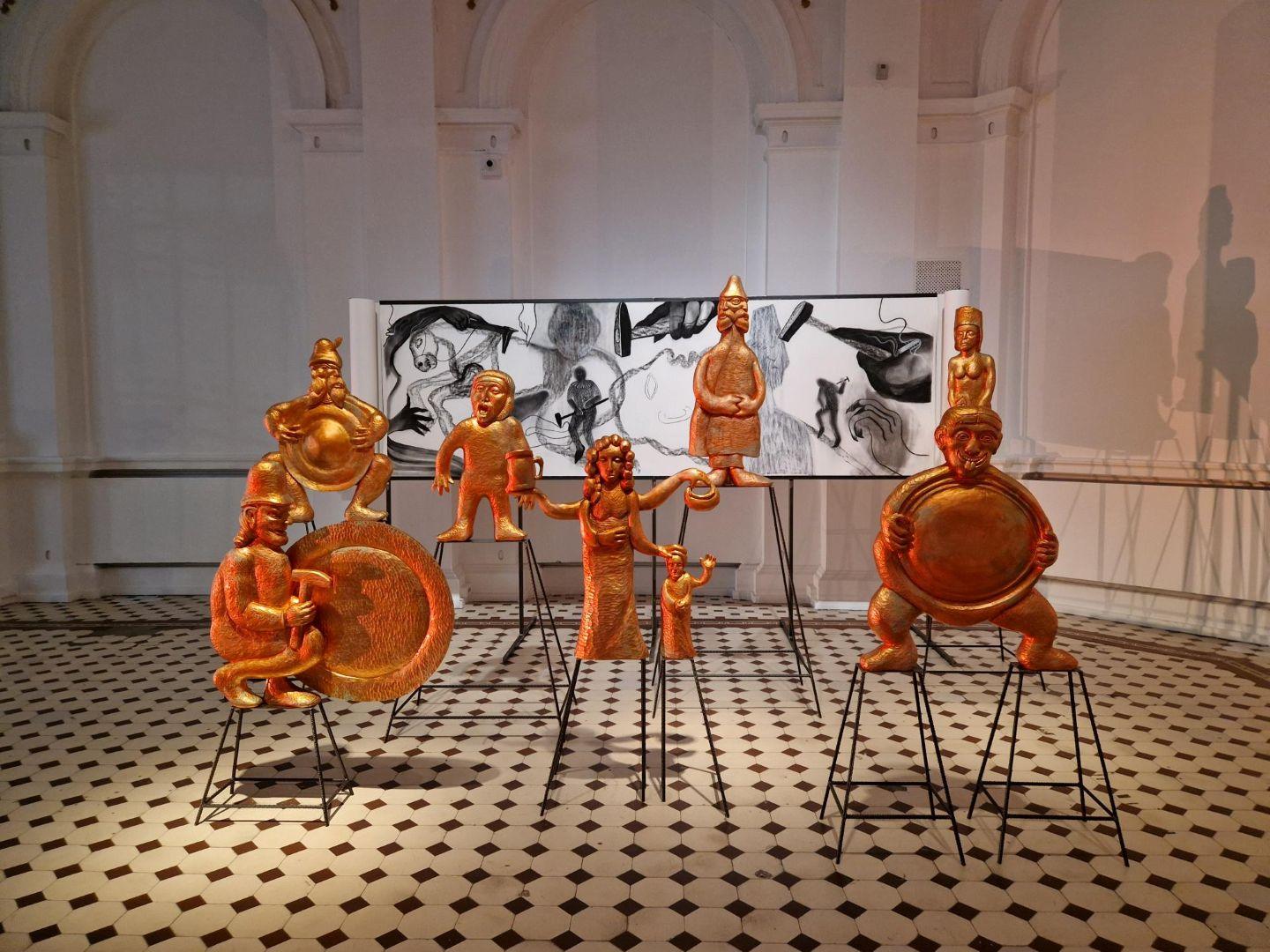
Krzysztof Gil’s new exhibition at Zachęta National Gallery reimagines the “ghetto” – from walled historical quarters to today’s excluded neighborhoods, refugee camps, and guarded migrant centers that function like “total institutions.” Gil explores how isolation, control, and restricted rights shape modern migration, while also examining how groups self-segregate into enclaves like gated communities, often eroding public space and deepening social divides.
Rooted in his Polish-Roma identity, Gil grew up in a state-created settlement under a 1958 law that forced “wandering” people to settle permanently. A policy that ghettoized Roma communities across the socialist bloc, with effects still visible today. Gil uses his dual-cultural perspective to confront “ghettoization” across scales and eras, probing both the real ghetto built by walls and policy and the “ghetto of imagination” – the stereotypes that justify exclusion.
Where: Zachęta National Gallery in Warsaw (https://zacheta.art.pl/en/wystawy/krzysztof-gil-nikt-was-tu-nie-chce)
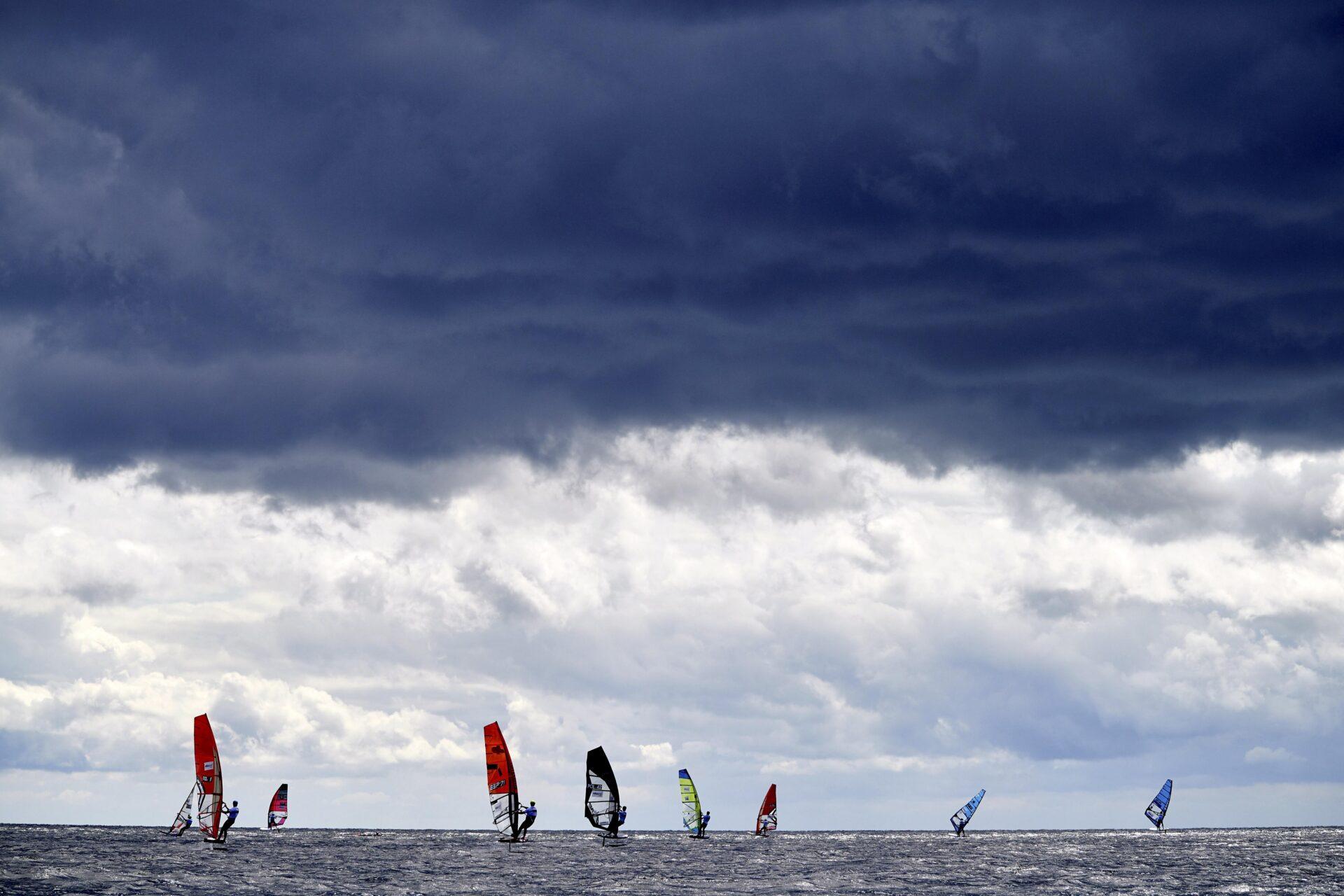
For windsurfers in Poland, Półwysep Helski (the Hel Peninsula) is the undisputed go-to destination. Nestled between the windy Baltic Sea and the sheltered Puck Bay (Zatoka Pucka), the peninsula offers contrasting conditions in a single location: stronger waves and open-water challenges on the sea side, and calm, shallow water perfect for learning and freestyle on the bay side. Chałupy, Jastarnia, and Kuźnica have emerged as local wind-sports hubs, with rental shops, training centers, and a growing community of enthusiasts.
The area’s reliability comes from steady thermal winds that peak in summer, making it one of the most consistent windsurfing spots in the region. Whether you’re a beginner taking your first steps on the board or an advanced rider seeking speed and waves, the Hel Peninsula delivers. If you’re planning to celebrate Global Wind Day on June 15, this is Poland’s natural epicenter for windsurfing.