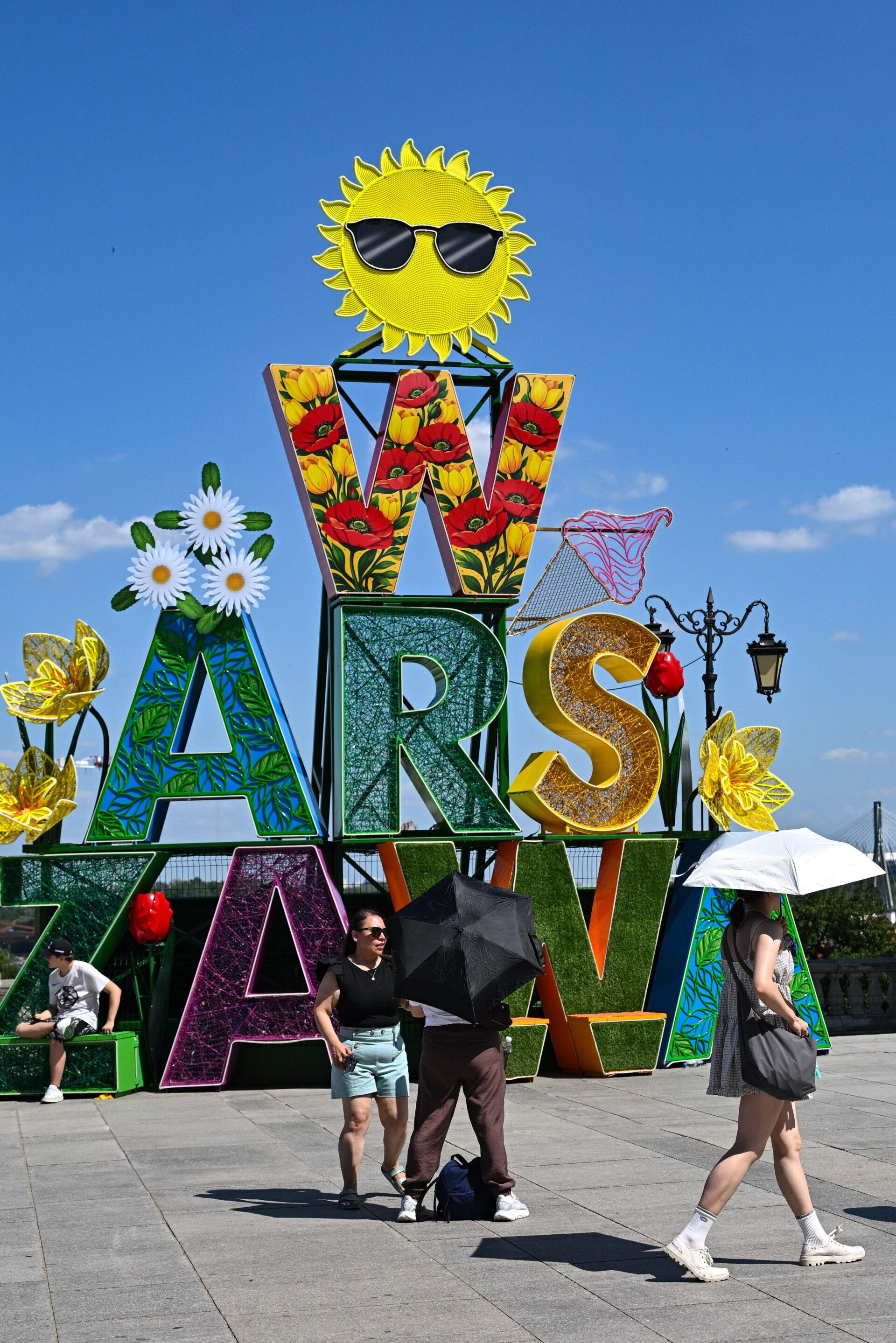
Poland Unpacked week 27 (22 - 28 June 2026)
Welcome to this week’s edition of our Poland Unpacked, where we deliver key insights and trends shaping the economic, corporate and political landscape. Catch the most important insights from Poland in this week’s briefing.
This article is a part of Poland Unpacked. Weekly intelligence for decision-makers
Think Tank The Company backed by a community of around 2,500 entrepreneurs representing more than 100 industries, has begun work on a new policy agenda called Entrepreneurial Poland (Polska Przedsiębiorcza). The non-partisan initiative aims to bring together business leaders, experts and public officials to develop a blueprint for modernizing the country between 2026 and 2036. The project rests on four pillars: entrepreneurship, an effective state, a competitive economy, and innovation, technology and people. XYZ was the first to report on the initiative's underlying assumptions here.
One year after Marcin Kuśmierz, a successful businessman and investor, took over as CEO of Allegro, Poland's largest e-commerce platform, he says there is hardly a part of the business that has remained untouched. The company has expanded into healthcare services through a partnership with Lux Med medical chain and into travel services with Itaka travel agency, launched a new generation of AI agents, deepened its collaboration with OpenAI, accelerated its international expansion and begun piloting exports to Ukraine. We take a closer look at the transformation of a company that Amazon and eBay still cannot outperform in the Polish market – even though they remain the only two companies ahead of Allegro in Europe. Read the story here.
"I accept that not every project will succeed. If a biotech venture still shows no real promise after a USD 5 million investment, you have to be prepared to shut it down," says Kris Siemionow, a surgeon, entrepreneur and investor who channels the proceeds from every successful deal into new medical innovations. After nearly a decade as a spine surgeon and head of department at a prestigious University of Illinois hospital, he decided to focus on developing his own technologies. His first breakthrough project – a robotic method for performing neurosurgical procedures – was commercialized as early as 2008. Behind all of his ventures stands a Polish team of 250 software engineers and engineers. Today, his fund, Biofund Capital Management, plans to acquire nearly half the shares in Pure Biologics and develop multiQure, an RNAi therapy for Huntington's disease. Can it outpace a Dutch-American rival that is also developing a treatment for the disease and is already valued at USD 3 billion? Here's our story.
Last week brought a range of data on current business conditions in the Polish economy. Taken together, they suggest that growth momentum remains solid this year, though likely somewhat slower than in 2025. Our economists also published a number of structural analyses.
Retail sales in constant prices rose by 3 percent year on year in May. This is a decent result, although below the market consensus of 3.6 percent. At the same time, sales increased more strongly than in the disappointing April reading, when growth stood at 1.3 percent year on year.
In broader terms, retail sales are growing more slowly than last year. Excluding April, the May reading was the weakest since June 2025. In January–May 2026, sales rose by 2.9 percent year on year, compared with 3.5 percent in the same period of 2025.
In our view, the May data better reflect the true condition of consumption than the readings from the previous two months. The March figure was inflated by one-off factors (8.7 percent year on year), while April (1.3 percent) was heavily affected by geopolitical tensions.
Average wages in the enterprise sector rose by 5.8 percent year on year in May. This was slightly faster than in April, when growth reached 5.4 percent year on year. In a broader perspective, however, wage growth is easing. Stabilizing inflation means employees are no longer pushing as frequently for higher pay increases. Moreover, the period of real wage declines – when inflation exceeded nominal wage growth – has already been made up. Finally, the minimum wage increase in 2026 was limited to 3 percent year on year.
Wages in the enterprise sector, however, continue to rise well above inflation. In May, real wage growth amounted to 2.7 percent. There are no signs that the conflict in Iran is feeding through into higher wage pressure in companies. This, together with data showing stable inflation expectations, means the risk of a wage–price spiral is effectively zero. As a result, interest rate hikes in Poland can, for all practical purposes, be ruled out.
We also received data on construction and assembly output, which rose by 3.9 percent year on year in May (in constant prices). After adjusting for seasonal effects, growth was somewhat faster, at 4.8 percent year on year. These dynamics are similar to those seen in the previous month.
To put it mildly, the data are not impressive. Activity in the construction sector has improved somewhat, but this is largely due to a low base effect from last year. More importantly, there is still no sign of the investment boom that had been expected in connection with the need to rapidly deploy funds from the National Recovery Plan and the EU budget.
In our structural analyses here, we highlight the key role of human capital in Poland’s economic transformation over the past 35 years. Poland entered the transition period with a relatively high level of human capital. In 1989, only one country – Romania – had a lower GDP per capita and at the same time a higher level of human capital than Poland. Conversely, nearly half of countries with higher GDP had lower human capital. The establishment of appropriate market rules and institutions made it possible to harness this human potential, ultimately enabling rapid economic growth.
We also examined the economy of our eastern neighbor, Ukraine. The analysis covers both the unsuccessful economic transition after 1990 and the functioning of the economy since Russia’s aggression. We look at Ukraine’s strengths, which could support higher prosperity once the war ends, as well as the factors that may hinder convergence with Europe, particularly institutions and human capital. Read the analysis here.
The school year has ended, and students across Poland are beginning their long-awaited summer vacation. Traditionally, the close of the academic year also marked the start of the political silly season. In today's era of post-politics, however, such conventions no longer apply. The hotter it gets outside, the hotter Poland’s political scene becomes.
The hospital scandal surrounding the ruling Civic Coalition (KO) continues to unfold. Although action has already been taken against a 28-year-old doctor who earned PLN 1.5 million (approximately EUR 350,000) in a single year at Warsaw's Southern Hospital despite not holding a medical specialty certification, new revelations have emerged. Dr. Emil Jędrzejewski, the hospital's former head of department, appeared on the Kanał Zero platform, alleging deeply troubling irregularities, including medical errors that allegedly led to patients’ deaths. The interview has become a political liability for Warsaw Mayor Rafał Trzaskowski, the Civic Coalition’s presidential candidate in both the 2020 and 2025 elections.
Prime Minister Donald Tusk has pledged to get “to the bottom” of the affair, while Justice Minister and Prosecutor General Waldemar Żurek is to personally oversee the prosecutor’s investigation. As fresh allegations continue to surface, public outrage has intensified online, leaving the Civic Coalition on the defensive for yet another week.
The hospital scandal has also overshadowed the long-awaited Ukraine Recovery Conference in Gdańsk. The event, held at the AmberExpo convention center on the Baltic coast, brought together Europe’s leading political figures, including European Commission President Ursula von der Leyen, representatives of Ukrainian and European business, as well as members of the Polish and Ukrainian governments. Notably absent were the presidents of both countries, who in recent weeks have been at the center of a heated historical dispute over the commemoration of the Ukrainian Insurgent Army (UPA). Even so, there was no shortage of developments on the ground. We covered the conference in person and report on it in our special dispatch here.
Next week is likely to bring the first opinion polls measuring the political impact of the hospital scandal, as well as the public response to the Gdańsk conference. Before looking ahead, however, it is worth returning to the start of the summer holidays.
For Education Minister Barbara Nowacka, the school break will offer only a brief respite. Her performance has received mixed reviews from education professionals, while Poland's school system continues to face mounting challenges. A looming demographic decline, the steady expansion of private education, school closures, and the continuing fallout from the controversy over health education are just some of the issues that will not disappear throughout the summer though.
Access to capital remains one of the key drivers of growth for Poland’s technology startups. The debate over how to boost funding for innovation and broaden the venture-capital market to attract new investors is still ongoing. Against this backdrop, AIP Seed has announced significant strategic changes while strengthening its advisory bench by bringing together some of Poland’s leading figures from business and technology.
Among those joining AIP Seed’s supervisory board are Sebastian Kulczyk of Kulczyk Investments; Łukasz Wejchert, co-founder of Dirlango and former CEO of Onet news portal; Marcin Żukowski, co-founder of the US-based Snowflake; Wiktor Schmidt of Netguru; as well as executives and investors from the retail and capital-markets sectors, including former heads of Lidl Polska and IQVIA Polska. According to the fund, the new board will not merely serve in an advisory capacity but will also actively co-invest in selected portfolio companies, giving startups greater access to both capital and operational expertise.
At the same time, AIP Seed is rolling out a new strategy that includes a planned listing on the Warsaw Stock Exchange, the introduction of an evergreen fund model, and founder-support initiatives under the Founder Factory and Founders House programs. The fund is focusing on artificial intelligence, dual-use technologies, and space technology, with the ambition of building companies capable of competing on a global scale.
Meanwhile, the proptech sector is seeing growing interest in solutions designed to improve transparency in the rental market. Startup Zaufany Lokator (trusted tenant) has developed an independent tenant-certification model based on the analysis of financial documents, rental history, and a behavioral interview conducted by an analyst. The assessment results in one of three recommendations: positive, neutral, or negative. The aim is to reduce risk for property owners while enhancing tenants’ credibility. Read our article for more details.
Experts caution, however, that certification alone will not resolve the market’s structural challenges. They argue that Poland needs reliable rental-history registries and more efficient legal procedures, which in their current form often discourage long-term residential leasing.
Artificial intelligence is also reshaping education. The example of Fluentbe suggests that AI primarily plays a supporting role alongside traditional teaching methods. Its “virtual tutor,” Kaia, has evolved from a pilot project into a commercial product used in both one-to-one courses and B2B offerings. Despite the rapid adoption of AI, it still accounts for only a small share of total teaching hours – just a few percent. Human instructors remain at the heart of the learning process, with hybrid models combining teachers and technology emerging as the industry standard.
At the same time, artificial intelligence is moving from the experimental stage into the regulatory arena. The EU’s AI Act establishes the first comprehensive legal framework governing the use of AI systems. The legislation introduces a risk-based classification of AI applications, new transparency and data-protection requirements, a ban on certain practices, and mandatory labeling of AI-generated content. The rules will be phased in gradually, affecting both global technology platforms and companies that rely on off-the-shelf AI tools.
For businesses, the AI Act marks a shift from the relatively unrestricted testing of AI technologies to an environment defined by clear regulatory obligations – a transition that many experts compare to the impact the General Data Protection Regulation (GDPR) had on Europe’s digital economy.
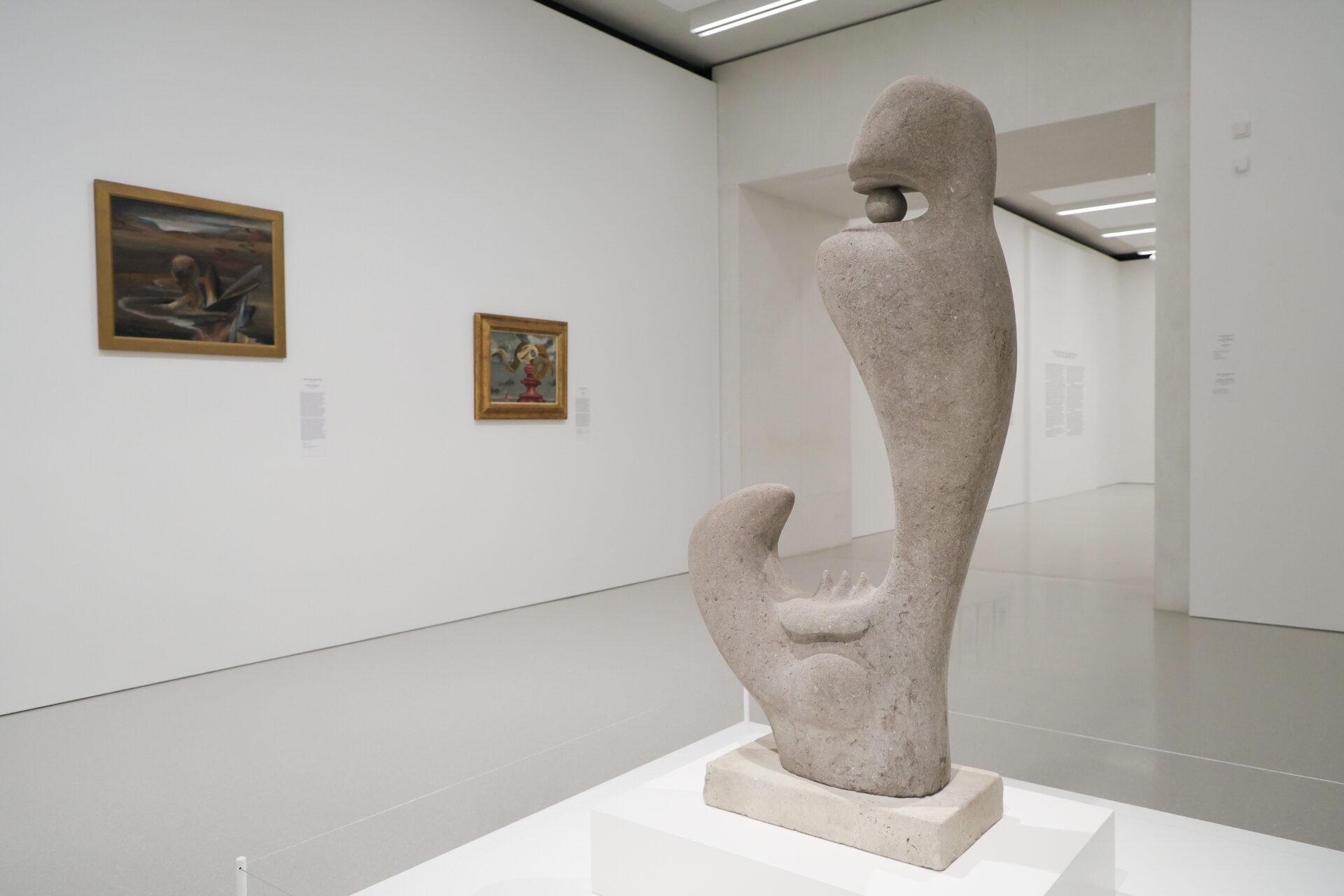
At the Museum of Modern Art in Warsaw, Surrealism returns to what it always claimed to be: not an escape from reality, but a way to confront it. In the Very Bowels of Changes: Surrealism and Antifascism traces a movement that saw no boundary between art and politics, linking poets and painters across continents in a shared refusal of oppression. Instead of a linear history, the exhibition unfolds like a map of solidarity - Prague alongside Mexico, Cairo alongside the Spanish Republic - revealing how Surrealism responded to the crises of its time with imagination as a form of resistance.
The Warsaw edition deepens that story with a Central and Eastern European perspective, from the a.r. group in Łódź to wartime underground networks, while also facing the movement’s entanglement with exile, persecution, and the Holocaust. What emerges is less a style than a question that still feels unsettled: what does it mean to link freedom in art with freedom in life? For today’s audience, the exhibition offers a quieter, more demanding takeaway - that imagination, taken seriously, can challenge power, but also carries the weight of history.
More information: https://artmuseum.pl/en/exhibitions/in-the-very-bowels-of-changes-surrealism-and-antifascism
On International Day of the Tropics, Poland might raise an eyebrow and point to the thermometer. The all-time record stood still at 40.2°C (Prószków in the Opole region in southwest Poland) since 1921.
But June 2026 made a serious bid to rewrite the charts. And a successful one. IMGW (Polish meteorological service) reported 40.5°C in Słubice at the Polish-German border in the west of the country. If this figure passes the standard verification and quality control process, it will officially become the highest temperature ever recorded in Poland’s meteorological history. Not quite equatorial, but close enough to make shade a strategic resource.
So now you know where Poland’s “tropics” are. Look west and southwest: Lower Silesia and Opole regularly top the heat rankings, with Słubice now joining the club. Add urban heat islands - Warsaw, Wrocław, Poznań - and the “temperate climate” label starts to feel like a technicality.