

This article is a part of Poland Unpacked. Weekly intelligence for decision-makers
Pocket is a compact AI device created by Gabriel Dymowski and Akshay Narisetti. The San Francisco-based startup has just raised USD 11 million (EUR 10.1 million / PLN 44 million) from prominent investors, including Accel and Y Combinator. The goal: to replace traditional note-taking apps and voice recorders.
Akshay Narisetti and Gabriel Dymowski met in 2024 at The Residency, a hacker house in San Francisco backed by Sam Altman. Dymowski, a Polish entrepreneur who previously built DoxyChain, arrived at a moment when Silicon Valley was beginning to search for a new language for AI-driven products. After the first wave of software applications and tools, more and more teams began to explore whether AI could move beyond the computer and smartphone screen.
From this conversation about the practical applications of artificial intelligence, Pocket was born. It is a small device designed to record conversations, meetings, and ideas spoken aloud. In 2025, Narisetti and Dymowski began working on it full-time, turning it into a business that has now attracted the attention of well-known investors.
“We want to grow the business and enter new markets. At the same time, we are working to strengthen our position in the U.S. We are also hiring engineers to build an even better product – both software and hardware,” Gabriel Dymowski tells XYZ.pl.
Major investment in Pocket
Pocket is currently developed by Open Vision Engineering, a San Francisco-based company founded by Gabriel Dymowski and Akshay Narisetti. The ownership structure has just expanded with the entry of major funds and angel investors, who collectively injected USD 11 million (EUR 10.1 million / PLN 44 million).
The round was led by Accel. Other participants included Y Combinator, Peak XV Partners, as well as angel investors tied to the U.S. tech and business ecosystem. Among them are Mati Staniszewski, co-founder and CEO of ElevenLabs, Guillermo Rauch, founder of Vercel, and Kaz Nejatian, who leads OpenDoor. For Pocket, the round is significant not only in reputational terms. It also provides capital for manufacturing devices, software development, inventory build-up, and team expansion.
“Additional capital means speed for us. Hardware is more capital-intensive than software, which can be scaled easily. To be able to deliver devices to a sufficiently large number of customers, we first need to commission production and pay for it,” says Gabriel Dymowski.
This is one of the key differences between Pocket and a typical software startup. The company reports rapid sales growth, but rising demand also translates into increasing capital needs. Pocket is therefore raising funds at a moment when the market is beginning to validate demand for the product, yet the company needs financing to keep up with deliveries.
“With investor funding, we can scale production, maintain higher inventory levels, and capture market share faster. Moreover, competition is not standing still and is also growing, so to win, we need truly strong investors,” adds Dymowski.
This is what Pocket looks like. It can be attached to a phone. Photo: press materials
How Pocket is growing
Pocket reports that sales are growing at a rate of more than 50% month-on-month. By the end of March, the company had delivered over 35,000 devices, while its annualized revenue run rate (ARR) – calculated based on performance in the first months – reached USD 27 million (EUR 24.7 million / PLN 108 million).
“That is the projected annual revenue based on the first months of results. Our main sales channel is our own website, heypocket.com. For the past few weeks, we have also been a seller on Amazon in the U.S. The largest market is the United States, which accounts for 80–90% of sales,” says Gabriel Dymowski.
The U.S. market is critical for the company. It is where sales are concentrated, where the team is based, and where Pocket is pursuing its first meaningful scale. However, the firm is not limited to individual consumers. According to Dymowski, the product is increasingly making its way into organizations through users who first buy the device privately and later adopt it at work.
“An increasing number of companies are becoming Pocket customers, including DoorDash. These are customers who have moved from consumer use to business orders. It usually follows a very similar path: a manager buys Pocket, starts using it, and really likes it. They promote it within their organization, and then a company representative contacts us to place a corporate order,” says the co-founder.
What Pocket is and why it is gaining traction
Pocket fits into a growing category of AI devices designed not as phone add-ons, but as standalone work tools. The device records conversations, meetings, and spoken thoughts, and then organizes them into summaries, notes, mind maps, draft emails, and task lists. It can be used during in-person meetings, phone calls, video conferences, consulting sessions, as well as field work.
Unlike many transcription apps, Pocket does not require users to operate a phone during conversations. It also has no screen. Recording is intentionally triggered by the user, and the device can work offline, storing audio locally. Once connected to its companion app, recordings are synchronized and converted into materials later used in work.
The product is equipped with two microphones for live conversations and a contact microphone for recording phone calls. When magnetically attached to the back of a phone – compatible with MagSafe – Pocket can capture calls without requiring speakerphone mode.
Gabriel Dymowski argues that dedicated hardware offers advantages that a standard smartphone app cannot replicate.
Why not a phone?
“There are several important reasons why customers choose Pocket instead of using an app on an iPhone. The first is the need for a dedicated device. Pocket records independently of whether there is network coverage or not. An incoming phone call will not interrupt the recording. In addition, Pocket has its own battery, so recording does not drain the phone and risk running out of power before the end of a meeting,” says Gabriel Dymowski.
Another key argument is how phone calls are recorded. Pocket uses a contact microphone technology, referred to by the company as a bone-conducting microphone, which captures vibrations and allows calls to be recorded without switching the phone to speaker mode. For people handling frequent sales, consulting, or operational calls, this can be a practical advantage: less friction and a lower risk of missing parts of a conversation.
The company also highlights a broader shift in user behavior. According to Dymowski, the most tech-savvy users increasingly prefer not to keep their phone on the table during meetings, as the device itself is a source of distraction. Pocket is meant to take over the role of documenting conversations without demanding participants’ attention.
“We also see a change in mindset among the most advanced users. They want to be present. They do not want to have a phone on the table, in sight, within reach, distracting them. They want to be present in the meeting,” says the founder.
At this stage, Pocket’s business model is primarily based on hardware sales. The company is also developing a software and subscription layer, but its importance will grow only as the user base expands.
“To generate subscription revenue, we first need to sell a sufficient number of devices. Without a product in the customer’s hands, there is no subscription. That is why, at this stage, the vast majority of revenue – over 90% - comes from devices,” adds Gabriel Dymowski.
AI inside the device
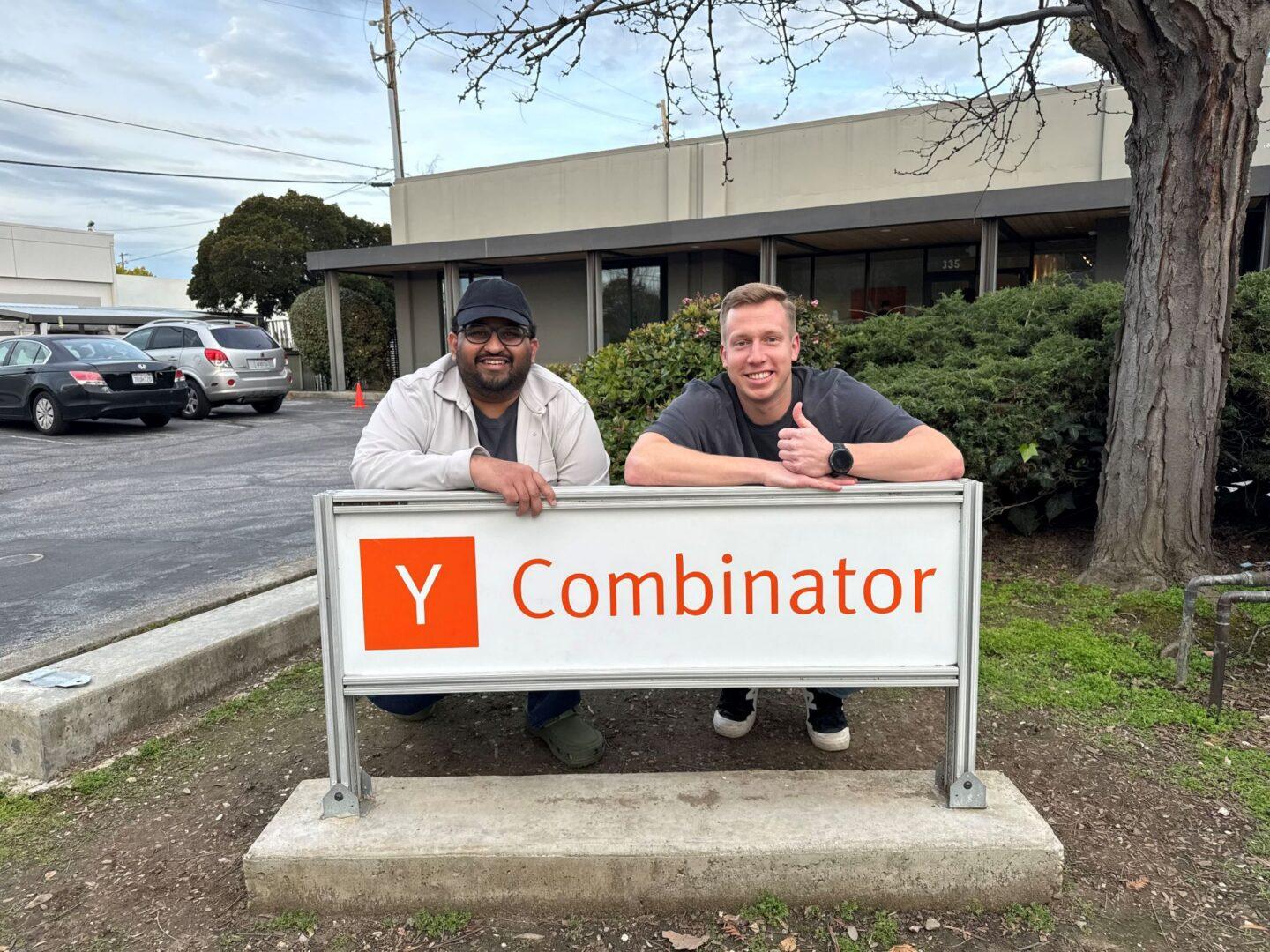
According to the company, Pocket first drew significant attention after a concept video was released in late 2024. That triggered thousands of pre-orders. On launch day in October 2025, more than 10,000 devices were shipped to users. In winter 2026, the founders joined the Y Combinator program, and their demo became the most-viewed presentation of its cohort.
A key element of the product is its AI model layer. Pocket does not rely on a single provider. According to Gabriel Dymowski, users can choose from the leading large language models.
“When it comes to language models, for meeting summaries you can select from the major LLMs. We aggregate different AI engines so that the customer, depending on preference or specific need, can choose the model that suits them: ChatGPT, Claude, or Gemini,” says the founder.
Pocket also claims compliance with HIPAA and SOC 2 standards, end-to-end encryption, and a policy of not using customer data to train AI models.
“Regulated markets are not our primary focus today, although we do have users operating in such sectors. As for data security, it is not shared with third parties or used to train models. Users can store recordings locally on their devices or synchronize them with Pocket’s integrated cloud,” Gabriel Dymowski comments when asked about potential use in sensitive industries.
Expert's perspective
Success in the U.S.? It has to be local
This creates a classic chicken-and-egg problem: to win an American customer, you need American references, but to get those references, you need your first customer. Polish companies that handle this well deliberately invest in that initial, often financially unprofitable contract, pilot project, or joint deployment – anything that later allows them to say: “We have worked with [U.S. name].” That first logo on a slide can open doors that remained closed for years. It is not a sales cost, but an investment in credibility.


The company’s future: hiring ahead, including in Poland
The company currently employs 13 full-time staff. The team is international, with its operational hub in San Francisco, where the software is being built. The devices are manufactured in Asia. Dymowski and Narisetti split their time between San Francisco and Asia.
The new funding is expected to support further hiring, particularly in engineering, design, and growth roles. Pocket also signals that it will be looking for talent in Poland. This is not limited to technical expertise. Dymowski also points to the business capabilities of Polish founders and operators, who are increasingly visible in San Francisco.
“To say that Poland has great engineers would be an understatement. That is almost self-evident. But we also look at Poland through the lens of business talent. In San Francisco alone, there are more and more Polish entrepreneurs who often bring skills and experience at a world-class level,” says the founder.
The company is conducting R&D on future product formats, but does not plan a rapid departure from its current device form.
“Of course, we are working on research and development of future products. But the current form of Pocket is very well received by customers, and we do not want to force improvements on something that already works well,” says Gabriel Dymowski.
What the company is building next
Investors currently assume that the market for devices designed from the ground up for AI is still in its formative stage. Pocket aims to secure a position in this emerging category as a specialized tool for people whose work revolves around meetings, conversations, and decisions made during those interactions. In this segment, success depends on whether users conclude that a dedicated device meaningfully reduces friction in day-to-day work. Gabriel Dymowski argues that this problem was the starting point. The technology is meant to run in the background, without diverting attention when conversation matters most.
“We believe that the combination of AI and voice technology will create one of the largest new categories of this decade. We are adding hardware to that equation, working on one of the most interesting challenges: technology that allows you to preserve thoughts and conversations without requiring full attention to the app interface,” says Gabriel Dymowski.


Key Takeaways
- Pocket illustrates a broader shift in the AI product market – from software applications toward dedicated standalone devices. The startup founded by Gabriel Dymowski and Akshay Narisetti is building hardware designed to record conversations, meetings, and ideas without requiring the use of a phone. The core promise is to reduce friction in everyday work. Users can record discussions and then receive summaries, notes, mind maps, draft emails, and task lists. The company is targeting professionals whose work revolves around conversations, decision-making, and rapid information processing.
- The USD 11 million (EUR 10.1 million / PLN 44 million) seed round is significant for Pocket both financially and strategically. It includes participation from well-known venture capital funds and angel investors linked to the U.S. tech ecosystem. The capital is intended for device manufacturing, software development, inventory expansion, and team growth. Hardware requires higher upfront investment than traditional software, as scaling sales necessitates pre-financing production. This highlights that Pocket’s success depends not only on demand, but also on its operational ability to scale supply.
- The company reports rapid sales growth and a strong focus on the U.S. market, which accounts for the vast majority of revenue. Pocket says it has delivered over 35,000 devices, is growing at more than 50% month-on-month, and has reached an annualized revenue run rate of USD 27 million (EUR 24.7 million / PLN 108 million). At this stage, over 90% of revenue comes from hardware sales, although the company is also developing a subscription layer. A key growth vector may be enterprise adoption, as some users start with private purchases and later introduce the device into their organizations.