Poland Unpacked week 28 (29 June - 5 July 2026)
Welcome to this week’s edition of our Poland Unpacked, where we deliver key insights and trends shaping the economic, corporate and political landscape. Catch the most important insights from Poland in this week’s briefing.
This article is a part of Poland Unpacked. Weekly intelligence for decision-makers
Summer holidays have begun, but at XYZ it is business as usual. Here are three business stories from XYZ.pl that we believe are worth your time this week.
This week's most-read article featured Citronex Group, whose president and co-owner, Rafał Zarzecki, is widely known as Poland's “Banana King”. The company, whose annual revenue is approaching PLN 2 billion, has no intention of slowing down. While bananas account for 70% of its sales, Citronex is expanding into a new line of business. It is investing PLN 220 million (EUR 52 million) in a facility that will supply seedlings to food producers in Poland, Germany and other countries across the region. And that is only the beginning. The company also plans to invest EUR 25 million in a tomato greenhouse in Romania and another EUR 20 million in a cucumber greenhouse in Poland. What is driving this strategy, and where does Citronex see its next sources of growth? We have answers in our article here.
Jarosław Parkot, the chief executive of Warta, Poland’s second-largest insurer after the state-owned PZU, has little doubt that compulsory third-party motor insurance premiums should rise by 15%. Warta has already increased its prices this year and says further rises are likely. It is also urging competitors to follow suit, warning that if the price war continues, the industry's underwriting losses on motor third-party liability and motor own-damage insurance could exceed PLN 3.6 billion (EUR 850 million) in 2027 alone. So, is the era of cheap motor insurance coming to an end? Read the interview here for the CEO's take on this and other questions.
Private equity is looking to space. Enterprise Investors, a private-equity group that has been investing across Poland and Central and Eastern Europe for the past 25 years, is expanding into dual-use technologies. Its first investment is Eycore, a Polish company whose proprietary SAR radar was launched into orbit this year aboard a satellite. Why is the fund betting on this sector, and what kinds of businesses is it looking for next? Michał Kędzia, a partner at Enterprise Investors, explains in an interview with XYZ here.
The key macroeconomic release last week was June’s inflation reading (details here). Consumer prices rose by 2.5% year on year, beating expectations: the market consensus had pointed to 2.7%. The main driver was a slowdown in fuel-price growth, accompanied – perhaps more surprisingly – by falling food prices. As a result, the Monetary Policy Council (RPP) is now widely expected to leave interest rates unchanged at next week’s meeting.
On Wednesday, Statistics Poland (GUS) published new experimental estimates of the country’s population. As of the end of December 2025, Poland’s population stood at 38.8m – around 40,000 higher than a year earlier. Foreign nationals accounted for 2.3m people, or just under 6% of the total.
How many people actually live in Poland remains a matter of debate. Different population estimates affect, among other things, Poland’s GDP per capita, as is evident when comparing figures published by Eurostat and the IMF. The experimental data released by GUS are not yet directly comparable with the official statistics. From 2028, however, a revised methodology based on administrative records will become the official standard. In our analysis based on these new statistics, we examine where foreign nationals are settling in Poland – and why those locations are attracting them. Read all about it here.
In another analysis, our economists examine the tax proposals put forward by both the governing coalition and the opposition ahead of the 2027 general election. They identify five recurring flaws in Poland’s tax debate. The most significant are the absence of clearly defined reform objectives and the disconnect between political promises and the state of the public finances. The five plagues of Poland's tax debate - get to know them in our analysis here.
Poland has recently been consumed by controversies surrounding the healthcare sector. Our economic analysis takes a broader, more systemic view, explaining why some doctors command exceptionally high incomes. The main reasons are an insufficient supply of physicians – stemming from years of undertraining – combined with the fragmented ownership structure of hospitals and the widespread use of B2B contracts in healthcare instead of regular employment contracts. Rather than using its monopsony power as the dominant purchaser of medical labor, the Polish state has effectively allowed public healthcare providers to compete against one another for doctors. The result? As described in our analysis here.
Over the past two years, Poland’s median wage has risen by 24.7%. Beneath that headline figure, however, lie striking differences across groups of workers. Median earnings for women increased by 26.2%, compared with 22.9% for men, with the largest gap recorded in the ninth earnings decile (26% versus 18%).
Wage growth also accelerated with age, peaking at 29.7% among workers aged 65 and over. By contrast, pay rose most slowly in the smallest firms, employing up to five people, where median wages increased by just 13.3%. In small and medium-sized enterprises, wage growth ranged from around 21% to 25%. There is one principal explanation for these patterns: substantial pay rises in the public sector during this period, where women make up a larger share of the workforce. In another analysis, we explore trends in entrepreneurship in Poland.
The most notable developments can be seen in the sectoral breakdown of new business creation: a boom in information technology, steady growth in professional, scientific and technical activities, and a decline in trade. Take a deeper look into Polish entrepreneurs here.
Although the worst of the heat wave has passed, Poland’s health-care system remains under intense political pressure. Fresh controversies surrounding a Warsaw hospital have triggered another round of dismissals.
The head of the hospital morgue is alleged to have promoted a funeral company co-owned by his business partner. Earlier reports revealed that, at the same hospital, a young emergency department coordinator linked to the governing Civic Coalition (KO) -the party led by Prime Minister Donald Tusk – earned more than PLN 1.6 million (about EUR 375,000) in a single year despite not holding a medical specialty certification.
Warsaw Mayor Rafał Trzaskowski – deputy leader of the Civic Coalition (KO) and the party’s candidate in last year’s presidential election – had already dismissed the hospital’s management. On Friday, he also removed two of his deputy mayors: Renata Kaznowska, who oversaw health policy, and Aldona Machnowska, who served on the hospital’s supervisory board.
Mr. Trzaskowski also announced that party officials would be removed from the supervisory boards of municipally owned companies. Prime Minister Donald Tusk has made a similar pledge regarding state-owned enterprises.
Health care is among the issues that generate the strongest political emotions in Poland. A new qualitative study by CBOS finds that Poles are losing confidence in both the state and politicians, citing, among other factors, the poor performance of public services and housing policy.
Disillusionment with politics is spreading, and many voters are looking for a leader capable of reaching those who feel left behind. Respondents pointed to Andrzej Lepper – the late agrarian politician and former deputy prime minister in a right-wing government in 2006-2007 – as a model. Want to know what's driving Poland's social discontent? Read our article here.
After three months, the government has ended its “Lower Fuel Prices” program, which combined fuel-tax cuts with fixed fuel prices. The scheme was introduced following the United States’ and Israel’s attack on Iran. According to the Ministry of Finance, it cost around PLN 4.7 billion (about EUR 1.1 billion).
Fuel prices rose by roughly PLN 0.80 per liter the day after the program ended. At the same time, the government approved draft legislation introducing a windfall tax on fuel companies’ excess profits.
Poland’s Pomerania region is set to gain as much as PLN 500 million (about EUR 117 million) a year after President Karol Nawrocki signed legislation establishing a metropolitan authority. The new metropolitan area will bring together more than 60 local governments.
The government plans to launch a pilot version of a state-run electronic school register in September. The project is expected to cost more than PLN 190 million (about EUR 45 million). Poland’s IT industry argues that the state is assuming a dual role here – as both market regulator and competitor. So, do we really need this state register? Read our take on the matter here.
At the recent Ukraine Recovery Conference, Polska Grupa Zbrojeniowa signed an agreement with Ukrainian drone manufacturer TAF Industries. At XYZ, we examined anti-drone protection at state-owned companies, concluding that significant improvements are needed. All the details here.
Will the government undergo a reshuffle after a year in office? On Friday, Prime Minister Donald Tusk suggested that Poland could soon have a new health minister. He demanded that Health Minister Jolanta Sobierańska-Grenda and the head of the National Health Fund present recommendations for overhauling the health-care system. He warned that if they fail to do so by Tuesday, he will make personnel decisions on Wednesday.

Orbit Capital has completed the second closing of its latest fund, bringing total commitments to EUR 107 million. And it is not done yet: the fund's final target size is EUR 120 million. The milestone was helped by the first-ever allocation of public funding from PFR Ventures to a fund investing under a venture-debt strategy.
The fund has already begun deploying capital. It has invested in five startups so far: Poland’s Talkin'Things; Czech HR-tech company Sloneek; Czech startups IAG; and a startup developing AI-powered calling software for the fintech sector.
Five institutions have committed capital to the fund, only two of them public: PFR Ventures and the European Investment Fund (EIF). The remaining three are private regional investors: pension fund Rentea, Erste (more precisely, Česká spořitelna, part of the Erste Group), and Conseq, a private wealth-management firm. Read the full story here.
Polish founders have also been making headlines. Pocket, the startup behind a device designed to replace voice recorders and handwritten notes, has raised USD 11 million from prominent investors, including Accel and Y Combinator. The company was founded by Gabriel Dymowski and Akshay Narisetti. Although it operates in the United States, it already has more than 30,000 customers. Read about their idea and plans here.
Meanwhile, Finnish media group Sanoma has acquired Fluentbe, a Polish AI-powered language-learning platform. The technology could also be deployed across other parts of the group's educational offering. Here's the story.
Another notable development is the stock-market debut of Liftero on the Warsaw Stock Exchange’s NewConnect market for smaller companies. The space-sector company opened at PLN 50 per share, up from PLN 35 in its initial public offering, through which it raised PLN 17.5 million (around EUR 4.1 million). Within days, the share price had climbed above PLN 70, more than doubling from the IPO price.
We also recommend a report examining how disinformation is winning over Polish audiences. In a crisis, 16% of Poles would instinctively turn first to TikTok or Facebook, while only 17% would seek information from official government websites or the Polish Police. Those are the findings of the latest report, Disinformation Through the Eyes of Poles, prepared by the Digital Poland Foundation with the support of NASK and independent experts. Here is why.
A good museum informs; a better one also feeds you. July 7 – World Chocolate Day – happens to be an excellent excuse to visit the E.Wedel Chocolate Factory Museum, a place where Poland’s most famous confectionery brand turns cocoa into both craft and narrative. Set in the company’s historic grounds, the museum leans into multisensory storytelling: the machinery hums, the air smells faintly of roasted beans, and visitors are gently nudged from industrial history into indulgence.

The real trick is that Wedel manages to package nostalgia without becoming saccharine. Exhibits trace the firm’s 19th-century origins through war, nationalization and post-1989 reinvention – Poland’s own economic story, told in pralines and packaging design. A temporary exhibition adds a contemporary twist, exploring chocolate’s global supply chains and cultural meanings. Come for the samples, stay for the quiet lesson in how brands survive history – and occasionally improve it.
More info: https://fabrykaczekolady.pl/en
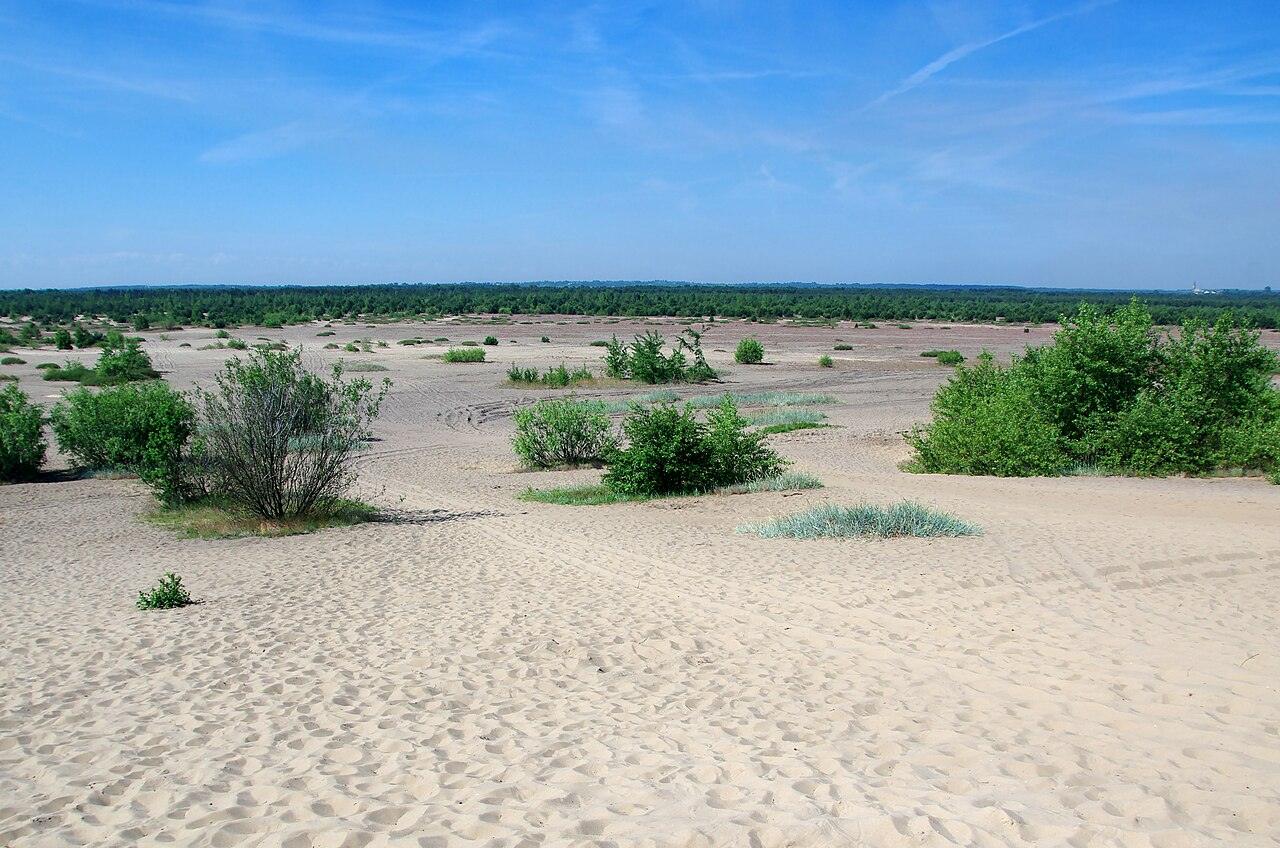
Poland may not scream “sand dunes” at first glance, but it quietly hosts one of Europe’s most unexpected landscapes: the Błędów Desert. Yes, an actual desert – complete with shifting sands – located about an hour from Katowice. It covers roughly 30 square kilometers and earned the nickname “the Polish Sahara,” which feels slightly ambitious until you see it stretching out under a hot summer sun.
The twist is that this desert is not entirely natural. It largely formed due to medieval deforestation and mining, which exposed sandy soil and let the winds take over. At its peak, it was so barren that the German Afrika Korps reportedly trained there during World War II.