

This article is a part of Poland Unpacked. Weekly intelligence for decision-makers
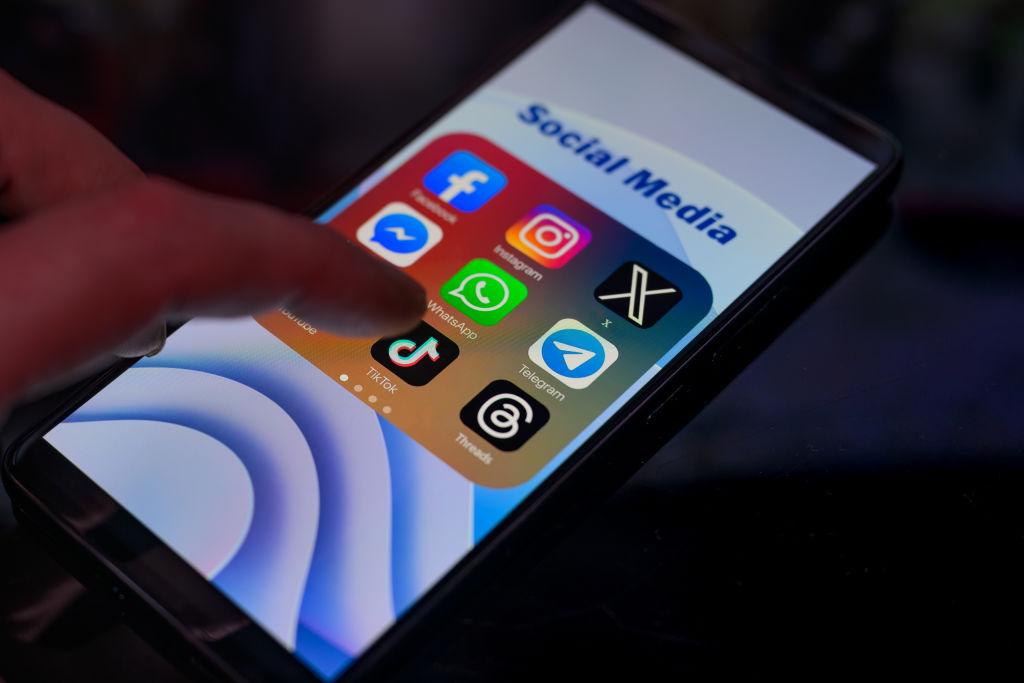
In a crisis situation, 16% of Poles would instinctively turn to TikTok or Facebook, while only 17% would seek official information on government domains or the police website. These are the findings of the latest report, “Disinformation Through the Eyes of Poles,” prepared by the Digital Poland Foundation with support from NASK and a group of experts.
Disinformation in Poland has reached mass scale, according to the report “Disinformation Through the Eyes of Poles. 2026 Edition.” It is one of the most important documents on perceptions of disinformation in Poland and a continuation of studies conducted in 2021 and 2024. As many as 91% of respondents confirmed at least one of 30 false statements presented in the survey. Two years earlier, the share of people misled by disinformation was the same.
How was the study conducted?
A sample of 1,000 adult respondents, representative of the Polish population aged 18–75 in terms of gender, age, education, and place of residence, was presented with 30 widely circulated pieces of fake news. These covered energy, health, new technologies, politics, and climate.
False narratives resonated most strongly in the energy sector, where the average acceptance rate of misleading claims reached 39%. In the study conducted two years earlier, the figure stood at 43%.
Other areas included health, with an average acceptance rate of 35% - the same as in 2024 – and politics and climate, both at 33%. In 2024, these figures were 23% and 22%, respectively. In the case of new technologies, the result reached 31%, compared with 29% in 2024.
Expert's perspective
Demagog expert: Politicians may have contributed to rising belief in the “climate conspiracy” narrative
At the same time, it is difficult to explain the rising popularity of the second most widely shared belief – that the Smolensk air disaster [in April 2010 when the Polish official state plane crashed while landing in Russia with 96 persons on board and no survivors – ed.] was the result of an assassination. I note that this is yet another increase; the previous one was already recorded in 2024 compared with 2022. This may reflect a broader rise in belief in conspiracy theories or a radicalization of the electorate of the current opposition – though it is hard to say with certainty.
I am, however, convinced that politicians may have contributed to the growing belief in “climate conspiracy” narratives, which deny human impact on climate change and downplay the scale of the phenomenon. An increasing share of the political spectrum appears to recognize that climate policy can be used to trigger public concerns about the stability of energy supply, electricity bills, and the need to change consumption habits.
Extreme emotions can be effectively leveraged to build support for a political agenda, as seen, for example, in debates on migration. Our recent report monitoring climate narratives in the media shows that it is politicians themselves who are the main source of such fears and false claims.


What do Poles believe in?
More than half of respondents (54%) agree with the statement that electric cars catch fire more often than combustion-engine vehicles. A further 52% believe that genetically modified food permanently damages human DNA and leads to infertility.
Nearly half of respondents (48%) believe that the growing replacement of cash with card payments is intended to enable full surveillance of every transaction. In their view, this would also make it possible to freeze bank accounts on the basis of political views.
Forty-one percent of respondents are climate change deniers, holding the view that climate change is a purely natural phenomenon, entirely independent of human activity.
These are widely circulating false claims, frequently debunked by disinformation experts, scientists, science journalists, and fact-checking organizations.
Four in ten respondents believe that the Smolensk air disaster – where, among others, President Lech Kaczyński died [the twin brother of Jarosław Kaczyński, the leader of Law and Justice party – ed.] – was the result of an assassination rather than an accident.
In short: one in five Poles agrees with roughly half of the 30 false theories tested in the survey, and 11% agree with almost all of them.
A TikTok video instead of information on gov.pl
Relatively high belief in fake news is accompanied by a surprisingly low level of trust in official sources, including state institutions, government websites, and agency platforms.
Respondents were asked whether they obtain current information from sources such as “official channels, including state institutions, government and agency websites (e.g. ministry websites, gov.pl, WHO, police).”
Only 28% of respondents indicated official sources. Television was selected by 60%, radio by 47%, while nationwide online portals and social media platforms were both indicated by 48% of respondents. Search engines were selected by 44%, and personal contacts by 41%.
Press media – including print editions, online versions, and mobile apps – ranked far behind, with only 21% of respondents saying they use them as an information source.
It is perhaps understandable that only 28% of Poles rely on government sources in their daily information diet, given that a TV remote or social media feeds are always within reach. More concerning, however, is that in a crisis situation only 17% would first check an official website in the gov.pl domain or the police service. By comparison, 16% would first turn to TikTok or Facebook. One in three respondents (34%) would instinctively switch on the television.
Expert's perspective
Pravda Association expert: We are facing a crisis of trust in institutions
For many people, social media is now the default choice because it is always at hand and delivers information faster than official communications. At the same time, a certain paradox emerges. On the one hand, there is ongoing debate about the need to build independent and resilient crisis communication channels. On the other hand, public administration and law enforcement agencies are increasingly using social media as their primary means of communication with citizens.
There is no simple solution to this problem today, but attempting to create an “alternative Facebook” is certainly not one. The key appears to be rebuilding trust in official sources and ensuring that reliable messages reach citizens where they actually look for information. In crisis situations, this is particularly important, as the first minutes often determine whether disinformation manages to outrun verified communication.
Who trusts alternative sources of information?
According to the report, 44% of respondents turn to alternative sources of information. Participants were presented with a list of such sources, which included profiles and websites that have repeatedly published false information in the past, such as legaartis.pl and the “Ukryte Terapie” profile run by Jerzy Zięba.
The latter has, among other claims, compared the effects of chemotherapy to Zyklon B, a substance used in gas chambers in Nazi extermination camps during World War II. In response to his statements, a joint declaration was issued by the Ministry of Health, the Patient Ombudsman, the Polish Society of Oncology, the Polish Society of Clinical Oncology, the Polish Society of Gynecologic Oncology, and the Maria Skłodowska-Curie National Research Institute of Oncology–National Research Institute.
The report also identified Krytyka Polityczna and Kanał Zero as examples of alternative information sources.
Explainer
'The Zero' media and Krytyka Polityczna
Kanał Zero ("Channel Zero") is the YouTube-based media project of Krzysztof Stanowski, a former sports journalist who founded the channel on 24 October 2023 and officially launched it on 1 February 2024. Stanowski had previously co-founded Kanał Sportowy, a sports channel, before striking out on his own with a general-interest format mixing politics, culture, sport and long-form interviews.
The channel built a reputation for landing high-profile guests - its launch broadcast featured then-president Andrzej Duda as its first interview subject - and for a low-confrontation interview style that gave political figures, including presidential candidates in 2025, long, largely unchallenged airtime.
Zero.pl (colloquially "Portal Zero") is the written-news arm Stanowski built to complement the video channel, aiming to give Kanał Zero's material a citable text form and compete directly with Poland's established news portals. It officially launched on 9 February 2026, staffed by a newsroom of a dozen-plus journalists poached from other media outlets.
Krytyka Polityczna
Krytyka Polityczna (Political Critique) is Poland’s prominent left-wing intellectual and cultural platform that has become a major voice in Polish public debate.
What are “alternative sources of information”?
“How did it happen that in the report, among alternative sources of information – alongside Justyna Socha, Jerzy Zięba, and numerous other websites or profiles that, as fact-checking organizations and experts have long pointed out, have repeatedly published fake news – Krytyka Polityczna and Kanał Zero were also included?” we asked the Digital Poland Foundation.
In response to the XYZ service’s question, the report’s authors explain that the term “alternative sources of information” is not intended to be derogatory.
In a guide titled “With a Shield! How to Protect Yourself from Disinformation,” published in 2021 by the Kościuszko Institute in partnership with the Demagog Association, “alternative news portals” are defined as: “websites or blogs presenting themselves as reliable sources of information. In most cases, however, these are sites used to spread disinformation and conspiracy theories. Their content is distributed via Facebook profiles and closed groups.”
“As part of this study, every two years we examine the popularity of lesser-known media, selected creators, or video channels that are outside the mainstream but still part of the information ecosystem. In the third edition of the study, experts co-designing the questionnaire added several new items, such as Krytyka Polityczna and Kanał Zero. Respondents indicated sources from which they may obtain information about current events in Poland and worldwide, even if only occasionally,” said Piotr Mieczkowski, Managing Director of the Digital Poland Foundation.
He added that in previous years – 2022 and 2024 – between 35% and 40% of Poles used such sources, and if YouTube were included, the figure would rise to 58%.
“This year, 44% of respondents used such sources. The results are therefore broadly consistent in direction with those from previous years,” Mieczkowski commented.
“The era in which we could trust our eyes and ears is coming to an end”
Nearly half of respondents (45%) say they have encountered the phenomenon of deepfakes. This represents an increase of 5 percentage points compared with the 2024 survey.
“The revolution driven by generative AI has also transformed the disinformation toolkit. Easy-to-use apps, websites, and programs now make it possible not only to generate any text, but also voice, images, and video. Each of us carries in our pocket a device capable of creating materials that, just a few years ago, would not have been out of place in major film studios,” wrote Filip Konopczyński and Magdalena Wilczyńska from NASK in the foreword.
Experts argue that “the era in which we could trust our eyes and ears is coming to an end.”
The need for security and fears of censorship
The report notes that Poles are clearly torn between the need to ensure information security and a deep concern over censorship.
Some 64% of respondents expect decisive action from digital platforms, while 57% support the introduction of government restrictions targeting creators of disinformation.
On the other hand, nearly half of respondents (45%) believe that current platform measures go too far and amount to unnecessary censorship. A further 40% defend freedom of speech, even if it means tolerating the publication of false information online.


Key Takeaways
- Experts presented a group of 1,000 Poles with 30 widely circulating fake news claims. As many as 91% of respondents believe at least one of them.
- More than half of respondents (54%) agree with the claim that electric cars catch fire more often than internal combustion vehicles. A further 52% believe that genetically modified food permanently damages human DNA and leads to infertility. These claims have no factual basis. Four in ten respondents believe that the Smolensk air disaster, in which among others President Lech Kaczyński died, was the result of an assassination rather than an accident.
- Nearly half of respondents (45%) say they have encountered the phenomenon of deepfakes. This represents an increase of 5 percentage points compared with the 2024 study. Experts argue that “the era in which we could trust our eyes and ears is coming to an end.”