

This article is a part of Poland Unpacked. Weekly intelligence for decision-makers
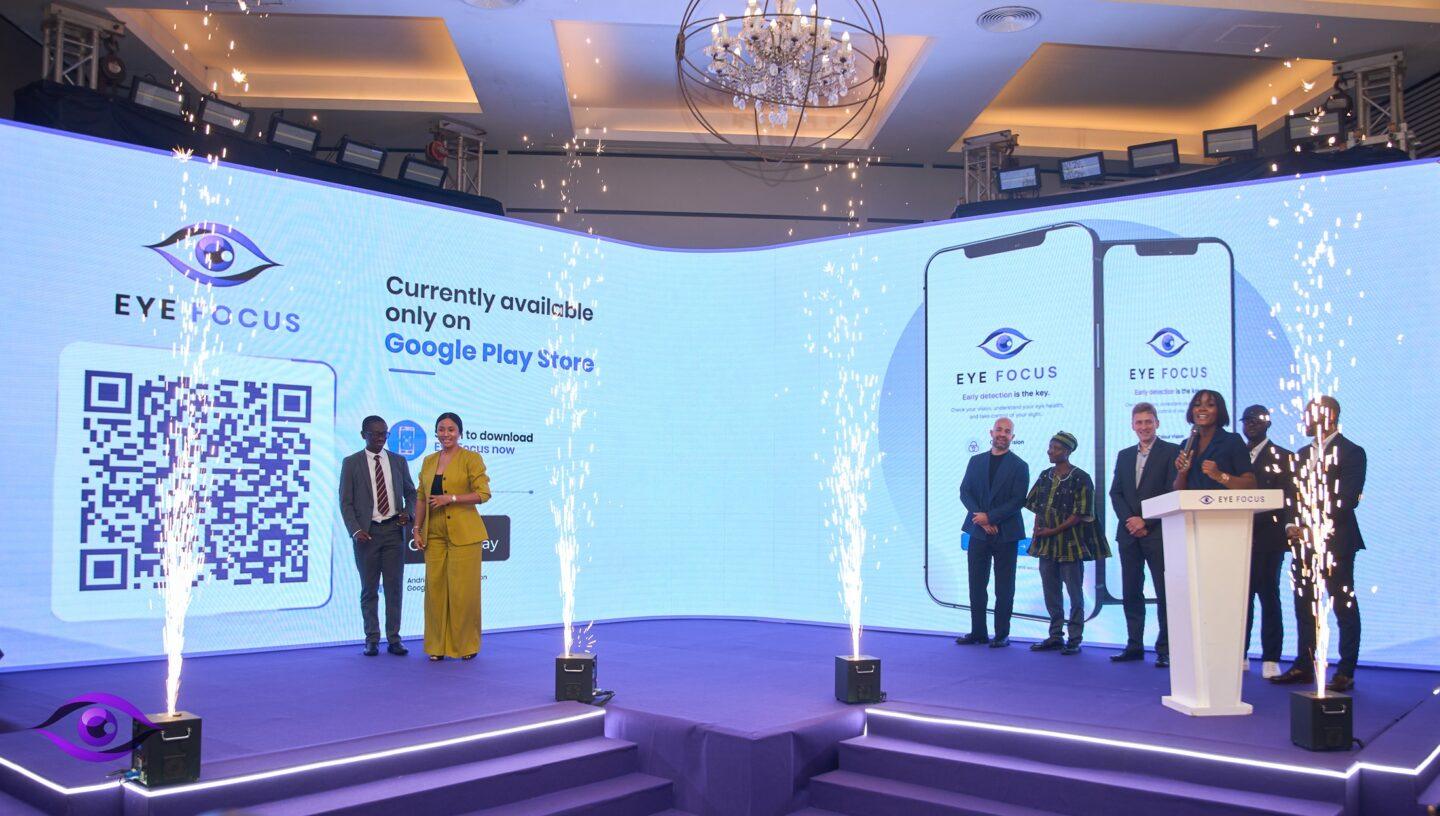
Polish startup Feyenally is beginning the commercial deployment of its technology in Ghana. The contract signed with AccessPlus is worth USD 15 million and covers 6.5 million eye examinations. The official launch of the project took place in Accra, Ghana’s capital, with the participation of Ghana’s health minister and representatives of the country’s healthcare system.
Feyenally is deploying its Eye Focus solution, an application designed for vision screening. The tool runs on a smartphone and can assess visual acuity, color vision and field of vision within minutes. After the examination, users receive a report that they can share with a specialist.
The Ghana deployment is just another practical stage in the startup’s development. The company already holds a US patent and is raising funds as part of a seed round, says Piotr Kruszyński, one of the company’s founders.
The project in Ghana is being delivered in practice by AccessPlus, Feyenally’s local partner. As Kruszyński explains, the cooperation was not the result of a one-off contact, but rather more than two years of work.
“We met AccessPlus at an industry event more than two years ago. Since then, we have worked together on the application and the structure of our cooperation. We also worked with the Optometrist Association of Ghana, which validated the performance of our application,” says Piotr Kruszyński, co-founder of Feyenally.
Expert's perspective
Polish medtech companies are gaining momentum
FindAir now generates a significant share of its revenue in the United States and has received approval from the US Food and Drug Administration (FDA) to market its FindAir ONE product. Talkie.ai is steadily increasing its presence in the US market, competing there with local players in the field of automated patient support, with the prospect that the American market will generate more revenue than Poland next year. Saventic Health operates across three continents and runs projects with 11 of the world’s 30 largest pharmaceutical companies focused on identifying patients with rare diseases.
We believe this is only the beginning of the trend. Polish medtech companies are no longer just a regional curiosity – they are becoming a real part of global healthcare innovation value chains.


“The biggest problem in global ophthalmology is not a lack of glasses. It is a lack of diagnostics”
The full-scale project in Ghana addresses some of the country’s most pressing healthcare challenges. Home to nearly 36 million people, Ghana struggles with limited access to basic vision diagnostics. The country also has the highest glaucoma incidence rate in Africa and one of the highest in the world. According to local health service data, as many as 90% of patients are unaware they have the disease, while the average age at first diagnosis is just 47.
People lose their sight during their most productive working years because they were never screened earlier.
Without an eye examination, patients do not know whether they need vision correction, further consultation or treatment. Meanwhile, the limited number of specialists, combined with an underdeveloped network of clinics, makes access to eye care difficult.
“The biggest problem in global ophthalmology today is not the lack of glasses. It is the lack of diagnostics. Without diagnosis, people will never buy glasses, contact lenses or receive treatment. That is why I believe accessible diagnostics are what create demand for further ophthalmic care,” comments Mateusz Toporowicz, co-founder of Feyenally.
Expert's perspective
Who can win the race
The second issue is the scale of available capital. The entire Polish VC market raises less money annually than a single US biotechnology company can secure in one funding round. This puts solutions that can demonstrate progress at relatively low cost in a stronger position – and software in diagnostics is particularly well placed in this regard.
Medical devices and biotech certainly have a place in Poland, but they need to seek significantly larger amounts of capital from day one. Software can be scaled with investments that are many times smaller and better aligned with the realities of the Polish market.
Local challenges as an opportunity for Polish technology development
Feyenally aims to address the problem not by building a traditional network of clinics, but by moving part of the diagnostic process onto devices that are already widely available. The first stage in Ghana involves Eye Focus. The next step will be the deployment of the company’s flagship technology – an objective eye examination system based on artificial intelligence. The system is designed to analyze images of the eye captured by a smartphone camera, without the need for additional specialized equipment or a visit to a clinic.
“We are showing that vision diagnostics does not require expensive equipment or infrastructure. A smartphone is enough. This changes the rules of the game in countries where the traditional model of ophthalmic care could never have worked at scale,” says Piotr Kruszyński.
Good to know
How Feyenally’s technology works
Feyenally is developing mobile vision diagnostics technology designed to move part of the screening process from clinics to smartphones. The company’s flagship solution, eyeTEST, uses a phone’s camera and machine learning algorithms to objectively analyze eye images and determine refractive error parameters, such as sphere, cylinder and axis. These measurements are needed, among other things, to select appropriate vision correction with glasses or contact lenses.
In Ghana, however, the company is deploying the first, simpler stage of the technology: the Eye Focus application. It enables basic vision screening, including assessments of visual acuity, color vision and field of vision. After the examination, users receive a report that they can share with a specialist.
The solution does not replace a full ophthalmological diagnosis, but it is designed to help identify people who require further examination – especially in places where access to optometrists and ophthalmologists is limited.
Expansion across Africa is on the horizon
This is why support from the local health ministry is so important. For Feyenally, the project also represents entry into a market that could open the door to further expansion across West Africa. The company says the first phase of the project could be extended to countries including Nigeria, Liberia, Sierra Leone and Côte d’Ivoire.
The potential market is substantial: Africa has a population of more than 1.5 billion people, and hundreds of millions lack regular access to eye examinations.
“We were looking for a technology that would allow us to expand access to eye examinations across the entire country. Feyenally gives us the opportunity to reach people who previously remained outside the healthcare system. The response from public institutions and the medical community has shown us that this is exactly the type of solution the market needed,” says Kelvin Boateng, CEO of AccessPlus, Feyenally’s partner in Ghana.
Expert's perspective
Commercialization remains the biggest challenge
From the perspective of Poland’s healthcare system, we need more innovation-friendly conditions for testing and purchasing new solutions, so that valuable technologies can not only be developed but also widely implemented in Poland. Experience gained on the domestic market would also allow startups to better validate their technologies, build references and prepare for future international expansion.
Polish startups very often actively seek foreign partners, looking for faster commercialization and access to new markets. Due to the more challenging conditions for implementing innovations in Poland, founders analyze international expansion opportunities at an early stage of project development. Foreign partners, meanwhile, are able to identify genuine technological gems in the Polish market – solutions that, despite their high quality, do not always have a straightforward path to broad adoption in Poland.
Ultimately, success comes down to three factors: the quality of the solution, the market’s readiness to purchase and use it, and the ability to turn innovation into practical implementation.
Feyenally was founded by two well-known Polish entrepreneurs
Feyenally is the brainchild of two well-known Polish entrepreneurs. Piotr Kruszyński spent years working at consulting firms before joining the management board of Pizzaportal.pl in 2017 and becoming its CEO in 2019. Mateusz Toporowicz, meanwhile, created Gepetto, an eyewear brand in which Kruszyński also became involved. The brand was later sold to Wokularach.pl. Prior to that, Toporowicz had founded two other startups.
The company operates under the name Feyenally Inc. and is registered in the US state of Delaware. The startup was supported by the legendary US accelerator Techstars. At the end of last year, it secured funding from a VC fund affiliated with Techstars, as well as from Kaiser Permanente.
“We are currently raising a USD 2.5 million seed round. Techstars and Kaiser Permanente joined as investors at the end of last year,” says Piotr Kruszyński.
Expert's perspective
We need more ambition and scale
Does this mean fewer chances for global success? Unfortunately, yes. It is simply a matter of statistics: the more projects are created, the greater the chance that one of them will truly take off. And in Poland, the overall scale is smaller.
But fewer opportunities do not mean no opportunities. ElevenLabs has shown that it is possible – and on a remarkable scale – because we need stories like this. Not only to inspire others, but also to understand what truly drives such success and how it can be replicated.
And this is where everyone – startups, investors and institutions responsible for funding research and development – is ultimately working toward the same goal. We are a hardworking, creative and entrepreneurial nation, and this is clearly visible wherever Polish companies have successfully entered foreign markets.
Customers value three things about Polish companies: flexibility and a practical understanding of their needs, strong engineering and technical expertise, and prices that remain competitive without compromising quality.
What are we missing? A little more ambition and effectiveness in the final stretch – the stage where ideas need to be turned into large-scale execution. But that will come over time, together with the next successes that will build our confidence and experience.
Ghana is just the beginning
The company is not generating revenue yet.
“We are pre-revenue, but we expect to record our first revenues in the second half of this year. We do not disclose the number of people examined, but our dataset consists of thousands of eye images from real patients. This year, we were granted a US patent for our solution,” adds Piotr Kruszyński.
Ghana and Africa are not the company’s only growth directions. Feyenally is also focusing on the US market, where it is in discussions with healthcare sector partners. In the third quarter, the company plans to begin a pilot project with Kaiser Permanente. At the same time, the company is considering expansion in Poland, where it is already cooperating with two major organizations.
Expert's perspective
A startup’s address does not determine its competitive edge
Our discussions around the current project show that, alongside innovation itself, equally important factors include data security, the credibility of the team and the ability to integrate easily with existing systems. These are the elements that most often determine whether cooperation begins. We should also remember that Poland has already produced many successful global medtech projects that are expanding internationally, including companies such as Sidly and Infermedica.


Key Takeaways
- Polish startup Feyenally is launching the largest commercial deployment of its technology to date. The project is enabled by a USD 15 million contract to conduct 6.5 million eye examinations in Ghana. Delivered together with local partner AccessPlus, the initiative aims to improve access to basic ophthalmic diagnostics. Ghana faces challenges including a limited number of specialists and underdeveloped healthcare infrastructure, resulting in difficulties detecting vision problems and eye diseases.
- The company’s model is based on moving part of the screening process onto smartphones. The first stage involves the rollout of the Eye Focus application, while future phases are expected to introduce the eyeTEST technology. Powered by artificial intelligence, the solution enables analysis of eye images captured with a smartphone camera. The company believes this approach can significantly expand access to diagnostics in regions where traditional ophthalmic care is difficult to access.
- The Ghana project is strategically important for Feyenally, not only commercially. The startup already holds a US patent and has secured support from investors associated with Techstars and Kaiser Permanente. It is also raising a USD 2.5 million seed round. At the same time, the company is developing its presence in the United States and Poland. Its founders hope that the African deployment will become a launchpad for expansion into additional markets.