Poland Unpacked week 29 (6 July - 12 July 2026)
Welcome to this week’s edition of our Poland Unpacked, where we deliver key insights and trends shaping the economic, corporate and political landscape. Catch the most important insights from Poland in this week’s briefing.
This article is a part of Poland Unpacked. Weekly intelligence for decision-makers
Euvic Solutions, an IT company within the group controlled by Polish entrepreneur Wojciech Wolny, has become Nvidia's strategic partner in the region. Together with the global leader in AI processors, the two companies will build AI factories. The first is already under construction in Greece. Euvic is preparing major investments and sees AI as a key driver of its future growth. Full story here.
Within the next few weeks, Poland is set to witness a pioneering transaction. An AI agent will purchase an item online and complete the payment entirely on a customer's behalf, without any human involvement. This will not be a pilot but Poland's first live commercial deployment of its kind. The project will be carried out by Visa together with a partner, Mateusz Oleksy, Visa's country manager for Poland, reveals in an interview with XYZ (read it here). He also outlines his vision for the future of online shopping.
Daniel Obajtek remains one of Poland's most polarizing public figures, both in business and politics. Under the previous government, he served as CEO of Orlen, the country's largest multi-energy group. He is now a Member of the European Parliament representing the Law and Justice (PiS) party. In a characteristically outspoken interview, he assesses the current situation at Orlen and discusses a possible return to Russian oil, renewable energy – which he dismissively refers to as “wind-and-solar-whatever” – his work in the European Parliament, and the conditions under which he would consider returning to lead a state-controlled company. Enjoy the read here.
In the second quarter, the number of mergers and acquisitions in Poland fell by 14% year on year and by 12% compared with the first quarter. According to market experts, the market is becoming increasingly selective, with investors focusing on companies that offer highly specialized technologies. Here's what happened in Poland's M&A market during the second quarter.
From a macroeconomic perspective, last week’s most important development was the National Bank of Poland governor’s indication that interest rates could be cut later in 2026. The shift reflects easing inflation in Poland, which, according to preliminary data, slowed to 2.5% year over year in June – exactly in line with the central bank's inflation target.
The central bank's benchmark interest rate currently stands at 3.75%. Given the National Bank of Poland's repeatedly stated objective of maintaining a positive real interest rate – that is, the nominal rate adjusted for inflation – the scope for further rate cuts appears relatively limited.
More broadly, the Polish economy remains in good shape. With tensions in the Middle East easing and energy prices declining, the main downside risk to economic growth has receded. Private consumption continues to expand, though at a measured pace. Industrial production has also picked up slightly, while infrastructure investment is showing the first signs of a strong recovery.
Last week, we also examined two longer-term structural issues. The first was the relationship between stock market capitalization and the size of the economy. The combined market value of all domestic companies listed on the Warsaw Stock Exchange currently stands at PLN 1.3 trillion (approximately EUR 305 billion), equivalent to around 32% of Poland's GDP. This ratio has risen markedly in recent years, largely thanks to the equity market rally. While it is now above its historical average, it remains low by the standards of developed economies. Over the long term, that could weigh on Poland's economic development. Read about it here.
Against the backdrop of recent controversies surrounding Poland's healthcare system, we also analyzed the tax preferences available to physicians. They turn out to be substantial. For the highest-earning doctors, the tax advantage amounted to more than 25% of income compared with standard taxation. The analysis (read it here) offers valuable insight into the complexities of Poland's tax and social security contribution system.
Last week in Polish politics effectively began a few days early. On July 3, Prime Minister Donald Tusk, with his characteristic air of concern, said he expected Health Minister Jolanta Sobierańska-Grenda (not belonging to any political party) to present a concrete plan for reforming the healthcare system within just a few days. Otherwise, he suggested, she could face dismissal.
The prime minister’s warning came after yet another week of reports about extraordinarily high earnings some doctors have who, on paper, were working simultaneous shifts at multiple hospitals for well over a dozen hours a day. In reality, they were often absent from their workplaces. Excessive physicians’ pay has become one of the dominant topics in both political debate and media coverage in recent weeks.
Ms. Sobierańska-Grenda responded with a package of proposals that, at least for now, have spared her from losing her post. Can political pressure finally produce meaningful reform in Poland’s chronically troubled healthcare system? Rafał Mrowicki examines the political backdrop and the proposed measures.
Last week also brought heightened attention to reports warning Poland and the Baltic states of further Russian provocations and hybrid threats. According to Poland’s Onet portal, the UK’s The Guardian, and the US The Washington Post, US intelligence warned the Polish authorities that Russia could intensify hybrid and cognitive operations, while not ruling out a scenario involving the infiltration of so-called “little green men” across the border. Foreign Minister Radosław Sikorski stressed that making the warnings public was intended to deter Russia from carrying out any such provocations.
Another noteworthy development was President Karol Nawrocki’s meeting with Ukrainian President Volodymyr Zelenskyy during the NATO summit in Ankara. The talks produced no breakthrough, but the very fact that the two leaders met following their recent public exchanges can be seen as an encouraging sign.
That said, relations are unlikely to improve overnight. This is all the more true given that Saturday, July 11, marked the anniversary of the so-called Bloody Sunday, the deadliest day of the 1943 Volhynia massacres, when the Ukrainian Insurgent Army (UPA) attacked Poles in 99 localities across Volhynia. Warsaw saw a march organized by anti-Ukrainian and pro-Russian Member of the European Parliament Grzegorz Braun. President Karol Nawrocki commemorated the victims in the village of Raduża, in Poland’s Podkarpackie Province (south-eastern part of the country).
The start of the summer may be vacation season, but Poland’s technology sector has hardly slowed down. The biggest story came from Expeditions, which announced the closing of its second investment fund, raising EUR 197 million (around PLN 845 million).
The venture-capital firm, founded by two Poles, plans to invest the capital in technologies that strengthen Europe's defense capabilities.
Meanwhile, Polish startup Feyenally secured a major USD 15 million contract in Ghana, providing a significant real-world test of its vision-saving technology. The company will deploy its Eye Focus solution – a smartphone application for vision screening – in Ghana. Within minutes, the app can assess visual acuity, color vision and visual fields.
The technology has already been patented in the United States. According to the founders, larger partnerships in the U.S. market are expected to follow soon. Here's the story.
Warsaw-based technology company Cthings.co is also preparing to expand into North America. The company has secured funding from Navivo Capital Poland to accelerate growth and strengthen its sales efforts. Cthings.co develops solutions in edge AI, the Internet of Things (IoT) and distributed infrastructure orchestration.
New ventures aimed at supporting businesses are also emerging. One example is Remotly, launched by the founders of GIAP. Its model differs from that of a traditional venture-capital fund, operating instead as a venture builder. The team already has notable successes to its name, including the sale of Nefeni to the Symfonia Group. Their story is well worth following.
The coming weeks also promise to be eventful. Poland’s deputy minister for digital affairs announced that the country has decided to bid to build a mid-scale AI gigafactory under LOT 1. If successful, total public support across both phases could reach EUR 1 billion. In the first phase, the consortium could receive guaranteed service procurement worth EUR 200 million, followed by a further EUR 800 million in the second phase.
Polska Grupa Zbrojeniowa (PGZ), one of Europe’s largest defense groups, has also announced an investment push into the startup ecosystem. The group brings together dozens of manufacturing plants, maintenance facilities and research centers that are central to Poland's defense industry.
In the future, PGZ intends to acquire stakes in innovative defense and dual-use companies from Chrobry, an investment company owned by Bank Gospodarstwa Krajowego (BGK, state development bank). The objective is to keep strategically important Polish technologies under domestic ownership, PGZ chief executive Adam Leszkiewicz said.
There is also growing momentum in science. Universities and businesses are joining forces to build a new collaboration ecosystem for Poland’s space sector – a hub designed to connect academia, companies and regions. Five universities have signed a letter of intent to establish the Inter-University Space Ecosystem Center (MCEK), a joint institution dedicated to advancing the country's space industry.
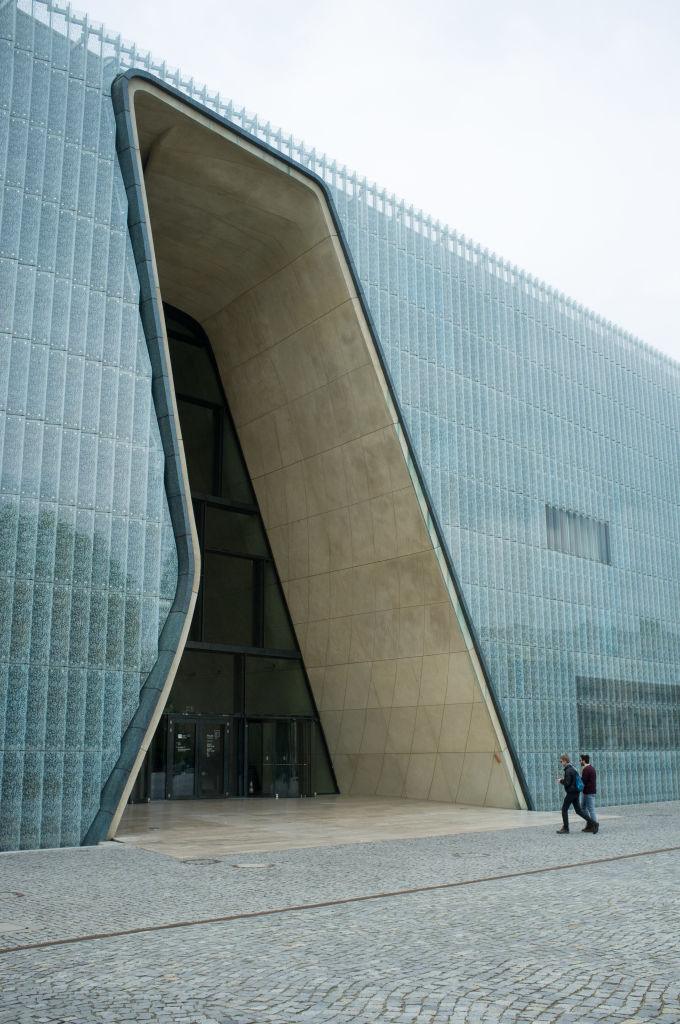
Helena Rubinstein’s story is one of those rare business biographies that reads like a modern myth: from Kraków to global beauty empires, with ambition, self-invention, and sharp commercial instinct at every turn. The exhibition, “Helena Rubinstein. Beauty is your destination,” uses cosmetics, advertisements, packaging designs, photographs, and archival materials to show how Rubinstein built not only a brand, but also a carefully crafted public persona.
What makes the show especially appealing is that it goes beyond beauty history and becomes a portrait of emancipation, style, and power — a reminder that cosmetics can also be about status, identity, and reinvention.
Where: POLIN Museum, Warsaw (https://polin.pl/en/event/helena-rubinstein-beauty-your-destination-exhibition)
World Horse Day celebrated on 11 July is a good moment to look at Poland’s most famous stud farm: Janów Podlaski in the east of the country. Founded in 1817, it is one of the country’s oldest and best-known horse-breeding centers, and it has become especially famous for Arabian horses – admired for their beauty, endurance, and elegant movement.
What makes Janów Podlaski especially cool is that it is not just beautiful – it is also part of Poland’s global reputation in horse breeding. The farm sits near the Bug River in a scenic landscape of meadows and woods, and it hosts the famous Pride of Poland auction (scheduled for 9 August) and the National Arabian Horse Show, which attract buyers and enthusiasts from around the world. One fun detail: some of its horses have pedigrees documented over many generations, which is exactly the kind of royal-level horse lineage that makes Janów Podlaski famous far beyond Poland.