

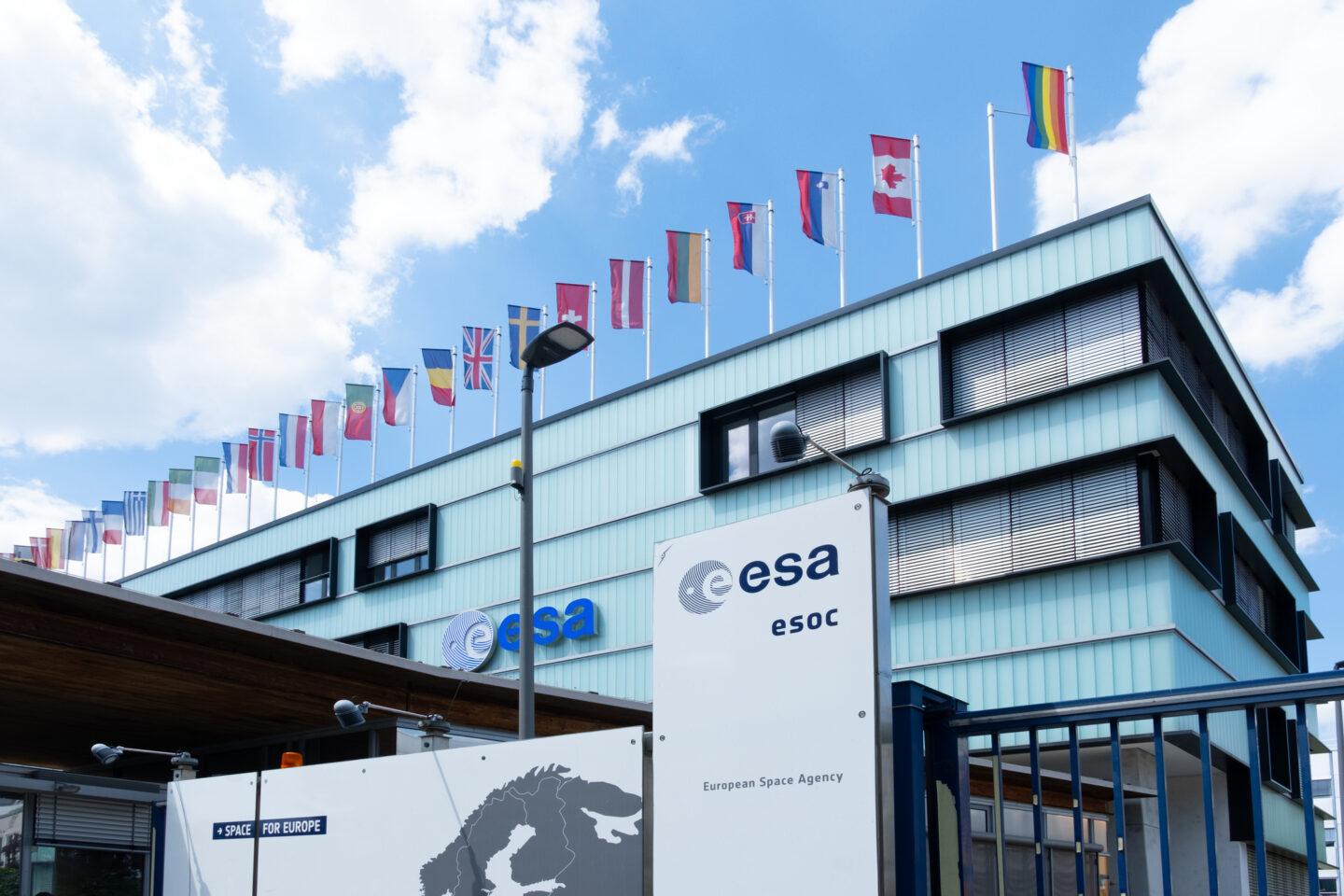
This article is a part of Poland Unpacked. Weekly intelligence for decision-makers
Warsaw has emerged as the winner in the competition to host what will be the largest investment in Poland's space sector to date. The contest lasted nearly a year.
The decision was announced at a joint press conference by Prime Minister Donald Tusk, Minister of Finance and Economy Andrzej Domański, and European Space Agency Director General Josef Aschbacher.
"The decision has been made: it is Warsaw. Poland is Europe's champion when it comes to investing in the space sector. That is justified not only by our ambition, but also by the large community of world-class scientists we have," Prime Minister Donald Tusk said, announcing the city where the European Space Agency will establish its newest research and development center.
"The goal was to create an ESA center in Poland that would serve the country's industry and defense sectors," said ESA Director General Josef Aschbacher.
The investment – the largest in the history of Poland's space sector – attracted bids from seven metropolitan areas over several months: Warsaw, Kraków, Gdańsk, Poznań, Łódź, Wrocław, and Katowice. The government says the unsuccessful candidates will not be left empty-handed.
"The selection process revealed the tremendous potential of Poland's urban centers. That is why we will establish a nationwide network for the development of the space sector across Polish cities. It will serve as a platform for coordination, the exchange of expertise, and joint projects. The Polish Development Fund (PFR) will create a fund for this purpose with capital of around PLN 500 million (approximately EUR 117 million). Meanwhile, Bank Gospodarstwa Krajowego (BGK, state development bank) will introduce a dedicated financing facility for local governments developing space-sector projects," said Andrzej Domański, Minister of Finance and Economy.
The new facility will be the first European Space Agency (ESA) center established outside the territory of the Agency's founding member states. The new ESA center in Poland will be responsible for research in the field of security.
Prestige, recognition, and growth
The decision followed months of competition among Poland’s leading academic and technology hubs to secure the investment. Seven cities competed to host the ESA center.
It is one of the most significant investments Poland has pursued since joining the European Space Agency. The new facility will be the first ESA center established on NATO's eastern flank, Prime Minister Donald Tusk emphasized. Yet the prize is about more than prestige. The center is expected to become a major European hub for developing technologies related to security, the EU's resilience, and dual-use applications.
The project was made possible by the government's decision last year to more than double Poland's contribution to the European Space Agency. Between 2026 and 2028, Poland will allocate EUR 731 million to its ESA membership, with the new research center set to become one of the flagship outcomes of that investment.
Seven cities with space ambitions
From the outset, the competition bore little resemblance to a conventional investment contest. The European Space Agency was not simply looking for an attractive site or a state-of-the-art laboratory. Instead, it evaluated the strength of an established ecosystem: scientific capabilities, collaboration between universities and industry, the presence of space-sector companies, access to research infrastructure, and the potential for the center to develop its own area of specialization.
For European decision-makers, however, quality of life also mattered. The chosen location had to be capable of attracting specialists from across Europe, many of whom relocate with their families. That meant transport connectivity, international schools, housing availability, and a city's openness to foreign professionals all formed part of the assessment.
Experts note that ESA typically establishes new centers where a strong ecosystem already exists, rather than in places where one still needs to be built.
Candidates’ strengths and weaknesses
Kraków built its bid around Poland’s strongest academic base. Its advantages include AGH University of Science and Technology, home to the country’s first Faculty of Space Technologies, the Kraków Technology Park, NATO DIANA, FORT Kraków, and a large pool of specialized talent. The city also has investment-ready sites in the Nowa Huta Przyszłości area. Its potential weaknesses include competing for other strategic state investments at the same time, as well as a tight labor and housing market.
Wrocław focused on its established ecosystem of space companies and universities. The city is home to companies including Scanway and SatRev, while Wrocław University of Science and Technology is developing microsatellite technologies. The Wrocław University of Environmental and Life Sciences also offers a degree program created jointly with space-industry companies, which helped design the curriculum. The city highlighted its high quality of life and airport expansion plans. Its challenge was strong competition from other academic centers with similar scientific potential.
Katowice made the case with investment-ready industrial sites, the growing Silesian Space Technology Cluster, the announced investment by Iceye, and a strong industrial base. However, the city may have been disadvantaged by weaker international connectivity and lower recognition within the European space community compared with Kraków or Wrocław.
Gdańsk stood out thanks to hosting the headquarters of the Polish Space Agency (POLSA) and the new ESA BIC incubator. The city proposed developing a specialization focused on Baltic Sea security, critical infrastructure monitoring, and maritime technologies. Its weaker points included a smaller concentration of space-sector activity compared with the largest academic centers and potential disruptions caused by Russia.
Łódź focused primarily on logistics. It highlighted its central location, the planned high-speed rail network, proximity to Warsaw, investment areas near the airport and Military Aviation Works, as well as the potential of Łódź University of Technology, whose graduate is astronaut Sławosz Uznański-Wiśniewski. At the same time, the city acknowledged that some of its advantages are still emerging and depend on future infrastructure investments.
Poznań emphasized the potential of Poznan University of Technology, the Space Robotics Testing Center, and the developing research campus in Kąkolewo. Its technical infrastructure was a key advantage, although some facilities are located outside the city and the local space-company ecosystem remains smaller than those of its main competitors.
Warsaw argued that it offers the most mature ecosystem in Poland for research and development investment, along with the country’s largest concentration of space, IT, and new-technology companies. The capital highlighted its proximity to central government institutions and its experience hosting other European bodies, such as Frontex. It also pointed to the country’s best transport connections and the largest labor market for highly qualified specialists. Warsaw’s main disadvantage could be its highest-in-the-country cost of living.
A high-stakes balancing act between ESA’s needs and Poland’s ambitions
During a debate hosted by XYZ on the competing bids from Polish cities, Paweł Pacek from the association of space-sector companies emphasized that ESA would also consider the existing centers within its network and their respective responsibilities when making a decision on the location of its new facility.
“ESA already has one center focused on defense technologies – in Belgium. And that presents a significant challenge for the agency. ESA understands Poland’s ambitions to develop security-related technologies, but it is concerned about competing with an existing facility. That is why a distinct specialization that appeals to ESA decision-makers could become an important factor in the final decision,” Paweł Pacek said.
Commentators argue that the most important factor is ensuring that the new center is located in a place capable of maximizing its potential and accelerating the development of Poland’s entire space sector. Although unofficial, many voices have pointed toward Warsaw. It is the capital, located in the center of the country, and meets both the substantive criteria and the broader social requirements.
Confusion instead of a victory photo opportunity
From a political perspective, the government finds itself in an uncomfortable position. Put bluntly, there may be no obvious counterpart to congratulate when announcing the winning location among the cities most frequently mentioned as front-runners. The traditional photo opportunity with city officials celebrating a major success is unlikely to materialize.
The mayor of Warsaw has come under scrutiny over the Southern Hospital controversy, making him a less attractive figure for a high-profile political event.
Explainer
The Southern Hospital (Szpital Południowy)
The Southern Hospital (Szpital Południowy) in Warsaw is the center of a major scandal involving alleged billing fraud, severe patient neglect, and political favoritism. The growing crisis has triggered investigations by Polish prosecutors and raids by the Central Anticorruption Bureau (CBA).
The mayor of Wrocław, facing four prosecutorial charges in connection with the Collegium Humanum case, is also viewed unfavorably by government circles.
Explainer
Collegium Humanum
Collegium Humanum, a private Warsaw university, turned out to be a diploma mill: prosecutors allege it sold MBA and postgraduate certificates with little or no real coursework — its exam-checking system reportedly gave everyone top marks regardless of answers, and top "students" allegedly skipped exams entirely. 58 people have been charged so far.
Wrocław mayor Jacek Sutryk has been indicted and he calls himself a victim.
Kraków, meanwhile, currently has no mayor at all following the recall of its previous mayor in a referendum, and there is still no clear timeline for when a new one will take office.
Gdańsk has not lost its leadership, but experts believe its chances are limited because of its geographic location. While the Tri-City region has a strong argument in favor of strengthening maritime security, Gdańsk is disadvantaged by its proximity to Russia’s Kaliningrad.
Explainer
The Tri-City
The Tri-City (Trójmiasto in Polish) refers to the metropolitan area formed by three neighboring cities on Poland's Baltic coast: Gdańsk, Gdynia, and Sopot.
Together they create one of Poland's most important urban areas with around 750,000-800,000 people.
Gdańsk is the largest and historic anchor - a beautiful port city with over 1,000 years of history, famous for its reconstructed old town, amber trade, and as the birthplace of the Solidarity movement that helped end communism. It's the economic and cultural center with around 470,000 people.
Gdynia is the youngest, built essentially from scratch in the 1920s-30s when Poland needed a modern port after regaining independence. It's more modernist in architecture, has a major commercial port and navy base, and feels more business-oriented. Population around 245,000.
Sopot is the smallest (around 35,000) but punches above its weight - it's Poland's premier seaside resort town, squeezed between the other two. Famous for its long wooden pier, beaches, the Forest Opera amphitheater, and upscale atmosphere.
The three cities blend seamlessly together, connected by the SKM (fast urban railway) that runs along the coast. You can live in one, work in another, and go out in the third without really noticing you've crossed city borders. The transport integration makes it function as one metropolitan area.
ESA avoids regions located too close to potential sources of instability. This is why, for example, Rzeszów – located near Ukraine – did not even enter the race, despite its interest in doing so. Meanwhile, Russia’s actions are already creating real challenges for maritime transport in the Baltic Sea.
There is also Łódź, which is promoting a return to the concept of the Łódź Aviation Valley, built around the Military Aviation Works. Poznań, meanwhile, argues that it could specialize in key areas of security and crisis resilience using satellite data. For now, however, neither city is strongly associated with the space sector. Katowice also benefited from strong lobbying efforts by one of the government ministers.
The benefits of lobbying
The intense, months-long competition between cities and the aggressive lobbying efforts demonstrated that awareness of the importance of the space sector is growing in Poland. It has also raised public awareness that the country already has a developing – and rapidly expanding – space industry.
As Professor Stanisław Uhl, Dean of the Faculty of Space Technologies at AGH University of Science and Technology, told XYZ in an interview, around 500 companies currently operate in Poland’s space sector. The best-known players, including Creotech and Scanway, have begun securing major public contracts both in Poland and abroad.
“Regardless of which city was selected, Poland’s space sector has been given a new opportunity. The competition between cities has shown the scale of opportunities we have in developing companies and research capabilities within the space ecosystem. The potential has been revealed. Now the priority is to activate it and ensure that we do not miss this opportunity,” said Maciej Myśliwiec, Director of the SGH Space Ecosystem Center.


Key Takeaways
- Announcement of the decision on the ESA center in Poland: The Polish government, together with the ESA Director General, announced the host city for the European Space Agency’s new research and development center in Poland. The project is one of the largest space-sector investments in the country and was made possible by an increase in Poland’s ESA membership contribution. Warsaw was selected as the winner.
- Competition between seven cities: Seven locations competed to host the center: Kraków (Poland’s strongest academic hub), Wrocław (an established ecosystem of space companies), Gdańsk (with a focus on maritime security), Katowice, Łódź, Poznań, and Warsaw. Some cities were disadvantaged by local political disputes, while others faced concerns related to potential security risks stemming from Russia’s activities.
- Strategic importance of the investment: The center will focus on dual-use technologies and security-related solutions. The competition between cities highlighted the growing potential of Poland’s space sector. Regardless of Warsaw’s selection, the entire ecosystem is expected to receive a new development opportunity. The government has announced financial support, including a PLN 500 million (approximately EUR 117 million) PFR fund and additional financing mechanisms to be offered by Bank Gospodarstwa Krajowego (BGK).