
Poland Unpacked week 30 (13 - 19 July 2026)

Welcome to this week’s edition of our Poland Unpacked, where we deliver key insights and trends shaping the economic, corporate and political landscape. Catch the most important insights from Poland in this week’s briefing.

Loading the Elevenlabs Text to Speech AudioNative Player...
Business
Tariffs, AI and expansion 
Małgorzata Grzegorczyk

Since July 1, a EUR 3 tariff has applied across the EU to every parcel arriving from outside the bloc. Brussels introduced the measure as part of its effort to counter Chinese e-commerce platforms. Within the first week of the new rules taking effect, the platforms had already changed their pricing strategies, according to a report by WhenUbuy and Univio that analyzed the 50 most popular products on AliExpress, Shein and Temu. Each platform passes the cost of the charge on to customers differently. Find out how – and which European industries could benefit from the new tariffs. Read our article here.

The IT boom has helped Senetic, a Polish provider of software and hardware. The company serves small and midsize businesses across Europe, typically with between 10 and several hundred computers. As AI drives demand, demand for the company's products and services now exceeds supply. Senetic had planned to reach PLN 1 billion (approximately EUR 235 million) in revenue in 2028, but is now likely to hit that target this year. The company is part of the Euvic Group, which partners in Europe with global leaders such as Microsoft, HPE and Cisco. Here's their story.

Ziaja, a family-owned cosmetics company founded in 1989, also wants to grow faster than the market. It generated PLN 500 million (approximately EUR 118 million) in revenue last year. The Ziaja brand is also highly popular abroad. South Korean tourists have reportedly been buying Ziaja products for years, particularly those from its Goat's Milk line, and in considerable quantities. Ziaja plans to pursue acquisitions and is looking for targets in Poland and abroad. It has several hundred million zlotys to spend. Within a few years, it wants to become a European company. More information in our article here.

Economy & Markets
Resilience amid new pressures
Marek Skawiński

Last week brought few new macroeconomic releases on Poland. The picture will change this week, when Statistics Poland (GUS) publishes data on average wages, industrial and construction output, as well as retail sales.

That does not mean, however, that there were no interesting data releases. Most notably, GUS published figures on foreign trade. Between January and May 2026, Poland’s exports of goods amounted to EUR 157.6 billion, up 3.4% year on year. Imports stood at EUR 160.6 billion, an increase of 3.3% year on year. As a result, Poland recorded a symbolic trade deficit of EUR 2.9 billion. In practice, this represents a balanced trade position.

This is particularly encouraging given the sharp increase in energy commodity prices in recent months. The fact that Poland has maintained a broadly balanced trade position despite these pressures highlights the resilience of its economy. This is largely thanks to the country’s highly diversified industrial base. In our detailed analysis, we also examine the rise in imports from China and Vietnam, particularly in the automotive sector.

Services output, adjusted for seasonal fluctuations, increased by 6.6% year on year in April, according to GUS. This represents a very solid pace of growth. By comparison, industrial output rose by 2.5% year on year over the same period. Services have been the main engine of Poland’s economic growth for several years now. Compared with the average level recorded in 2021, services output in April this year was 30.1% higher.

The Ministry of Finance published the latest data on the estimated execution of the state budget for the first six months of the year. The dynamics of VAT revenues, the most important component of budget income, are a cause for concern. Between January and June, VAT revenues amounted to PLN 161.2 billion, increasing by only PLN 0.3 billion (0.2%) compared with the same period a year earlier. This is significantly below the pace assumed in the 2026 budget law (6.2%).

In May alone, VAT revenues fell by almost 9% year on year. One factor behind the decline is the Lower Fuel Prices program, which reduced VAT on liquid fuels. However, this appears to explain only part of the weakness. To some extent, weaker VAT revenues are being offset by higher CIT revenues (following an increase in the tax rate for banks) and PIT revenues (as a result of frozen tax brackets).

Mid-year is a good moment to take stock of global equity markets. The stock market indices that have gained the most this year are South Korea’s KOSPI and Taiwan’s TAIEX, both up by around 60%. The extraordinary rally has been driven by massive investment across the entire artificial intelligence value chain.

The Polish stock market has also performed very strongly this year. The WIG, the broad market index, has risen by more than 22% since the beginning of the year. This marks the second consecutive year in which Polish equities have ranked among the world’s strongest performers. Gains on the Warsaw Stock Exchange reflect the strong condition of the Polish economy, which is benefiting listed companies. They also partly reflect a larger inflow of foreign capital into the Polish market.

In our structural analysis, we show that Poland has achieved the status of a highly developed economy, despite widespread concerns a decade ago that the country could fall into the middle-income trap. Current data show that Poland has already overtaken some Western European countries in terms of income per capita and has a realistic chance of continuing to narrow the gap.

In another analysis, we examine the latest Eurostat data. Poles spend 1.5 fewer years in employment than the average EU resident. The expected duration of working life in Poland stood at 35.9 years in 2025, compared with 37.4 years on average across the European Union. We highlight the key divisions in this area along Europe’s north–south axis, with particular attention to women’s labor market participation.

Politics & Policy
Will the former prime minister leave Poland’s largest opposition party?
Rafał Mrowicki

This was one of the most frequently asked questions in Polish politics over the past week.

Tensions are rising over the conflict between Mateusz Morawiecki, prime minister from 2017 to 2023, and his rivals within the Law and Justice party (PiS). Party leader Jarosław Kaczyński and his closest allies are unhappy with the growth of the association Mr. Morawiecki has established, to which he has invited 40 MPs. Mr. Morawiecki and his allies have been given an ultimatum: choose either the party or the association. The next two weeks could determine the former prime minister’s future within PiS.

PiS also attracted attention over remarks by Przemysław Czarnek, a former education minister and PiS’s current candidate for prime minister. Riding a wave of anti-Ukrainian sentiment on the Polish right, he suggested that the European Union should suspend aid to Ukraine until Kyiv renounces its support for “Banderism”. The term refers to an extreme nationalist ideology from the 1930s and 1940s. Its tragic symbol was the genocide of Poles in Volhynia region (now in Ukraine) during the Second World War. PiS leader Jarosław Kaczyński demanded an explanation from Mr. Czarnek.

Mr. Kaczyński has also invited Marek Woch to cooperate with the party. Mr. Woch is the leader of the Non-Party Local Government Officials movement and a candidate in last year’s presidential election. He came last, receiving 18,000 votes (0.09%). The move was mocked by Sławomir Mentzen, leader of the Confederation party, which is currently PiS’s main rival on the right.

President Karol Nawrocki signed into law a ban on “patostreaming” — online broadcasts featuring extreme or harmful content — as well as legislation requiring the collection of data on doctors’ earnings. The latter law follows reports of doctors receiving multi-million-zloty salaries.

The president, however, vetoed a bill introducing the legal status of a “close person”, which was intended as a more limited alternative to civil partnerships. Poland remains one of the last European Union countries without legal recognition of same-sex partnerships. From August, it will become possible to transcribe marriage certificates for same-sex marriages concluded in other EU countries. This follows a ruling by the Court of Justice of the European Union.

Poland and Germany are set to deepen cooperation in defence. At XYZ, we spoke with Miguel Berger, Germany’s ambassador to Warsaw, about the new Polish-German treaty. The diplomat highlighted the need to strengthen the competitiveness of the European economy amid growing pressure from China. Here's the interview.

Tensions within the governing coalition also flared over legislation on short-term rentals. The government approved a softer version of the bill, which does not give local authorities powers to regulate the sector. The legislation primarily provides for the creation of a registry of properties offered for short-term rental. The only government minister to oppose this version of the bill was Katarzyna Pełczyńska-Nałęcz.

Next week, the Senate (the higher chamber of Polish parliament) is expected to formally approve the Sejm’s decision on the appointment of Poland’s Commissioner for Human Rights. On Friday, the Sejm elected lawyer Sylwia Gregorczyk-Abram to the position. She was an active protester against what she described as violations of the rule of law under PiS governments. Her rival was Adam Borowski, who is seen as sympathetic to PiS.

The Senate will also decide on the appointment of the president of the Institute of National Remembrance (IPN). The Sejm, with votes from PiS and the Polish People’s Party (PSL), selected Dr Mateusz Szpytma, a historian and former deputy head of the IPN when Karol Nawrocki served as its president. Prime Minister Donald Tusk has announced that Civic Coalition (KO) senators will oppose his candidacy.

Startups / VC / Tech
Capital meets innovation
Anna Bełcik

After months of competition among seven of Poland’s largest cities, the government has selected the location for a new research and development center of the European Space Agency. It will be the largest investment to date in Poland’s space sector and one of the most significant outcomes of the country’s increased contribution to the ESA. The new facility will develop technologies related to security and dual-use solutions, while its creation is expected to strengthen Poland’s position in the European space ecosystem. At the same time, the government announced the establishment of a PLN 500 million (EUR 116 million) PFR fund and new financing instruments from BGK to support the development of space-tech projects beyond the city selected by the ESA.

In this article, we examine the behind-the-scenes story of the months-long competition between Poland’s metropolitan areas, their strongest arguments, and why the final decision depended not only on universities and companies operating in the sector, but also on the quality of the broader local innovation ecosystem. The decision could shape the direction of Poland’s space sector for years to come.

PFR Ventures announced last week that Poland’s venture capital market closed the first half of 2026 with a record result: startups raised more than PLN 4.6 billion (EUR 1.1 billion) in funding. However, more than 80% of this amount came from just two exceptional transactions: funding rounds by ICEYE and ElevenLabs. Once these deals are excluded, the picture is one of a much slower-growing market, although the way investments are being made is clearly changing. Funds are increasingly committing larger amounts of capital to a smaller number of companies, co-investments are becoming more important, and startup financing remains heavily reliant on public funds.

In this article, we analyze what the latest data really says about the health of Poland’s VC market, which segments are growing fastest, and whether the era of small seed-stage funding rounds is coming to an end.

Record-breaking funding rounds attract attention, but the health of the venture capital market is still determined primarily by early-stage startup investments. According to PFR Ventures data, the average pre-seed or seed round now stands at around PLN 3 million (EUR 700,000), while the market is becoming increasingly competitive and international.

Business angels and foreign partners are joining VC funds more frequently, while Polish funds are becoming increasingly willing to finance companies based abroad. We examine how the market for financing young technology companies is changing and what opportunities are available today to startups at the beginning of their growth journey.

Alongside startups raising funding, companies turning artificial intelligence into practical business solutions are also expanding rapidly. One example is exeAI, a company founded by former head of Microsoft’s technology center in Poland Jarosław Sokolnicki and entrepreneur Piotr Kawecki. The company is focused on practical AI implementations in industry, particularly in the food sector, where the technology is intended to support areas such as production planning, logistics, and quality control. We explore how exeAI’s founders aim to stand out in an increasingly competitive market and why they are prioritizing measurable business outcomes over fashionable buzzwords.

After hours
News, now served cold
Michał Szcześniewski

Newspresso, XYZ’s signature coffee collaboration with STOR, has landed – temporarily – at STOR Cafés on Bracka Street and Tamka street in Warsaw. And it is worth a detour before it disappears at the end of August.

The drink itself is a summery twist on espresso: beans roasted in Warsaw by ROST paired with a house tonic infused with orange peel and orange blossom syrup, designed specifically for the XYZ community. The setting helps – STOR’s airy spaces with its pre-war mosaic floor, sunlit garden and relaxed mezzanine (on Bracka) feels made for slow, curious tasting rather than hurried caffeine fixes. Subscribers get an extra incentive with a small discount (show your XYZ app at the counter;)), but even without it, this is one of those limited, local collaborations that reward showing up while they last.

Enjoy! https://stor.cafe/

newspresso
Newspresso. Worth a detour before it disappears at the end of August.
fun fact about poland
The castle that refuses to retire
Michał Szcześniewski

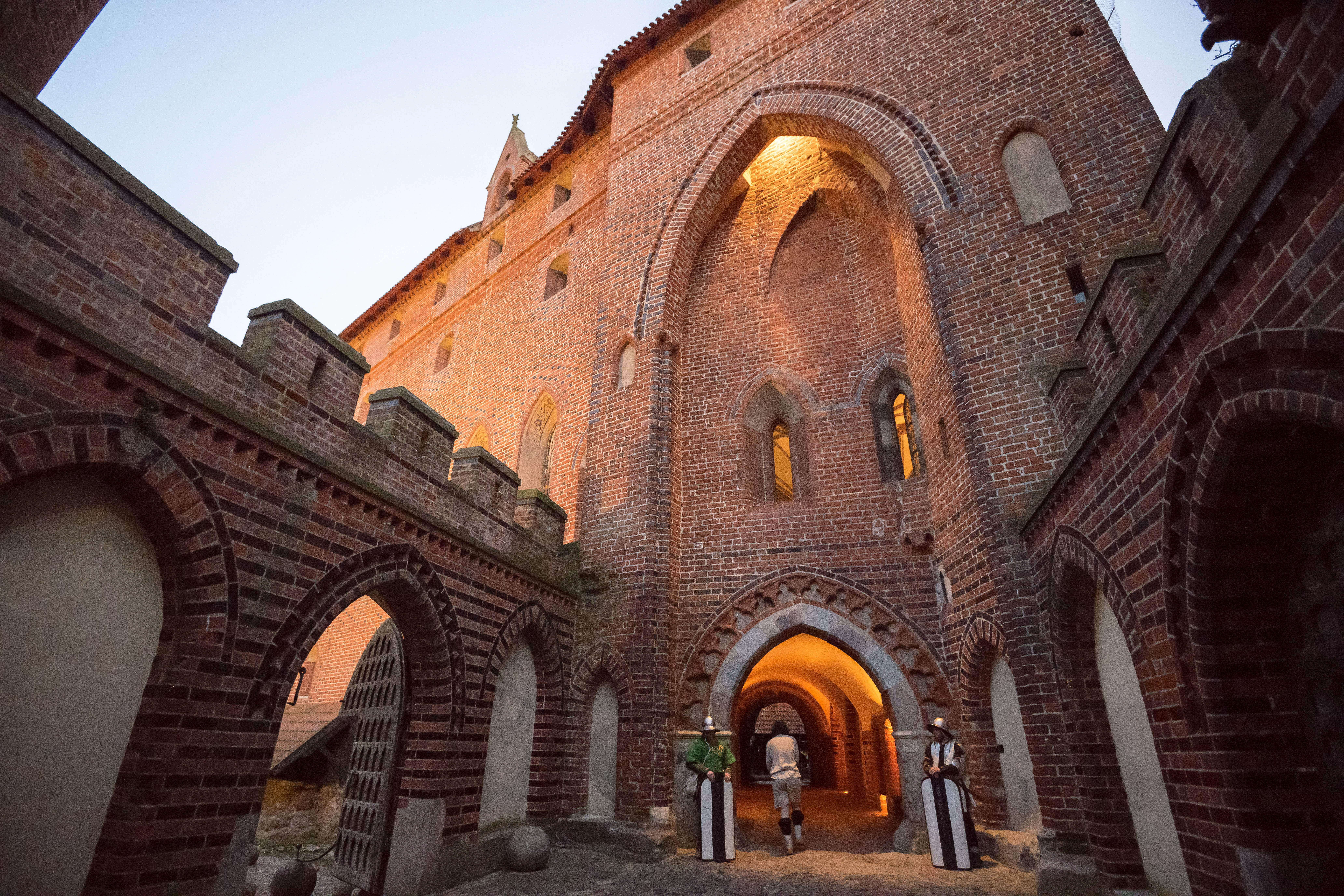
July 19 marks International Castle Day and yes - we have something to celebrate it with. Meet the Malbork Castle, a hulking red-brick fortress in northern Poland. Or less a castle than a statement of medieval ambition. Built in the 13th century by the Teutonic Knights, it remains the largest castle in the world by land area – a sprawling complex of walls, courtyards and halls that once anchored a crusading state on the Baltic frontier. Its scale was strategic theatre: intimidating rivals, impressing allies and projecting the orderly power of a military-religious order that mixed monastic discipline with territorial appetite. Today, it is a UNESCO-listed monument and one of Poland’s most recognizable historical sites, where Gothic austerity meets careful post-war reconstruction.

Yet Malbork is not merely a relic. It regularly fills with the clank of armor and the thud of hooves as modern-day “knights” descend for reenactments and tournaments. Enthusiasts from across Europe (and even Australia!) gather to stage battles, practice swordplay and briefly resurrect the pageantry of chivalry – albeit with better health insurance and fewer existential crusades. For visitors, the spectacle offers a curious blend of education and entertainment: history not just preserved behind glass, but performed, shouted and occasionally swung on the end of a broadsword.

Check their website for more info and the big event coming soon: https://zamek.malbork.pl/en/home/
Zamek w Malborku
A night tour of the castle in Malbork is definitely an experience for thrill-seekers. Photo: PAP/Andrzej Jackowski