

This article is a part of Poland Unpacked. Weekly intelligence for decision-makers
The differences concern not only the level of additional costs, but also the point at which customers learn the final price of their purchase.
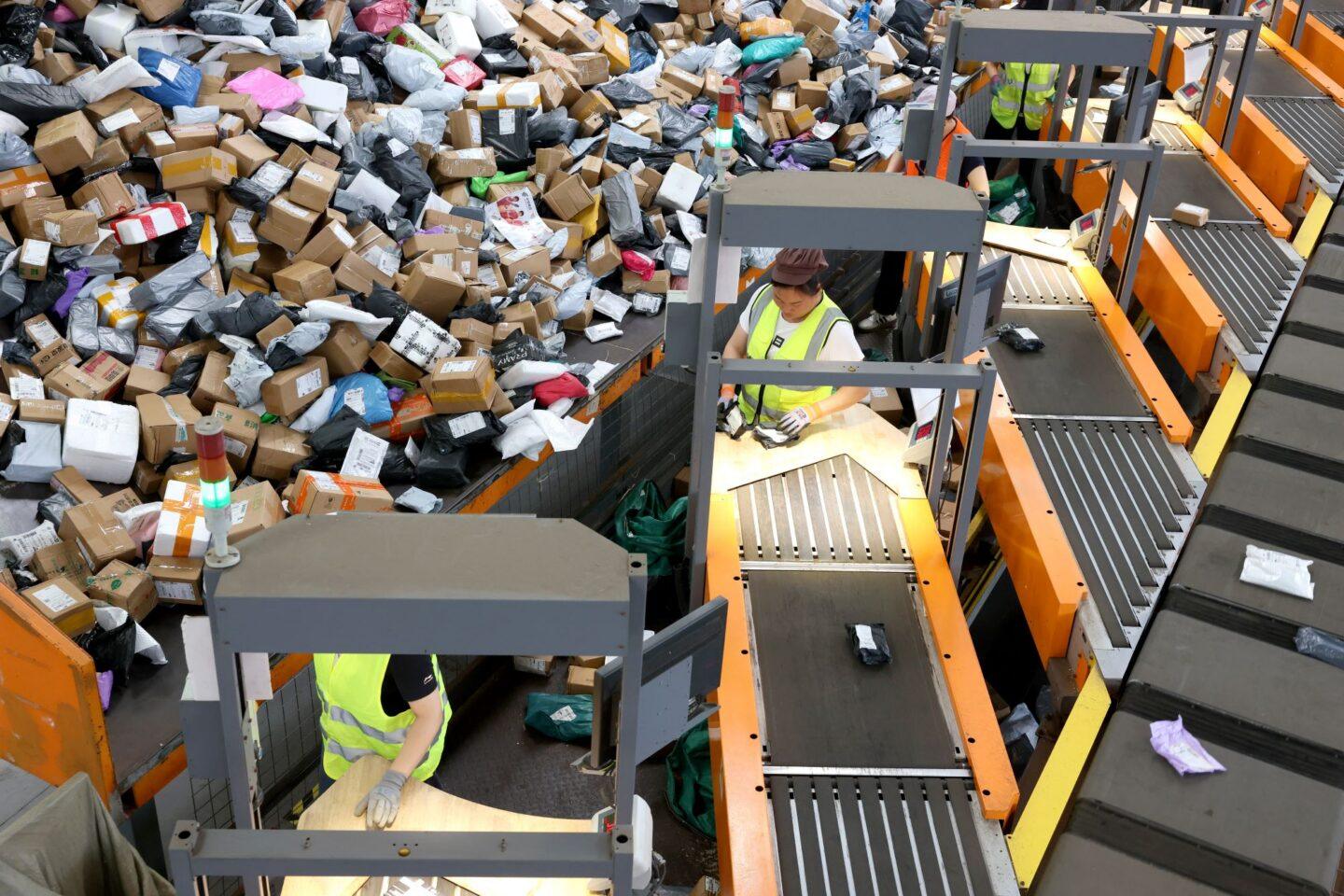
Tariffs on Chinese parcels have become a reality. Since July 1, 2026, all goods purchased remotely from countries outside the EU and imported into the bloc in parcels have been subject to a EUR 3 duty (around PLN 13). From November 1, an additional handling fee will be introduced. Previously, parcels containing goods worth up to EUR 150 were exempt from customs duties.
Although the new EU rules apply to all parcels arriving from outside the bloc, it is no secret that their main target was goods purchased on Chinese platforms. In 2024, the EU received 4.6 billion non-EU parcels containing goods worth less than EUR 150. That was twice as many as in 2023 and more than three times the number recorded in 2022.
“Such parcels are currently entering the EU duty-free, creating unfair competition for EU-based sellers, posing risks to consumer health and safety, contributing to high levels of fraud, and raising environmental concerns,” the Council of the European Union said in December, explaining the rationale behind the introduction of the tariff.
Before the new rules came into force, forecasts suggested they would have little impact. It was argued that Chinese companies were increasingly moving a significant share of their logistics operations to Europe. Goods imported from China in bulk but shipped to retail customers from warehouses located in Europe are not covered by the new regulations.
Experts, however, point out that contrary to those predictions, the effects are already visible. Where? Precisely where they were expected to hurt the most: in customers’ wallets.
Chinese companies are already responding to the new regulations
It was often argued that consumers would not notice any change after tariffs on Chinese parcels were introduced. Yet, within the first week of the new rules coming into force, Temu, Shein and AliExpress adjusted their pricing strategies. The additional costs are, with little doubt, being passed on to end customers, according to Ewa Kraińska, CEO of WhenUbuy, and Sebastian Błaszkiewicz, strategic advisor and market expert at Univio, as well as a member of the Chamber of Digital Economy’s Council.
Their analysis shows that prices on the three most popular Chinese platforms in Poland had already changed during the first week under the new regulations. Experts from WhenUbuy and Univio examined the prices of 50 of the most popular products on AliExpress, Shein and Temu. They compared purchase prices from the first half of 2026 with prices recorded in the first week of July.
Three platforms, three strategies
Each of the companies analyzed by Ewa Kraińska and Sebastian Błaszkiewicz is pursuing a slightly different strategy. At one end of the spectrum is Temu. Average product prices on the platform have changed only marginally, and in the vast majority of cases the duty is added only at the shopping cart stage.
This means that the offer remains highly competitive at first glance. The full cost of the purchase is revealed only at the final stage of the customer journey.
AliExpress has taken the opposite approach. The platform shows clear price increases on the products themselves. According to the authors of the analysis, this suggests that a significant share of the new costs has been incorporated directly into product prices. For customers, this means the increase is visible as soon as they browse the offer. However, the risk of an unexpected charge when completing the order is lower.
Good to know
Transaction prices on Chinese platforms differ from standard prices
The authors of the analysis point to an important methodological caveat. The purchase price recorded in the first half of the year does not necessarily reflect the regular listed price. In practice, it may have been reduced through coupons, discounts or promotional offers provided by the platform or the seller. As a result, the calculated scale of price increases following the introduction of tariffs may be overstated in some cases.
Shein has adopted a middle-ground approach. On this platform, both significant increases in product prices and the addition of customs duties at the shopping cart stage can be observed. This means that part of the cost has been incorporated into the product price, while another part is revealed only when the order is finalized.
“Customers are already noticing a shift in the platforms’ approach. This is clearly visible in the numerous reactions shared on social media,” Ewa Kraińska and Sebastian Błaszkiewicz point out.
Additional costs are borne by customers
The introduction of tariffs has not remained neutral either for the market or for consumers – this is the main conclusion of the analysis. Just one week after the new regulations came into force, it is already clear that platforms have changed the way they set prices. The additional cost has been passed on to end customers.
“The e-commerce market is adapting to the new reality very quickly. Platforms do not intend to absorb the additional costs in the long term. Instead, they are changing the way they communicate these costs and pass them on to customers. This shows that the product price alone is no longer a sufficient benchmark for assessing the attractiveness of an offer,” comments Ewa Kraińska, CEO of WhenUbuy.
She adds that consumers should pay attention not only to the price displayed in search results or on the product page. All additional charges added at the shopping cart stage also matter. In her view, the introduction of tariffs could also have implications for sellers and other businesses operating in the market.
“If the price gap between Chinese platforms and local sellers narrows, some consumers may begin to place greater importance on other elements of the offer, such as delivery times, ease of returns, quality of customer service or shopping security. As a result, competition in e-commerce will increasingly be based not only on the lowest price, but also on the overall shopping experience,” says Ewa Kraińska.
Polish players can benefit, but they cannot afford to sit idle
Sebastian Błaszkiewicz of Univio, a member of the Chamber of Digital Economy’s Council, believes that the new tariffs create fresh opportunities for Poland’s e-commerce industry. This is particularly true given that they may only be the first step towards a broader reform of the customs system. However, European companies must make effective use of the opportunity created by the reduction in the price advantage enjoyed by global platforms.
“Local players should consciously invest in areas that cannot be replicated overnight. This means fast and predictable delivery, a simple returns process, high-quality customer service, transparent information about product origins, and genuinely building trust in their brands. If Polish online stores and marketplaces seize this moment, they can turn the price shock caused by tariffs into a lasting change in consumer purchasing habits,” says Sebastian Błaszkiewicz.
Expert's perspective
The number of parcels from China may fall. The question is for how long
From a logistics perspective, the change introduced on July 1 does not mean the end of trade in low-cost goods from outside the EU. A shift in the way products reach customers is more likely. The model of individual air parcels shipped directly from Asia will lose some of its cost advantage. It will increasingly be replaced by consolidated imports, involving customs clearance for larger batches of goods, their storage in EU warehouses, and delivery to customers in local markets.
This trend could have consequences not only for e-commerce but also for the logistics sector. If major Asian platforms and operators move larger volumes of goods into European warehouses, they may gradually develop their own last-mile delivery capabilities or strengthen partnerships with selected courier companies. For local operators, this would mean greater competition not only in import handling but also in the domestic delivery market.
The starting point for these changes is the relocation of goods to European warehouses. This model primarily benefits platforms that already have warehouse infrastructure in Europe, handle large shipment volumes and have the financial resources to rapidly redesign their logistics operations. Smaller sellers will find it much more difficult to adapt at the same pace. For Polish and European SMEs, this creates an opportunity to capture part of the market.


Polish logistics stands to benefit. But what about sellers?
According to Andrzej Ciesielski, CEO of Furgonetka.pl, local online sellers and large European marketplaces will not necessarily benefit from the introduction of tariffs. Chinese platforms can still compete with them on price. At the same time, they are expected to accelerate the development of their logistics infrastructure in the EU, staying ahead of further regulatory changes.
“Poland is becoming a Chinese distribution hub for Europe. Platforms are not waiting for new regulations. Temu, Shein and JD.com are moving goods into warehouses across Europe, including facilities in Poland. A parcel no longer spends three weeks travelling from China; instead, it is shipped from a distribution center near Warsaw or Łódź. Moreover, the €3 fee is only the first step. More stringent rules will come into force in 2028, when the EU completely removes the EUR 150 threshold. By then, platforms will have had time to redesign their operating models,” says Andrzej Ciesielski.
In his view, the changes could hurt intermediaries that import low-cost products through Chinese marketplaces and then resell them on local platforms. Companies providing infrastructure and logistics services, however, may benefit.
“The more goods that are moved into warehouses in Poland, the more parcels will need to be distributed from here across Europe. These are real contracts for Polish courier companies, businesses providing end-to-end order fulfillment services, and logistics software providers. Paradoxically, Chinese expansion is driving the growth of Polish logistics,” says the CEO of Furgonetka.pl.
“A key element of the changes taking place in Polish e-commerce under the influence of new EU regulations will be consumer education,” says Sebastian Błaszkiewicz.
As he points out, customers will bear additional costs – either directly in the form of customs duties or indirectly by financing foreign platforms’ investments in logistics infrastructure located within the EU.
For this reason, companies operating in the e-commerce market should inform customers not only about customs costs, but also about product quality, associated risks, manufacturing locations and the consequences of shifting mass consumer spending towards non-EU platforms for local businesses.
“Let us remain open to competition, but not to a model in which European companies are burdened with additional regulations while non-EU players benefit from ‘preferential’ conditions for years. Equal rules, transparency and fair accounting for costs, including customs duties, are the only way for Polish e-commerce to have a genuine chance in this competition. Today and during the next stages of customs reform,” says Sebastian Błaszkiewicz.


Key Takeaways
- Shopping on Chinese e-commerce platforms has become more expensive. The effects of introducing tariffs on parcels worth up to EUR 150 were visible as early as the first week after the new regulations came into force.
- The three most popular platforms – AliExpress, Shein and Temu – have adopted different strategies regarding when customers are informed about the higher price resulting from customs charges. This has implications for conversion rates, marketing strategies and consumers’ ability to compare offers.
- Polish and European e-commerce companies may benefit from the changes. This applies not only to sellers, whose prices have become more comparable with those offered by Chinese platforms. EU-based logistics operators, warehousing companies and software providers may also play a more prominent role.