


This article is a part of Poland Unpacked. Weekly intelligence for decision-makers
Read the full issue
Small modular reactor (SMR) projects are advancing around the world, but they are at very different stages of development. According to the World Nuclear Association (WNA), two such facilities are already operating commercially: one in Russia and one in China. Another five are under construction: two in Russia and one each in China, the United States and Argentina.
That list, however, is already partly outdated. Argentina officially abandoned construction of the Carem-25 reactor last year and shifted to another technology, ACR-300. Meanwhile, in April this year, Canada installed the foundations for its first BWRX-300 reactor, an event considered the official start of construction. A similar facility is planned for Poland, provided Orlen and Synthos Green Energy reach an agreement on the project. At the same time, more European countries are announcing final investment decisions or selecting technology partners.
Enthusiasm is high, but data remains scarce
The development of this technology is also being monitored by the Nuclear Energy Agency (NEA). The agency has recorded significant progress in the deployment and commercialisation of SMRs, with the strongest acceleration taking place over the past two years. The NEA estimates that by 2050, global small modular reactor capacity could range from 30 GW to as much as 150 GW. Much will depend on whether these facilities are used solely in the energy sector to produce electricity and heat, or whether they will also be deployed on a large scale to power industrial plants. For the most optimistic scenario to become reality, technology providers will need to adapt to industrial requirements in terms of both costs and investment timelines. For now, however, those figures remain a major unknown.
“The ability to deploy SMRs rapidly and at scale has not yet been demonstrated, and the actual costs of projects remain largely uncertain,” the NEA cautions in its latest report on small modular reactors.
The agency nevertheless sees numerous potential benefits from the use of SMRs. These include improved safety systems, the ability to supply district heating networks and more attractive financing options. Such advantages are possible thanks to shorter construction times, fewer components and the smaller overall size of the facilities.
Both the NEA and the World Nuclear Association (WNA) expect additional commercial SMRs to emerge over the coming decade.
“Leaving aside China and Russia, the first unit at Canada’s Darlington site is expected to be connected to the grid in 2030. At the same time, other investors are planning SMR projects in Europe and North America. Facilities in the United States, the United Kingdom, the Czech Republic and Poland are expected to be connected to the grid in the early or mid-2030s,” says Henry Preston from the WNA press office.
British technology gains traction in several countries
Across Europe, more countries are announcing their SMR ambitions. The United Kingdom has selected domestic company Rolls-Royce SMR as the supplier of its small reactor technology. State-owned Great British Energy – Nuclear signed an agreement with Rolls-Royce this year to begin design work on three reactors. They will be built at the site of the former Wylfa nuclear power station in north Wales. The British government has committed £2.6 billion in support for the project.
“In an era of global instability, this is a milestone for the United Kingdom’s energy security. We are supporting a British company in delivering our first small modular reactors. This will create good new jobs, drive economic growth and provide clean, local energy for decades to come. Our clean energy mission is the only way to break free from the fossil fuel cycle and regain control over our energy independence,” said Ed Miliband in April. At the time, he was secretary of state for energy; he has since become the UK’s foreign secretary.
Rolls-Royce SMR also signed a contract this year with Czech energy group ČEZ. The companies are working together on the development of small reactors at the Temelín nuclear power plant in the Czech Republic.
“Thanks to this agreement in the Czech Republic and the contract in the United Kingdom, Rolls-Royce SMR has become the only company with multiple contractual commitments to supply SMR units in Europe,” said Chris Cholerton, CEO of Rolls-Royce SMR.
Czech momentum
And that is not the end of the story. In July, the company signed an agreement with the Czech Republic covering preparatory work for the construction of additional units at two other locations. In June, Sweden also selected this technology. Rolls-Royce plans to build three SMRs on the Värö peninsula on Sweden’s western coast.
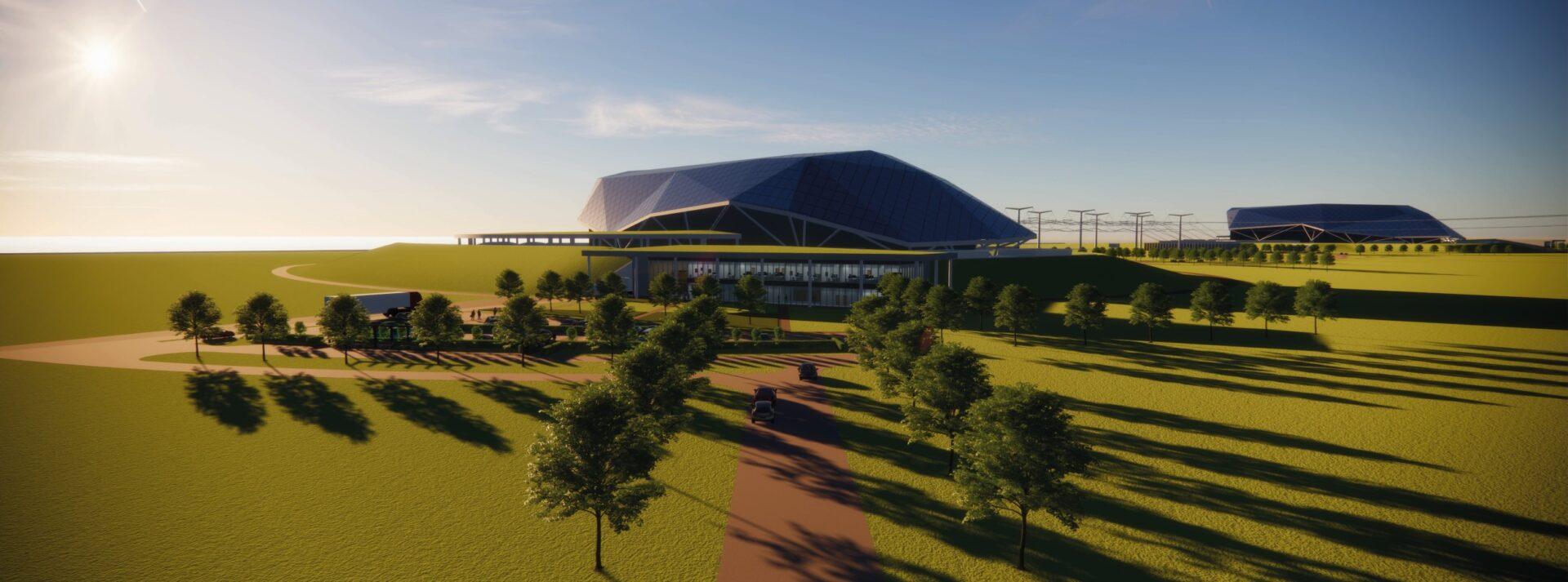
According to Rolls-Royce, its reactor is in the final stage of the regulatory approval process in the United Kingdom. It is an unusually large SMR, with an output capacity of 470 MW. Many publications define small modular reactors as units with a capacity of no more than 300 MW. Even so, the technology remains significantly smaller in scale than a conventional nuclear power unit. For comparison, the US-built AP1000 reactor planned for Poland has a capacity of 1,250 MW.
Construction has already begun in Canada
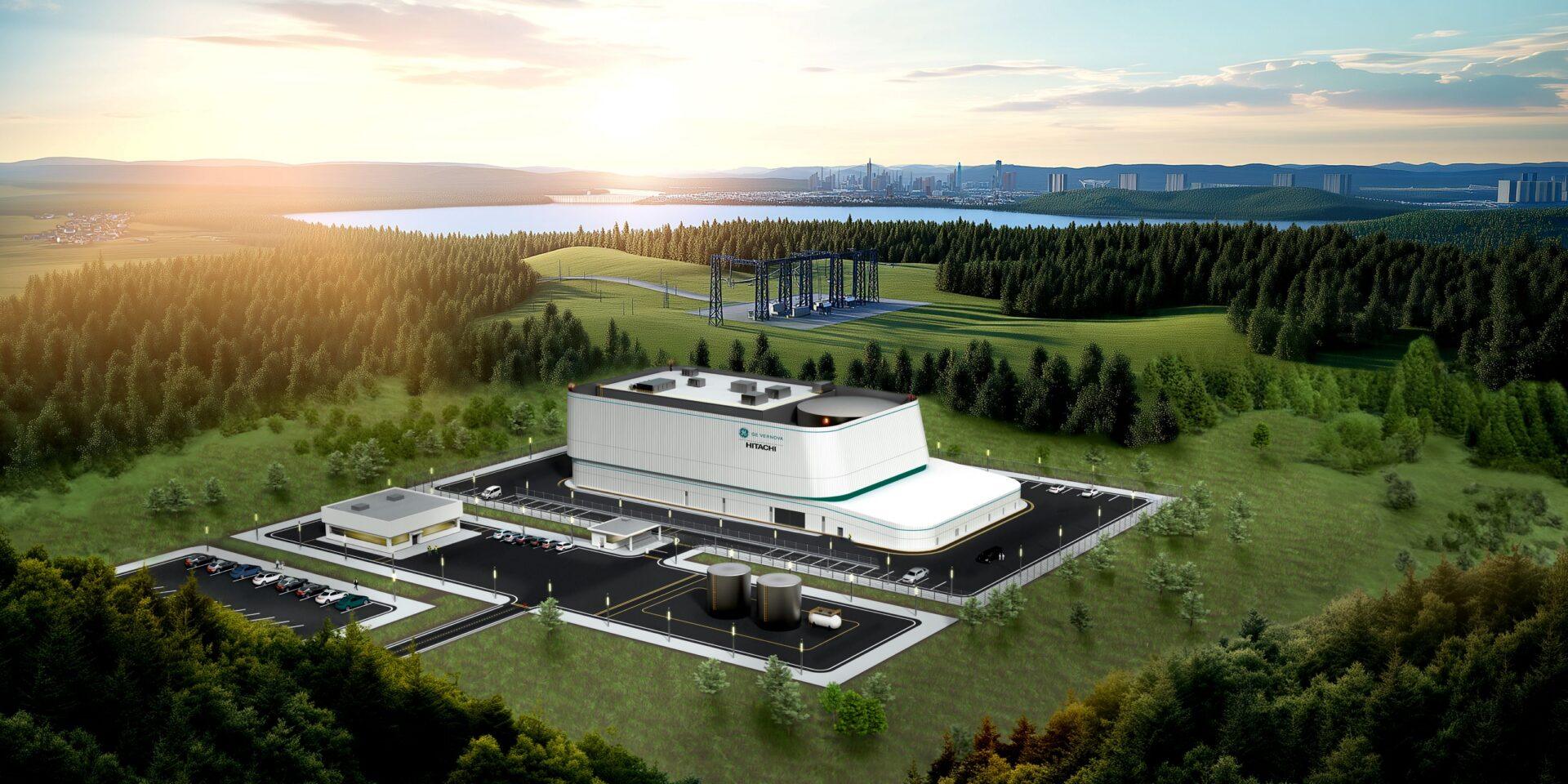
The first small reactor launched outside Russia and China could be the BWRX-300, a 300 MW reactor developed by the US-Japanese consortium GE Vernova Hitachi. The project is being carried out by Ontario Power Generation (OPG) at the Darlington nuclear power plant. Construction is already under way. In April, the contractor installed, 35 metres underground, the approximately 952-tonne foundation for the first small reactor. Four such units are planned for the site in total.
Following the completion of the foundation work, construction of the reactor itself will begin. It will be the first new nuclear power facility built in Canada in more than 30 years. At the end of March, OPG submitted an application to Canada’s nuclear regulator for an operating licence for the first SMR.
“Reaching these milestones demonstrates the momentum behind the project. Our focus on safety, quality and continuous improvement ensures that the project continues to progress and positions us well for the next stages of work,” commented Boris Vulanovic, vice-president at OPG.
The BWRX-300 will also be built in the United States. In December 2025, the US government awarded a $400 million grant to support efforts to accelerate deployment of the small reactor at the Clinch River site in Tennessee. The investor has submitted a construction permit application to the US nuclear regulator and is currently awaiting a decision.
Reactors for Google
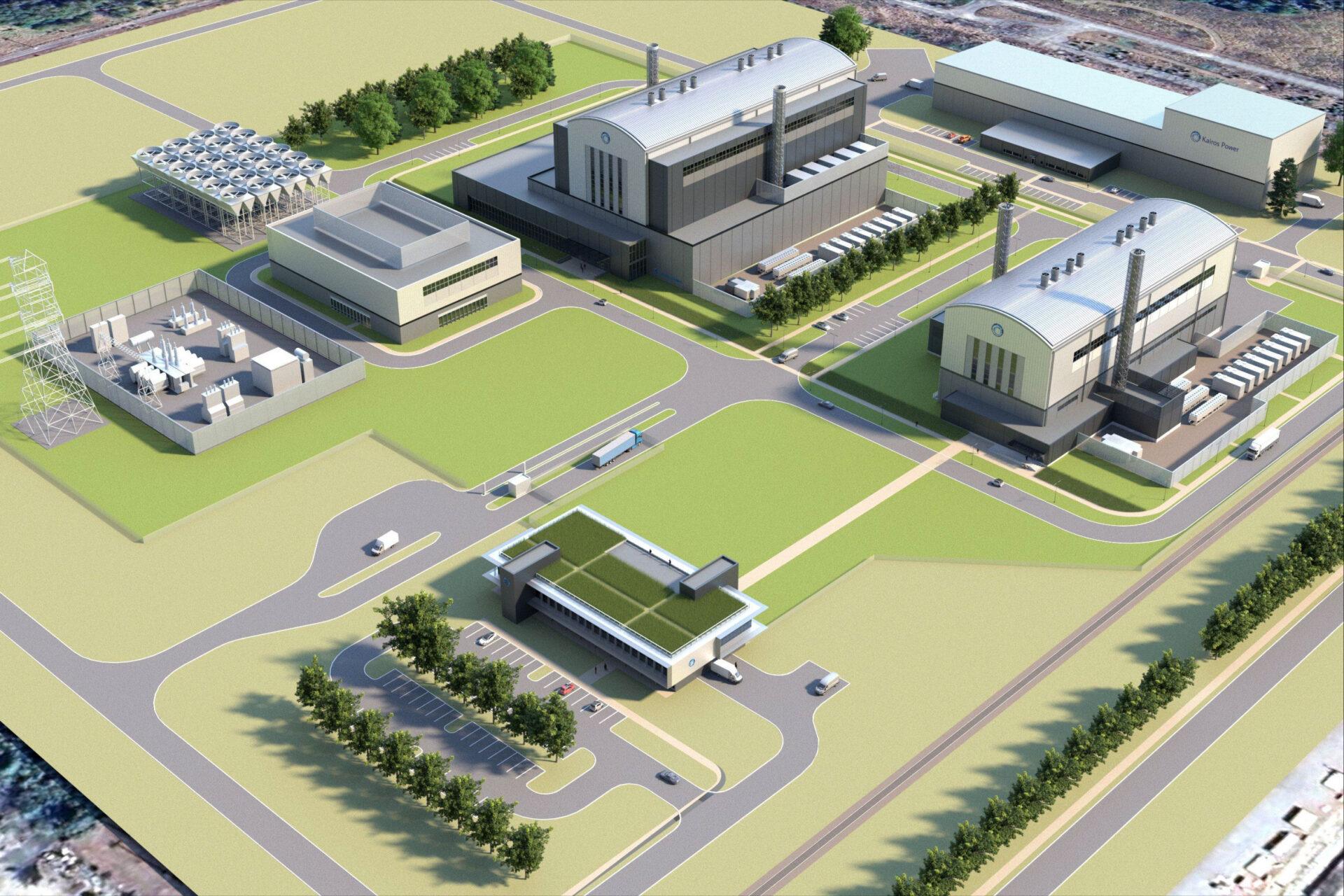
Meanwhile, Kairos Power began construction of its Hermes demonstration reactor in the United States a year ago. The project is a step towards building the commercial Hermes 2 reactor, which will generate power for Google’s data centres. The company announced the start of construction on the second project—in Oak Ridge, Tennessee—in April this year.
“This is a major turning point for the company. The Hermes 2 project represents the culmination of everything we have learned from Kairos Power’s demonstration programme. It is our first power plant, our first delivery under our main agreement with Google, and a long-term commitment to the Oak Ridge community,” said Edward Blandford, chief technology officer and co-founder of Kairos Power.
Romania also made a final investment decision this year on the construction of SMRs. In Doicești, the country plans to build six 77 MW reactors supplied by US company NuScale. The investor is currently focused on securing financing, optimising costs and obtaining the necessary approvals.
“(...) The ultimate goal is to ensure that the price per megawatt-hour of electricity produced is economically viable and affordable. In essence, this is about finding the optimal technical configuration model that would provide Romania with the most favourable conditions,” explains Nuclearelectrica, the Romanian state-controlled company developing the project.
A reactor designed to produce heat
Finland, meanwhile, has opted for the LDR-50 reactor developed by Finnish company Steady Energy. It is an unusual reactor, as it is designed primarily for heat production. The manufacturer is currently building a full-scale pilot facility in Helsinki on the site of a former coal-fired combined heat and power plant. In this project, the reactor core has been replaced with an electric heating element, and the first energy is expected to flow into the district heating network in spring 2027. The next step will be the construction of a facility using a nuclear reactor.
“Our power plant is small and probably the simplest in the world. This means we can build a full-scale unit specifically for safety testing. Testing under real-world conditions significantly reduces the schedule risks traditionally associated with large nuclear power projects. Our goal is to be ready to begin construction of the first nuclear power plant within three years,” says Hannes Haapalahti, chief technology officer at Steady Energy.
Steady Energy also wants to develop its technology in Poland. The district heating sector there has for years faced pressure to decarbonise, alongside rising costs of CO₂ emission allowances.
In Ukraine, meanwhile, Polish group ELQ sees an opportunity for expansion. The company plans to build David reactors developed by Czech company Witkowitz, with an electrical capacity of 50 MW and a thermal capacity of 175 MW. Potential locations include areas within the Chernobyl exclusion zone.
Conquering Europe
Synthos Green Energy (SGE), owned by billionaire Michał Sołowow, holds exclusive rights to GE Vernova Hitachi’s BWRX-300 technology in parts of the European market. SGE has signed letters of intent concerning nuclear energy development in countries including Bulgaria and Hungary.
In July this year, the company, together with international partners, submitted an application under the UK’s Advanced Nuclear Framework programme for the development of SMRs in Britain. The plan involves building 14 reactors with a combined capacity of 4.2 GW.
SGE has also made clear that it expects support from the British government in the form of a contract for difference (CfD). This mechanism guarantees power producers a state-backed price for electricity. If market electricity prices fall below the strike price set in the contract, the difference is paid to the producer. If market prices exceed the contracted price, the producer returns the difference to the state. In Poland, offshore wind farms are among the projects eligible for contracts for difference.
“Our fleet of small modular reactors will provide efficient, safe, affordable and clean nuclear energy. The United Kingdom has one of the most experienced nuclear workforces in the world. Through the Advanced Nuclear Framework programme, the British government has created a clear pathway for SMR technologies to enter the market. I am confident that we will set a new standard for nuclear energy development by combining our innovative business model with the proven tenth-generation BWRX-300 reactor technology,” says Michał Sołowow, founder of SGE.
However, SGE’s attempt to enter the British market may prove challenging, given that the country has officially selected Rolls-Royce SMR as its small reactor supplier following a competitive process. This does not necessarily rule out additional projects, however. The British programme is specifically designed to support private-sector initiatives of this kind.
“At this stage, we only know SGE’s plans. Let us wait and see how the British government responds,” says one representative of the nuclear industry, who wished to remain anonymous.
Turbulence on Poland’s market
In Poland, SGE is developing projects together with state-controlled Orlen. The two companies established Orlen Synthos Green Energy (OSGE), which holds exclusive rights to the BWRX-300 technology in the country. The partnership, launched under the previous PiS government, is now facing turbulence. According to sources at Orlen, the key issue is currently defining the term “general partner”. The two sides interpret the concept differently, and the outcome will determine the roles each shareholder will play in individual projects.
The talks are proving difficult, as neither side is willing to compromise. The Ministry of State Assets is becoming increasingly impatient with the situation. According to our sources, the ministry expects Orlen to resolve the matter as quickly as possible and decide whether the company will continue building SMRs together with SGE. A decision is expected by the end of this year.
What options does Orlen have? If it exits the partnership with SGE, it will only be able to participate in so-called large-scale nuclear power projects. As we understand it, the existing agreement prevents Orlen from investing in reactor technologies with a capacity of up to 500 MW. In such a scenario, however, Orlen does not rule out investing, for example, in a 700 MW CANDU reactor developed by Canadian company AtkinsRéalis. The Canadians have recently been actively promoting their nuclear technology on the Polish market and are participating in preliminary talks on the construction of Poland’s second large nuclear power plant.
If OSGE survives, the first BWRX-300 reactor is expected to start operating in 2032 in Włocławek, near the facilities of fertiliser producer Anwil, part of the Orlen Group. Further units are planned near Oświęcim, where Synthos operates chemical plants. Work is also under way on other locations, including Stalowa Wola. The Industrial Development Agency (ARP) is considering taking on the role of investor in the special-purpose vehicle responsible for the Stalowa Wola project.
How much will power from small nuclear reactors cost?
There is still little certainty about the cost of electricity generated by small modular reactors. What is clear is that the first projects are likely to be the most expensive, while construction costs for subsequent plants should fall as the technology matures. At the end of last year, Orlen Synthos Green Energy (OSGE) told the Polish parliament that the strike price it expects under a contract for difference would be €115–135/MWh (approximately PLN 496–583/MWh). This figure is expected to decline as more units are built.
For comparison, three offshore wind farm projects that won electricity sales auctions in December last year offered prices ranging from PLN 476.88 to PLN 492.32/MWh. These rates will be adjusted annually in line with inflation.
At the end of June 2026, OSGE asked the energy minister to begin work on a support mechanism for the construction of a fleet of BWRX-300 reactors. The company is seeking a contract for difference for 14 units at three locations: Włocławek, Stawy Monowskie near Oświęcim, and Stalowa Wola.
Earlier, representatives of the energy ministry stressed that such support for SMRs was possible. Among the options under consideration, they mentioned a contract for difference or state guarantees for loans taken out to finance projects. The scope of government support will be determined by the SMR Roadmap currently being prepared by the Ministry of Energy. According to the ministry, a draft of the document could be published as early as July this year.
Expert’s perspective
Political enthusiasm does not determine the success of nuclear projects
The success of a reactor project depends on programme discipline in the phase before the final investment decision (FID), not on political enthusiasm. Three elements must be validated simultaneously: a business case resilient to a wide range of scenarios, credible identification and mitigation of execution risks, and a financing structure capable of withstanding seven to 12 years of construction without losing investor confidence. The best programmes assume that as much as around 20% of capital expenditure may need to be committed before construction begins. This is precisely what determines whether a project proceeds smoothly.
Whether Poland becomes one of the first European countries to deliver a new nuclear project will depend on the consistent execution of the preparation phase. Programmes delivered on time and on budget share common characteristics. Barakah in the United Arab Emirates and China’s post-2000 nuclear expansion are among the strongest examples: a proven reactor design, replication without unnecessary deviations, and supply chains and skilled personnel treated as critical-path elements from day one. Tripling global nuclear capacity by 2050 could create more than 5 million new jobs, and competition for qualified workers and components is already under way.
The importance of nuclear energy for Poland is confirmed by all three scenarios modelled by Bain, in which nuclear capacity maintains or increases its share of the energy mix. Existing nuclear power plants are already among the cheapest sources of reliable electricity. Building new reactors is expensive, but as the share of renewable energy grows, power systems will require sufficient quantities of stable, dispatchable generation capacity to ensure security of supply. By 2040, global electricity demand is expected to rise by 40–70%, with residential buildings and industry accounting for the largest cumulative increases in consumption. In a system with a growing share of variable renewable sources, firm baseload capacity is essential for stability.


Key takeaways
- After a period of stagnation in the small modular reactor market, more countries are announcing plans to build such facilities. Technology providers argue that they can deliver nuclear plants within just a few years. If these promises are fulfilled, the 2030s could see a wave of SMR deployments. According to the current World Nuclear Association map, two small reactors are operating worldwide: one in Russia and one in China. Another five are under construction, while many more are at the design stage.
- One example under construction is the BWRX-300 reactor in Canada, developed by the US-Japanese consortium GE Vernova Hitachi. Work has also begun in the United States, where Kairos Power is building the Hermes reactor complex to supply energy to Google’s data centres. Other countries are also moving beyond letters of intent, selecting technology partners and allocating funding to develop small nuclear power. The Nuclear Energy Agency estimates that global SMR capacity could reach between 30 GW and 150 GW by 2050.
- In Poland, the most advanced small nuclear projects are being developed by OSGE, a company owned by Orlen and Synthos Green Energy. However, the two companies are currently disputing the final structure of their cooperation. If they reach an agreement, the first BWRX-300 SMR in Poland could begin generating electricity in 2032 in Włocławek. Orlen has given itself until the end of this year to conclude negotiations with its partner.