

This article is a part of Poland Unpacked. Weekly intelligence for decision-makers
Polish industry stands out impressively against the backdrop of other EU economies, particularly Germany and other countries in the region. What accounts for its strength? Here is a brief tour de force through the phenomenon of Polish industry.
Methodological note
First, a methodological clarification. Industry is divided into four segments, known as sections. These are mining and quarrying; manufacturing; electricity generation and supply; and water supply, sewerage, waste management and remediation activities. The dominant segment is manufacturing, which currently accounts for more than 85 percent of total industrial output in Poland.
This analysis will focus exclusively on manufacturing and will use the term “industry” as a synonym for manufacturing. This approach is intended to capture the most important trends in this part of the sector, where outcomes are significantly influenced by external factors such as energy prices and regulatory decisions.
Polish manufacturing against the European backdrop
 Interactive chart
 Polish manufacturing ranks among Europe’s leaders in terms of industrial output growth in recent years. This is clearly visible in the chart above, where a value of 100 represents the average level of production throughout 2021.
In June 2026, after adjusting for seasonal factors, production was nearly 16 percent higher than in 2021. The figure itself may not appear spectacular — there have been periods of significantly stronger growth. However, the broader context is worth considering: a slowdown in demand for goods following the COVID-era boom, the energy crisis, rising interest rates and growing competition from Chinese products.
In the vast majority of countries shown on the chart with grey lines, production remains at roughly the same level as five years ago. The situation is even weaker in Germany, where output is more than 7 percent below its 2021 level. It is also lower than in 2015.
Interactive chart The only country with significantly stronger production growth in recent years is Denmark. Its output is currently 38 percent higher than in 2021. The country owes this result largely to a surge in pharmaceutical manufacturing, driven by the rapid expansion of obesity treatments known as GLP-1 drugs.
It is also worth looking at Polish manufacturing from a broader perspective. At the beginning of 2015, production stood at 71 percent of the 2021 level. This means that over the entire period — from 2015 to mid-2026 — manufacturing output increased by as much as 63 percent.
It is not just Germany. Regional economies are struggling too
The increase in Polish manufacturing output compared with 2021 is the fourth fastest in the entire EU. Apart from Denmark, mentioned above, production growth has also been recorded in Greece and tiny Malta. Production has expanded at a similar pace to Poland’s in Cyprus, Lithuania and Sweden.
Manufacturing in the remaining EU countries has either declined or, at best, stagnated. This group includes many economies from the region, in addition to Germany. Since 2021, output has fallen by nearly 9 percent in Estonia, contracted by 5 percent in Romania, declined by 2 percent in Slovakia, dropped by 1.5 percent in Hungary and decreased by 1 percent in Bulgaria. Italy’s industrial sector, which is important from a European perspective, is also struggling. Production there is more than 5 percent below its 2021 level.
The Czech industry is performing somewhat better, with production value up by 6 percent. In France and Spain, the increase has been around 5 percent. Across the EU as a whole, output is only 1 percent higher than in 2021. Against this backdrop, Polish industry stands out as an exceptionally strong performer.
Where production is rising and where it is falling
To understand why manufacturing in Poland is performing so well, it is worth examining how output has changed across individual industries and how these trends compare with the rest of the EU. The chart below presents this comparison.
Interactive chart The X-axis shows the value of EU production in May 2026 compared with the average level in 2021, while the Y-axis shows the growth rate in the same industries in Poland. The overall conclusion is that trends in Polish manufacturing broadly mirror those observed across Europe.
Two categories had to be excluded from this comparison: coke and refined petroleum products, as well as leather goods, because Eurostat does not provide data for Poland in these areas. This is due to the small number of entities operating in these segments of the Polish economy, which means the data are subject to statistical confidentiality.
The stars…
The sector where production value has increased the most in Poland is other transport equipment. Growth reached as much as 129 percent. It is also the industry that has recorded the strongest production growth across the entire EU — up 43 percent.
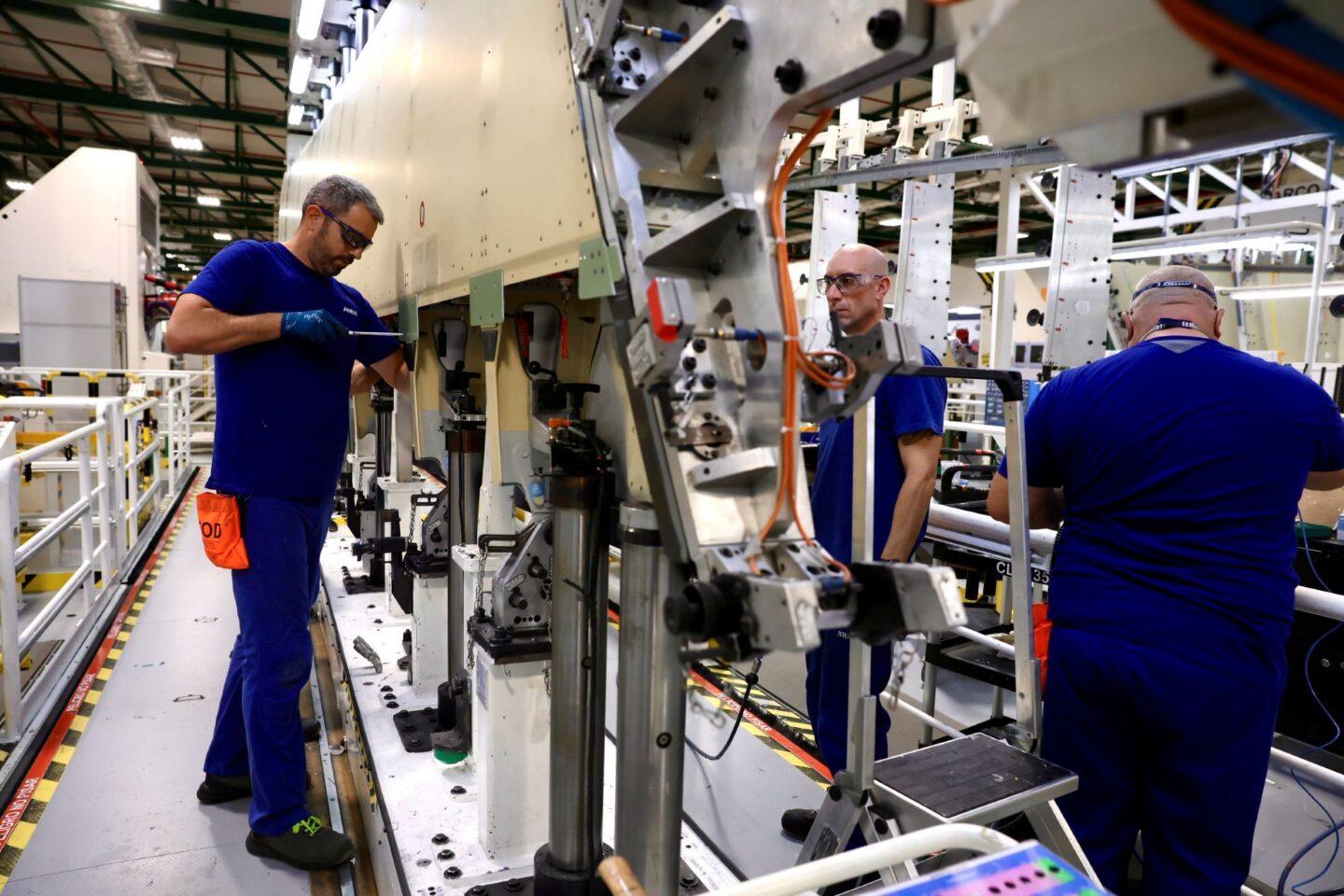
What exactly does this category include? Among other things, the production of military vehicles, including tanks, as well as aircraft and aircraft parts. In the case of Polish manufacturing, the latter subcategory appears to be the key driver, as reflected in export data. Poland’s aviation industry has expanded significantly in recent years.
Other sectors that have recorded strong production growth include the repair, maintenance and installation of machinery and equipment. In Poland, this was the second-fastest-growing category, with production value in May this year nearly 80 percent higher than in 2021. Across the EU, it was also among the fastest-growing categories, with output up 19 percent. The broader trend toward automation and robotization across industry appears to have played a major role in driving growth in this area.
Pharmaceutical production has also grown strongly, although in this category growth has been more pronounced across the EU. It increased by 32 percent, compared with 25 percent in Poland. Another strong performer was the category of miscellaneous manufacturing, where output rose by 38 percent in Poland and 20 percent across the EU.
Poland is also performing well in machinery and equipment manufacturing (up 49 percent), automotive production and parts (34 percent), and food manufacturing (23 percent). Production in these sectors has also increased across the EU, although only at single-digit rates.
It is also worth noting that there are several industries where production has declined in the EU but increased in Poland. These include rubber and plastic products, as well as fabricated metal products.
…and the laggards
There is only one area where production value has declined in Poland while increasing across the EU: tobacco products. There are also several industries where output has fallen both in Poland and across the European Union. These include clothing, furniture and wood products. However, declines in Polish manufacturing have generally been smaller.
The conclusion that emerges from this analysis is that Poland has a surprisingly small number of “laggards.” There are no industries where production is currently more than 15 percent below its 2021 level. The EU has several such sectors. The chemical industry is in the most difficult position, with production down by nearly 20 percent. This is largely linked to the sharp declines seen in Germany following the loss of access to cheap Russian gas supplies.
How does Polish industry stand out from the rest of Europe?
Those looking for a single, straightforward explanation for the phenomenon of Polish industry will be disappointed. Much like the strong performance of the economy as a whole in recent years, the reasons behind this resilience are complex.
They can be divided into two categories. The first can be described as conventional factors. These include the very high diversification of Polish industry, among the strongest in the world. This means that problems in one sector do not drag a large part of the industrial base down with them. Other factors include a sizeable domestic market, supported for several years by rising real wages and a large fiscal deficit. Poland also remains an attractive destination for new investment. In addition, Polish industry is relatively resilient to goods imported into Europe from China. Increased defense spending and EU funding flows also play a role.
There is also a second category — less conventional explanations. One example is the fact that Polish industry has gained orders as a result of the war in Ukraine. Poland is sending the country vast quantities of fuel, weapons, aircraft and components, as well as vehicles.
Another explanation of this kind is… the weakness of German industry. For some companies producing intermediate goods for German manufacturers, this is clearly a major challenge. But there are also businesses that are replacing German companies in supply chains. This may be another factor behind the relatively strong performance of Polish manufacturing.
What comes next? On the one hand, most of the factors mentioned above should continue to support Polish industry. On the other hand, the wave of Chinese goods entering global markets is still gaining momentum. It has already swept through many sectors in Europe, and there is a serious risk that it will affect more. Polish industry has so far proved resilient, but whether this will continue in the future remains to be seen.


Key takeaways
- Polish manufacturing is now among the strongest in Europe. Since 2021, output has increased by nearly 16 percent, the fourth-best result in the EU, while most countries have experienced stagnation or declines. Compared with Germany, Italy and many Central and Eastern European economies, Polish industry stands out for its exceptional resilience in the face of successive crises.
- The success is driven by broad-based growth across multiple industries rather than by a single sector. The fastest-growing areas include transport equipment manufacturing, machinery, aviation, automotive and pharmaceuticals. The number of underperforming industries is limited. Poland’s key advantage remains the strong diversification of its industrial base, which means that problems in individual sectors do not translate into weakness across the wider economy.
- There are many reasons behind the strong performance of Polish industry, but maintaining this advantage is not guaranteed. It benefits from strong domestic demand, inflows of investment, defense spending, EU funds and the partial capture of orders previously handled by weakening German manufacturers. At the same time, rising competition from low-cost Chinese products is becoming an increasingly significant challenge, one that could put the resilience of Polish industry to a serious test in the years ahead.