Poland Unpacked week 33 (3-9 August 2026)
Welcome to this week’s edition of our Poland Unpacked, where we deliver key insights and trends shaping the economic, corporate and political landscape. Catch the most important insights from Poland in this week’s briefing.
This article is a part of Poland Unpacked. Weekly intelligence for decision-makers
This week, we look at three Polish companies taking very different routes to growth — from a retail empire built over 35 years to a software business serving the US market and a fast-growing fitness chain preparing to expand abroad.
From a shop in Rzeszów to a PLN 5bn group
Krzysztof Tokarz started Grupa Specjał in 1990 with a shop in his home in Rzeszów. More than three decades later, the group generates PLN 5bn in revenue and serves 14,300 outlets, making it Poland’s largest network of company-owned and soft-franchise stores.
The group includes Livio, Rabat Detal and Spar, as well as wholesale businesses, medical stores and a security-services operation. Tokarz spent several years pursuing the acquisition of Spar and has now overtaken rival Eurocash by 100 outlets.
In our interview, he explains why people remain at the heart of his business and how he sees the competitive landscape changing when Canada’s Couche-Tard takes over Żabka. Read our hit of the week.
Building a US tech business from Poland
Callstack offers a very different story. Founded just ten years ago, the software company generated PLN 151m in revenue and PLN 57m in EBITDA last year, with 90 percent of its sales coming from the US.
The company specializes in mobile applications built with React Native, Meta’s open-source technology. Last year, US investment firm Viking Global Investors acquired a majority stake, valuing Callstack at more than PLN 500m. Co-founder Mike Grabowski chose to remain with the business rather than sell his stake. Today, as CEO, he explains what it takes to build a global technology company from Poland — including the personal cost of doing business across the Atlantic.
“In 2025, I traveled 20,000 km and took 45 flights, most of them long-haul,” he says.
He also reveals his plan: „I dream of seeing our logo on a Formula 1 car".
From Polish gyms to Australian fitness
Xtreme Brands is taking a third route. The company expects to operate 300 gyms and kids play centers in Poland by the end of this year and is at the very beginning of its international expansion conducted in the Czech Republic.
The company is itself becoming a master franchisee, bringing the Australian premium Strong Pilates brand to Poland. Its concept combines strength training and cardio, using proprietary Rowformer and Bikeformer machines.
What does Xtreme Brands have planned for the next stage of its expansion? Find out in our latest story.
The past week was relatively quiet on the Polish macroeconomic data front. The picture will become clearer this week, when Statistics Poland (GUS) releases its preliminary GDP estimate for the second quarter of 2026, alongside comparable data for other EU economies from Eurostat.
Ahead of those figures, we take a broader look at Poland’s economy: the latest monthly indicators, financial markets and the structural trends shaping the country’s growth story.
A strong first half — with challenges ahead
Poland’s economy ended the first half of 2026 in solid shape. Retail sales accelerated sharply in June, rising by 6.2 percent year on year compared with 3 percent a month earlier. Industrial production remained strong, while construction began to benefit from accelerating infrastructure investment. The recovery, however, is not evenly distributed. Some sectors are expanding rapidly, while others continue to face weak demand.
The bigger question is whether this momentum can continue. June’s data came before a renewed shift in external conditions. The end of the “Lower Fuel Prices” program and renewed US-Iran tensions pushed oil prices higher, contributing to a rise in inflation to 3 percent in July from 2.5 percent. Together with slowing wage growth, this could weigh on real income growth and consumer spending — the key driver of Poland’s recent economic expansion.
July was a strong month for Polish financial markets. The WIG and WIG20 indices gained around 9 percent, placing Polish equities among the world’s top performers this year. The zloty recovered slightly against the dollar after sharp swings in June, while higher oil prices pushed bond yields higher. Meanwhile, the Monetary Policy Council kept interest rates unchanged, in line with market expectations. Read the analysis.
Why Polish industry keeps outperforming Europe
One of our main analyses this week focused on the resilience of Polish manufacturing. Since 2021, industrial output has increased by nearly 16 percent — the fourth-strongest result in the EU — while many European economies have stagnated or declined.
Poland’s diversified industrial base has helped it withstand successive shocks better than many peers, including Germany and Italy. But a new challenge is emerging: the growing pressure from low-cost Chinese imports, which could test the strength of Polish manufacturers in the years ahead.
Warsaw: a surprisingly modest capital
We also examined Warsaw’s role in Poland’s economy. Compared with other European capitals, Warsaw is an unusual case: the capital region accounts for just 9 percent of Poland’s population and 17 percent of its GDP.
While European capitals typically generate a disproportionate share of national income, some — including Budapest, Bucharest and Bratislava — dominate their economies far more strongly. Warsaw’s position is closer to that of Berlin, The Hague and Rome, where economic activity is more widely distributed across the country.
The gender pay gap mystery
Finally, we looked at Poland’s labor market and the sharp decline in the gender pay gap recorded in February, the latest month for which data are available.
The narrowing gap appears striking at first glance, but the explanation lies largely in seasonal factors — particularly the timing of additional annual payments in the public sector. The data reveal how employment structures and wage patterns continue to shape the measured gap between women and men. Read the text.
The first weeks of Poland’s summer political season were anything but quiet. While the turn of July and August brought fewer dramatic events, several developments offered an early glimpse of the battles and alliances likely to shape the road to the 2027 parliamentary election.
Morawiecki’s new political experiment begins — with a barbecue
The most eye-catching event of the week was the launch of former prime minister Mateusz Morawiecki’s new political initiative, “Rozwój Plus.” We covered the topic in the previous issue of Poland Unpacked.
Controversy over soldiers on election lists
Another development came from Grzegorz Braun, leader of the far-right Confederation of the Polish Crown. Braun announced that his electoral lists in all 41 constituencies would include police officers and soldiers.
The declaration immediately raised legal and security concerns. Active-duty professional soldiers cannot run for office while serving. They must take unpaid leave during a campaign and resign from the armed forces if elected, although unsuccessful candidates may return to service. Experts warn that the involvement of military personnel in promoting views contrary to Poland’s strategic interests could create risks for the credibility and neutrality of state institutions. Read the text.
Nawrocki’s first year: a more confrontational presidency
President Karol Nawrocki marked the first anniversary of his inauguration with a large public event outside the Presidential Palace, featuring a stage, red carpet and speeches to supporters.
The president pledged to continue a confrontational approach toward Donald Tusk’s government and announced plans to present a “presidential development strategy.” For many observers, this was a sign that Nawrocki intends to play an active political role ahead of the 2027 election.
The first year of his presidency has already produced a notable record: 41 vetoes of government legislation, surpassing the previous record set by Aleksander Kwaśniewski during his ten years in office.
Poland’s technology ecosystem is entering a new stage of maturity. After a decade of rapid growth, the country’s startups are facing a fundamental question: who should represent their interests — and who should pay for that representation? The debate has come into focus around Startup Poland, a foundation that has spent the past ten years advocating for Polish technology entrepreneurs.
Following its decision to move away from funding from big tech companies, including Google, Startup Poland now faces the challenge of building a new operating model while proving that an independent voice for the startup community remains essential.
In our latest analysis, we look at why the previous funding model has reached its limits, who could step in as future backers, and what lies ahead for the organization. We also explore whether Poland’s startup market is mature enough to sustain its own representation and what role such institutions should play in strengthening the venture capital ecosystem. Read the full text.
Artificial intelligence is moving from experimentation to everyday business reality — but many companies still do not know where AI is already being used inside their organizations. That question is becoming urgent as the EU’s AI Act introduces new transparency requirements. Companies will increasingly need to audit their AI systems, understand how employees use AI tools and ensure that users can distinguish between human interaction, bots and AI-generated content. The biggest challenge may not be adopting new AI solutions, but discovering the ones already operating in the workplace. Experts warn that regulation must reduce risks such as deepfakes and misuse of AI while avoiding barriers that could slow innovation and investment.
As populations age, longevity is becoming more than a healthcare issue. It is reshaping the future of labor markets, business strategies and public policy. In our interview with Aneta Sieradzka, president of the AI One Health Foundation, we discuss why Poland needs a national longevity strategy based on prevention, data and artificial intelligence. We explore how governments and companies should prepare for demographic change — and whether longer, healthier lives will become a universal opportunity or a privilege available mainly to the wealthiest. Read the interview.
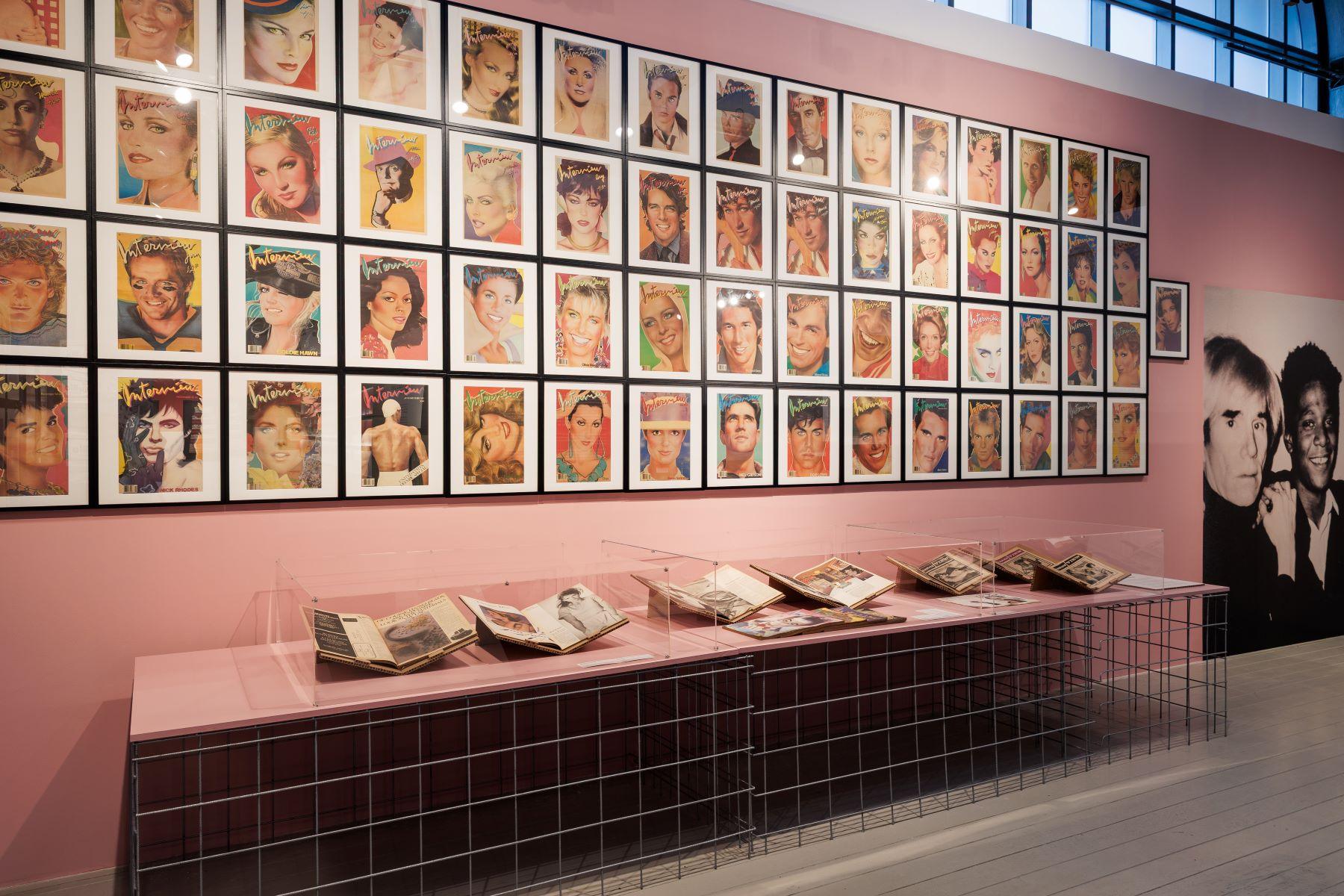
Think you’ve already “done” Warhol? Marilyn, soup cans, tick the box - move on. Not so fast. Kraków’s “From Line to Legend” rewinds the story to a much less polished starting point: a young Andrew Warhola sketching, hustling for magazine work, and quietly figuring out how to turn repetition into a superpower. Instead of a greatest-hits parade, you get a backstage pass—drawings, Polaroids, Screen Tests, and fashion pieces that show the icon being built, line by line.
And here’s the twist: it feels uncannily current. Warhol understood early that image is currency - and that sooner or later, we all become our own brand managers. The show leans into that idea with some unexpected gems (1950s textiles, Xerox experiments, even early digital work on a Commodore) plus a room-sized “Cow Wallpaper” moment that’s hard to ignore. It’s less a nostalgia trip than a mirror: how we curate, repeat, and broadcast ourselves today would not surprise him one bit.
Where: Kraków, Górny Pałac Sztuki at Plac Szczepański 4
When: between 7 August and 27 September 2026
https://www.instagram.com/palac_sztuki_krakow/
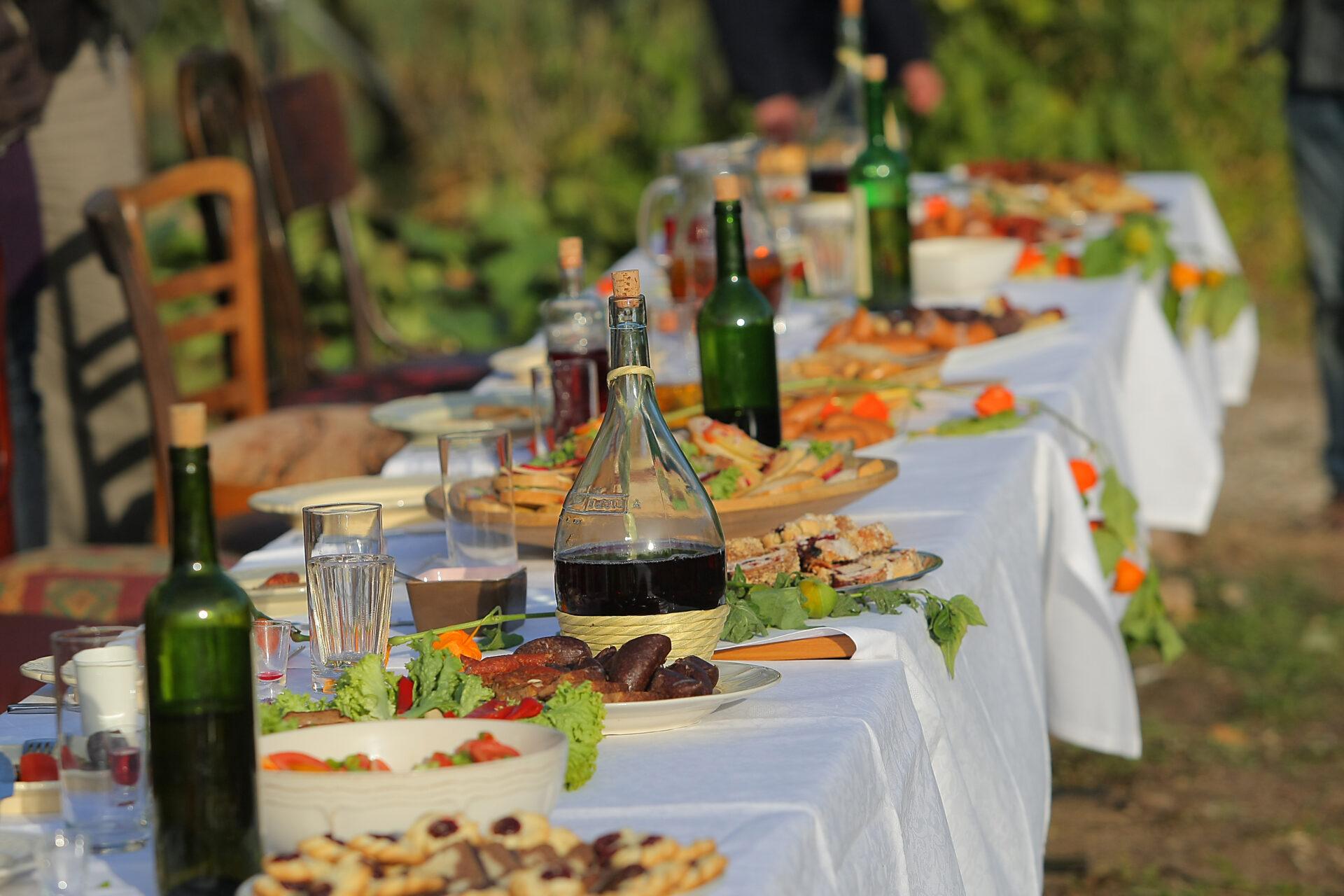
This fun fact fits well with the International Friendship Day celebrated on July 30. In Poland, being a guest still means being properly looked after. It is not just about politeness, but about the instinct to offer food, coffee or tea, and a kind of over-caring – the sense that no one should leave hungry, cold, or slightly underfed. That is why hospitality here can feel less like a social nicety and more like a duty.
And in the home, that often comes with a few customs that can seem odd from the outside. You may be told to take off your shoes right away, accept a plate of food even if you say you are fine, and never leave the table without trying “just a little more.” There is also a strong sense that a guest should be made comfortable at once, which can mean an extra chair pulled out, a cake sliced without discussion, and a host who will not take no for an answer. In that sense, Polish friendship often begins the same way Polish hospitality does: with an open door and far too much food.