

This article is a part of Poland Unpacked. Weekly intelligence for decision-makers
Instead of raising the tax-free allowance, the government plans to change the income-tax brackets. But the proposal put forward by the prime minister is more cautious than initiatives floated previously. “This is merely a Band-Aid. The middle class needs major tax surgery,” says MP Rafał Komarewicz.
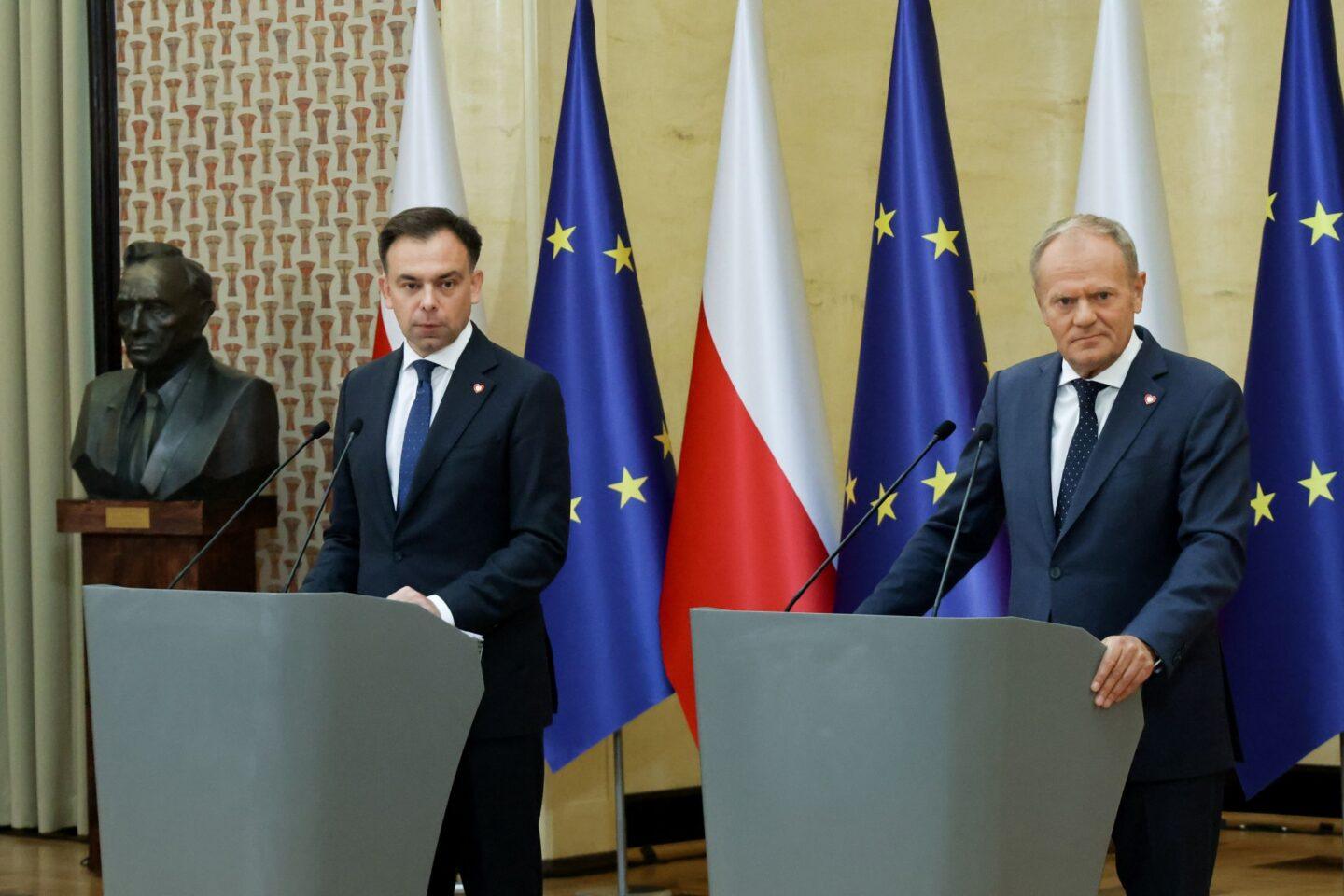
After months of avoiding clear commitments, the government now wants to revise the income-tax brackets. On Wednesday, Prime Minister Donald Tusk and Finance and Economy Minister Andrzej Domański unveiled the shape of the proposed changes. The prime minister said that, together with the minister, he wanted to ease the burden on the growing middle class in two ways.
Explainer
A quick look at Polish PIT options
Poland uses a two-tier progressive tax system:
First threshold (up to 120,000 PLN annual income):
12% tax rate
Minus tax-free amount: 30,000 PLN annually
Second threshold (above 120,000 PLN annual income):
32% tax rate on income above 120,000 PLN (the 12% still applies to the first 120,000 PLN).
Several alternatives to standard PIT for entrepreneurs and certain situations:
1. Lump-sum tax:
For self-employed/sole proprietorsFixed percentage of revenue (not profit) based on business type, e.g. 17% for most professional services (IT, consulting, etc.)
No deduction of costs - you pay tax on gross revenue
2. Linear flat tax rate - 19%:
Flat 19% rate on all income regardless of amount
No tax-free amount
Can deduct business costs
Used by higher earners to avoid 32% rate
The main changes concern the tax brackets. The current threshold of PLN 120,000 (EUR 28,000) is to be raised to PLN 130,000 (EUR 30,400). A new 24% rate is also to be introduced, covering personal income-tax payers earning between PLN 130,000 and PLN 150,000 annually (EUR 30,400–EUR 35,000).
This would mean that people earning up to PLN 120,000 a year (EUR 28,000) would pay 12% personal income tax. Those earning PLN 130,000–150,000 (EUR 30,400–EUR 35,000) would pay income tax at 24%. Anyone earning more than PLN 150,000 (EUR 35,000) would pay 32%.
A new tax bracket
According to the government’s announcements, simply raising the threshold from PLN 120,000 (EUR 28,000) to PLN 130,000 (EUR 30,400) would save a taxpayer PLN 2,000 (EUR 470). For those moving into the next tax bracket, the saving would amount to PLN 3,600 (EUR 840). Some 3.5 million taxpayers are expected to benefit from the changes.
The second tax bracket was last raised in 2021, under the Law and Justice (PiS) government. The threshold was increased from PLN 85,528 to PLN 120,000 (EUR 20,000 to EUR 28,000). The tax-free allowance was also raised from PLN 8,000 to PLN 30,000 (EUR 1,900 to EUR 7,000). These were one-off changes. As inflation and the minimum wage rose, the number of taxpayers crossing the second threshold quickly reached a record high.
 Interactive chart
 Changes to Corporate Income Tax
The changes to the tax brackets are to be financed through three measures:
- Raising the corporate income tax (CIT) rate from 19% to 22% for companies with annual revenue exceeding EUR 50 million (PLN 200 million), as well as for tax capital groups.
- Increasing the solidarity levy by 1 percentage point, to 5%, for people earning at least PLN 1 million (EUR 233,000) a year.
- Restoring the previous revenue limit for flat-rate taxpayers of EUR 250,000, or about PLN 1 million. The current revenue limit for the flat-rate regime is EUR 2 million.
“The 22% rate is roughly in line with the EU average. The changes announced today more or less balance each other out. This is the first change in many, many years that does not cost the state budget anything; from the budget’s perspective, it is neutral,” Finance Minister Andrzej Domański assured.
Changes after the summer recess?
The Council of Ministers was expected to discuss the proposed tax changes at an informal meeting on Friday (21 August) and again at another meeting this week. Will the bill make it onto the Sejm’s agenda for its first session after the summer recess? Mariusz Witczak, a Civic Coalition (KO) lawmaker, says it is possible.
“The bill should reach the Sejm fairly quickly, particularly because tax legislation has to be considered well in advance. I would not rule out it being tabled at the Sejm’s first September sitting,” says Witczak.
The KO politician adds that the proposal responds to rising wages in “less obvious sectors.”
“Take nurses, for example. They are also workers in sectors that contribute significantly to the economy. Even with our liberal views on taxes and the economy, we are obliged to spend heavily on the military and health care. So we need to calibrate all of this. Introducing a higher tax rate for companies with revenue of more than PLN 200 million (EUR 46.7 million) is one solution. To a large extent, this concerns companies operating in global markets. They will also benefit indirectly, because their employees who fall into the 32% tax bracket will be able to earn more. Companies will pay higher CIT, but their employees will benefit from the change,” Witczak says.
“It’s only a Band-Aid”
MP Rafał Komarewicz had been calling for changes to the tax brackets from January, when he was still a member of Poland 2050; he is now a member of the Centrum parliamentary caucus. At the time, he proposed a Middle-Class Package that would raise the tax-free allowance from PLN 30,000 (EUR 7,000) to PLN 45,000 (EUR 10,500) and link it to the minimum wage, while also raising the tax threshold from PLN 120,000 (EUR 28,000) to PLN 200,000 (EUR 46,700). The tax threshold would be tied to the national average wage.
The changes would be financed by abolishing flat-rate tax regimes, tightening CIT enforcement, and introducing a digital tax and a cadastral tax on a fourth home. But he failed to get the Finance Ministry to engage with his proposals.
In an interview with XYZ, the politician says the government’s move is a step in the right direction, but “does not solve the problems facing the middle class.” In his view, the threshold could have been PLN 200,000 (EUR 46,700) had it been regularly indexed since the last increase.
“The government is not so much raising the threshold as trying, on a limited scale, to make up for lost ground. The new tax rate, meanwhile, does not address the expectations and needs of the middle class. It is merely a half-measure. It’s only a Band-Aid, while the middle class needs major tax surgery. The coalition should be more ambitious and build lasting foundations for the growth of the middle class for years to come. More courage is needed. My Package has been waiting for a serious discussion for more than six months. I am ready to work on it,” says Rafał Komarewicz.
The Centrum caucus politician considers the proposed changes to CIT insufficient. He welcomes the changes to the flat-rate tax regime.
“I am pleased that the government has adopted at least some of my proposals. But tightening the system only makes sense if the additional revenue is used to provide real tax relief to people who are being penalized today for working hard,” Mr. Komarewicz says.
Coalition partners back the plan
In April, Poland 2050 submitted a bill proposing changes to the tax brackets. It called for raising the second threshold from PLN 120,000 (EUR 28,000) to PLN 140,000 (EUR 32,700).
In June, Education Minister Barbara Nowacka (Civic Coalition, KO) told XYZ that changes to the tax brackets were needed. She pointed out that teachers were increasingly finding themselves just above the second threshold. At the time, she acknowledged that she regularly discussed the issue with Finance Minister Andrzej Domański.
The prime minister’s and finance minister’s proposals announced on Wednesday received positive reactions from Paulina Hennig-Kloska, climate minister and leader of the Centrum Union, and Anna Maria Żukowska, leader of the Left parliamentary caucus.
PiS wants changes, too
In mid-June, the Law and Justice (PiS) party also called for changes to the tax brackets. Przemysław Czarnek (possible Prime Minister if PiS wins – ed.) proposed raising the second tax threshold in 2028 from PLN 120,000 (EUR 28,000) to PLN 180,000 (EUR 42,000), and to PLN 360,000 (EUR 84,000) for married couples filing jointly. Katarzyna Pełczyńska-Nałęcz, leader of Poland 2050, urged her coalition partners to change the tax brackets, warning that otherwise PiS would do so after winning the next election.
PiS MP Michał Kowalski is critical of the government’s proposals.
“The prime minister is tinkering and trying to introduce cosmetic tax changes. This is not a serious reform, but mere window dressing. He claims that we will have more money in our pockets, yet at an annual income of PLN 150,000, the savings would amount to PLN 3,600 (EUR 840) a year. Our proposal to raise the second threshold from PLN 120,000 to PLN 180,000 would have saved Poles around PLN 12,000 (EUR 2,800) a year. Our proposal would put more money in people’s pockets. That is a major difference. Public finances need to be reformed and taxes genuinely cut,” says Michał Kowalski.
Sławomir Mentzen is also critical of the government’s new proposal. The leader of the Confederation party wrote on X that the increase in the second tax threshold was merely symbolic. He also condemned the proposed changes affecting flat-rate taxpayers.
What will the president do? Several options
Although the bill was due to be considered by the Council of Ministers on Friday las week, the prime minister has already appealed to President Karol Nawrocki not to veto it. He said the prospect of a veto makes it harder for the government to make decisions. It is not yet clear in what form the proposed changes will be submitted to the Sejm.
During his presidential campaign, Mr. Nawrocki pledged not to sign legislation that raised taxes. Yet in November he signed a law increasing CIT for large banks and financial institutions. If parliament were to send the Presidential Palace two separate bills – one covering changes to the tax brackets and another covering changes to CIT, the flat-rate tax regime and the solidarity levy – it would be easier for the president to sign the first and veto the second. That, however, would increase borrowing, forcing the government to find other sources of financing for the changes to the tax brackets.
If all the changes were included in a single bill, the president could instead refer it to the Constitutional Tribunal. Given the Tribunal’s current pace of work, this would significantly complicate, or even prevent, the new tax rules from taking effect at the beginning of 2027.
Paweł Szefernaker, head of the president’s cabinet, believes the government’s initiative will make the tax system more complicated. He also pointed out that a year ago the president submitted a bill proposing to raise the tax threshold to PLN 140,000 (EUR 32,700).
The coalition, however, is counting on the 3.5 million people who would benefit from the changes as a persuasive argument with the president.
“President Nawrocki will find himself in a very difficult position when it comes to weighing these two developments. On one side, there would be a somewhat greater burden on the largest companies, including multinationals, while as many as 3.5 million citizens could benefit from the changes. That could be politically difficult for the president. He would have to face those 3.5 million Poles who stand to gain,” says KO MP Mariusz Witczak.
Tax brackets instead of a higher tax-free allowance
According to Prof. Danuta Plecka, head of the Department of Political Systems at the University of Gdańsk, it is difficult to say at this stage whether changes to the tax brackets will improve the government’s standing in the polls. In her view, the prime minister’s announcement on Wednesday is political compensation for failing to raise the tax-free allowance.
“Clearly, this is an attempt to fulfill at least some of the 100 pledges the governing coalition made to voters. It may also be an attempt to divert attention from the unfortunate decision to dismiss Minister Maciej Berek and send him to the Constitutional Tribunal. Instead of raising the tax-free allowance, the government is proposing to introduce another tax bracket. As we know – and as Finance Minister Domański has said publicly – the state budget probably could not withstand an increase in the tax-free allowance. The promise to introduce a new tax bracket is, of course, a substitute for everything that was promised on tax policy,” Prof. Danuta Plecka says.
The prime minister acknowledged that raising the tax-free allowance to PLN 60,000 (EUR 14,000) in 2027–28 will not be possible. It was one of the Civic Coalition’s flagship campaign pledges ahead of the 2023 election. According to Minister Domański, it would cost PLN 54 billion (EUR 12.6 billion).
“Nobody is saying this is the best solution, but it is a tax adjustment that will put more real money in people’s pockets. We are taking budget spending and needs into account. We have the deficit in the back of our minds, and to an even greater extent public debt. We are spending almost half a trillion złoty on defense and the National Health Fund,” says KO MP Mariusz Witczak.
Stabilizing living standards
Prof. Rafał Chwedoruk, a political scientist at the University of Warsaw, believes the proposed changes could have positive effects, for at least two reasons.
“The first is a situation in which the fortunes of successive governments depend on maintaining the living standards of electoral groups that are crucial to the governing parties. If people do not feel threatened, voters tend to stick with those parties despite reservations and scandals. But when such doubts emerge, it sets off a chain of problems and leads to a loss of support,” says Prof. Rafał Chwedoruk.
According to the political scientist, the middle class is overrepresented among the electorates of the Civic Coalition and the New Left. These are the groups that could feel the effects of the changes.
“This move will help stabilize living standards and, in some cases, lead to modest increases. The recent debate over teachers’ incomes was telling: it showed that an increasing number of education workers are falling into the second tax bracket. It is no secret that the governing coalition enjoys stronger support than the opposition among teachers,” the expert says.
The second possible effect, the political scientist argues, would be the “Europeanization of our tax system.”
“We are a very peculiar country, fascinated by the Western world but unwilling to accept that tax progression is an important component of Western prosperity. Even in the United States, federal personal income tax has more brackets than Poland does. The abolition of the third PIT rate in Poland was a joint achievement of PiS and PO. It was absurd, because one in every four złoty of PIT revenue came from the third bracket,” says the University of Warsaw lecturer.
A problem for the opposition
Despite the initial criticism from opposition politicians, Prof. Rafał Chwedoruk believes that voting against the changes would put them in a difficult position.
“PiS (Law and Justice), which has always sought to present itself as the political representative of less affluent and middle-income Poles, should not oppose the measure. The biggest questions may concern the Confederation, which is mainly neoliberal. It could invoke the need to find budget savings while, at the same time, trying to project a more moderate image and show that it understands not only young voters but also members of the middle class, whose interests this reform is supposed to serve,” the political scientist says.


Key Takeaways
- The prime minister wants to raise the second tax threshold to PLN 130,000 (EUR 30,400) and introduce a new 24% rate for taxpayers earning between PLN 130,000 and PLN 150,000 (EUR 30,400–€35,000). Those earning more would pay the 32% rate. The government wants to finance the changes by raising CIT for companies earning at least PLN 200 million (EUR 46.7 million) a year, increasing the solidarity levy and lowering the revenue limit for flat-rate taxpayers. Prof. Danuta Plecka sees the changes to the tax brackets as a response to the failure to raise the tax-free allowance. Prof. Rafał Chwedoruk, meanwhile, believes the changes will be felt by Civic Coalition and New Left voters.
- Rafał Komarewicz, a member of the Centrum parliamentary caucus, has been calling for changes to the tax brackets for months. His proposals, however, went further. He also wanted the tax threshold to be linked to the average wage. Poland 2050 has submitted a bill to change the tax threshold. PiS is pushing for more far-reaching changes as well.
- The government was set to discuss the proposed changes as early as Friday last week at an informal meeting. The bill could make it onto the agenda for the Sejm’s first sitting in September.