

Poland Unpacked week 35 (17-23 August 2026)
Welcome to this week’s edition of our Poland Unpacked, where we deliver key insights and trends shaping the economic, corporate and political landscape. Catch the most important insights from Poland in this week’s briefing.
This article is a part of Poland Unpacked. Weekly intelligence for decision-makers
The biggest political development in Poland this week was Prime Minister Donald Tusk’s announcement of a tax reform, presented jointly with Finance Minister Andrzej Domański. The timing was somewhat unexpected, but the reform itself was not: changes to the tax system, particularly the second income-tax threshold, have been politically inevitable for some time. The government says the package will be fiscally neutral - an important pledge given that the draft 2027 budget is expected next week and the public-finance deficit is projected at 7.3% of GDP.
At the heart of the proposal is the second tax threshold, currently set at PLN 120,000 a year. With more Poles crossing it as wages rise, the issue has become both an economic and electoral pressure point. Calls to raise the threshold have come from across the political spectrum, including Katarzyna Pełczyńska-Nałęcz of centrist Poland 2050 and Law and Justice’s Przemysław Czarnek, potential future Prime Minister. The question now is whether the government’s proposal can translate into political support ahead of the next election.
There are several reasons to view the reform positively. It addresses a genuine problem created by years of freezing the tax thresholds while nominal wages have risen. More importantly, the government is attempting to do so without adding to the burden on public finances - a significant constraint in a year when the deficit is expected to reach 7.3% of GDP. The proposed return to a EUR 250,000 ceiling for the flat-rate tax system is also a defensible move. It should curb some of the more glaring inequities under which very high earners could pay relatively little in health-insurance contributions and avoid the solidarity levy.
The changes will nevertheless be substantial for some self-employed professionals. For taxpayers using the 14% flat-rate tax, such as certain medical professions, the effective burden could rise from roughly 17% to 25–26%. That would still leave them better off than comparable employees, but the increase is significant. For those using the 12% rate, common in IT, or the 8.5% rate, the jump would be larger still - although these changes will affect a much smaller group of taxpayers. The government also proposes raising the solidarity levy by one percentage point, increasing the progressivity of the system and asking the highest earners to contribute more to public spending.
The main weakness is that the reform largely bypasses low- and middle-income earners. These are precisely the groups whose labor-market participation tends to be more sensitive to changes in take-home pay. The personal tax allowance will remain frozen at PLN 30,000, meaning that as wages continue to rise, effective taxation of lower earners will keep creeping upward. This is particularly awkward given the coalition’s 2023 campaign promise to double the allowance to PLN 60,000.
The numbers explain much of the disappointment. Raising the tax-free allowance to PLN 60,000 would cost the budget roughly PLN 60bn, compared with about PLN 10bn for the proposed changes to the tax thresholds. In broad terms, therefore, only around one in six taxpayers gains compared with the PLN 60,000 scenario.
There was, however, a cheaper alternative: increasing employee tax-deductible costs. Designed progressively, this could have directed more of the benefit towards people who actually work -including lower earners - while delivering a stronger economic effect, albeit at the price of a more complicated tax system.
On balance, the reform looks like a step in the right direction, even if it falls well short of the government’s earlier ambitions. The fiscal constraints are real: since 2023, Poland has increased child benefits, raised public-sector wages, introduced the widow’s pension, expanded health spending and ramped up defense expenditure. A PLN 60,000 tax-free allowance was therefore always going to be difficult to finance. The government has opted for a narrower and more targeted intervention. It may not satisfy everyone, but in the current fiscal climate, that restraint is arguably more responsible than another expensive tax promise.
Mokosh is the latest Polish brand with global ambitions. It is not afraid to talk about them – but, more importantly, it is acting on them. That is all the more ambitious given that it operates in a market where made in Poland has so far had little recognition.
“Just a few years ago, many partners in Western Europe could not imagine that a Polish cream could be a premium product. They would ask why anyone would choose a Polish cosmetic when they could buy a French one,” says Anna Rutkowska-Didiuk, Mokosh’s founder. She told us about the brand’s global ambitions – including an idea for... Korea. Here's the story.
Another Polish company has won a major and prestigious contract in Germany. It will outfit Bundeswehr soldiers. The contract, worth tens of millions of euros, is to mark the beginning of Trawena’s expansion into NATO countries. Read about their plan here.
ACP Credit is a fund backed by one of Poland’s best-known bankers: Mariusz Grendowicz, the former CEO of mBank. It is filling the gap left by banks by using debt financing to fund investments and acquisitions by fast-growing entrepreneurs. After the success of its first fund, it has raised a second, which starts with EUR 105 million. One of the investors is from Poland. Here is what it will invest in.
What is happening in Poland’s residential construction market? Nearly 1,000 projects have been put on hold over the past 12 months. But that does not mean construction has ground to a halt: more than 1,200 projects have moved into the initial stage or into construction. In other words, for every 100 projects launched, around 77 were put on hold. Private investors are taking a more cautious approach to launching projects, while the public sector is clearly picking up the pace. Here is what the market looks like.
Poland’s economy has been sending mostly positive signals of late: industrial production rose by 5.1% year on year in July, while manufacturing output increased by 4.4%. This confirms the resilience of Polish industry despite weak conditions in the euro area and competition from China.
We have grown accustomed to good news from the Polish economy, so we are devoting somewhat more attention to what is not working. Construction remains a clear exception. Construction and assembly output fell by 2.2% year on year in July and is down 2.5% since the start of the year. Particularly disappointing is the lack of any visible boost from major infrastructure projects financed by the National Recovery and Resilience Plan (KPO) and EU funds. The reasons include the greater complexity of energy and transport projects, lengthy procedures and problems related to public procurement. The government is seeking to accelerate investment through a special law, while the scale of funding earmarked for transport, energy and defense suggests that a construction recovery should eventually arrive. For now, however, there remains a clear gap between talk of an investment boom and the hard data.
Budget revenues remain under pressure, but July brought a strong rebound in VAT: receipts rose by almost 13% year on year, although they are still increasing more slowly than assumed in the budget for the year to date. Excise-tax revenues, by contrast, are underperforming, while corporate and personal income-tax receipts are growing very rapidly. The performance of tax revenues will be crucial in determining the shape of the 2027 budget.
In our structural analysis, we examine how Poland’s export position has changed relative to Russia over recent decades and what lies behind the shift. In 2025, Polish exports reached USD 517bn and exceeded Russian exports for the third consecutive year, this time by more than 10%. This reflects the rapid growth and diversification of Polish exports, as well as Russia’s problems stemming from its dependence on commodities and Western sanctions.
In another analysis, we examine how depopulation will reshape Poland’s municipal map and the way local governments operate. By 2040, as many as 27% of municipalities could have fewer than 4,000 inhabitants, with the problem particularly pronounced in the east and north-east of the country. Population decline could raise the cost of providing public services and, in time, force a debate over merging the smallest municipalities.
Among circles hostile to the government, a theory is circulating that the unveiling of the new tax proposal was intended to overshadow reports that Maciej Berek was being considered for a seat on the Constitutional Tribunal. Without getting bogged down in unnecessary detail: Mr. Berek is a former government minister who was responsible for overseeing the government’s work and legislation.
He was, in effect, the prime minister’s “brain” and “eyes” - and the prime minister himself openly described him as his “right hand.” The Constitutional Tribunal, meanwhile, has been suffering from a crisis of public image and credibility for years in a deeply divided society. Today, a majority of its judges were nominated by the previous government, which played a major role in politicizing the Tribunal.
The current government promised to depoliticize it, but Mr. Berek’s nomination flatly contradicts that pledge. As a result, his nomination has become yet another image problem for the governing coalition. So what lies behind the choice, and what impact will it have on Polish politics? Read our analysis here.
We mentioned Poland’s divided society. And while rising political polarization is affecting virtually all Western democracies, Poland is widely seen as an especially acute case. But is that really so? The latest research paints a picture of a Polish society divided not necessarily by political views themselves, but rather by attitudes toward political opponents. Why do we disagree less, yet hate each other more? We recommend our latest read.
The Heart, one of Poland’s venture builders, is changing its operating model following its acquisition by Maciej Marszałek and Jędrzej Iwaszkiewicz. The organization plans to raise a total of about EUR 3 million (PLN 12.8 million) to fund its operations and development. New investors include Maciej Noga, co-founder of Grupa Pracuj (major job search portal), and Marian Popinigis, an entrepreneur and investor who co-founded biotech company Blirt, which has since been sold.
The Heart also plans to establish its own family of funds. The first is expected to have around EUR 20 million (PLN 85.3 million) and invest in companies from the pre-seed stage through post-seed rounds. Subsequent vehicles will target growth companies. Another key focus is the commercialization of Polish science. The Heart works with universities and research centers. Here's the story.
Meanwhile, Talent Bridge has joined the list of interesting investments made by Polish funds in recent weeks. The company is developing a platform that combines psychometrics, AI, analytics and automation and has raised capital from 24Ventures. With around 100 active clients, the company plans to use the funding to accelerate growth and expand beyond recruitment. Its tools are also intended for onboarding, career-path planning, reskilling, upskilling and skills development. Here's their plan.
We also look at the story of TransactionLink, a Polish fintech that, after an unsuccessful business model based on open banking, shifted in 2023 to automated verification and monitoring of corporate clients. The company draws on data from 150 registries, helping financial institutions automate KYB (Know Your Business) and AML (anti-money-laundering) processes. Demand for such solutions is being boosted by rising regulatory requirements, including the AML Regulation, which will take effect in 2027.
Today, TransactionLink serves around 100 companies across 28 markets, with most of its revenue generated abroad. In 2025, the company posted revenue of PLN 5.1 million (EUR 1.2 million), up 60% from a year earlier. According to its CEO, foreign markets are more profitable, partly because of higher labor costs and legacy IT systems at Western banks. The company now wants to make a stronger push into Polish banks, which have so far been harder to convince to adopt its solution. At the same time, TransactionLink plans to deepen its presence in existing markets and is not currently planning another funding round.
An interesting initiative is also taking shape in Kraków. The plan is to create a Polish Quantum Valley, bringing together three universities – the Jagiellonian University, AGH University of Science and Technology and Cracow University of Technology – with rolling-stock manufacturer Newag. The company wants to finance the purchase of a quantum computer, estimated to cost PLN 100–150 million (EUR 23.4–35.1 million). The machine could arrive in Poland in 2027.
The project is intended not only to harness computing power, but also to build expertise in developing and advancing quantum technologies and bringing them to market. The Kraków initiative stands out for its scale among other Polish projects pursuing different technologies and financing models. The partners are still determining the legal structure, financing arrangements and scope of cooperation. Details in our article.
A Warsaw exhibition that rewrites how we see post‑war design? Head to „A sculpture to fit in a wall unit” (Rzeźba na meblościankę). The show brings together original 1950s prototypes from the Institute of Industrial Design and places these “chamber sculptures” on proper plinths inside a museum devoted to sculpture, not design. The effect is disarmingly simple: suddenly the porcelain birds, gazelles, masks and figures stop being nostalgic knick‑knacks and start reading as compact, sophisticated modernist forms.
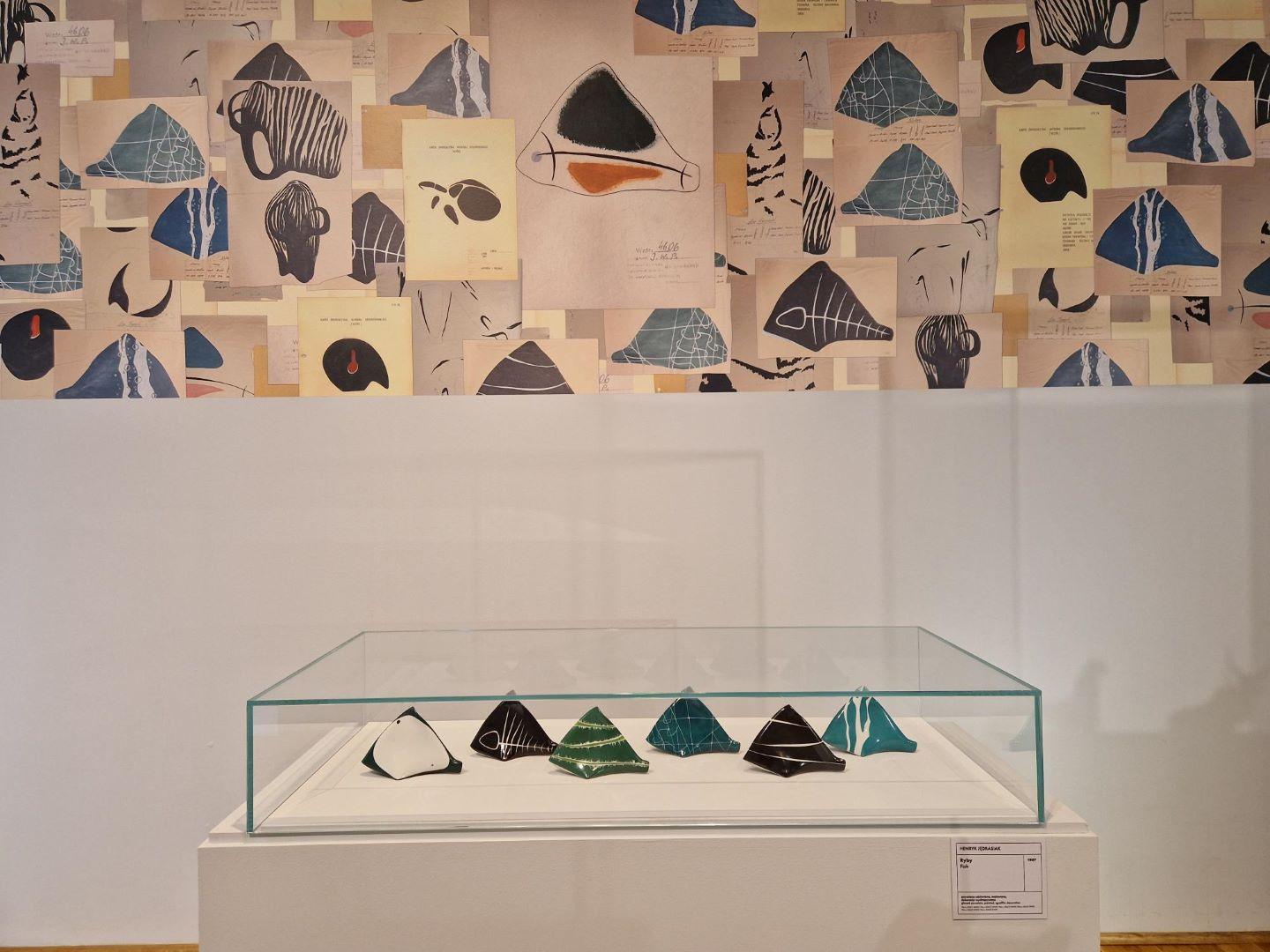
The exhibition lets the objects speak: no multimedia overload, just a clear thematic layout (animals, the human figure, exoticism) and clever use of light and the surrounding park, which turns the Sculpture Park’s greenery into an extra compositional layer. Pro tip: go before late October, ideally on a weekday afternoon, then wander the free outdoor Sculpture Park – this is design history that finally feels like art.
On 27 August, World Lake Day invites us to celebrate one of Poland’s most watery treasures: Mazury, the country’s famous “Land of a Thousand Lakes”. The name is modest advertising: there are actually more than 2,000 lakes in the Mazury Lake District, scattered across north-eastern Poland. The region was shaped by retreating glaciers, which apparently left behind enough water to keep sailors, kayakers and anglers busy for several lifetimes.
Mazury is home to Śniardwy (try pronouncing it😉) and Mamry, Poland’s two largest lakes. Connected by rivers and canals, they form a vast sailing network where “taking the scenic route” can mean accidentally spending the afternoon on a different lake. So, if World Lake Day needs a Polish headquarters, Mazury is the obvious choice.
