

This article is a part of Poland Unpacked. Weekly intelligence for decision-makers
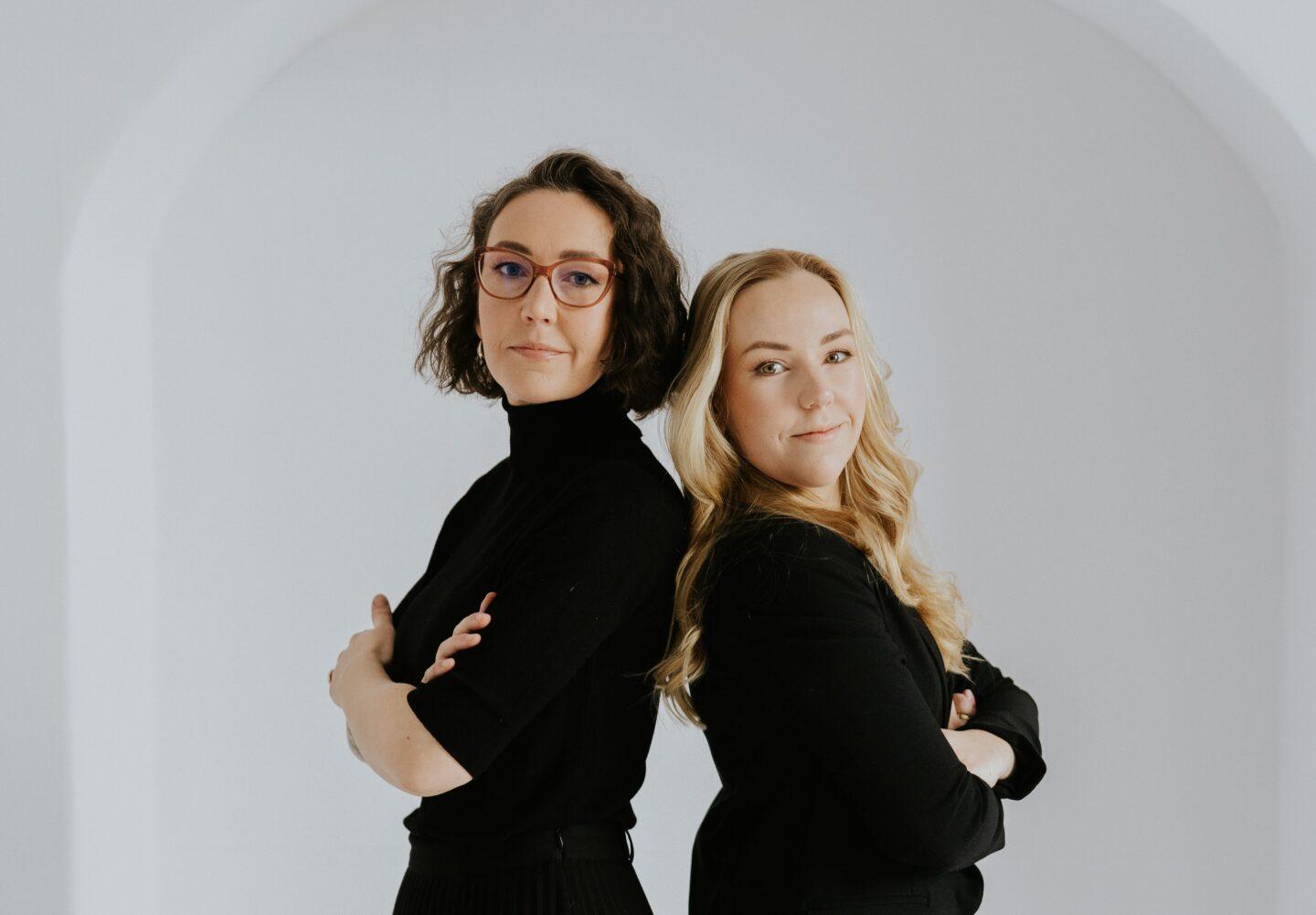
“People like hearing startup success stories that show nothing but growth on the chart. Our story, however, looks more like a sine wave,” says Ania Bieluń, co-founder of Ministerstwo Dobrego Mydła, or the Ministry of Good Soap. After a painful lesson in scaling up, the company is getting its house in order and investing.
Ministerstwo Dobrego Mydła was founded in 2014. The cosmetics market was radically different from what it is today. At the time, there were around 200 Polish manufacturers operating in the sector. Today, there are more than 1,000. The cosmetics industry is saturated with concepts.
“The beauty sector is extremely competitive. That makes it all the more surprising to me how well it is doing. I think a great deal of the credit goes to the fact that this is a distinctive community of highly empathetic, cultured people. It is also very female-dominated. Women bring a particular perspective to business. They are effective, but also attentive and sensitive to others. That supports growth,” says Ania Bieluń, co-founder of Ministerstwo Dobrego Mydła.
The idea behind Ministerstwo Dobrego Mydła
Where did the idea of entering the cosmetics market come from?
“The impulse to start the company was… boredom. I worked in television and had long breaks between programs. I spent a lot of time at the computer and explored the internet, which looked very different back then. I was looking for a hobby to pursue after work. I had always liked handicrafts, and I came across information that you could make things such as artisanal soap yourself. I gave it a try, and then the classic story unfolded: you make something at home, your friends like the product, then more people come along and want more. Gradually, you start thinking of your passion as a business idea,” recalls Ania Bieluń.
It would still take several years, however, before the home-based hobby turned into a concrete business plan.
“I knew I needed my own premises, the right permits and product registrations. And all of that meant a major investment. Given the risk and my lack of funds, I put off making the decision for a long time. But in 2013, a friend called to tell me that the Marshal’s Office in Szczecin was running a grant competition. The prize was PLN 40,000,” recalls Ania Bieluń.
One of the competition’s requirements was that the newly established company remain in business for at least two years.
“By then, I had already been living in Warsaw for quite some time, I had a young son and a full-time job. I did not feel able to enter the competition on my own. I asked my sister Ula, who was studying in Szczecin at the time, for help. We decided to give it a try together,” adds Anna Bieluń.
Gratitude, not a “Zero to Hero” story
The first workshop was set up in Kamień Pomorski, the founders’ hometown.
“We made soap in an old apartment that our parents let us use because they no longer needed it. They also lent us the money for my first professional soapmaking course, which I traveled to London to attend. The fact that I was able to go at all – and, above all, understand what was being taught – was also thanks to our parents. Ula and I feel a great sense of gratitude toward them,” says Ania Bieluń.
She stresses that neither sister is particularly fond of “zero to hero” success stories that gloss over all the resources and support their protagonists receive.
“Success is extremely rarely a matter of chance. More often than not, it is the result of an enormous amount of collective effort by several generations of a family, loved ones and colleagues,” says the founder of Ministerstwo Dobrego Mydła.
Expert's perspective
The beauty market is entering a more considered phase of consumer spending
The beauty market is entering a phase of more considered purchasing decisions. Consumers are paying closer attention to whether they choose a manufacturer’s brand or a private-label product, and they are willing to pay more when they see genuine value. This is a clear signal that quality and brand will be key factors in the near term.


The early days of Ministerstwo Dobrego Mydła
Ministerstwo Dobrego Mydła started out by making soap.
“Our first bars were based on simple artisanal formulas. Neither of us had a background in chemistry or technology. We knew absolutely nothing about how the cosmetics market worked. What we did have was a strong passion for natural ingredients, environmentally friendly packaging and craftsmanship. We wanted to make cosmetics from the heart, the way you cook for people you love,” recalls Ania Bieluń.
Cosmetic chemistry, however, has rules of its own. A formula has to be reproducible, and many different factors can affect the outcome.
“Even something as simple as the temperature in the workshop, which changes between summer and winter, can make a difference. There were also times when tap water ruined several batches of soap. Only later did we switch to purchased distilled and stabilized water. It was an extraordinary period – months of trial and error. We were driven by incredible energy,” adds the company’s founder.
The sisters learned from their own mistakes.
“Everything was happening so quickly that we had no concrete vision for how the business should develop. We had only one dream: that someone would notice us. We went with the flow. In the early days of distribution, I would leave my son with his father in Warsaw, get on a train and travel to my sister’s for two days so that we could prepare a batch of products together. Then we would take two huge suitcases, fill them with our handmade soaps and travel by train to the capital. Sometimes we added our products to shipments made by friends of ours who were transporting cured salmon from their small production facility in Kamień Pomorski. We would later discover that the bath bombs smelled of salmon,” recalls Ania Bieluń.
They sold their cosmetics mainly at outdoor markets. They began thinking more seriously about expansion when they realized they needed to grow the team. Today, Ministerstwo Dobrego Mydła employs more than 20 people and has more than 100 SKUs in its portfolio.
“The portfolio grew alongside our dreams and ambitions. Today, we have our own small R&D department and chemists on the team. One person focuses exclusively on documentation and regulatory matters. And my brother-in-law Maciek has been responsible for production for many years,” the entrepreneur says.
Is Ministerstwo Dobrego Mydła for sale?
“We receive various inquiries, but so far none has led to further talks. After these 15 years, we can finally say that we more or less know how to run a cosmetics business well. But Ula and I still do not feel that Ministerstwo has become what it should be. This project is not even halfway complete. We have ideas for how to develop the company and we are still on that journey. And later? We are not saying no. But this is not the time yet,” says Ania Bieluń.
Double-digit growth
Ministerstwo Dobrego Mydła ended 2025 with PLN 10 million in sales revenue and a PLN 0.5 million loss. A year earlier, revenue stood at PLN 9.4 million and the loss was PLN 800,000.
“This is the result of heavy spending in previous years. We are not ready to start harvesting the rewards, so we still reinvest most of the money we earn in expanding our product range and production capacity. I know people like hearing startup success stories that show nothing but growth on the chart. We all dream of things being easy, of everything moving in a straight line and of the direction we choose once remaining the right one forever. But our story is a sine wave, just like life. By the end of this year, we want to break even without stopping investment, while continuing to optimize our processes. We have also learned a major lesson in humility when it comes to rapid growth and scaling a business, so we are focusing on increasing sales and cutting costs,” says Ania Bieluń.
One reason is to free up some funds for marketing and advertising, as well as to cover rising utility costs.
“We are planning 10% revenue growth this year. Although personally I am opposed to the idea of perpetual growth, we have to adapt to market conditions. We would like to maintain double-digit growth while stabilizing production. Later, there will be time for more deliberate cooperation with the broader market, further scaling and export expansion. We also manufacture private-label products for external clients. We have commitments to them, which is why we have decided to focus on expanding our machinery base,” says Ania Bieluń.
Ministerstwo Dobrego Mydła is currently consolidating its production and distribution operations in Stargard Szczeciński.
“We bought a plot of land in an industrial zone. We are putting together our own machinery base and have installed a homogenizer, a large, highly professional piece of equipment for producing emulsions such as creams and body lotions. We have also invested in a larger, 200-liter mixer for gels, including shampoos. That cost around PLN 600,000. We are also investing around PLN 100,000 in a new online store, which is due to launch very soon,” says Anna Bieluń.
Today, Ministerstwo Dobrego Mydła has two brick-and-mortar stores of its own – one in Warsaw and one in Szczecin – as well as partner retail locations.
“This year, we have put a strong emphasis on developing partnerships with major e-commerce platforms. We have joined Rossmann’s online offering and DOZ, and we are returning to Drogerie Natura. We are also opening a new location in Szczecin, in a beautiful prewar townhouse. One part will be a store, while the other will be a workshop space combined with a café. It has long been a dream of mine for our stores to become a concept where, on the one hand, people can try and buy cosmetics and, on the other, have a good coffee, come in, sit down and slow down for a while. If the concept works, we will want to introduce it in Warsaw as well,” says Ania Bieluń.
Challenges facing the cosmetics market
What keeps cosmetics manufacturers awake at night today?
“Several things. First of all, Europe has, in a sense, moved backward to a point where it no longer generates as much innovation as it once did. Instead, it is much more focused on reformulating products and adapting them to regulations that are constantly being updated. And this affects us to exactly the same extent as large companies. The associated costs are also the same. The difference is that, in our case, those costs do not get spread over huge volumes. I do not sell millions of units of a product every month, but hundreds,” says Ania Bieluń.
One issue she finds particularly troubling today is “dupe culture” (from “duplicates,” or copies), a consumer trend centered on seeking out and buying cheaper alternatives to premium products.
“I find the very use of the word ‘culture’ extremely irritating. It is almost as if calling it that somehow makes it civilized. If you take a product, copy it one-to-one and put it on a drugstore shelf at half the price, that is theft. From the perspective of a small manufacturer, it is demotivating. If the market can copy you within a few months, replicate and scale what you have done and recreate your concept, then what is the point of putting effort into creating something of your own?” the entrepreneur asks rhetorically.
Another major challenge for the beauty industry is Chinese e-commerce platforms and uncontrolled imports of cosmetics from Asia.
“While Polish manufacturers have to comply with strict and costly regulations, for example when reformulating products, consumers can order cosmetics through popular apps without any such restrictions. We cannot ship products to China without completing the appropriate procedures. Registration takes more than two years. In the meantime, Asia is investing in innovation because it is highly trend-driven. And who is supposed to work on those trends here when we are constantly adapting production to changing regulations? Fortunately, the cosmetics industry has recently scored a success by pushing for duties and taxes on parcels from these platforms. That has made imports from China less attractive on price,” adds the founder of Ministerstwo Dobrego Mydła.
From July 1, 2026, products entering the EU from Asia in small parcels worth up to EUR 150 will be subject to a flat customs charge of EUR 3.
“I have a very tangible example from my own home. We have a kitchen and two rooms. I sit in one room working remotely at my computer and dealing with regulatory matters. I spend half my working time changing formulas and adapting packaging to regulations that are constantly being updated. At the moment, there are a dozen or so ingredients under discussion in the cosmetics market and a dozen or so different areas where manufacturers could soon face major changes. And on the other side of the wall are my teenage children, ordering cheap cosmetics from Asia through an app, without any regulatory restrictions whatsoever. And both things are happening simultaneously, in the same place,” adds Ania Bieluń.
Expert's perspective
It is no longer just K-Beauty: C-Beauty is coming too
But beyond K-beauty, another challenge is emerging on the horizon. This time, it is C-beauty—cosmetics from China. In recent years, Chinese manufacturers have significantly improved the quality of local production. C-beauty is a term that will probably feature increasingly often in industry discussions. By moving part of their production to China, many companies also transferred technology and know-how there. This has fueled the very rapid development of local manufacturers, which are now emerging as genuine competitors to Europe.
I have the sense that many companies are thinking too short-term. Working with manufacturers in China means longer supply chains, which runs counter to the lessons learned from the pandemic. It showed very clearly how important it is to maintain local production, because that is what ensures security of supply. This is a very worrying trend. We can see it, for example, in electric-vehicle technology. We would not want to repeat that scenario.


Key Takeaways
- Ministerstwo Dobrego Mydła was founded in 2014 by two sisters, Ania and Ula. At the time, there were around 200 Polish cosmetics manufacturers operating in the market. Today, there are more than 1,000.
- Ministerstwo Dobrego Mydła ended 2025 with PLN 10 million in sales revenue and a PLN 0.5 million loss. A year earlier, revenue stood at PLN 9.4 million and the loss at PLN 800,000. This year, the company is targeting 10% revenue growth. By the end of the year, its founders want the business to break even.
- Ministerstwo Dobrego Mydła is currently consolidating its production and distribution operations in Stargard Szczeciński. The company’s founders have bought a plot of land in an industrial zone and are building up their own machinery base, including the installation of a homogenizer. The investment has cost around PLN 600,000.